African diaspora and language in lindy hop

Odysseus Bailer has recently posted an interesting request on a number of facebook pages and groups. His piece begins”The Phrase “Black Dance”, “Black music and dance”, “Black Culture” is not the same as “Black American Music and Dance”, “Black American Culture”” and continues to make some interesting points.
His key argument (to paraphrase clumsily) is that we should stop staying ‘Black dance’ and start saying ‘Black American dance’ because the dances from African American communities are unique and distinct from the dances created by and in other communities in the African diaspora.

I agree with this.

There have been some really interesting comments by other Black dancers, DJs, and organisers, and I do recommend taking the time to read through all these discussions. Some of the comments are very, very clever. Kenneth Shipp asks us why do we need to specify Black American?

I mean sure, you can make this distinction, but the etymology and history of Black / Negro in Western culture directly points to Black American culture as a direct line to enslavement (to mark a difference from African nations and parts of the diaspora) and marks cultural progress (like when Washington and DuBois argued for capitalizing Negro, and various popular changes through the centuries, like Afro vs African).

My question, given this history: what would functionally change if we explicitly said Black American?

One of the other really interesting comments is along the lines of ‘I don’t think of myself as African American… I am Black, or Black American’. A few people made this comment. I thought this was super interesting to see. And it’s a sentiment I’ve heard echoed in the Teaching Hard History podcast: the speakers are very much invested in the idea of a United States of America that is their country as well. It’s quite different to the discussions by Aboriginal Australians who actively reject the idea of a single country ‘Australia’. But I guess that’s one of the key differences between First Nations people’s sense of nation and belonging and Black American sense of nation. And my own racism is indubitably coming out there, if I just assume that these two very different groups of people would think about nation in the same way! Shame on me!

A lot of white lindy hoppers really like to draw that ‘lindy hop family tree’ as rooted in Africa, and to insist on that connection with Africa. I say ‘Africa’ deliberately, as I’ve seen white dancers argue for learning all sorts of dances from different African countries and traditions, rather than from the West African nations that lost people to white kidnappers and slavery. It seems odd to me to imply that ‘any African dance’ will do. It makes the cultural distinctions between African countries disappear; it makes Africa that ‘dark continent’ all over again.
But I’m not 100% sure what I think about this right now. I need to think more about it. Especially since we can definitely argue that lindy hop might have more in common with dances of…. say, Uganda, than the folk dances of Scotland!

Anyway, of course I chimed in. One thing I saw in some white people’s comments was what seems to be a misunderstanding of the concept of the African diaspora. So I wrote a stupid long comment. I’ve put it here, because writing it helped me put together what I’ve learn listening to the excellent Teaching Hard History Podcast, reading up about 70s and 80s lindy hop, and thinking about the different experiences of Black American and Black British lindy hoppers in that period. And how the Black women on both sides of the Atlantic have been quietly erased from modern lindy hop history.

I’m going to preface this comment with explaining who I am. When we pretend we are writing objectively, we make our own privilege disappear. It’s important that I always remember the privilege I was born with, and to some extent recreate every day. Despite my best efforts.

I am a white, middle class, able bodied woman living in a big city (Sydney/Warane) in Australia. I was born in England, and emigrated here with my family in 1982, after living in Fiji. I chose to become an Australian citizen in the mid 1990s, and have dual British/Australian citizenship. I think I’m the only one in my family who is (my brother and parents are permanent residents with British citizenship). My family chose to come to Australia, and our emigration was relatively easy because we are white, middle class, and British. You could say that we are part of a British diaspora, though we have always lived in British colonies (my father is Welsh and lived in Gibraltar and Kenya as a child and teen).

Friends (especially white people like me) reading along who aren’t familiar with the phrase ‘African diaspora’:
In really simple terms, it means people who are from or descended from people born in Africa. It’s usually applied to these people who no longer live in Africa. So those people can live anywhere in the world.

First important thing: there are 54 African countries, each has distinct languages and cultures. They were/are politically and culturally sophisticated with impressive architecture, systems of mathematics and philosophy, complex crafts and technologies, some of the oldest libraries in the world, etc etc. In many cases colonisation by European nations fucked shit up real bad.

Second important thing: people of African descent living outside Africa
a) may have chosen to emigrate,
b) may be refugees who didn’t want to leave but had to flee,
c) my be or have been enslaved people who were kidnapped and transported to another country,
d) may be the descended from enslaved people.

Third important thing: We can’t talk about the African diaspora without talking about European colonialism and slavery.

The empires of countries like England, Spain, Netherlands, etc were dependent on the labour of enslaved people. Slavery still happens today in many countries. The economic power of countries like England today were built on slavery. White people like me, who were born in England and live in Australia still benefit from the enslaving, trafficking, and labour of African people during the past few centuries. My country is rich because of slavery in the British empire.

Slavery involves:
a) humans being treated as objects to be bought and sold;
b) the labour of these people (ie unpaid work);
c) and usually involves racism: believing that humans can be divided up into ‘races’, and that some of these races are less advanced than others. Sometimes people are enslaved because they belong to a different caste, religion, or ethnic group. Note: the idea of ‘race’ is a white concept. The idea of being ‘half-caste’, etc, is a white concept invented to justify enslaving some people and not others.

When we talk about the USA (where lindy hop began), we have to talk about the way people from mostly west African countries were kidnapped and transported to then North American colon(ies) by white traders. The USA was built on the labour of enslaved people and the oppression (and enslaving) of Indigenous people who were there first. After emancipation (the ‘ending’ of slavery in the USA), there were African Americans in the Freedom Movement who explored the idea of ‘returning’ to Africa. That’s a whole other topic, and worth researching.

But the USA is also home to Africans who came to the country voluntarily in the last century or so. Things get more complicated when we talk about people of African descent who migrated to the USA voluntarily, but were descended from Africans who were enslaved in other countries. eg Haitians. If you’re a fan of hip hop, the Fugees are a good example of artists of Haitian descent who were born in Haiti, or born in the USA to Haitian parents. Haiti was a Spanish colony, and African people were kidnapped and transported to Haiti as a source of labour.

There are also people of African descent living throughout Europe (eg France is home to the largest population of people of African descent). Some of them are the descendants of free Africans who travelled to Europe at some point in the last few centuries. Some are descendants of Africans enslaved by Europeans and transported to Europe.
Some of them migrated to Europe during the 20th century from European colonies which had enslaved populations of African people.
When we talk about the ‘Windrush generation’ of Black British people, we are talking about a generation of people who emigrated to the UK on boats like the Windrush from the 1940s. As citizens of the British colonies in the Caribbean (called the ‘British West Indies’ at the time), they were entitled to British citizenship, and came to the UK for work. They were often descendants of African people enslaved by the British and transported to the Caribbean.

And of course, there are African migrants in lots of other countries. eg Australia has more African migrants than African American migrants. Some of these are refugees who’d like to return to their homelands, some are migrants who’d like to stay. My country has always been really shit in the way it treats non-white migrants.
Australia is also home to people who are descended from people who were enslaved in other countries (eg Indians who were enslaved in Fiji by the British), Pacific Islanders who were kidnapped by white men and transported to Australia to work on farms, and Aboriginal and Torres Strait Islander people who were enslaved by white farmers and families in towns.

As you can see, people of the African diaspora have some things in common, but the African experience in France in the 1980s is not the same as the African experience in the USA in the 1700s. It’s important to know and remember these differences. Just as Europe is made up of lots of cultures and people, Africa, and the African diaspora is made of of lots of cultures and people.

Lindy hop is the product of African American cultures and experiences.

The word ‘Black’ became a word of power for African Americans in the Freedom Movement in the 1960s. It is a word of pride and political identity.
It’s also used by people of African descent in other countries in the same way: a political and cultural identity.
It’s also used by Aboriginal and Torres Strait Islander people in Australia (though spelt ‘Blak’), in much the same way.
And it’s used by people of other cultures as a physical descriptor (eg having black skin) or political identity. This is where things get more complicated and culturally specific, so I’ll leave it there.

I think that Odysseus is asking that when we teach lindy hop (a Black American/African American dance) we refine our use of the phrase ‘Black’ with the word ‘American’, to distinguish the African American experience from the experience of people of the African diaspora in other countries.

The term ‘Black’ has been problematic in the past, and it has been a word of power in other moments. When I speak to dance friends today, I try to use the term they prefer. African American, Black, Black American. It’s just polite.

NB I say ‘Freedom Movement’ instead of ‘Civil Rights Movement’ after hearing Ruby Sales explaining the difference.

I’ve just listened to this episode of Teaching Hard History, “Listen, Look and Learn: Using Primary Sources to Teach the Freedom Struggle” and it’s fantastic.

If you follow the SNCC Digital Gateway to the Black Power entry, you can learn about the way the word ‘Black’ was used during the 1960s in an empowering way.

If you’re researching dance and music history of your local area, this ep of Teaching Hard History is an invaluable resource. They talk about how to use primary sources (eg oral histories and interviews), how to record them, how to archive them.

It’s been really cool to listen to this podcast, then think about the discussions people are having about the role of Frankie Manning in lindy hop history this week. I have been thinking more lately that the latest generation of white lindy hoppers (eg people who started in the last ten years) haven’t been exposed to all the oral histories (ie stories told by OGs) that I have through the last 30 years. Oral histories are really powerful because they personalise history. And a story well told is particularly powerful.

NB I use the word ‘white’ rather than ‘European’, because whiteness is a political and ideological concept, and ‘European’ has more to do with geography. I also think that ‘European’ is problematic because there are plenty of European peoples who experience extreme disadvantage and oppression (hello, Ukraine).

When we talk about whiteness in the context of slavery and racism, we give ourselves a pathway to deconstructing the power and privilege of people who may have pale skin, but more importantly, have economic and social power.

Community vibes – how do you grow a crew?

Ah, that most perennial of questions.

I’ve recently started teaching lindy hop again, and while mostly it’s been a lot easier than when I first set up a business and class, there are the same usual challenges: how to get students to stay for the whole block, how to be welcoming without making it weird, how to balance the work with the fun for me.
I actually feel ok about the teaching itself, and the marketing and promotion side of things. The interesting bit for me is figuring out where I, my class, and the peeps in my class fit into the bigger local scene. How and when do I look at running social dancing? How do I stop my social dancing being some weird stand alone thing instead of a natural progression from classes? How do I make the right conditions for community?

Or as I said to my friend, it’s like I’m asking myself, “How do I make friends?!” I am not a shy person. I should know this. But I’m curious to see how other people do this.

What are the things about your club/class/party/crew that make it fun and somewhere people want to be?

I know from experience that the way to build a cohort and a little group of peeps is to use my social skills so they can make friends. Welcome everyone individually. Learn names. Ask them about themselves. Drinks and snacks after classes, time to talk and make friends in class. Spend more time on making connections with the students who come to class than with trying to sell classes to people who haven’t come.

Ideally, I’d like to just have them all get into trying out ‘social dancing’ ie, just dancing, in the space right after class. And also taking time to eat snacks (the snack table is where people chat), have a drink, get to know each other. The dancing part is lovely, but the getting to know each other part is essential.

Anyway, Julia Loving just put me onto this fantastic panel session they did in NY in 2019. They spend a bunch of time in the question time talking about how to get young folk, especially young Black folk into lindy hop. Once again, white girl me should be listening to Black elders to learn. The things I see and hear them say:

  • Providing food, Ronald Jones says. A basket of chicken for some kids in a basement. A buffet dinner in the room where the panel is held. This makes complete cultural sense to me from my family and background.
  • Respect the young people, Ronald says. Don’t treat them like babies or fools. Treat them like thinking, responsible people.
  • If you’re a young person, sit with the elders, Mickey Davidson demonstrates. Listen to them, learn from them, earn their respect. ie show respect. And you’ll be gradually included.
  • Play music at the party.
  • Make your gig physically accessible (ie not way over the outside of town).
  • Make some jokes, laugh at some jokes.
  • If someone’s talking to you (whether it’s in a mic on a stage or at the snack table), make the active listening noises: hello! Oh yeah! Whaat? The Black audience listening to the panel session demonstrate. We don’t like a silent, stiff crowd, right?

Black women in lindy hop: getting shit done

After doing a bunch of reading and digging, these are some of the important things I’ve learnt about lindy hop in the 1970s and 1980s.

The New York Swing Dance Society doesn’t get the props it deserves for running parties that got people out and dancing (including Frankie and Norma and other OGs).

Community spaces – bars, clubs, church halls, social clubs, basements – were where lindy hop lived during these decades. It didn’t die. It was busy.

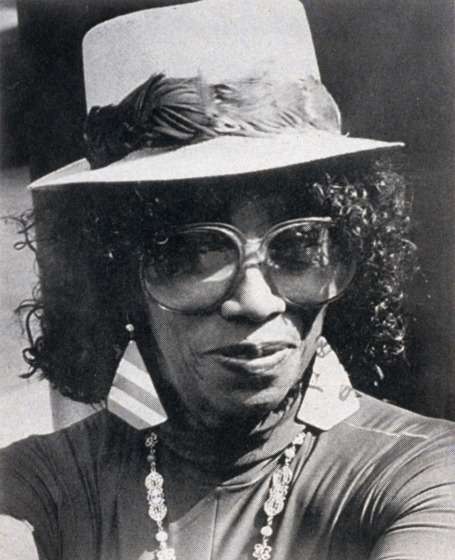
Norma Miller wearing her Menton Buck Clayton Hat, Photograph by Nancy Miller Elliot, Courtesy Norma Miller

Norma Miller was really important. She was the sort of person who’d make sure people like Frankie went out to dance to a band (1983), and got a whole gang of OGs together for a party at Sandra Cameron’s studio (1983).

“In April 1983, at Norma’s suggestion, Larry Schultz and his wife, Sandra Cameron, had invited about thirty Savoy Lindy Hoppers to a little get-together at their dance studio. It was wonderful to see everybody, and we had a ball catching up and dancing with each other. We were all out there clowinging around, trying to remember our old routines.” (p225 Frankie Bio)

She put on shows with OGs starring in the early to mid 80s, she trained up new Black dancers. She did that thing that still holds lindy hop (and communities!) together today: she introduced people to each other.

Mama Lu Parks was another of those important women, putting on gigs, running performance groups, getting shit done.

The stories I’ve heard in the past about the 1980s were mostly about white men ‘discovering’ Frankie or Al Minns or Norma and convincing them to ‘come out of retirement’. But it was Black women who were keeping relationships alive, bringing people together, and getting shit done. AS PER USUAL.

Frankie Manning and politics

I’m checking some details in Frankie Manning’s biography, and there’s a section where he writes:

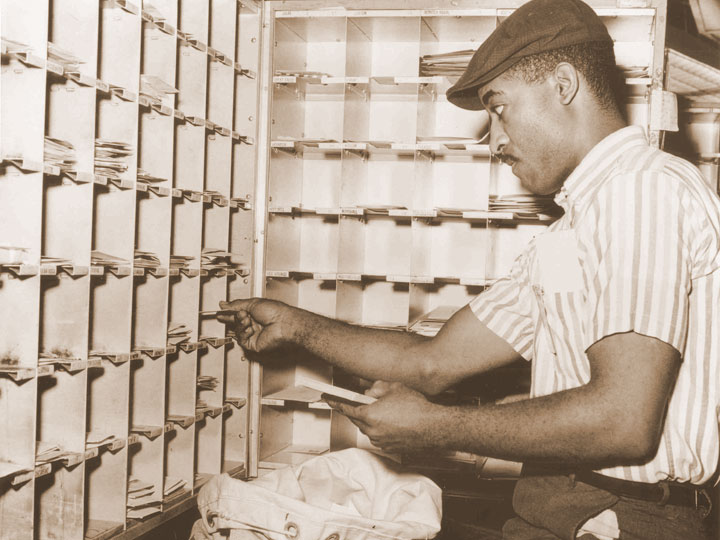
I always agreed with Martin Luther King’s point of view. In 1963, a whole group of us from the Postal Workers Union went down by bus to the rally in Washington, D.C. to support him. When I heard him give his famous ‘I have a dream’ speech, I was very moved.” (pg 218)

I’ve heard white lindy hoppers argue that Frankie wasn’t political*. That’s patently bullshit. He was a union member. He went to Washington to support King. It’s also really important to remember that the US Postal Service was (and is) an important site for Black organising and grassroots politics. Margot Lee Shetterly talks about this in her book Hidden Figures, noting the path from postal service to aeronautics for Black workers and thinkers.

And of course he choreographed and performed in A BIOGRAPHCICAL FILM ABOUT MALCOLM X. A film that directly visually referenced multiple films that starred Manning and his peers.**

I also want to point out that Frankie didn’t ‘stop dancing’ in the 1950s. He mostly retired from professional dancing, but of course he kept on dancing! Parties, dances, band gigs… all the usual places where vernacular dance lives.

References

*What do I mean by ‘political’?
On one level, it’s referring to the mechanics and institutions of a political systems – parties, voting, electoral systems, unions, politicians.
But that’s the very simplest level.
If we define ‘politics’ as being the relationships of power between people, things get a lot more interesting. This is the sort of definition used by feminist and anti-racist activists and scholars.
So ‘politics’ can expand to include the social relationships between adults and children, the collectivist philosophies of unions, the uses of power between men and women, and so on.
Every time Frankie said ‘Think of your partner as a queen’, he was making a political statement: treat your partner like royalty. Show your respect by bowing. Obviously he didn’t think they were actually a member of a royal family; this was about defining relationships between men and women as one of mutual respect, where men invite women to be powerful and love it.

** If you compare the soundie/short film Keep Punchin’ with the scenes in the ballroom in Malcolm X you’ll see characters and narrative elements from the soundie in Spike Lee’s film. This is one of the clever things about Lee’s films: he uses archival material as inspiration, but often also shows them on-screen during the films. I am a huge fan of his films.

A proposition isn’t necessarily sexual harassment

Ok, so my feeling is that if someone propositions you (ie asks you if you’d like to have sex) at a dance event, it’s not sexual harassment in and of itself.

What makes it sexual harassment?

– They have more power than you do (whether they’re your teacher or boss, your host whose house you’re staying in, someone with more physical power, etc etc).
– They threaten you with consequences, or imply shit will go bad for you if you don’t take them up on the offer (eg they’re your dance partner and say they’ll pull out of the comp if you say no; they’re your boss and say they won’t give you any shifts if you say no; they’re a peer and say they’ll tell people bad stuff about you if you say no). ie they try to coerce you into saying yes.
– They ask in an inappropriate setting (eg you’re colleagues both working, and they ask you while you’re both working and you can’t move away or comfortably say no).
– They ask you repeatedly and try to convince you.
– When you don’t respond, or you say no, or you leave the room, they follow you, ask you repeatedly, or continue as though you’d said yes.
– The event has a safe space policy that says ‘It’s not ok to ask someone if they want to have sex with you at this event’. This one is trickier, but if an event has a ‘no sex’ policy (and that is a legit option) and they proposition you anyway, that implies they don’t care about boundaries and rules.
– You weren’t physically able to say yes or no or move away (eg if you’re drunk or stoned, asleep, working (eg MCing or working a cash register), backed into a corner, etc.
– You’re at an event in a culture or society where the act of asking is impossible to refuse.
– You’ve just told them you feel scared and afraid.

If they asked you to have sex, then moved on (physically or in conversation) when you say no or don’t say yes, then it’s not necessarily sexual harassment.

It could be awkward, you could dislike it, you could feel confused or upset, but it’s not necessarily sexual harassment.

To be super clear: there’s nothing wrong with feeling afraid, upset, confused, embarrassed, angry, etc when someone propositions you. It’s ok to feel shitty if you were enjoying a nice asexual/nonsexual moment and they harshed your vibe. It’s ok to be annoyed if you’re straight and they’re gay (or vice versa) and they don’t suit your sexual preferences.

They’re all legit feelings. If you do feel this way, you should definitely find a safe space and get some help if you want it. You don’t have to report anything or have a safe space staff member sort it out for you.
But if someone likes you and finds you attractive and makes an offer, that’s not necessarily sexual harassment.

How do you respond if someone does proposition you, and you don’t want to, or feel afraid or panicky?
A first step is to say “No.” That’s enough. You don’t need to say anything else.
If you can’t get the word out, then it’s also ok to just freaking run away. Get out of there.
What if you freeze and can’t do or say anything?

A decent person is looking for _enthusiastic_ consent. If you don’t say anything, or if you say no, then a decent person is not going to pursue you. Best case scenario, they’re going to apologise and remove themselves.
If you do haul arse and run away, or you’re stuck there frozen and silent, a decent person will check in with the event staff to let them know that you seem upset, and they’ll make sure the staff know how to find them. Or they’ll tell your mates to check in. They should know better than to follow you and try to explain themselves.
And I think that this is where it becomes obvious that we are all responsible for each other’s safety. If you’re in a group or a social space, and you do freeze and panic, hopefully someone else will notice and check in with you.

And if _you_ see someone proposition someone and get a panicky/scared response, it’s important that you do something. You don’t have to confront anyone. You could just suddenly ask the scared person if they’re taking class tomorrow. Or you could ask the propositioner if _they’re_ taking class. Do it loudly and akwardly and you’ll defuse the situation and other people’s attention will be drawn, so they might be able to do something more.

But we all have a responsibility to keep an eye out for each other.

AI, slavery, and being annoying

The thing about the environmental impact of AI data centers (they have huge electricity and water requirements), is that there were already big issues with data centers before AI became a popular media topic. ‘AI’ (as a topic) just pushed it to the public consciousness.
‘AI’ is really just bigger, smarter computers. And we’ve been heading towards bigger, smarter computers for decades.

It’s easy to hate on AI for killing jobs for creatives, or for making the world a little more boring. But the thing that I’m most concerned about is the way the writing that AI does (for university essays or newspapers or whatevs) is not insightful or brilliant.

‘AI’ is really just a computer reading a heap of things, observing patterns, and then making some informed guesses about the right answers. It doesn’t make intuitive leaps, it’s not creative, and it’s not thinking critically. So you don’t get new ideas. It could be useful for doing things like generating a literature review, but it’s not going to take the ideas from that literature review and apply it to real world situations or real people.

I read an article recently where they were discussing a study on the types of writing AI generated essays produce (sorry I can’t remember the reference). They found that the sort of writing produced by AI tended to preserve the status quo. It didn’t do anything radical, it didn’t have new ideas, it didn’t critically engage with the ideas in the material it assessed.

In other words (speaking as a feminist cultural studies scholar), the students using AI to write their essays are not going to go on and fucking fight the man. Their thinking and writing will not be radical.

Not a huge surprise for feminists who’ve been critical of university-based gender studies. Masters tools, masters house and all that.
The other issue that a lot of us who have been doing creative work for a job (copywriters!) is that the work we do will be done by computers. Again, not a new idea. But if we pull back a bit and look at the bigger cultural landscape, we can see that this change in labour practices is happening all over the place. Companies like Amazon have done a very good job of union busting, destroying collectivism, and reducing workers to slaves. I wish it was an exaggeration.

Modern day slavery is something women and people of colour experience in various contexts – sex work, garment manufacturing, and most tellingly, prison work.

That last one has been bothering me this week. ICE rampaging through fields and factories and kidnapping workers to incarcerate them is one very effective way of developing an enslaved workforce. Prison detainees work for no pay, or for a stunningly low rate. Prisons are increasingly privately run.

All of this has been bothering me since I listened to the first two episodes of the Teaching Hard History podcast. These eps look at the role of slavery in the civil war. I was surprised to hear that many white Americans assume that the civil war was about states’ rights. I’d just figured it was about the north and south arguing about ending slavery. These two eps make it super clear that it’s about the role of slavery in the pre civil war economy. Enslaved people = free labour. Under the Fugitive Slave Act of 1850, people were paid if they ‘captured’ ‘escaped’ slaves. This Law was passed by the US congress, and was one of those issues contributing to the ‘states’ rights’ arguments.

It gets a bit complicated (the podcast is easy to understand though), but it helps understand how ICE and the Trump’s determination to kidnap Black and brown people contributes to an economy which has _always_ involved slavery (from ridiculously low basic wages to indenture and the powers of businesses like Amazon).

Reassuringly (and this is why we teach history), the introduction of the Fugitive Slave Act was met by very angry crowds of citizens. And as the podcast points out, the civil war and the ending of slavery wasn’t something that was done ‘for’ or ‘to’ Black Americans. It was something they actively participated in. In other words: white Americans, you need to pay attention to Black history if you want to fight this shit.

And Australia? Our own history of slavery (from Pacific Islanders in cane fields to Aboriginal and Torres Strait Islanders workers in white homes and on white farms) makes it clear that we white people are ok with slavery.

Incidentally (and to bring me back to my original point), the types of connections I’m making here (looking at social and economic and cultural patterns) to critique the uses of power and technology are things a computer can’t do. So of course it makes sense for a company like Amazon to embrace AI technology.

It’s important to pay attention to the details, and to keep track of those niggling little feelings you have that something isn’t quite adding up. Ask questions. Be annoying.

I-go, you-go!

Irina in the Teaching Swing Dance group on facebook just asked:

Hey folks! I have a question I’d like to crowd source for. How do you teach rhythm to folks who don’t inherently understand it? As in those who can’t stay on beat and don’t know they’re off beat even after months or sometimes years of classes. I’m teaching a group class focused on this topic this month and I’d love to hear some tactics and success stories from y’all!

And since I’ve been teaching 30 minute drop in classes for the monthly Blue Rhythm Band gig, I’m full of excitement about teaching again. This is what I wrote:

Oooh! My favourite thing!

So I actually think that keeping time (ie finding the beat) and rhythm are the most important things in lindy hop. It’s how we connect with the music and our partners.
So when I’m teaching brand new dancers (heck, any dancers), I begin with a big apple style jazz warm up, where one teacher leads the group through a series of jazz steps, changing step on the phrase. This teaches students:
– to be present (ie they have to concentrate, so they stop thinking about work, etc)
– about phrasing (but with no obligation to find it themselves; if they’re not ready to hear it, then that’s ok, the teacher’s go it)
– about the beat (the teacher demos how to dance in time)
– to dance on their own before touching another human (much easier than partner dancing)
– to move on from mistakes rather than stressing about them; have to move on – the next step’s coming
– some basic jazz repertoire.

The teacher should be mindful about the rhythms they use. eg using simpler rhythms (single time or half time) first, then adding complexity. eg I might begin with walking on the spot, then walking + a clap on 8, then it becomes fall off the log with some shape.
It’s also good to give students some small victories in the first few seconds, so they feel confident. So start simple, then get more complex later.
-> this is 3-5 minutes. If they’re loving it, do another song!

After this we play i-go, you-go. I intro this by saying ‘now we’re going to play a game to learn the rhythm we’ll use all class.’

Then we play:
– I clap the basic rhythm (if it’s for lindy hop, it’s ‘slow slow, slow quick slow’, if it’s charleston it’s 8-1, 3-4 or however you think of charleston, etc).
It’s 8 counts (2 bars) in a moderate tempo (not too fast), swinging.
– They immediately repeat it back to me
– I clap the same rhythm….

This goes on in real time, with the same tempo. I move from clapping it to tapping it with different parts of my feet, with different feet, then step it out, then move it around. You can also scat it.
The other teacher is ‘on their team’ so they have a model for what to do.
As the ‘caller’ (they’re the responders), you pay attention to how they’re going. If they’re struggling, make it a bit simpler. Repeat something. If they’re all over it, add in elements like the shape of your body, where you place your feet, etc. The great thing about this is that if they’re not ready to work on these ‘extra’ things, they won’t see them because they’re too focussed on the basic stuff. Don’t stop and articulate this; just let it be there for the students to see when they’re ready.
Do not stop and explain things or correct or ‘break things down’. This is essential. This teaches them how to keep time _in real time_. It also teaches them how to learn-by-seeing and learn-by-doing. Just as we would on the social floor. This is one way you might think about building Black street dance tradition into your classes. But defs not the definitive or final way!

You don’t have to say ‘rhythm is the most important part of lindy hop’. By having it right up front as the first thing, you’re showing them that rhythm is important.
It’s ok to say ‘yes!’ or positive comments and noises when they really do stuff that impresses you. Show them how to be a receptive, appreciative audience.
The goals:
– learn how to learn without having a move ‘broken down’ for them verbally. They learn how to ‘break it down’ themselves, into the parts that matter to them – eg they might be ready for foot tapping, but not ready to see which foot it is; they might be ready for hitting the last 4 beats, but keep missing the first 4.
– get them used to moving on from mistakes without stopping to stress
– feeling confident trying instead of stopping to think before trying
– starting simple (clapping), then getting more complex (stepping the rhythm through space)
– they make a few mistake at first as people figure out how to play, but keep going. This teaches people that it’s ok to stumble through until you figure out what you’re doing. This teaches you to feel confident in mistakes. No one stops to correct you (and tell you you’re doing it wrong), no one judges.
– saying it’s a game is essential: game connotes fun, no pressure, play. ‘exercise’ or ‘rudiments’ feels like more pressure. Also, it’s fun.
– we start with this simple version so that they can learn how to play before we move onto more complex or challenging games later.
– they are all on one team (rather than one person clapping in front of the whole group).
By the end of this, 99% of them will be keeping good time and will have mastered the rhythm. They’ll also be a bit fatigued (brain wise), so change tasks.
-> this takes about 5 minutes max.

If it’s a normal class, I then have them play the same game with a partner, one-on-one. They take turns being the ‘caller’ and ‘responder’. You can have them do exactly the same thing (clapping the same rhythm with different shapes) or you can have them do different stuff (eg jazz steps, different rhythms, etc).
Goals:
– they learn to watch their partner and figure out rhythms from watching
– they start learning (from being a caller) that the goal isn’t to be best rhythm-composer, but best communicator of rhythm
– their weight changes and clarity of shape get really really good; it has to be super clear so their partner can figure it out. They’re not always aware of this.
– they learn to keep time and recognise and then reproduce rhythms
– Most amazing (and I only realised this after observing them carefully) they actually start orienting their bodies _towards_ their partners, with that lovely active balance (weight forwards, core engaged), the ‘perfect’ distance apart. So when they partner up in closed THEY ALREADY KNOW HOW TO HAVE ‘LINDY HOP BODY’ !!!!
-> this takes about 5 minutes.

From here they go on to partnering up.
I find that they are 100% ok with doing the nice rhythm (step step triple step), they keep lovely time, and if you play a nice song, they SWING IT. They also don’t need to be counted in, and can find ‘1’ easily.
All this takes about 15 minutes. I find that this investment in time gives them the skills to really _learn_. If you then move on to teach ‘moves’ by saying ‘please observe us, then reproduce it as best you can’ they are happy to just give it a go. You don’t need to break it down, they learn faster (and dance more), and they actually learn better and retain more.

Important things:
– never ‘correct’. Every time you correct a student (‘just one tip’ is a correction), you’re essentially telling them that they’re doing it wrong. This lowers self esteem and confidence, and actually makes it harder to learn. Happy people learn faster, retain more, and are braver and more confident.
– if you want to praise, make it process-oriented. ie don’t say ‘that was amazing!’ say stuff like ‘I saw X and Y get into a mess, then stop, laugh, take a breath, then restart. This was really effective’. This will give X and Y positive vibes, but it will also give the rest of the group info on what they might try, and it generally makes YOU feel fantastic, because you’re looking at your students to find good things, rather than looking at them to find bad things.
I have one hundred million things to say about this, and have posted about it a million times in this group (you can find it if you search for ‘i-go’, etc), and a lot of clever teachers have made suggestions and helped me learn about this stuff. It’s SO MUCH FUN!

Props:
I learnt this approach from taking classes with tappers Josette and Joseph Wiggan, and with Thomas Moon. Ramona Staffeld’s kind-but-clear approach to teaching helped us refine the approach. Classes with OGs like Chazz Young taught me that I can learn and do ok if I just keep trying and don’t have a teacher hold my hand. Josette taught me to not ask questions when I was confused, but to just have a go instead.

Our Swing Dance Sydney teaching group developed this approach together; I was just one person in the 6 person team.
The students themselves offered lots of feedback and suggestions on these things. We’d ask them ‘what did you think about this game?’ and they’d give us useful answers

Could you just fuck off? Being a professional DJ when the DJ bros will NOT fucking leave you alone to do your job.

Hello!
As you may or may not know, I had some issues with a DJ bro pulling acts of Massive Sexism in my work place at Herrang this year. Despite our managers’ best intentions, the Herrang DJ team is still home to extremely bro bros. It’s also home to some of the very nicest reconstructed men in DJing, but let’s put them aside for a minute.

What about these DJ bros? Why don’t we just ditch them completely?
Mates, if it was up to me (and it has been in the past), I would. You hassle a sister? You’re out. That’s it. And all the time and energy we put into dealing with these jerks can be put into fostering new DJs and new DJ cultures.

Anyway, because I’m me, and I can’t stop thinking about things (ruminations are us), I started working on a way to develop a healthy DJing culture at a big event like Herrang that also draws on cultures from all over the world. Now, local DJing in many countries is not male dominated. Godddess bless the young man whose response to my story about being told ‘Women DJs can’t handle the pressure’ was honest befuddlement. He’d grown up lindy hopping in the Melbourne scene, where almost all the organisers are women, and most of the highest profile DJs are women. This generation of young people (ie the 20 somethings) is doing quite well. And we DJs in Australia have put a LOT of effort into getting rid of rapists and misogynists, and pushing women into DJing. As a result, we have some truly excellent (and definitely world standard) DJs.
But it seems the rest of the world needs to do some catching up. In my week as staff DJ in Herrang, I was the only woman on staff. Which SUCKS BUTTS. I love men, I really do, but I also really need to NOT WORK WITH JUST MEN. Because I need someone who can do the proper in-depth chitchat that non-bros do as a matter of fact. I don’t know want to know who broke up with who, I want to know the when, where, why, what, and how of it. I want anecdata. I want speculation. I want personal commentary. I want backstory. I also want at least one other person who’d shout “THAT’S BULLSHIT” when told women can’t handle the pressure of DJing.

Anyway, if Herrang has a safe space policy, and a general (though not terribly well articulated or publicised) anti-racist policy, how is it enacted at a departmental level within this sprawling organisation (that has about 300 people on staff each week)?
In the DJing team: not very well.
There are:
– no posters on the walls about it in the DJ office
– no paper flyers on it
– no social media campaigns or content
– one or two somewhat unexcellent pages in the DJ handbook
– a passing comment in one meeting.

No practical tips for:
– not raping or harassing or disrespecting people
– making reports
– trusting your own judgement if you think a bro just disrespected you
– dealing with unsafe situations
– making spaces safer
– intervening if you’re a bro watching a fellow bro go fully dodgy.

So of course, I decided to make some. Because fucking hell, mate, this is not brain surgery, and the rest of the world has been doing this for ten years now.

I also think that a good safety policy should involve:

1. an organisation-wide policy
That is publicly available (that’s usually a mission statement or set of values that says things like ‘We are trying to be anti-racist. And we don’t tolerate racism or sexual assault.”) This big picture policy guides the decisions individuals and managers make at lower levels or other places in the organisation.

2. A transparent reporting process
So you know what’s going to happen if you make a report. NB this is my example from Jazz BANG, and it’s out of date. We need to update it. But since we haven’t run an event since 2019… we are behind. This lets people know what will happen if they make a report. Most people make reports because they don’t want to be near the offender again, and want to know if he’ll be at the event. The other common reason is that they want to protect other people from him. I’ve never heard anyone say they want him punished. Except me. I FUCKING WANT THEM PUNISHED.

3. Visible safety staff, with photos in public place everywhere uniforms or badges, contact phone numbers, emails, and social media addresses, as well as physical offices!
this one is super important, as most people eye off the safety staff before making a decision to speak to them. They might even save reporting til well after the event (for safety’s sake), when they’re sure the safety people are actually safe.

4. A clear guide to what is considered sexual assault, racism, etc.
This one is especially important for letting everyone know what the event’s policies and ideologies are, and whether they take this seriously or are just cutting and pasting a random document. It’s very important for newer dancers who aren’t familiar with the way these issues play out in the dance world, and it’s essential as information for potential offenders, so they know what we count as harassment or assault or racism.

This info also plays a key role in dealing with offenders: if you kick them out of your event, you can say ‘you broke the code’, they can look at the code and see ‘oh, touching boobs is not permitted’, and they learn not to touch boobs if they want to go dancing. Well, that’s the goal. I don’t think it works that way. In fact, I know 99% of offenders know they shouldn’t touch boobs without permission, but they do anyway because they legit think they can do whatever they like because MAN.

I do know that it’s more likely to go: person has boobs touched by man, person sees the code on the website and thinks ‘fuck that; i was RIGHT to be shitty that he touched my boobs’; person speaks to safety person, saying ‘i saw on your website that boob touching in lindy hop is not ok!’, and the safety person says ‘you are CORRECT’; and then that unsafe creep gets kicked out.

5. A solid policy communication strategy.
This is basically a strategy for telling everyone – attendees, staff, randoms reading on the internet – all about your policy. It should also outline processes (eg how to make a report), identify safety staff, etc etc. It should be practical, and on-brand for your event (eg it should sound like you and the voice of your event, if you want it to sound authentic and real and trustworthy, not just cut and pasted and a token effort).
I like this stuff to be super simple, engaging and possibly funny, positive and empowering, normalising this stuff (eg the tone should be ‘of course we kick rapists out’ not ‘omg rapists?! how even? what ?!’), using photos and images rather than words. Fewer words. A catchy slogan or mnemonic is helpful.

It’s worth noting that the way you communicate your policy to staff is not always the same as the way you communicate to punters. eg staff will need to know exactly what to do if a banned man comes to the door, but customers don’t.
So you might divide your communication strategy between internal communication and external communication.

6. A solid process.
You have great ideas and policies, but what will you actually do? So, in my case, a guy spent a week pushing me about, challenging all my actions and thinking, making very sexist comments, and ultimately making me feel like shit. So I spoke to my managers. Who…. didn’t know what to do.

In this case, they clearly weren’t trained, and there was no internal documentation for practical responses to a report. I wasn’t sexually assaulted, so we didn’t need the cops or a doctor. All my managers and the rest of the team were men, and they hadn’t experienced or even noticed any of this shitty behaviour, so they didn’t really understand, or even know what I meant.
Because I’m experienced, and I am so fucking DONE WITH THIS SHIT. I refused to just leave it with my managers so they could quietly ignore it and move on. I spoke to the camp’s safety officer. Who also didn’t know how to deal with this. And now I am bloody well developing documentation, because if I’m dealing with this, imagine what it’s like for a new DJ who doesn’t speak English, in Herrang for the first time, dealing with a bossy white man (who isn’t a boss, but likes power) who keeps telling them what to play and that they aren’t actually capable of DJing under pressure?! Somebody needs to fucking well get this shit done.

I JUST WISH THE OTHER DJ MEN WOULD DO THIS WORK SO I COULD GET ON WITH BEING AWESOME.

Anyway.

7. Solid documentation.
Processes have to be recorded somehow. How do we handle reports? What’s the process for dealing with a rape versus a week of sexist harassment? What happens when the DJ managers change over at the end of the week, or resign from Herrang forever? Where are the reports stored? How do we measure the success of our response? And for me, specifically, how do I know this man won’t be on staff again next year the same week I am? Can I be sure he hasn’t read the report and correspondence? Will I be safe from his reactions? What if it happens again? At this point, neither Herrang nor I can answer any of these questions.

8. Retraining and retention or kick that fucker out?
You can see my position on this. I don’t think they’re worth the effort. These men know their behaviour is fucked up. But they keep doing it, because they think they’re fine. And retraining them takes SO MUCH WORK. So much time. And who’ll do that retraining? PLEASE don’t tell me it’s a woman (it’s always a woman). What are the metrics for gauging his ‘retrainedness’? What’s the time line? Where will he be trained? How do we deal with the effects of his mistakes (he will make mistakes)?

I would much rather spend all these resources on supporting those young women from China or Korea, that young Black man from the US, that clever and attractive middle aged feminist from Australia WHO JUST WANTS TO DJ FUCKING MUSIC AND NOT HAVE TO FEND OFF UNWANTED MANSPLAINING AND OTHER PEOPLE TOUCHING THE FUCKING SOUND DESK.

But that’s not the end!
What else do I look for in an event, to be sure its safety policy is both legit and 4real?

Other stuff:

  • A diverse staff cohort. eg if it’s all straight white bros, shit will not be safe there;
  • The organisation communicates about safety stuff. eg they have social media posts on the regular, talking about what they’re doing, introducing safety staff, marking milestones, etc;
  • Responding staff are trained in practical responses;
  • Staff making responses can access help and make reports quickly and easily;
  • Staff know how to make reports and are happy with the responses they get;
  • Workers feel safe enough to make reports;
  • Data is collected and used to improve policy and practice.

[all this stuff is from this pdf called ‘Good Practice Indicators Framework for Preventing and Responding to Workplace Sexual Harassment’ from Respect at Work.

So here we are. I’ve been at an event, had a moderately good time, dealing with the irritation and stress of making a report. And I’m going to make bloody sure no one else has to go through this again. I go through the DJ handbook (which the most excellent Yana developed in previous years), and I see some room for improvement, specifically in terms of safety stuff. So I write up some recommendations.

Here is a… probably third draft? It is just in what I call the ‘raw script’ form. From here it needs to be written and simplified, changed into pictures and photos, translated into at least Korean, Mandarin, and French, and then inserted into the relevant documents. To make this really work, it needs to be:

– In the official handbook in a ‘serious’ official form (that is still on-brand for Herrang);
– Made into a funny and accessible comic on a paper flyer to hang out in the DJ office, and in each of the four DJ booths;
– Made into a funny and accessible poster to be stuck up in the DJ office, in the DJ booths, in the staff lounge, the tech lounge, and music department offices (with extras for replacing them);
– Actually printed, then stuck up everywhere;
– Monitored for vandalism and graffiti (this tells what people are thinking about the issue and initiative) and replaced when it’s torn down or damaged.

All this, and it also needs:
– A script for managers to present it in meetings and revisit during the week;
– A script for DJs who are responding to harassment;
– A script for DJs who are intervening in bros’ behaviour.

And this is just one document that basically says ‘DON’T BE A FUCKING ARSEHOLE, ARSEHOLE.’
Anyhoo, here is the first draft.

Additions for DJ Handbook

Being a good colleague
DJs come from all around the world, and are all different ages, ethnicities, genders, sexual identities, and personalities. Hoorah! But this means we can occasionally miscommunicate or confuse each other. Here are some tips to make your work week extra smooth and fun.

Respect your colleagues. 

  • Assume every DJ is as capable as you are. That means you treat every DJ (even brand new ones!) as your equal. They will know things you don’t!
  • Don’t lecture or offer advice without first having enthusiastic permission (“Yes please!”) Had permission before? You need to ask every time.
  • They don’t need to tell you what song they’re playing now, what song they’re playing next, or what song they played last night. But if you’re a good colleague, they’d probably love to tell you!
  • Don’t like a DJ’s song choice? Keep it to yourself.
  • Love a DJ’s song choice? Tell them! Tell everyone!

Don’t twiddle someone else’s knobs.

  • Don’t adjust the mixing desk or sound gear unless you are DJing, or the current DJ has asked you to. Exceptions: the booth will catch on fire if you don’t.
  • Don’t tell another DJ what to play, or what to do with their set. They’re DJing, not you. Yes, even if they’re a brand new DJ. Step back.

Sex and the Herrang DJ.
Attracted to your colleague and want to take it further? Stop and think a minute.

  • They’re working, asleep, drunk, high, or injured: The answer is no. Nope. No way. Someone in this position cannot give you consent.
  • You’ve asked once, and they did not say “yes please!”: Back off. They’ll tell you if they’re interested.
  • You’ve had sex with someone once, and you’re keen for more: Use your words, ask respectfully, and if they don’t say “Yes please!” it’s time to back off. If they do say “Yes please”? Wonderful news – enjoy!
  • You want to ask someone about their sex life, relationships, body, sexual preferences: Not while we’re working, buddy. You might get to ask once, politely, and if they don’t want to answer, you stop! And don’t ask again.
  • No touchy! Don’t touch another DJ’s breasts, bottom, groin, genitals… without enthusiastic permission (“Yes please!”) And not while you’re working, please.
  • What about touching the rest of their body? If you have power in this situation (eg you’re a cisman, straight, white, an experienced DJ, on staff, older, and they’re not), you need to back off. If you’re equals and friends, maybe it’s ok? Remember that different cultures have different rules about touching other people, and always use your words if you’re not sure. It’s ok to say “Hey, I just patted your shoulder. Are you ok with that, or should I use my words next time?”
  • You’re a manager and you’re hot for a staff DJ or guest DJ: Think carefully about this. Let the person with less power (not you) make the first move. Check in with the Safety Boss Daphna to get clarification.
  • You’re a staff DJ or guest DJ and you’re hot for a DJ manager: Think carefully about this. Check in with the Safety Boss Daphna to get clarification. But if you make a move and they don’t say “Yes please!” say “No problem!” and back off.
  • Someone touched you/said something sexy/showed you sexy pictures or video/asked you about your sex life or sexuality, or did something that made you feel ‘urk! No! Unsafe!’: If you feel safe, say “Stop! I don’t like that”, holding up your hand like a stop sign. If you don’t feel safe to do that, leave the room straight away. Find or call Daphna and the Safety team straight away, even if you don’t think it’s important enough.
  • Someone said “Stop! I don’t like that!” to you, and held up their hand like a stop sign: Stop what you’re doing immediately! And you need to back up so that person can leave. Then you need to go to Daphne and the Safety Team and figure out what you did. If you’re not sure, they’ll help you figure it out! 

Be helpful.

  • Your colleague’s forgotten their record, the DJ phone, a bottle of water, a power cord, an adaptor: Offer to fetch it or find it. Team DJ: activate!
  • Finished your set (and your beers, dinner, and snacks)? Take all your junk with you. The only thing a DJ should leave in the booth is a bad smell.

———————————————–

You can see as you read through this that the beginnings of catch phrases are emerging: “Yes please!” is a good example. Here we’re trying to get people thinking about and practicing enthusiastic consent. So we practice saying ‘yes please!’ and ‘no thanks’ long before we get to the sex stuff. Hopefully. It’s important to practice these little scripts in non-stressful (safe) spaces, so when it comes to a stressful situation (300 dancers high on adrenaline staring up at you at 3am), you can say ‘no thanks’ and that DJ bro will FUCK OFF BACK TO THE DJ OFFICE and quit asking you what you’ll play next, and you can get on with being fucking awesome.

You should know that while I’m typing this up, I’m also assisting my male partner in making dinner (how could he not read the recipe? I don’t know. We will have a little fucking talk after this), booking a physio appointment for that goddamm sore hip, planning a balboa party, corresponding on this incident, asking a music friend to trust me with his CDs the way I trust him with mine, and trying to get it all done before I do my weights workout.

References:
This document ’Sexual harassment: practical resources and tools’ from Disrupting the System (a pdf https://championsofchangecoalition.org/wp-content/uploads/2021/05/Disrupting-the-System_Sexual-Harassment-Practical-resources-and-tools.pdf) gives a good overview of things to look for to see if your workplace is enabling sexual harassment and sexism. Much of it applies to assessing workplaces for racism as well.

This document ‘Everyday Respect: it starts with understanding’ from Champions of Change (a pdf https://championsofchangecoalition.org/wp-content/uploads/2022/08/Champions-of-Change-Consult-Australia-Everyday-Respect-Report.pdf) gives a good overview of understanding exclusionary behaviour in a workplace (including sexism and racism).

And the Champions of Change coalition also have this guide ‘Building confidence and trust in workplace responses to sexual harassment’ (pdf https://championsofchangecoalition.org/wp-content/uploads/2023/11/Building-confidence-and-trust-in-workplace-responses-to-sexual-harassment-1.pdf) which is very helpful.

This document ‘good practice indicators framework for preventing and responding to workplace sexual harassment’ from the Aus gov body Respect At Work is also useful (pdf https://www.respectatwork.gov.au/sites/default/files/2022-12/Attachment%20B%20-%20Good%20Practice%20Indicators%20Framework%20for%20Preventing%20and%20Responding%20to%20Workplace%20Sexual.pdf)

Why did I choose those songs for the competition?

Friends have asked questions about the music and competition from the weekend (set list for that is here), so here is some more info.

Michael Quisao asked:

Congrats on the accomplishment and for getting through it! DJing for comps is still very stressful for me and I admire the heck out of folks who do it.
If you don’t mind my asking, what was the comp format? What requirements did you have to account for with your selections?

Here’s my reply:

Here’s what the contestants had access to on the website. Plus they could email and ask questions/get support. I think that last point was important. Even if people didn’t end up emailing, hearing ‘just email Squish if you need anything’ was important for reassuring them.

We had done another version of the m&m at the previous dance (which was in July), and that was a great chance to test the format, and generally start people feeling ok about competing. Good practice for me too!

There were two comps:
1. mix and match (everyone welcome)
– heats: 3 allskate songs of gradually increasing tempos
– finals: 1 allskate warm up song, 1 ‘shine’ song for each couple, where they get to dance to the first 1.30mins of a song ; final allskate

2. strictly lindy (everyone welcome, no aerials)
– heats (which we didn’t do in the end)
– finals: 1allskate warm up song, then jam-style with everyone getting 2 shines (of two phrases) each. We used 2 songs, fading out the first one after the last couple had their shine. The second song started with shines, then ended with an all-skate. I was using that fun version of Flying Home, where that distinctive riff cuts in at the ‘allskate’ part.

I can’t remember if people paid to enter or not.
Prizes were medallions.
Judges were local teachers + guest teachers for the weekend.
I don’t know what the judging criteria were (beyond what’s on the site) or how they decided winners.

Criteria for my song choices:
I know the organisers well, so we were on the same page RE musical styles before we started. We had some chats on messenger to sort out little details (and for them to reassure me about my nerves 😃 ).

I went with:
All ‘old school’ recordings. ie nothing after 1950 (except that one Johnny Hodges song, which was 1951), unless it was for a warm up. I wanted to have all the songs have the same fidelity, as it’s never fair if someone gets a hifi recording that naturally pumps energy into the room. Organisers didn’t mind whether it was a mix or all of one.

All big band, rather than a mix of small and big. Again, I wanted a consistency of sound and style for every couple. And because I’ve been talking to Heidi Wijk, my DJing influencer, who keeps reminding me that big bands bring big emotions. We were also in a big ballroom, so it felt right.

All with that New York/Kansas/LA sound, rather than a Nola revival vibe from the 30s. So no Bechet. Again, I wanted to have a consistent ‘style’ for all the couples. I was a bit torn on this one, because what about people like Eddie Condon, my current passion? But I got over it, because BASIE and ELLINGTON and HAMP and WEBB.

I also avoided the later early jump blues/rnb sound of bands like Buddy Johnson, because I’m personally on a kick to reduce how much I DJ them. I’ve noticed that when I play that stuff, the dancers end up emphasising the second beat really heavily, so when you look out over the floor, they’re bobbing up and down, instead of having a more even bounce, or emphasising any old beat. This is a personal thing, but in Sydney, where rock and roll really dominates all dancing and has squished lindy hop almost to death, I feel it’s important to keep that lindy hop ‘four on the floor’ vibe whenever I can. You’ll notice, though, that I did play Solid As a Rock, which breaks that rule. That was in a heat for the m&m, and I deliberately chose a song that people knew, so they’d feel more comfortable and relax. It’s Basie in 1950, so it’s right on the edge, though.

Phrasing and so on. This is where I got nervous. I couldn’t find a good enough and long enough song that allowed 6 couples to have 2 shines of 2 phrases each. We’d decided not to use the band for the comp (which would be a simple solution) because we had a lot of plates in the air, and tbh, I know I couldn’t manage liaising with the band on music in addition to all the other things I’ve had on this week.

So we knew we had to use two songs. DJ bud Trev Hutchison suggested just fading out the first song, which was something I’d considered. Heidi had also suggested it. So I did it. I specifically chose a song everyone knows (though, considering this is Sydney, not everyone does), so, again, people could feel more confident and comfortable.
I had the next song in mind, a Barnet recording of Flying Home, which is one of my total go-to songs when I’m DJing big events and want to pump everyone up. It’s good because everyone knows Flying Home. But it’s better because it’s a less well known recording, so it feels fresher. For music nerds, there’s a sax solo in the middle (Barnet himself?) that is very unlike Lester Young’s famous one, but is fucking GREAT. I doubt the competitors noticed details like that in the heat of it, but the audience might.

Which brings me to my final point. I’ve never been a fan of competitions, until fairly recently. I know that a lot of people find them utterly tedious at social dances. And I know that one thing a comp should do (according to Peter Loggins 😃 ) is entertain the crowd. A comp should be about an organiser being able to sell tickets to people who are going to watch a comp. Because there are only a handful paying to be in the comp.
So the most important part of DJing, for me, was finding songs that are fun and good to listen to, and make you feel like dancing. Doing that first m&m a few months ago, I realised that DJing a comp is a bit like working a wave in a social set: you start calmer, but energised, and then you work up to a climax with higher energy and higher tempos. So I tried to do that again. This makes for a more comfortable listening experience, as I’m making smooth transitions between styles, speeds, and energy types.

I think this perhaps the best argument for using a band in a comp: it’s good entertainment for the audience, who if nothing else can simply sit/stand and watch/listen to the band.

As an addendum, over the years I’ve DJed little things like solo charleston comps, and I’ve run other little comps, but used bands because I cbf DJing when I’m running something. One of the best ones was in a smaller, cosier space (but still big), where we did a basic ‘strictly lindy’ style comp, open to couple registrations, but we also offered to help match people up with partners if they just wanted a go. The band played great music at not-blistering-fast tempos, and it was all over fairly quickly. We had real prizes from community businesses (who were there to watch). I can’t remember how we judged, but I really want to run a comp where we have a famous (but not necessarily a famous dancer) judge.

How to be a professional lindy hop teacher. How?

A famous international teacher wrote this in a public post on facebook today.

Hey y’all, real talk. I have encountered multiple people this week who have never taken classes from me, are not signed up to take classes from me, yet have told me they have seen my class recap videos and been practicing from them. The purpose of my recap videos is to help the people who actually have bothered to become my students and who have shown up to learn from me. Believe it or not, this is my livelihood, I make a living from teaching dance. I sell instructional videos from my website. Undermining that is an incredibly shitty thing to do. The same way I would hope you wouldn’t buy a friend’s band’s CD and then just turn around and burn copies for everyone you know (and would hopefully encourage them to actually support the artist and go buy their own copy), I would hope you would encourage folks to actually come take a class from someone who has built a career doing a thing. The easy option is I just don’t do recap videos anymore (shocking concept, but for much of my dance career, video recaps just weren’t a thing). But I actually care about students’ improvement and would love to provide that as a resource because I think it is helpful (as many folks also seem to), so the option I’d rather pursue is just be respectful of artists. Thanks.

This post was shared by a mutual friend. This was my comment:

I don’t buy this argument at all.
Recap videos are a brilliant way to market a teacher’s skills. They get people gigs, it gets people into workshops at events.

Recap videos often circulate between people who don’t have the money or opportunity to go to big workshops, and they’re an ongoing resource for a local scene. It’s also super common for someone to take a recap video back from a weekend to their home town, and then work on the material with their friends and dance partners (who may not have attended the workshop!) This is how dance knowledge permeates and spreads. It’s also a good strategy for people with low incomes to access knowledge.
To be honest, I have zero problems with people of colour, women, other marginalised folk doing this sort of ‘textual poaching’ from a white man 😃 😃 😃

This is not the same as people filming you while you’re teaching a class. That’s fucked up and not ok.
If you’re not ok with the way video footage circulates in the community, don’t let people film your recaps. Boom.
If you want to capitalise on the fact that your fanbase is sharing videos of you, learning from you, emulating you, get onto it! That is some powerful audience-engagement!
Things you can do:

  • Follow up on that conversation with that fan
    (which, tbh, is a hugely flattering thing for them to do), by saying something like “Oh, that’s so good to hear! We should organise a zoom session so you can ask questions as you work through things! I have pretty reasonable rates, and we can make it work for small groups.” This is effective because this fan is clearly ok with working from a screen (usually a tiny phone screen!), and a zoom session would be a step up! It’s not often that an audience makes their preferred mode of engagement so clear!
  • Regard that conversation as a fan being brave enough to approach their hero
    and respond with positive enthusiasm. Ask them questions about their dancing, ask them what they liked about the video, and what they’d like to do next. That fan will remember that conversation, take it home, and tell it to zillions of people. That sort of interaction gives teachers a rep as ‘a nice person’ and that rep convinces local organisers to hire teachers. You don’t have to put on a fake cheery persona; just respond like a decent human being to someone who’s telling you (in so many ways) that they think you are amazing.
  • Rethink the way you structure your recaps
    to take advantage of this free circulation and marketing. Add a little intro with details of how to reach you. Limit the content in the recap. Have students dance the recap material instead.
  • Don’t do in-class recaps at all
    but release them yourself from your own website (or a third party site), where you say to the group: “Give me your email addresses, and you can have access to the recap videos on my website” and then you can garner their email addresses for your marketing!
  • Be very clear in your T&C with organisers about recaps and filming them.
    I personally say to teachers that they are not obliged to do recaps, filmed or otherwise, and I make it very clear to all registrants that teachers may not offer a chance for them to film recaps (ie their registration fee does not cover the chance to film a recap).

The more I thought about this, the angrier I got.

In the replies to his post, where people offer suggestions for monetising or controlling the circulation of this footage, he says “I’m old school. I teach dance classes. Not trying to be a youtube/insta/whatever power user” and then another big name teacher chimes in with “this is great but it’s a lot of – more – work” and this made me furious.

Most of the people who put on events that host these sorts of teachers do it for free. They work very hard to give these teachers work and provide workshops for their local scene. There’s very little money to be made (most people hope to break even, or subsidise with other stuff). It _is_ a lot of work. And they do this _in addition_ to their day jobs, caring for families… and often, teaching weekly dance classes.

To hear a high profile teacher denigrate this type of work makes me VERY ANGRY. And yes, it is lots of work to do this sort of management and promotion. HAVE THEY ONLY JUST REALISED THIS?!

I hear this bullshit from white man musicians all the time. As though being ‘a musician’ means that you just ‘do art’ and the audiences magically come to hear you ‘do art’. NO BITCH, THAT IS NOT HOW IT WORKS. Being a working artist means you WORK. You work on your craft, but sorry, white man, that means doing promotion, profile management, networking, all that distasteful plebean stuff. You also put work into being good at working with others (sound crew, venue managers, promoters, bar staff), you develop a sense of brand or how you want to be promoted, you develop actual promotional material (a bio, some photos, and – god forbid! – a website).

Argh this makes me so, so angry.

Anyway. This is why over the years as an organiser, and as someone who’s also been the ‘talent’, I’ve realised that the ‘talent’ is interchangeable, but the people on the ground who run events, who work the door, set up rooms, and clean up after parties, are the really irreplaceable people.