Lindy hop is a street dance. And those streets were full of political rallies, protests, and speeches

First, who am I speaking to?

To Black American dancers reading along:
It is insufferable of me to say all this to you. I apologise for whitesplaining your own history.
I am still figuring this all out in my head, so I’m going to write it out.
To everyone else reading along (especially white lindy hoppers and people who are part of a socially powerful group):
We can do better.

Nor am I speaking specifically to teachers with this post. I’m talking to my friends (and strangers) about the way we use history, and specifically Frankie Manning, in lindy hop culture today. More particularly, the way people who are not Black Americans use Black history.
I am endlessly, perpetually enraged and just plain shat off by white ‘dance historians’ who reduce history to a list of dates and ‘events’ they found in a newspaper or journal produced by white businesses for white readers. I am not a historian by trade or training (though I seem to have produced and published a heap of articles and dissertations that look at history and how we ‘make’ it), but I know that if we want to understand what happened in the past, we need to do more than read the accounts of history written by the victors. The victors, in the case of the USA, are white, able bodied cismen. And fuck knows I’m thoroughly sick of reading about them.

Second, I am 100% coming at this issue with an agenda, and that agenda is ‘place Frankie Manning in social and cultural context’. I have that agenda because most of the current ‘talk’ (ie classes, lectures, social media posts, pages on websites, etc etc) present Frankie Manning the way the Ken Burns would: as a singular genius who created great art alone. This is the ‘Great Man’ approach to history.

This approach is a product of 19th Century Angle-Celtic imperialism: the idea that great social and political events (and scientific and cultural and artistic…) are the product of ‘great men’. Heroes. It’s also total bullshit. Creative and scientific and political changes and events are always the product (or one step in a process) of a whole community. You know the line ‘behind every great man is a great woman’? We’ll, it’s more that ‘every great man is embedded in a community that makes his work possible’.

In the case of Frankie Manning, yes he was a talented artist. But he was also the child of a woman called Lucille, who moved north from Florida to New York in the Great Migration. So his world growing up in Harlem was made up of the thousands of other Black Americans who’d moved away from the violence and unemployment of the south. This whole world made him who he was. His work as a professional dancer was shaped by his ‘colleagues’ (other dancers, managers, venue owners, film directors and producers, competition organisers, band leaders, musicians, etc etc etc). His domestic life was shaped by the people he lived with (his single mother, his wives and lovers, his friends), his social life was shaped by his neighbours (a crowd of people living cheek-by-jowl in urban Harlem), his friends’ and friends’ families’ experiences at work, in social clubs, in churches, and in the neighbourhood.

People lived really close together in the overcrowded area, and people came from all over the country with experiences with horrible injustice. They were often the first free people in their family, or even were enslaved in their own life time. To be alive, to travel independently, to make choices about where to live, to be paid for their labour was political. They were political people.

So this is the important bit: you couldn’t live in Harlem in the 20s and 30s without seeing political rallies on the street, hearing speeches on the street about New Negro issues, hearing people (especially women) organising tenant rallies and actions… and so on (this is a good article to learn about how everyday and ordinary politics was in Harlem in the 1910s-40s). The people who moved out of the south had come from places where they couldn’t speak loudly on the street, couldn’t make eye contact with a white person, had no legal recourse when their families were lynched by whites. But in Harlem, the whole philosophy of the ‘New Negro’ was to find a new way of being Black. And that identity was founded absolutely in community.

Politics wasn’t just about joining a political party and voting in elections (though voting rights were at the core of the New Negro movement). It was about neighbours in a building getting together to make their landlord treat them fairly. Or it was about getting WPA funding for a community arts center. Or it was about going to a church meeting and being organised to bring meals to the needy.

You can see the roots of the Black Panthers in all this: political activism was centered absolutely on the community, and on social justice.

Third why teach this in a lindy hop dance class or in a lecture to dancers, or write it on a blog about dance, or in a social media post? Why should modern day lindy hoppers think about Frankie Manning as a man who is part of the Harlem Renaissance?

1. If we tell a story of Frankie Manning as a ‘Great Man’, he becomes a sort of ‘touched by god’ larger-than-life superhero.

2. But if we tell a story of Frankie Manning as part of a community, specifically, the community of the Harlem Renaissance, then we can teach the fact that Black Americans in Harlem (and elsewhere) weren’t just passively accepting slavery or segregation or white oppression. They were actively working to resist oppression. And activism like this has to be collective.

3. This is important for understanding history, but it also provides a model for political action today. The Civil Rights/Freedom movement of the 50s was a product of revolutionary New Negro politics, and reworking of their practices. The Black Panthers were a decentralised community organisation that explicitly drew on the politics of the New Negro that centered education and community care. The Black Lives Matter movement is the next step in that long political and intellectual and community legacy.

Some of the key features of this political heritage are:
– the role of women is centered and acknowledged (women are always present in actions, but not acknowledged in patriarchal movements eg white peace protest in the USA)
– grassroots activism holds everything together. These politics happen in community spaces including homes, church halls, beauty parlours, cafes. Spaces where women and children have power (unlike, for example, a law court)
– when politics and action happen in everyday spaces, everyone is exposed to it everyday
– the ‘street economy’ (eg drug dealers and users, sex workers and consumers, organised crime, etc) becomes an acknowledged part of the process. eg Black trans women during the AIDS crisis (1980s USA) were essential in organising community care and support, and gangsters like Casper Holstein became involved in funding community works.

This all means that we can look at the Harlem Renaissance as a way to understand how we can resist and be politically active today. So instead of thinking ‘oh, I can’t run for a senate seat, I don’t have the money, so I can’t change anything,’ we can think ‘I can organise a fundraiser in my local scene and raise money for the local women’s shelter’ or ‘When I go to the weekend dance event, I can choose the class taught by a Black teacher instead of a white teacher’… and so on.

Frankie as part of the Harlem Renaissance gives us a model for understanding how we can be part of a politicised community today.

I especially like it because it’s a good alternative to the political model offered by white patriarchy in Australia. I don’t want to join a major political party. I want to teach lindy hop in my local club’s games room, and show people a photo of the Silent Parade taken by a Black photographer, to show how the streets of Harlem were literally filled with political actions taken by ordinary people to challenge white violence in other states.

4. It can also show how, even if a person like Frankie Manning didn’t tell stories about politics when he was teaching white people in the 1980s, he was part of a politicised community. If we think of him as a product of the Harlem Renaissance, the short anecdote in his bio where he describes traveling to see Martin Luther King speak as an ordinary thing colleagues in a unionised workplace did makes perfect sense.

It also shows modern, white lindy hoppers that you can be a great artist, or a hardcore adrenaline junky lindy hopper AND go to a political rally with your workmates.

And to address Damon’s point on my fb post:

it seems very much of filling an agenda that doesn’t serve the point of most Lindy Hop related lectures.

Color struck! Telling history in lindy hop classes should be radical

I’m always very annoyed when people begin stories about lindy hop or Frankie Manning with ‘and the Savoy was unsegregated heaven’ or ‘he came out of retirement to …’

We should begin with “Lucille Manning left Florida and the violent racism of the south in 1917, moving north to Harlem, New York. She found a Harlem in the grip of social and creative revolution, as six million Black Americans just like her left the south for the promise of northern cities.”

And then there should be a bit about the Harlem Renaissance, and what it was like to be living in Harlem between the 1910s and 1940s. Not the stuff about how heavenly the Savoy was. The stuff about the exciting political activism, floods of books and magazines and journals, weekly public speeches on modern issues in the street, the importance of libraries and community arts centers, and the way a small part of a big city was stuffed full of creative people inspired by the New Negro movement. And how the drugs and drink and queer sex and cross dressing and sex work were as important to the street economy and community as the women who held it all together. The stuff about the Savoy can come after all that. The five thousand people who came through its doors each night were also book sellers and activists and librarians and teachers and truck drivers and unionists.

Let’s stop telling bullshit stories about Great Men. That’s white man kenburns bullshit. Black history is about matriarchal communities, collective action, and thousands of silent Black Americans walking down Fifth Avenue to protest white racial violence. It is fierce political activism, and Zora Neal Hurston tossing a red feather boa over her shoulder and declaiming “Color struck!” as she swanned into a room.

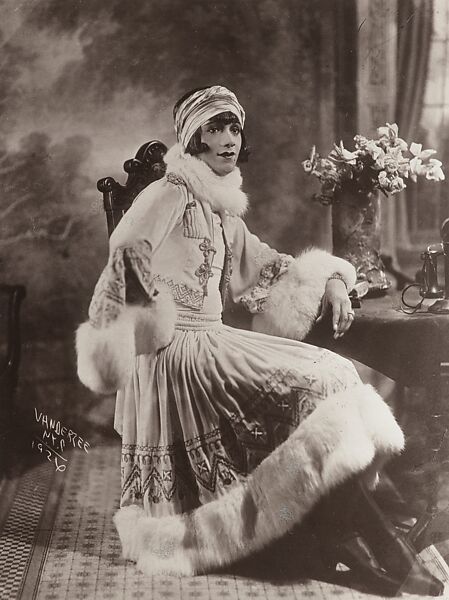
James van der Zee’s portrait ‘Beau of the Ball’ 1926. van der Zee was a prolific and very famous photographer of the Harlem Renaissance (and following decades).


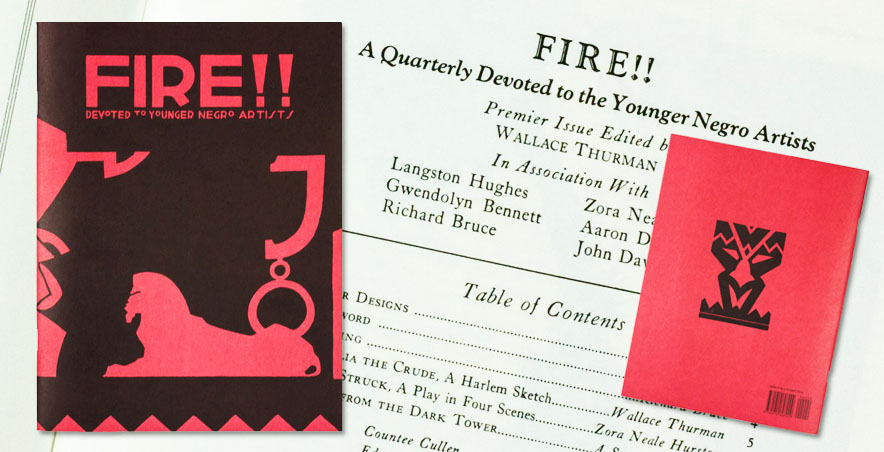
The magazine ‘Fire!!: Devoted to Younger Negro Artists’ included the (super gay) story “Smoke, Lilies, and Jade, A Novel, Part I,” by out queer author Richard Bruce Nugent in its only issue (1926). Wallace Thurman, another out queer man also published a piece in the magazine. As did Langston Hughs (who was sexually ambiguous). This magazine featured the hot and the new of the younger generation of Harlem Renassaisance artists, who called themselves the ‘Niggerati’. The name was designed to shock. You can read the magazine here.

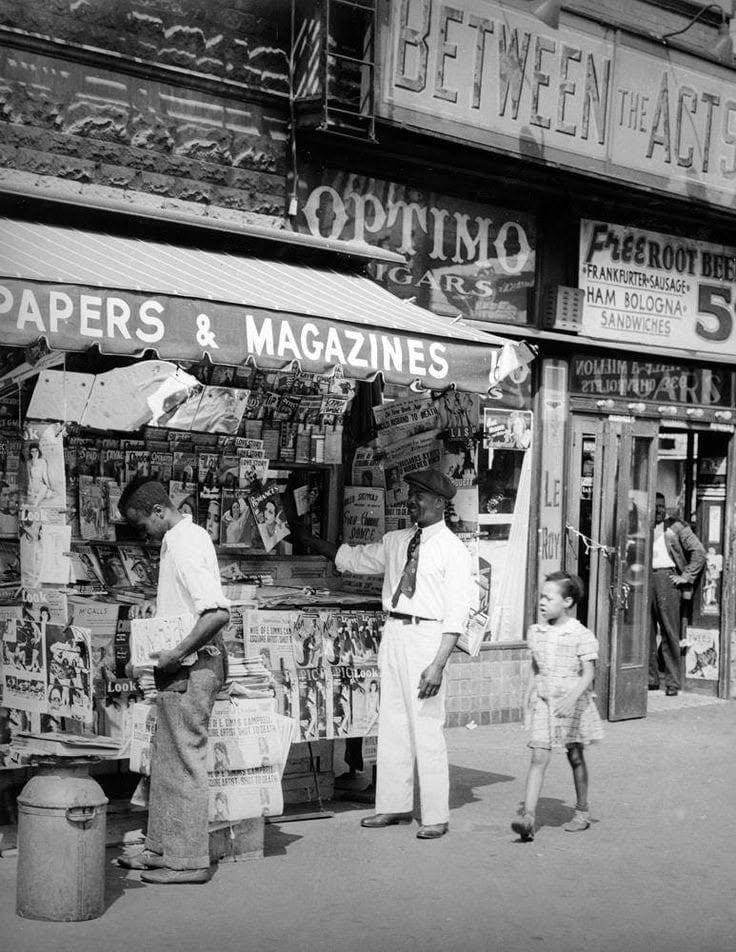
Sid Grossman 1939 Harlem News stand

Footage of the Silent Parade, 28 March 1917.
The protest was a collaboration between a number of civic and political groups including NAACP, church groups, etc, and it was explicitly designed to call attention to the lynchings in the south.
This is the important part: Black southerners didn’t just ‘flee north’. They went north, got organised, and got out on the fucking street in the thousands.
Lynching was not criminalised in the US until 2022. Lynchings of Black Americans continue today.

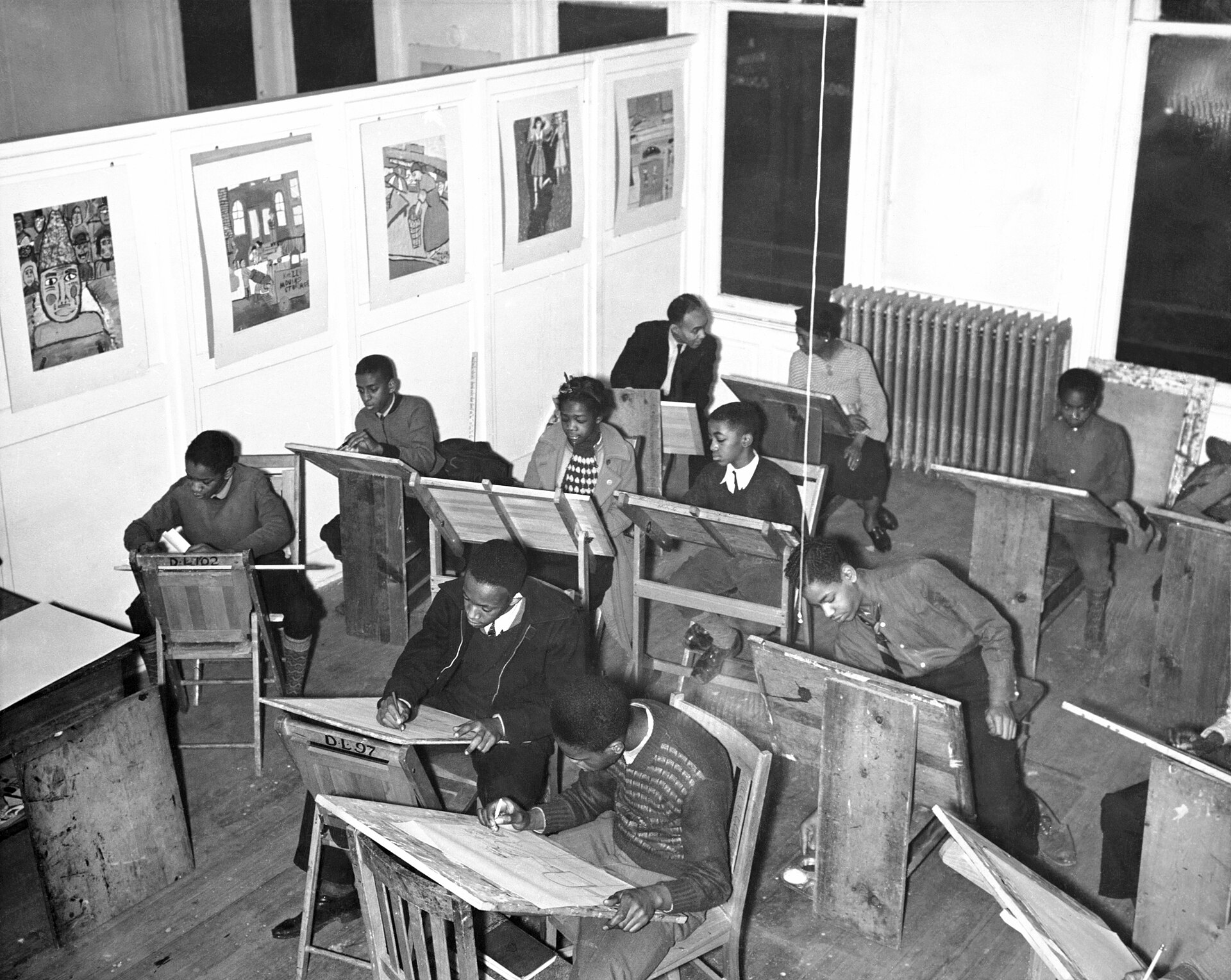
Harlem Community Arts Center 1939

The Harlem Community Arts Center was founded in 1937, and funded by the WPA. It was run by Augusta Savage and then Gwendolyn Bennett. 70,592 people attended activities at the center in its first 16 months. Why so many? I haven’t looked up the facts on that yet (some of the links are broken and I’m worried the sources have been purged by the Trump govt). But it’s no doubt a combination of a very crowded neighbourhood, the high profile of the center and its members, a multicultural staff and membership, services for kids and adults, and just a big old interest in the arts and culture in Harlem itself. Harlem folk like a show, I guess.

I am excited about Harlem Renaissance again because I’ve just listened to this podcast: Harlem is Everywhere. It’s very accessible, and gives lots of good info, all in shortish episodes.

I also saw this film, ‘once upon a time in harlem’ at the SFF this weekend.
I spent quite a bit of that film with my mouth hanging open. The photographs I’d shown in my film talk the other day were taken by the man on the screen, James van der Zee, talking about living in Harlem in the 20s and 30s.
And there’s Eubie Blake talking about writing Shuffle Along with Noble Sissle. And there’s NOBLE SISSLE TALKING ABOUT WRITING THE PLAY AND I NEARLY EXPLODE.
This film made it clear how important women and collectivism were to Harlem in the 20s-40s. Black women librarians managing the building where writers like Langston Hughes wrote. Black women organising the parties and dinners and salons where these people got together and talked and argued and thought. Augusta Savage running the Harlem Community Art Center. Iolanthe Sydney, a Black woman renting the ‘Niggerati Manor’ to young radical artists very cheaply because she wanted to support the arts.

African diaspora and language in lindy hop

Odysseus Bailer has recently posted an interesting request on a number of facebook pages and groups. His piece begins”The Phrase “Black Dance”, “Black music and dance”, “Black Culture” is not the same as “Black American Music and Dance”, “Black American Culture”” and continues to make some interesting points.
His key argument (to paraphrase clumsily) is that we should stop staying ‘Black dance’ and start saying ‘Black American dance’ because the dances from African American communities are unique and distinct from the dances created by and in other communities in the African diaspora.

I agree with this.

There have been some really interesting comments by other Black dancers, DJs, and organisers, and I do recommend taking the time to read through all these discussions. Some of the comments are very, very clever. Kenneth Shipp asks us why do we need to specify Black American?

I mean sure, you can make this distinction, but the etymology and history of Black / Negro in Western culture directly points to Black American culture as a direct line to enslavement (to mark a difference from African nations and parts of the diaspora) and marks cultural progress (like when Washington and DuBois argued for capitalizing Negro, and various popular changes through the centuries, like Afro vs African).

My question, given this history: what would functionally change if we explicitly said Black American?

One of the other really interesting comments is along the lines of ‘I don’t think of myself as African American… I am Black, or Black American’. A few people made this comment. I thought this was super interesting to see. And it’s a sentiment I’ve heard echoed in the Teaching Hard History podcast: the speakers are very much invested in the idea of a United States of America that is their country as well. It’s quite different to the discussions by Aboriginal Australians who actively reject the idea of a single country ‘Australia’. But I guess that’s one of the key differences between First Nations people’s sense of nation and belonging and Black American sense of nation. And my own racism is indubitably coming out there, if I just assume that these two very different groups of people would think about nation in the same way! Shame on me!

A lot of white lindy hoppers really like to draw that ‘lindy hop family tree’ as rooted in Africa, and to insist on that connection with Africa. I say ‘Africa’ deliberately, as I’ve seen white dancers argue for learning all sorts of dances from different African countries and traditions, rather than from the West African nations that lost people to white kidnappers and slavery. It seems odd to me to imply that ‘any African dance’ will do. It makes the cultural distinctions between African countries disappear; it makes Africa that ‘dark continent’ all over again.
But I’m not 100% sure what I think about this right now. I need to think more about it. Especially since we can definitely argue that lindy hop might have more in common with dances of…. say, Uganda, than the folk dances of Scotland!

Anyway, of course I chimed in. One thing I saw in some white people’s comments was what seems to be a misunderstanding of the concept of the African diaspora. So I wrote a stupid long comment. I’ve put it here, because writing it helped me put together what I’ve learn listening to the excellent Teaching Hard History Podcast, reading up about 70s and 80s lindy hop, and thinking about the different experiences of Black American and Black British lindy hoppers in that period. And how the Black women on both sides of the Atlantic have been quietly erased from modern lindy hop history.

I’m going to preface this comment with explaining who I am. When we pretend we are writing objectively, we make our own privilege disappear. It’s important that I always remember the privilege I was born with, and to some extent recreate every day. Despite my best efforts.

I am a white, middle class, able bodied woman living in a big city (Sydney/Warane) in Australia. I was born in England, and emigrated here with my family in 1982, after living in Fiji. I chose to become an Australian citizen in the mid 1990s, and have dual British/Australian citizenship. I think I’m the only one in my family who is (my brother and parents are permanent residents with British citizenship). My family chose to come to Australia, and our emigration was relatively easy because we are white, middle class, and British. You could say that we are part of a British diaspora, though we have always lived in British colonies (my father is Welsh and lived in Gibraltar and Kenya as a child and teen).

Friends (especially white people like me) reading along who aren’t familiar with the phrase ‘African diaspora’:
In really simple terms, it means people who are from or descended from people born in Africa. It’s usually applied to these people who no longer live in Africa. So those people can live anywhere in the world.

First important thing: there are 54 African countries, each has distinct languages and cultures. They were/are politically and culturally sophisticated with impressive architecture, systems of mathematics and philosophy, complex crafts and technologies, some of the oldest libraries in the world, etc etc. In many cases colonisation by European nations fucked shit up real bad.

Second important thing: people of African descent living outside Africa
a) may have chosen to emigrate,
b) may be refugees who didn’t want to leave but had to flee,
c) my be or have been enslaved people who were kidnapped and transported to another country,
d) may be the descended from enslaved people.

Third important thing: We can’t talk about the African diaspora without talking about European colonialism and slavery.

The empires of countries like England, Spain, Netherlands, etc were dependent on the labour of enslaved people. Slavery still happens today in many countries. The economic power of countries like England today were built on slavery. White people like me, who were born in England and live in Australia still benefit from the enslaving, trafficking, and labour of African people during the past few centuries. My country is rich because of slavery in the British empire.

Slavery involves:
a) humans being treated as objects to be bought and sold;
b) the labour of these people (ie unpaid work);
c) and usually involves racism: believing that humans can be divided up into ‘races’, and that some of these races are less advanced than others. Sometimes people are enslaved because they belong to a different caste, religion, or ethnic group. Note: the idea of ‘race’ is a white concept. The idea of being ‘half-caste’, etc, is a white concept invented to justify enslaving some people and not others.

When we talk about the USA (where lindy hop began), we have to talk about the way people from mostly west African countries were kidnapped and transported to then North American colon(ies) by white traders. The USA was built on the labour of enslaved people and the oppression (and enslaving) of Indigenous people who were there first. After emancipation (the ‘ending’ of slavery in the USA), there were African Americans in the Freedom Movement who explored the idea of ‘returning’ to Africa. That’s a whole other topic, and worth researching.

But the USA is also home to Africans who came to the country voluntarily in the last century or so. Things get more complicated when we talk about people of African descent who migrated to the USA voluntarily, but were descended from Africans who were enslaved in other countries. eg Haitians. If you’re a fan of hip hop, the Fugees are a good example of artists of Haitian descent who were born in Haiti, or born in the USA to Haitian parents. Haiti was a Spanish colony, and African people were kidnapped and transported to Haiti as a source of labour.

There are also people of African descent living throughout Europe (eg France is home to the largest population of people of African descent). Some of them are the descendants of free Africans who travelled to Europe at some point in the last few centuries. Some are descendants of Africans enslaved by Europeans and transported to Europe.
Some of them migrated to Europe during the 20th century from European colonies which had enslaved populations of African people.
When we talk about the ‘Windrush generation’ of Black British people, we are talking about a generation of people who emigrated to the UK on boats like the Windrush from the 1940s. As citizens of the British colonies in the Caribbean (called the ‘British West Indies’ at the time), they were entitled to British citizenship, and came to the UK for work. They were often descendants of African people enslaved by the British and transported to the Caribbean.

And of course, there are African migrants in lots of other countries. eg Australia has more African migrants than African American migrants. Some of these are refugees who’d like to return to their homelands, some are migrants who’d like to stay. My country has always been really shit in the way it treats non-white migrants.
Australia is also home to people who are descended from people who were enslaved in other countries (eg Indians who were enslaved in Fiji by the British), Pacific Islanders who were kidnapped by white men and transported to Australia to work on farms, and Aboriginal and Torres Strait Islander people who were enslaved by white farmers and families in towns.

As you can see, people of the African diaspora have some things in common, but the African experience in France in the 1980s is not the same as the African experience in the USA in the 1700s. It’s important to know and remember these differences. Just as Europe is made up of lots of cultures and people, Africa, and the African diaspora is made of of lots of cultures and people.

Lindy hop is the product of African American cultures and experiences.

The word ‘Black’ became a word of power for African Americans in the Freedom Movement in the 1960s. It is a word of pride and political identity.
It’s also used by people of African descent in other countries in the same way: a political and cultural identity.
It’s also used by Aboriginal and Torres Strait Islander people in Australia (though spelt ‘Blak’), in much the same way.
And it’s used by people of other cultures as a physical descriptor (eg having black skin) or political identity. This is where things get more complicated and culturally specific, so I’ll leave it there.

I think that Odysseus is asking that when we teach lindy hop (a Black American/African American dance) we refine our use of the phrase ‘Black’ with the word ‘American’, to distinguish the African American experience from the experience of people of the African diaspora in other countries.

The term ‘Black’ has been problematic in the past, and it has been a word of power in other moments. When I speak to dance friends today, I try to use the term they prefer. African American, Black, Black American. It’s just polite.

NB I say ‘Freedom Movement’ instead of ‘Civil Rights Movement’ after hearing Ruby Sales explaining the difference.

I’ve just listened to this episode of Teaching Hard History, “Listen, Look and Learn: Using Primary Sources to Teach the Freedom Struggle” and it’s fantastic.

If you follow the SNCC Digital Gateway to the Black Power entry, you can learn about the way the word ‘Black’ was used during the 1960s in an empowering way.

If you’re researching dance and music history of your local area, this ep of Teaching Hard History is an invaluable resource. They talk about how to use primary sources (eg oral histories and interviews), how to record them, how to archive them.

It’s been really cool to listen to this podcast, then think about the discussions people are having about the role of Frankie Manning in lindy hop history this week. I have been thinking more lately that the latest generation of white lindy hoppers (eg people who started in the last ten years) haven’t been exposed to all the oral histories (ie stories told by OGs) that I have through the last 30 years. Oral histories are really powerful because they personalise history. And a story well told is particularly powerful.

NB I use the word ‘white’ rather than ‘European’, because whiteness is a political and ideological concept, and ‘European’ has more to do with geography. I also think that ‘European’ is problematic because there are plenty of European peoples who experience extreme disadvantage and oppression (hello, Ukraine).

When we talk about whiteness in the context of slavery and racism, we give ourselves a pathway to deconstructing the power and privilege of people who may have pale skin, but more importantly, have economic and social power.

Community vibes – how do you grow a crew?

Ah, that most perennial of questions.

I’ve recently started teaching lindy hop again, and while mostly it’s been a lot easier than when I first set up a business and class, there are the same usual challenges: how to get students to stay for the whole block, how to be welcoming without making it weird, how to balance the work with the fun for me.
I actually feel ok about the teaching itself, and the marketing and promotion side of things. The interesting bit for me is figuring out where I, my class, and the peeps in my class fit into the bigger local scene. How and when do I look at running social dancing? How do I stop my social dancing being some weird stand alone thing instead of a natural progression from classes? How do I make the right conditions for community?

Or as I said to my friend, it’s like I’m asking myself, “How do I make friends?!” I am not a shy person. I should know this. But I’m curious to see how other people do this.

What are the things about your club/class/party/crew that make it fun and somewhere people want to be?

I know from experience that the way to build a cohort and a little group of peeps is to use my social skills so they can make friends. Welcome everyone individually. Learn names. Ask them about themselves. Drinks and snacks after classes, time to talk and make friends in class. Spend more time on making connections with the students who come to class than with trying to sell classes to people who haven’t come.

Ideally, I’d like to just have them all get into trying out ‘social dancing’ ie, just dancing, in the space right after class. And also taking time to eat snacks (the snack table is where people chat), have a drink, get to know each other. The dancing part is lovely, but the getting to know each other part is essential.

Anyway, Julia Loving just put me onto this fantastic panel session they did in NY in 2019. They spend a bunch of time in the question time talking about how to get young folk, especially young Black folk into lindy hop. Once again, white girl me should be listening to Black elders to learn. The things I see and hear them say:

  • Providing food, Ronald Jones says. A basket of chicken for some kids in a basement. A buffet dinner in the room where the panel is held. This makes complete cultural sense to me from my family and background.
  • Respect the young people, Ronald says. Don’t treat them like babies or fools. Treat them like thinking, responsible people.
  • If you’re a young person, sit with the elders, Mickey Davidson demonstrates. Listen to them, learn from them, earn their respect. ie show respect. And you’ll be gradually included.
  • Play music at the party.
  • Make your gig physically accessible (ie not way over the outside of town).
  • Make some jokes, laugh at some jokes.
  • If someone’s talking to you (whether it’s in a mic on a stage or at the snack table), make the active listening noises: hello! Oh yeah! Whaat? The Black audience listening to the panel session demonstrate. We don’t like a silent, stiff crowd, right?

UQ Press, nostalgia, and writing

This is an important read. I care about UQP because I did my undergrad, honours, and masters research degree at UQ, and UQP was a big part of our day to day. Our teachers and colleagues were published there, we worked there, and we hoped to be published there.

When I was a student at UQ, the English department was politically active. That meant that staff and students were involved in strikes and rallies (on campus and off), we had an active postgraduate group (of which I was on the exec for a couple of years), and staff came to hear postgraduates present papers on their research. And they engaged with them. All these people were published authors, experienced speakers, or aspiring authors and speakers. To participate in public ‘intellectualism’ was an expected part of academic life for all of us. And it was fun.

And when I say politically active, I mean that my colleagues were involved in social justice issues. Sure, there were political party memberships, but group membership was more effectively grounded in unions and grass root community action groups. As postgrads we worked for and published in feminist journals like Hecate, we created our own feminist reading and writing groups, and I dealt with my first report of sexual harassment. Because I was surrounded by active feminist academics, I knew where I should start. That time truly shaped me, as a feminist and activist, but also as a thinker and writer in community.

Because we were in the university in the early 1990s, the years immediately after Bjelke-Peterson’s reign of corruption and suppression (1968-1987), we were all personally acquainted with the reality of oppressive and corrupt governments. We’d either been beaten up by the cops, or knew someone who had been. We knew which GPs would help you get a safe abortion. And we knew where to get a drink after 6pm on a weekday.

We took rallies and protests seriously. Writing about power and community was central to the work of many of us. Even if we’d wanted to stay quietly busy in middle class academia, Joh’s government had reached all of us in one way or another. We’d have laughed about the phrase ‘social cohesion’, because one of the things we did best was argue and disagree. But I also remember two of the fiercest combatants crying and embracing each other when we had news of a student’s death.

The Queensland government’s recent outlawing of the phrase ‘from the river to the sea’ smells like the dark old days of the deep north. Not because it’s ostensibly about banning hate speech, but because it is clearly and actually about banning criticism of the government, and of genocide. It seems ridiculous to write that a government would outlaw criticism of genocide. But that is the white Queensland way, with its long and bitter history of Blak massacre and cultural oppression.

Jazz Money is an Aboriginal Australian, and halting publication of her book because of her position on colonial genocide is really just another version of familiar Queensland policy. The decline of UQP as a site (or the idea of a site) for political expression and exploration makes me sad. While it was the organ of a white, patriarchal institution, it still published people who were not white, not straight, and not at all interested in supporting patriarchy. I guess those days are over.

AI, slavery, and being annoying

The thing about the environmental impact of AI data centers (they have huge electricity and water requirements), is that there were already big issues with data centers before AI became a popular media topic. ‘AI’ (as a topic) just pushed it to the public consciousness.
‘AI’ is really just bigger, smarter computers. And we’ve been heading towards bigger, smarter computers for decades.

It’s easy to hate on AI for killing jobs for creatives, or for making the world a little more boring. But the thing that I’m most concerned about is the way the writing that AI does (for university essays or newspapers or whatevs) is not insightful or brilliant.

‘AI’ is really just a computer reading a heap of things, observing patterns, and then making some informed guesses about the right answers. It doesn’t make intuitive leaps, it’s not creative, and it’s not thinking critically. So you don’t get new ideas. It could be useful for doing things like generating a literature review, but it’s not going to take the ideas from that literature review and apply it to real world situations or real people.

I read an article recently where they were discussing a study on the types of writing AI generated essays produce (sorry I can’t remember the reference). They found that the sort of writing produced by AI tended to preserve the status quo. It didn’t do anything radical, it didn’t have new ideas, it didn’t critically engage with the ideas in the material it assessed.

In other words (speaking as a feminist cultural studies scholar), the students using AI to write their essays are not going to go on and fucking fight the man. Their thinking and writing will not be radical.

Not a huge surprise for feminists who’ve been critical of university-based gender studies. Masters tools, masters house and all that.
The other issue that a lot of us who have been doing creative work for a job (copywriters!) is that the work we do will be done by computers. Again, not a new idea. But if we pull back a bit and look at the bigger cultural landscape, we can see that this change in labour practices is happening all over the place. Companies like Amazon have done a very good job of union busting, destroying collectivism, and reducing workers to slaves. I wish it was an exaggeration.

Modern day slavery is something women and people of colour experience in various contexts – sex work, garment manufacturing, and most tellingly, prison work.

That last one has been bothering me this week. ICE rampaging through fields and factories and kidnapping workers to incarcerate them is one very effective way of developing an enslaved workforce. Prison detainees work for no pay, or for a stunningly low rate. Prisons are increasingly privately run.

All of this has been bothering me since I listened to the first two episodes of the Teaching Hard History podcast. These eps look at the role of slavery in the civil war. I was surprised to hear that many white Americans assume that the civil war was about states’ rights. I’d just figured it was about the north and south arguing about ending slavery. These two eps make it super clear that it’s about the role of slavery in the pre civil war economy. Enslaved people = free labour. Under the Fugitive Slave Act of 1850, people were paid if they ‘captured’ ‘escaped’ slaves. This Law was passed by the US congress, and was one of those issues contributing to the ‘states’ rights’ arguments.

It gets a bit complicated (the podcast is easy to understand though), but it helps understand how ICE and the Trump’s determination to kidnap Black and brown people contributes to an economy which has _always_ involved slavery (from ridiculously low basic wages to indenture and the powers of businesses like Amazon).

Reassuringly (and this is why we teach history), the introduction of the Fugitive Slave Act was met by very angry crowds of citizens. And as the podcast points out, the civil war and the ending of slavery wasn’t something that was done ‘for’ or ‘to’ Black Americans. It was something they actively participated in. In other words: white Americans, you need to pay attention to Black history if you want to fight this shit.

And Australia? Our own history of slavery (from Pacific Islanders in cane fields to Aboriginal and Torres Strait Islanders workers in white homes and on white farms) makes it clear that we white people are ok with slavery.

Incidentally (and to bring me back to my original point), the types of connections I’m making here (looking at social and economic and cultural patterns) to critique the uses of power and technology are things a computer can’t do. So of course it makes sense for a company like Amazon to embrace AI technology.

It’s important to pay attention to the details, and to keep track of those niggling little feelings you have that something isn’t quite adding up. Ask questions. Be annoying.

The revivalist narrative will not die.

I keep coming across white organisations telling a ‘history’ of lindy hop that gives ‘the revival’ pride of place. ie white people claiming the modern lindy hop world as their own altruistic work.
So the term ‘revival’ is problematic because it implies that lindy hop was dead (replaced by rock and roll and/or bebop) before white people came along and brought it back to life. In this narrative, white people are heroes for saving ‘this wonderful dance’ and bringing it back to life.

Black people are totally absent from this story, except as venerable elders who teach eager white people. The white people are also credited with bringing these elders ‘out of retirement’ and back to the dance floor.
It’s all very problematic.

1. Lindy hop wasn’t dead. There’s a whole family of Black social partner dances that are thriving (Tena Morales’ event the International Swing Dance Championships showcases them every year, but white people don’t go to that and aren’t involved, so it must not exist).

2. Because it wasn’t dead, it didn’t need reviving. Declaring lindy hop ‘terra nullius’ (ie no people living in this territory) was white people giving themselves permission to take lindy hop. So the white people who ‘went looking’ for Black elders were pretty much just out on a bit of a colonial expedition. Just like Captain Cook expanding the British Empire, ‘discovering’ a huge big southern continent (‘Australia’).

3. Those Black elders, like Frankie Manning and Norma Miller and so on were still dancing, but in their families and homes and community spaces. Black spaces, to which white people did not have access. The story told most often about Frankie Manning, that his working in the post office was somehow less important or lower status than his dance career is classist and racist. The US Postal Service has a long history as an important employer and union locus for Black communities. It was good, solid work. Norma, of course, was running a dance business (managing troupes), Mama Lou Parkes was still dancing professionally… and so on.

4. The Black dancers who were involved in lindy hop in the 1980s tend to disappear in these revivalist narratives. Angela Andrew and other Black women have lots to say about the number of Black dancers out there lindy hopping in the 1980s, but they somehow disappear when white people tell the stories.

5. The white ‘ownership’ (appropriation) of Black lindy hop in that 1980s period is not only about selling places in classes and workshops (and thereby ‘creating community’ via economic relationships), but also about the exploitation of Black dancers working for white troupe managers (we won’t go into some of the more troubling accounts from that period).

RE the USPS:
I came across references to the importance of the postal service in Hidden Figures and the way it provided a pathway to the space program for Black women (SUCH a good book).

There’s also Philip F. Rubio’s book ‘There’s Always Work at the Post Office: African American Postal Workers and the Fight for Jobs, Justice, and Equality’ (which I haven’t read, but have read _about_.
This all makes the US govt’s cuts to the USPS a matter of institutional racism and white supremacy, rather than a push for smaller government generally (though I’d argue the two are the same thing).

The more I learn about the USPS as a site for unionising, civil rights activism and Black community empowerment, the more troubled I am by white histories of lindy hop that devalue the USPS in Manning’s life. If the civil rights elements of this workplace are ignored, then white ‘historians’ can continue with their bullshit about ‘Frankie never talked about racism in lindy hop, so it didn’t happen’. I’d say that Frankie, as with any other Black worker in America then and now, was very much aware of racism in the entertainment industry and in America generally, and was very careful about what he said to white people about it, and when.

As with the workers who continue to go back to places like Herrang, despite unsafe or inequitable working environments, when you don’t have the financial and personal safety of white privilege, you have fewer choices about the work you can do. And teaching middle class white kids to lindy hop might have suited Manning.

Developing a practical covid plan: What if someone won’t do x, y, or z?

Today I was talking to someone completely unconnected to the dance world, and they asked what I’d been doing lately. I mentioned that I’d been been working on a covid policy, and it was really interesting because it was a way to talk about flatter power structures (and fighting The Man). I wanted to do more than just present a bunch of rules and then enforce them authoritarian style.
I mentioned that masking is a good option, but it’s rubbish for dancing in.
Then I mentioned that vaccination is really important, but that only 69% of NSW people have had more than two covid vaccinations.

My friend had been active listening along, but when we go to this point, they were clearly quite flushed and emotional. So I stopped yapping. They told me that they were really tired of the covid stuff, and had two vaccinations, but that “Other people can get more.” They went on to talk about how the lockdowns and government policies had really exhausted them, and the lack of gov support had taken a toll on their business. Their major concern was with the way the vaccines are produced by corporations of dubious ethics and morality.

I nodded and did active listening. They were upset and needed to talk about these things. And these are reasonable concerns: lack of support from a government that enforced unjust limits and penalties does not inspire compliance. And as Aboriginal communities can explain, an unjust government cannot be trusted with your medical data, let alone your body in a medical setting. Nor can we excuse the way big corporations in the medical industry have conducted itself in the past, or in the production and dissemination of vaccines (particularly in developing countries).

I didn’t once say that my friend should get a vaccination. That’s not cool; we don’t make medical decisions for other people like that.

As we continued talking, I shifted things away from vaccination to the frustrations with the government policies. They had interesting things to say about that. At one point I mentioned that the whole point of this particular covid policy was to do good social activism. And part of that was discussing equity. So if we have a ‘must test’ policy, we also need to make RATs freely available, because they’re expensive, and they’re a barrier to participation for people who can’t afford them (and who are also often in those high-risk workplaces). Then I pointed out that if I was going to do a policy that was just, I had to source free masks and RATs. And I explained how I’d done that.

It was interesting to see friend’s reaction to this information. Getting free stuff from The Man is always a pleasure, and it seemed to delight my friend.

I wonder if masks would get the same response? Perhaps not, as wearing them is a lot less fun than getting a covid test :D :D

But this conversation made some things very clear to me. If we simply make rules and then penalise people for not following them, we destroy their trust in us, and we make them pretty bloody shitty. A better alternative is to ‘call in’ (rather than ‘calling out’), and make it easy for people to make their own educated decisions about their health.
If we want people to do something (or things), then we can do better than just telling them what to do. We can provide information, and then let them decide what to do with their own bodies.
In the case of something like a pandemic, we can frame this discussion as one of mutual care, where you get vaccinated, wear a mask, wash your hands, or whatever not necessarily for your own benefit, but for the safety of others. And they do the same for you.
This is very effective for people who have a communitarian impulse. But what if they don’t?

As I discovered with my friend, there are other inducements we can offer. Or rather, we can find the side of the issue that appeals to them. We can frame the discussion as one of civil disobedience, or evading punitive rules. Accessing tests can become a mission of getting free shit and evading the capitalist structures of ‘big pharma’. Similarly, making or accessing masks that work as a billboard for a person’s politics (much like a Tshirt) can be a way of encouraging people to wear a mask.

And we were both on board with the idea that not washing your hands after you use the bathroom is fucking rotten. :D :D

So when it comes to communicating your policy, it helps to:

  • Use language, imagery, and framing that appeals to their values (be they communitarian, radical feminist socialist, or anarchist), and
  • Use a variety of approaches to reach a variety of people.

The dance world, of course, is made up of a whole mass of interconnected hyper-local communities that are part of an international, intercultural global community. Even a single local scene in one city might be comprised of a few smaller micro-communities, each centered on a dance school, a particular social night, or a performance troupe. Each of these has its own specific culture and social norms. And we know what each of these are like, because we are part of them. After all, it’s hard to be a lindy hopper if you don’t actually lindy hop.

If we are actually observant humans, we understand that our own experience of a group or community is not the same as someone else’s. For example, you might have loved learning to swing out using lots of technical jargon, but your friend might have loved learning-by-doing. And you might love the late night parties that start at midnight because you’re single with no kids, but your friend might prefer afternoon dances that are child-friendly, because they’re a parent.

We might be aiming for diversity in many places, but we often just don’t get there. Students tend to be people ‘like’ their teachers (same demographics, same sense of humour, same values, etc). Performance troupes tend to be a similar age, physical fitness, and schedule. Paying for classes excludes people on low-incomes, so people in classes have disposable incomes. And so on. It’s actually good that a single scene is made up of lots of different types of mini-groups. So long as they can all come together with kindness and a generosity of spirit for things like bigger parties, events, and discussions.

This is why I think it’s very, very important for each of these micro-groups to develop their own covid policies, ones that speak the right language, carry the right values, and ultimately change people’s behaviour. Or in the case of my own commitment to ‘radical care’, a policy that actively contributes to social justice and fighting the fucking man.

Some facts about masks

The one good thing about respirator masks (P2 or N95) is that they can be used more than once, provided you handle them carefully (no touchy!) and let them dry out properly before re-using.
If you’re curious, a well-fitted surgical mask will do in a pinch, but they cannot be re-used, and you need to fit it properly. Which applies to all masks, really.
And unlike some places in the US, in NSW you can deny entry to people who aren’t wearing masks.

The rules in Victoria are slightly different (check the info site here). They make exception for professional sports people (no, lindy hopper, you are not a professional sports person if you are a student in a class). They do, however, make it clear that if you can’t do social distancing, you’re indoors, and you’re with more than 2 or 3 people, you should mask.

Types of masks is an interesting one. While the science suggests that P2 or N95 masks (fitted and worn correctly) are the only options, we know that most people don’t fit or wear any masks correctly, so no mask is really going to stop the transmission of covid. But we also know that wearing masks can remind people to distance, and can signal to other people that the wearer is concerned about covid.
My personal policy is: mask! Always! indoors and in crowds outdoors, and I always use a P2 or N9, fit them properly and never touch them.

My feeling for a public covid policy, is that we strongly recommend masks (the right types – P2 or N9 and surgical), make them freely available, have influential people (teachers, DJs, performers) model wearing them, but we definitely begin or stop there. We place equal emphasis on vaccination mandates, hygiene, testing regularly, symptom checking, and staying home if you have symptoms, test positive, or are a close contact.

Some facts about RATs and PCR tests
(Please note: this information can change very quickly. It did in the couple of days I was researching this topic! So always double check. And some centers run out of RATs, so double check)

Free RATs were provided by the federal government up until this week. But now the state governments (in Vic and NSW at least) have stepped in to provide them. Free RATs are available to some concession card holders:

Eligible Commonwealth concession card holders can access free rapid antigen tests through the concessional access program. Up to 20 rapid antigen tests are available for free for eligible people living with a disability at state-run testing sites and through Disability Liaison Officers. Eligible people include NDIS participants, disability support pensioners and people with a disability who receive a TAC benefit. Evidence of eligibility, such as an NDIS or TAC statement, is required (source).

Anyone can collect 5 rapid antigen tests (per person) from a COVID-19 testing site in Victoria (source).
In NSW, RATs are free to some concession card holders, and available at neighbourhood centers and NDIS providers. I can’t find information about free RATs for anyone else, though word of mouth suggests you can get them if you ask.

And of course, PCR tests are still free, and available at testing clinics. Though these tests are more reliable than RATs (because they’re conducted by pros, not you with a jumbo q-tip in your bathroom), the results can take up to 48 hours (though they’re usually with you within 24 hours).

Some facts about vaccines
Vaccines are the best way to contain covid at this time, in developed countries like Australia. They prevent you getting really sick, and they stop you spreading the virus to more vulnerable people (because you’re not as sick you don’t blow droplets everywhere as much, and because you’re not sick for as long, you spend less time blowing droplets everywhere).
But they only last for about six months. Which is why we need to get boosters every six months.
If you do catch covid, your immunity only lasts for about three months after your symptoms end (source). Which is why you can get it over and over again in one season.
You can get vaccinated when you’re pregnant or breastfeeding, and it’s recommended. And a note about the magic of breastfeeding: your milk contains antibodies that are given to your babby, giving them immunity! Hoorah for boobs.

Vaccination is free in Australia, and you can get a quick vax from your local chemist, a GP, or a covid center (do check your state’s local vaccination centers, but you can search nationally here.) I got mine at my local chemist. I just walked in and said “Can I get a covid vaccine, please?” and they did it then, and there, then a bit later it was in my digital vaccination certificate on the Services NSW app on my phone. No mess, no fuss.
A practical covid management plan that is socially responsible

I’m currently working on a covid management plan for a dance school. I’m quite enjoying the process.
Here’s the process:

–The Plan–

Restating the org’s values

  • Which helped me understand how and why the org would develop a covid policy, what issues to focus on, and how to implement it,
  • Which ensured we were all on the same page.

Stating the covid plan philosophy

  • In this context, a philosophy is theoretical or ideological model for addressing concrete issues,
  • Which is basically applying the org’s abstract values to a concrete issue (covid),
  • Phrasing the philosophy as a list of clear applications of values to a specific issue (covid)
  • This could be a list of a hundred items, or a list of two.

Developing two goals for the plan

  • These are deliberately limited in scope (ie this isn’t a govt department managing the health of a whole city or state, it’s a small dance school),
  • They are very focussed and practical.

Putting all this into practical actions

  • There are four ‘actions’ which cover four general areas of covid management,
  • These actions can be phrased as ‘guidelines’ (ie covid rules) for the org, but they can also guide procedures.
  • They deliberately limit the scope of the plan to keep it very local and very practical.

So that’s the whole Covid management plan.
From here, I use the plan to develop:

  • Guidelines (or rules)
  • Procedures (eg if a rule is ‘you must provide proof of vaccination’, who does this checking, where do they check, what do they do if someone doesn’t have proof, what constitutes proof, etc etc)
  • Social media strategy to communicate all this, and also to provide information about covid that will encourage people to participate
  • Website materials (eg a public statement of the guidelines)
  • A handbook that contains all the procedures, contact info, covid facts, etc.

–Developing the plan–

At this point I have a first draft, and it’s been to the org’s boss for comment and approval to go ahead and develop it.
After some tweaking, I’ll send it off to the rest of the org (teachers and staff) to get their feedback, impressions, comments, suggestions, etc.
I’ll also do a model for public comment.

This Plan development process, and the plan itself, are guided by:

A key part of this process is an ethos of community strength, and collectivism. My experiences working on sexual harassment in dance has made it clear that top-down solutions are a) not effective, b) burn out the people doing the work, c) maintain existing power structures that _enable_ injustices like sexual harassment. As I learnt working on Melbourne Lindy Exchange (MLX) for years, you need to develop work practices that allow any one person to drop out or take a break at any time. Which is, of course, what flexible, healthy workplaces are all about.

–A final form?–

A key part of this plan is to be agile. It must be able to change and respond to social changes. Covid will change. The community changes.
An Important thing I learnt from working on sexual harassment stuff, is that we can’t just develop a code and leave it at that. That doesn’t work. We need to update it, to change and develop our approach, as we learn more, and as our communities change.
So putting this plan together, I’m assuming that it will need to be changed and updated regularly; I can’t just post it on the website and forget about it. There’ll be feedback from staff about the processes, there’ll be changes in covid, we’ll see things like the development of new vaccines and healthcare strategies.
This means that the Plan itself, and where it lives needs to mutable.
This is a very exciting idea. It’s a lot like lindy hop itself: you have basic structural elements, but it is, fundamentally, about innovation, improvisation, and responding to the needs of its users.

–Why am I doing all this work?–

I have a long history of writing and researching and lecturing, but I am rubbish at presenting my plans and projects in ways that make it easy for the audience to take my work and do their own projects with it.
So I’m deliberately learning how to:

  • Develop a plan
  • Present a plan to stakeholders who have different types of engagement
  • do good community/group consultation and engagement.

I’m also really interested in how social media management can be employed in social justice work, so I’m quite keen on using things like instagram, facebook, etc etc in new and interesting ways. Which, bizarrely (unsurprisingly?) circles back to my doctoral research and academic research, which was all about how small communities use media in unique ways.

–What have I learnt so far?–

One of the most exciting things I’ve learnt so far, is that if a project like this is equitable in design, it actually fights racism, misogyny, homophobia, etc. I think one of the most exciting things about the Camp Jitterbug covid plan, is that it came from the experiences of people of colour, people of a range of genders, people with lived experience doing activist community labour. It’s proof that anti-racist work is good for all of us.

Promoting your dance or jazz music business online

Here are some things I’ve learnt about promoting dance or music related businesses online. I’m not a marketing specialist, but I am a media studies specialist who’s been promoting dance events online for about 15 years now.

You need a website.

You need an email newsletter.

Why?

  • With both of these media, you are the producer broadcasting a message to your readers.
  • Audiences tend to regard these as authoritative sources, unfiltered by social opinion.
  • If a social media platform collapses or moves out of vogue, your data won’t disappear with it.

They don’t need to be fancy. In fact, the simpler the better. A single page website with clear headers and a simple structure is best. A newsletter can be sent out maybe once a month. So long as it’s sent out _consistently_, at the same time each week or month, it’s all good.

What about social media?
Important, but in a different way. Think of your behaviour on social media as your brand (which is the public version of you and your business) interacting with lots of real people and other brands out in public. It’s a way for you to develop personal and professional networks in your community or industry. And social media get used a lot, by a lot of different types of people, of all ages and demographics. Perhaps the best thing about social media, for marketing and advertising, is that it allows you to know who’s seeing your ad, when, and where. Something that was harder to judge before social media. Before social media, a brand used social media to ‘broadcast’ a message. With social media, a brand can interact with audiences in a much more complex way.

Websites are important.
Of the two, the website is most important. If you do a tiny bit of audience research (eg we used a very simple survey to routinely ask all our dance class attendees how they found us), you can see which media are most important. For our dance classes, a ‘google search’ accounted for 90% of our attendance. Even if they saw a post on facebook first, they still used a search engine to actually get them to class (and make the sale).

This is where we talk about SEO. Search Engine Optimisation. It’s not magic, it just means ‘make it easy for search engines like google to find your website’. We know a lot of things about google. We know that when it indexes your website, it pays attention to the words you use. ie it ‘reads’ your code. And google tells you how to make it easier for their search engine to find your site.

What should your website include?

  • Your name. The name you want people to use when they announce you over a microphone or list you on a program.
  • Your contact details. A phone number, and an email address. Right at the top. And in the footer too. Make it really easy for busy bookers, festival programmers, and prospective clients to find you. If someone’s prepared to pick up the phone to talk to you, they want information quickly, and they’re close to making a decision.
  • Some useful key words. What do you do? Dance teacher? Then you need ‘dance teacher’ right at the top of your page. Are you a lindy hopper? A jazz musician? Do you run weekly balboa classes? Then say so, right there in text on the page. Make it easy for google to find you when your audience does a google search.

Pictures?
Most importantly, don’t hide information away in images. Search engines like google can’t ‘find’ your information if it’s hidden in an image. All google knows about your lovely instagram graphic is that it’s a .jpg file, 1080px x 1080px, created on 2 January 2022. Even more importantly, people who use screen readers can’t find your information if it’s locked inside an image.

Do use photos on your website or newsletter, because they look nice, and it’s easier to sell a product if people know what it looks like.

Don’t hide information in an image.
Each image should have a ‘title’ tag, and ‘alternative’ text (‘alt’ text) to that tag. If you’re writing your own website code, that’s easy to do. You just add alt=”the information from your image” to the image element. Most website building tools (like squarespace) and newsletter tools (like mailchimp) offer you the option to add alt text as well. Yay!

As an example, this little graphic is very effective for instagram. It has all the information we need – there’s a party, when and where it’s on, and bring cake!

But without alt text, all your web browser knows is that this is an image, 812px x 812px, called ‘Screen-Shot-2022-04-06-at-2.30.41-pm.png’. No one will come to your party.
If you add alt text like “party time! Monday 3pm, 11 Streetname St, Bring cake!”, then a google search will be able to find the information and serve it up as a result in a google search.

What about a newsletter?
Don’t underestimate the value of a newsletter. People actively choose to sign up for your newsletter, which is a way of signalling to you ‘I am interested enough in you and your product to give you access to my inbox’.

Newsletters give you lots of useful information about your subscribers as well. How many people click on links? Or open the email at all? How many unsubscribe? How many ‘bounce’? All these analytics can help you improve your newsletter: which subject lines convinced people to open the email? Which calls to action in your newsletter got a response?

If you use a newsletter service like mailchimp (and you really should. For privacy, security, efficacy, and ease), you often have the option of displaying an archive of your past emails. Each of these past emails is another tool for improving your SEO: another hundred or thousand times a search engine will read your name on the internet and add that page to its index.

Most of all, a newsletter lets you speak directly to a group of people who are even just a little bit interested in you and what you do. Gold!

Take this seriously
If you’re going to stand up on stage and play, or run a class for people to learn to dance, you have to let people know. Even if your business runs mostly via word of mouth, having a solid website can work just like a nice business card. Something that means a lot more in a world where most people have a smartphone in their pocket (or hand!)

If you need a hand with this stuff, drop me a line I can give you some tips. For a very reasonable rate :D