Here I am throwing one ‘feminist ally’ at another ‘feminist ally’ and making a bit pile of sooking manbaby mash.
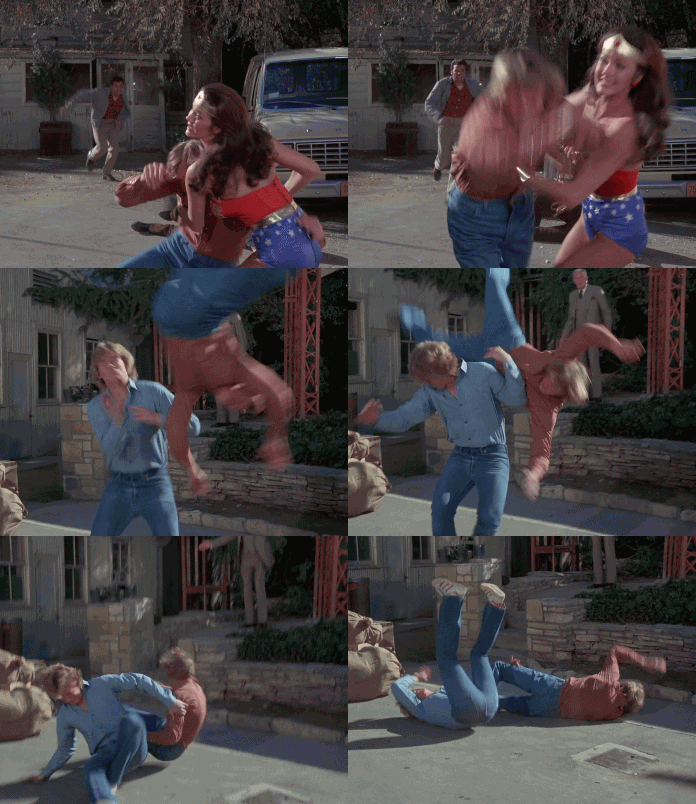
(in the background you can see an old white dood throwing up his hands in disbelief, and a black guy coming to help me)

Here I am throwing one ‘feminist ally’ at another ‘feminist ally’ and making a bit pile of sooking manbaby mash.
(in the background you can see an old white dood throwing up his hands in disbelief, and a black guy coming to help me)
I keep leaving facebook discussion groups that _say_ they’re all about being feminists in lindy hop, but are _actually_ all about white straight blues dancing polygamous Mens Rights Activists.
Where all the _actual_ femmo stroppos at?
Honestly, I have no time for men who want to mansplain reverse sexism at me. It’s not real. There, we’re done. Now let’s talk about something else.
My previous post led to this discussion on the facey, which really caught my interest. I’ve quoted other people without their permission, so do let me know if you want it deleted, you peeps.
Hetty Kate (Tues 7 April 4pm)
That’s quite a rant, however a few nice pics, a nice video, a schtick, a costume and a cute name doesn’t mean you’re actually any good. Though it does make a bookers job easier.
Sam (Tues 7 April 4.16pm)
It’s a mega rant. Having those things does make a booker’s job easier (and a dance event organiser’s – which is a slightly different role), which I guess is my point. I guess with all these things you can fake it til you make it, right?But I actually feel quite sad when I come across fantastic musicians (especially the older ones) who don’t have any online presence . Makes it really hard for me to discover them, or chase them down after a gig. Maybe I should start a side business – ‘Dodgy Sam’s Dodgy Websites for Jazzniks.’
Hetty Kate (Tues 7 april 4.17pm)
haha, well the older musicians came up in a different environment..Hetty Kate
lucky bastards!
Sam (Tues 7 April 4.24pm)
Totes. But they gotta get on it, if they want to develop a new (or continuing) audience. It’s a shame, because the older doods have mad skills that many younger musicians could really benefit from working with. The dance scene is particularly respectful of elders, and we really dig seeing younger and older people working together.
Hetty Kate (Tues 7 April 4:24pm)
agreed!!
Bruce (Tues 7 April 4:46pm)
You can have the best product in the world, but if its not marketed properly no one will know about it!
Sam (Tues 7 April 5:09pm)
And I guess that’s the difference between the very olden jazz days and now. In those days bands travelled endlessly, and were gigging endlessly, so the word of mouth talk was strong. And there were magazines and general news stories (because this was mainstream music then) talking up bands and musicians all the time.
But today there are fewer opportunities for jazz bands and musicians, fewer gigs, and small audiences… though part of me thinks that olden days’ musicians had it a bit easier because they were pitching to the mainstream (ie a bigger market), and modern day musicians need to work a bit harder to convince people to try something new (old). But there is the internet, which makes reaching niche audiences easier.Now I want to post a link to that fascinating post someone hooked me up with a while ago (I think it was Andrew?), where Steve Albini argues that the internet is good for niche/indy music (Steve Albini on the surprisingly sturdy state of the music industry – in full (Monday 17 November 2014)
I’m not 100% convinced by his largely personal anecdotes, but it’s an interesting provocation. The internet is an opportunity for niche music and musicians. How else could I get hooked on the Dry Throat Fellows?…although playing and recording music professional has always been about networks. I’m reminded of a line I read in an article about Black Swan Records. Though they were explicitly designed to record and sell to black artists and audiences, they actually sold in the Asia Pacific region, because segregation happened in our part of the world too.
So getting your product to the right market – getting your music to the right ears – is still a matter of having a savvy promoter with the right contacts and a clever understanding of who might dig what you do. John Hammond, anyone?
I am (obviously) interested in the way specific communities of interest use digital media. That was my doctoral research. Now I’m thinking about jazz musicians and how they use (or don’t use) digital media. I guess I’m especially fascinated by the tension between ‘pre-digital’ media and cultural practices operating in a ‘digital’ world.
This piece is really a companion piece to Make it Easy for me to hire your band, where I talk about the sorts of things I need bands to have to make my job easier. Basically, they need an online presence and a name. Or, in other words, they need to make it possible for me to a) find them, b) hire them, and c) promote them. And I buy a lot of music, because I’m also a DJ.
I don’t mind (I quite like) hunting down bands and musicians, but I have only limited time and resources.
In this post, I talk explicitly about how I find new music by musicians today.
Jeff James asked in
Whats the best music mapping tool to find new swing jazz bands? (28 March at 10:36)
And of course I had a one million word reply.
You know, my responses are always long because I type quickly, and because I spent 10 years in higher education learning to write and think quickly. It’s just a job skill. It helps if you can read quickly too :D
Anyway, on track.
This was my reply. I’ve used the facey links here, because they’re a useful way of demonstrating how it’s useful for musicians to have a facebook presence, so they can be tagged and see who’s talking about them and where.
Mostly my brain. :D
I use Bandcamp for new bands, particularly American and European bands
As a bandcamp member, I then follow a bunch of people who are dancers or DJs, and their purchases pop up in my feed, which then gives me ideas about what to buy. I can also check out the ‘supporters’ of a band I like, and buy what they buy.
I <3 Bandcamp My other way of finding out about new bands is to see what bands a particular musician I like is playing in. eg Gordon Au turns up in lots of great bands. I might find good musicians by seeing who's in a band I like - eg Gordon Webster‘s band for the ‘Live in Rochester‘ CD included Aurora Nealand, Jesse Selengut, Gordon Au, Dan Levinson, Matt Musselman, Cassidy Holden, Rob Adkins, Jeremy Noller, Naomi Uyama. I then google those musicians to see what bands they’re in, then I hunt down those bands on google, then follow links from their sites to their cd releases.
If you start with that list of musicians in Gordon’s band, you can find:
Aurora Nealand: Aurora Nealand and the Royal Roses, the New Orleans Moonshiners
Gordon Au: The Grand Street Stompers, New Orleans Moonshiners
Matt Musselman: Naomi and her Handsome Devils, Sly Blue, Glenn Crytzer‘s bands,
Jesse Selengut: Tin Pan, Mona’s Hot Four
Dan Levinson: the Bix Centennial All Stars, Janet Klein and her Parlour Boys, David Otswald’s Gully Low Jazz Band, Dick Hyman, Vince Giordano’s Nighthawks, Jeff Healy, Terra Hazelton
Cassidy Holden: Cassidy and the Orleans Kids, Luke Winslow King,
If you add Adrian Cunningham (who played on Gordon’s Live In Philadelphia album) you can follow him to Crytzer’s band with Musselman, Naomi Uyama’s Handsome Devils and the Baby Soda band.
…and then you can follow each of those bands to other good bands. That will give you a good overview of New York musicians. Mona’s Hot Four, for example, will lead you to Tamar Korn, which leads you to the Cangelosi Cards and Gaucho. Gaucho will help you find San Francisco musicians. Cassidy and the Orleans Kids will help you find New Orleans musicians.
I do the same with Australian musicians, but I’m finding the older generation (ie these guys’ parents or grandparents) are rubbish at using digital media, so it’s really hard to find their recordings. Unless you stalk the Sydney Jazz Club gigs, and look at their CD stall.
I was hiring a guy called Paul Furniss for a gig recently, and gave him a googling to see what I could find out about him. This led me to some great youtube videos, which helped me find some good bands and other musicians. Then I had to email the guys who ran their website and order a CD by mail. Laborious, but worth it.
And then, I see who the bands are in the dance videos on youtube. That’s how I found the Hot Sugar Band. I also see which bands are playing at dance events, and keep an eye on musician friends like Laura Windley, Eamon McNelis, Leigh Barker, Hetty Kate, Justin Fermino, etc etc etc.
I’m kind of a serial collector of musicians: GET ALL THE BANDS.
This piece is really a companion piece to How Do I Find New Bands, where I talk about how I use digital media to find modern jazz bands. In this post, now, I’m going to talk about the sorts of things I need bands to have to make my job easier. Basically, bands need an online presence and a name. Or, in other words, they need to make it possible for me to a) find them, b) hire them, and c) promote them. And I buy a lot of music, because I’m also a DJ.
I don’t mind (I quite like) hunting down bands and musicians, but I have only limited time and resources.
I’ve been meaning to write about this for a while. But today I just had a bit of a spit on the facey because I wanted to actually reach some people.
This is a post about musicians, and how they can get gigs with dancers. It’s also a post about how to present yourself as a professional in the music industry.
Hey, musicians. It makes it much easier for me to promote your band if it has a name and a ‘shtick’. Five creative guys having fun is a good thing, but it’s not going to sell tickets to the average punter. And having a name and shtick is a good way to give your project focus and impetus. Which punters can connect with – it’s a way in.
Also with the hi-res photos, a short bio, and a website, please. If you have youtube videos, you’re winning.
Playing your guitar in your lounge room is art. Playing gigs where people pay you is business. Unless you actually are Django, your name alone is not enough to sell tickets. Particularly if you want to draw more than just the same five retiree jazzniks to your gigs.
Examples of bands/artists doing it right:
Hetty Kate (Melbourne, Australia)
website: http://www.hettykate.com/
facebook: https://www.facebook.com/hettykatemusic
shop: http://shop.hettykate.com/
Promotions, presence and networking.
Good, clear site, bio, pics, sound files right there.
Hetty Kate brings a good stage vibe too – she’s an entertainer. She wears good outfits, she talks to the crowd (nothing like a little witty banter to let the audience in), and she’s really present when she plays gigs. She looks at people. Jazznicks, I’m sorry, but your faded ‘gig blacks’ aren’t going to cut it. Buy a decent suit that’s comfortable and looks nice. If you’re not into suits, wear something you dig. Just show you care enough about this gig to make an effort. And punters will care enough to pay for a ticket.
Hetty Kate is also really good at networking. Or, in human words, keeping in contact with other humans. You don’t have to shmooze – in fact, it’s much better if you don’t – but it’s humans who give you gigs, so make friend with them. It’s in your interests to travel interstate and overseas to play gigs, so you’ll need a far-reaching network of professional ‘friends’.
And the best way to keep these relationships is to: a) Have a simple email address, phone number, and business card. Spread them widely, b) stay in contact (drop an email occasionally, say hi at a gig), c) Return favours and do favours (ie be a decent person, so people will help you out and stay sweet on you), c) Don’t be a dick. This last one is important. I know far too many male jazz musicians who are sexist dicks. I won’t hire you. Most of the dance event organisers in Australia are women too, and they won’t hire you either. And unlike the jazz music scene, the jazz dance has more women than men, so if you’re a sexist dick, you will not get gigs.
Naomi Uyama and Naomi & Her Handsome Devils
website: http://www.naomisdevils.com/
facebook: https://www.facebook.com/NaomisDevils
bandcamp: https://naomisdevils.bandcamp.com/
Professional musicianship and leadership.
We’ve heard all these musicians before, but this band has a distinct sound and clear leadership. They’re also pretty bloody hardcore on stage. There’s no fucking about being idiots, or screwing around with stupid in-jokes. When they get on stage, they are ON STAGE, and they bring some serious shit. They are good musicians, and they don’t patronise dancers. They recognise that lindy hoppers today are serious music fans and know an awful lot about good music. Dance event organisers and DJs often know much more than jazz musicians about what makes good dancing jazz. And this band are more than willing to accept that. They have a woman dancer leading them! Win!
They also have a website with all the info and assets (pics, etc) that I need to do my job properly. So I don’t need to hassle the band with a string of email requests.
Most importantly, they have a clear, strong leader who kicks heads and takes names. I know who to contact if I want to book her (and I’d love to!) Naomi a visible leader on stage, she dresses the part, she has serious presence, and she makes sure the band’s book is full of the right songs, played the right way for dancers. I’ve no doubt she uses her contacts as a dance teacher to secure gigs, and she stays in contact with them, figuring out which gigs are right for her band, for her, and for their reputation.
Tuba Skinny
website: http://www.tubaskinny.tk/
facebook: https://www.facebook.com/pages/Tuba-Skinny/198301143539894?fref=ts
bandcamp: http://tubaskinny.bandcamp.com/
A clear, coherent ‘brand’ or vibe.
The website is pretty basic, and it takes content directly from bandcamp, but it does the job. It has a bio, photos, and links to music!
More importantly, the band has a clear ‘brand’ or identity, which makes it easy to promote them. I don’t have to waste a lot of space explaining who they are and what they do. And what they do, they do 100%, from the songs in their book, to their clothes they wear on stage, and their presence on stage. This band identity is real, it’s who they are, and it’s what they do. They busk, they’re street jazz, and there’s a consistency right across their whole vibe – from their shows, to their recordings, to their look, their song choices, and their musical performances. This makes them easy to sell. The realness of it makes them easy to connect with, emotionally and creatively, as an audience.
This band has also worked extensively with dancers, both on the street, and for dance events. They respect what we do, and we respect what they do. So they are solid gold from a promotional perspective.
You need (if you’re actually running a band rather than screwing about):
– Band name.
– A website (even a tumblr or wordpress will do) with your email contact details right on every single page. Your phone number is also helpful. A website makes you look legit.
– A facebook page (where are you playing? What are you recording? What music do you play/love? What other bands, venues, and pages are you ‘friends’ with – who is in your network? What is your scene?).
– Sound files (complete songs) online.
– Youtube or vimeo clips are great.
– Hi-res photos of your band, taken by a pro, that are on your website.
– A short (1 or 2 paragraph) bio for your band (the musical/creative mission or vision, where you’re based, what you do), and for each member (who they are).
– And sell your music online, via downloads. So people outside your tiny local scene can give you money. Use a third party like bandcamp so people can find you.
Why a band name?
So I can say “Harlem presents: Sam and her Fancy Fiddlers!” rather than “Sam and Mike and Fred and Harry and Sheilah and a drummer if we can get him” on my 14cmx10cm postcard.
So you can develop a band ‘identity’ that helps people know what to expect when they buy tickets to your gig.
You can change the members at will, and it doesn’t screw up the PR copy (the whole is greater than the sum of its parts).
To give your band FOCUS. Your name should reflect your vibe: what music do you play? Are you rowdy jazzpunks fighting the man? Are you 100% Benny Goodman recreationists? Who ARE you?
A name shows me you can keep your shit together long enough to cooperate with a group of other musicians for a whole gig. And that suggests you’re easier to work with, and I’m more likely to hire you. I have zero interest in loner mavericks.
If you have a clear goal for your band, a clear focus, you will present as a ‘package’. You will do better music. You will work as a band not as a bunch of loner ‘artists’*. Yes, music is art. But it’s also business, and bills have to be paid. Get it together.
*wankers
I’m reading through Kyra D. Gaunt’s book ‘Games Black Girls Play’ again (!!) and there’s a fun bit about double dutch, or skip rope with two ropes.
There’s a section where Gaunt goes to jump with the Double Dutch Divas (or Shout Sister Shout). She talks about two things that were really interesting: a) call and response, or crowd participation, and b) how to get into the ropes.
One thing I’ve always disliked about predominantly white, middle-class, or mainstream staged performances (of any kind), is the lack of support the audience gives, or can sustain, when someone is singing or performing. Even when invited, they don’t seem to understand that clapping encourages a better performance – it gives life to the moment – which gives positive feedback to the performers during the performance. All those in the room who were not turning ropes or jumping have their eyes turned to the center action, while their bodies are vibing to the beat. Our mouths generously shout alrights, umphs, andyeahs though not to distract her focus or detract her from the moment (p 172 Games Black Girls Play.)
I’ve written about call and response and audiences in Live music: listening or doing, and about call and response one million times before. But I like the way Gaunt talks about this group of older women using call and response to encourage each other, and to include everyone.
At last, it was my turn. I was thirty-seven years old and there was no question that I was a black girl, with our without knowing how to double-dutch. Since I knew I would be entering the ropes sooner or later, I had been watching how Lady Di, Faith, and Spirit entered them. When I was a kid, entering the ropes was always my stumbling block….
Lady Di got into the ropes effortlessly. It seemed she and the others didn’t even think about it. But there had to be a ‘rhythm method’ that protected them from getting hit by the oscillating ropes. I watched Di put her hand out in front of her body as she moved up to the perimeter of the ropes and felt the gaps between them. Her whole body moved with the action – reminding me of the young girls rocking back and forth toward the ropes before they entered (p 174 Games Black Girls Play.)
This section really caught my attention, because I’ve always felt like going into a jam is like getting into a skipping rope. You have to find the rhythm, put it in your body, before you get in there. And I’m always pretty strict about when I go in – I need the general vibe of the jam to be right. I don’t want to cut someone else’s lunch, especially if they’ve been getting ready to get in for a while. I want to match the feel of what I do with what’s happening in the song (I don’t just mash my favourite steps on top of any old part of the song). It really feels like getting into a skipping rope.
I always think it’s a shame that so many lindy hoppers today don’t use the jockey step before they get into a jam.
Watch the couple behind and a little to the right of the dancers in the jam (the man is wearing a pale hat and pale trousers and a dark shirt) from about 0.44. They’re doing a sort of step-tap rhythm, which is a sort of jockey:
(Whitey’s Lindy Hoppers in Day at the Races)
The ‘jockey’ is named for that idea of ‘jockeying’ in place – “…probably relates to the behaviour of jockeys manoeuvring for an advantageous position during a race…” (from my computer’s dictionary).
This gets your body and brain ready to dance – it puts the rhythm in your body. It also signals to everyone around you that you are getting ready to dance – you are literally jockeying with the people around you, looking for a good position (musically and physically) to get into the jam.
Any old how, just thought I’d plop this all in here while I’m thinking about it.
FYI a scarf tied around your (totally massive fully omg) boobs under your shirt is not the same as wearing a sports bra while teaching two hours of lindy hop. Apropos of nothing.
A discussion came up on the facey the other day about how leads can deal with rough follows. It caught my eye, because I’d just had a dance with someone the night before which was particularly rough. I was leading, and the follow really moved herself through steps in a fierce way which left me feeling a bit sore. It also dovetailed nicely with my ongoing thinking about how to prevent sexual harassment in lindy hop.
On that last topic, I’m approaching this with a different strategies:
I seriously believe that feminist work needs to be practical. High theory and abstract conversation is very important, but for me pragmatic feminism means actually doing things. It’s important because it powers me up and makes me feel strong, but it’s also important because you know – actually DOING something. It can be quite hard and scary sometimes, because you are agitating, you are disturbing the status quo and you will attract some shit. Men don’t like to be told they’re doing dodgy stuff (and lefty men get particularly upset by this), especially when it’s a woman telling them. They often respond with physical intimidation, which is scary. And there can be social consequences for women which suck in a social dance community like lindy hop.
So, for me, I try to do this work in a way which isn’t too confronting or frightening for me. And which isn’t too confronting for other people. Feminism by stealth.
Where does Frankie Manning fit into all this?
Just in case you’ve been living under a rock (or are just new to lindy hop), Frankie Manning was one of the best dancers, choreographers, and troupe leaders of the swing era (1930s-40s). He’s generally positioned as ‘second generation lindy hop’, and credited with inventing the first public air step with his partner Freda Washington.
More importantly for modern lindy hoppers, he came out of retirement in his 60s to ‘teach us how to dance’. He taught people to lindy hop from the 80s until he passed away at 94 in 2008.
He wasn’t (and isn’t) the only old timer to do this. But most significantly, he had a very joyful, accessible approach to dancing, he didn’t mind that we all sucked, and he was prepared to work with complete amateurs, even though he really didn’t have any experience teaching total noobs or of teaching in a formal classroom context.
So Frankie holds a special place in many modern lindy hoppers’ hearts, and many of us take his example as near-gospel.
There are a range of problems with this approach, and I talk about them in Uses of history: a revivalist mythology. I basically say that I think we should be wary of uncritically using Frankie and his approach when we teach and talk about lindy hop. There are a host of political issues to consider when we appropriate his image and approach, both in terms of race, ethnicity and class, but also in terms of gender. Basically, he wasn’t perfect, and we have to be careful we don’t literally use him and his work for our own ends. And we have to be careful about how we use historical discourse in our classes.
So that’s my disclaimer, really: the next bit of this post is written with an awareness that I am a white, middle class woman writing in a developed, urban city in the 21st century. I am taking the words and teaching of a black, working class man of the early 20th century and using them for my own ends. I try to couch that with respect to Frankie’s memory, by name checking him and giving him credit for his work. I direct students to footage of his dancing, and to his own words.
I also make it clear that I am framing his work from my own POV and goals as a teacher and dancer. I didn’t know Frankie, and I only met him a few times and learnt from him a few times. So I tread lightly in his memory, and I try not to speak for him. But I am inspired him – by his dancing, by footage of his classes, by the mark he left on dancers who I learn from now and admire very much. I try to work with respect for his memory and for his work; he is an elder in our community, a custodian of knowledge, and important.
So here is something I wrote on the facey.
It’s about how I ‘use Frankie Manning’ in class to counter misogyny and sexism and to promote a type of connection that privileges creative collaboration, mutual respect, joy in dancing, and flat out badarse dancing.
I have trouble with rough follows every now and then. Especially ones who’re in troupes or do a lot of performing. They’re used to really physically strong leads (I don’t have the upper body strength of a man). I’ve had some bad shoulder and back twinges lately, despite my best efforts to improve my own technique, core stability and so on. As with dealing with rough leads when I’m following, I figure a rough follow is a partner who isn’t listening or paying attention to me because they’re stressing. At least I hope that’s what it is – it’d break my heart if rough follows were deliberately rough.
So the first thing I do if my partner is a bit rough, is to get us in closed position and tell a joke. But not too close a closed position, especially if they’re a woman who’s obviously weirded out by dancing with another woman. I’ll try to do something to distract the follow from being fierce and doing what they think I’m leading. Once we’re both chilled, and paying more attention to each other, I do super simple steps with a lot of emphasis on jazz feels and call and response – they do something, I echo it. That helps us both get on the same page. Then I build it out from there, adding in open position, etc etc.
So my first response to a rough follow is to become a really clear, yet incredibly gentle, responsive lead. And I make my basics the very best I can, so they feel confidence in me.
I’ve been using Frankie Manning as a good guide for safe dancing lately when I’m teaching. He would usually teach from the lead’s perspective, so I find it very helpful as a lead working to make a dance with a follow really comfortable and nice.
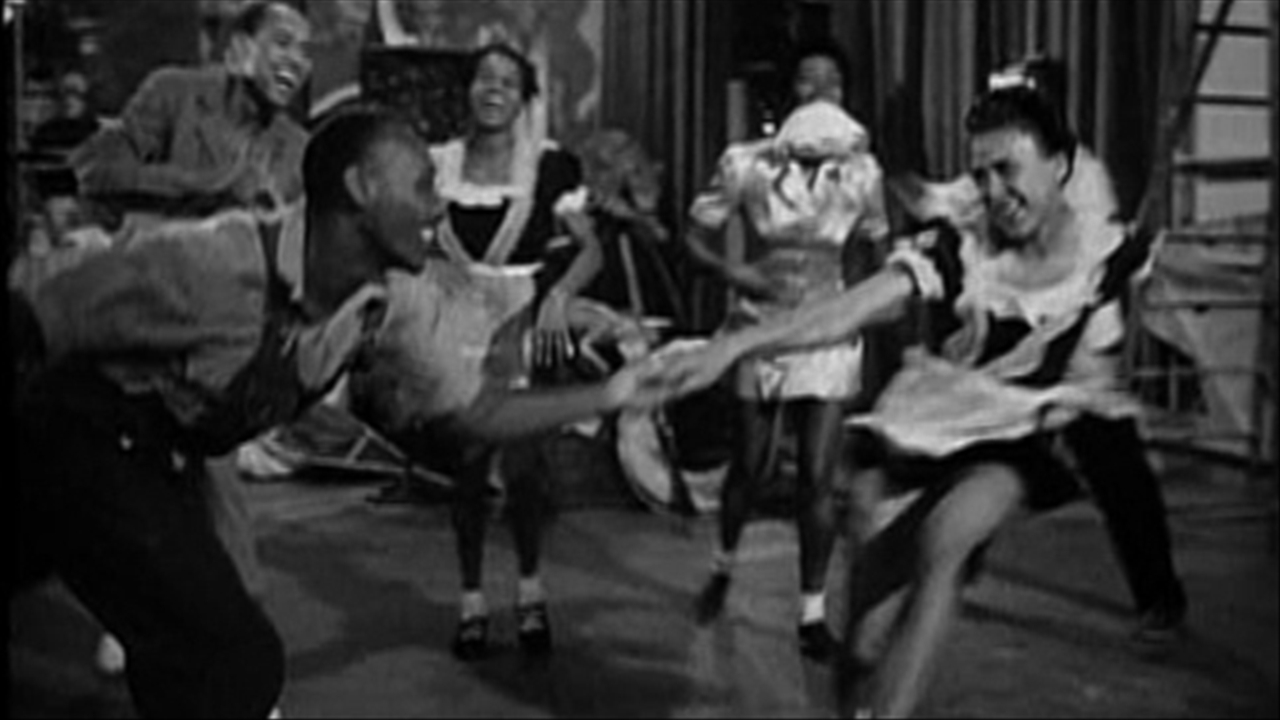
That means I’m emphasising:
– Looking into your partner’s face.
This is the most important thing I know about lindy hop. LOOKING into your partner’s face. It was the one big thing I learnt in the Frankie track at Herrang last year (where all the classes were taught by people who’d worked closely with Frankie). Once I noticed it, I was stunned by how infrequently partners look into each other’s faces.
It’s good for your alignment and posture relative to your partner, but it’s also good for making you connect with another human as a person, it helps you learn to observe your partner and recognise when they feel pain/scared/happy and it’s good for making you lol.
-> follows are less likely to throw themselves through steps if they’re looking at your face and seeing you flinch in pain. They’re also distracted from the move by the genuine human connection, so they stop pre-empting or rushing or panicking.
– Call and response rhythms as fun steps.
They make you pay a LOT of attention to your partner, visually and physically, so you can ‘hear’ what they’re doing rhythmically. This is good for interpersonal communication (how is my partner feeling?) and learning how to recognise physical signals (what does a suddenly-tight arm tell me when I combine it with their facial expression?)
-> this is the next level of looking at your partner. So follows stop pre-empting and are really there with you. And because you’re really listening to them (everyone calls, everyone follows), they feel like you’re listening to them, so they feel more confident and worry less about ‘getting it right’ and rushing or hurting you.
– Your partner is the queen of the world.
We say this a lot: your partner is the queen of the world (whether they’re leading or following, male, female, whatevs). This means that you have to look at them (and we model how to be impressed by/respond to your partner positively), and the ‘queen’ should then feel confident enough to bring their shit.
This teaches you to be connected emotionally with your partner, and to recognise how your positive response to a partner’s dancing can make them feel good and then bring their best shit.
-> follows bring incredible swivels and generally become the queen of the world. They pay more attention to you as a lead, and they feel like you’re really listening to them, so they reciprocate.
– Scatting.
Brilliant for improving your dancing, but when your partner is scatting, you can hear them, so you’re connected with them in an additional way.
-> makes follows lol.
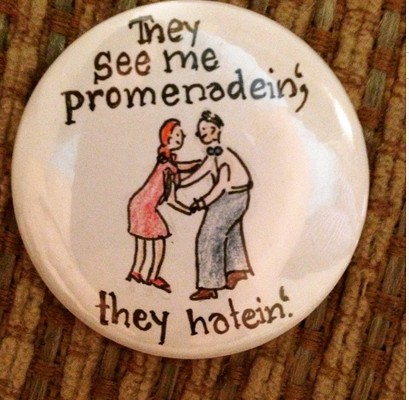
– Frankie thought the most important lindy step was the promenade*.
It’s in closed position, it requires lots of communication to walk together without kicking each other, and it has lots and lots of variations with lots of different emotions. It teaches you to communicate with someone, and you have to look into each other’s faces a lot, and be ok with that.
You get to hold someone in your arms, which means you have to be respectful.
*Lennart says so, so it’s probably true :D
-> I find some follows aren’t so ok with being so close, so I have to pay really close attention to them to find the ‘comfortable’ distance/connection. This makes me do my very best dancing. I try to put me in front first, so the follow feels more comfortable (follow first means they’re walking backwards – eeek!). I do pecks to make them lol, or rhythmic variations. I respond to the variations they bring.
– You’re in love for 3 minutes.
Doesn’t have to be romantic love. But for that 3 minutes, this person is the most important person in the world. You look at them, you lead steps you think they’re like, you do your best to realise the step or move their aiming for, you work to make this dance work.
To me, this is excellent mindfulness. It makes it hard to be rough with your partner. And when someone is feeding all those good vibes back at you, you smile and do your very best dancing.
-> follows become the queen of the world. They listen to you, and even better, they bring things to the dance.
I think it’s worth looking at a video of Frankie teaching to see how he did this stuff:
Frankie Manning’s Class part 2
I don’t think his approach is 100% excellent. He does drive the class, he uses gendered language, etc etc. But he is the ‘star’ teacher, and his teaching partner partner is his assistant – this is very clear. He uses gendered language because he is explicitly thinking about male leads and female follows, and his talk about respectful dancing uses this gendered dichotomy. I’m not excusing this, I’m pointing it out. And here I can make this point: while I dig a lot of what Frankie is doing in this video, he’s not perfect, and I actually find that reassuring. He wasn’t a saint, he was a real person, and when we idolise dancers, we need to keep that in mind: we don’t excuse their faults because we love their dancing.
A couple of things I like about this class:
at about 4.44: “If you find yourself falling, and he does not stop you from falling…. take him with you.” I LOLed when I heard this. But it’s a nice, simple way of saying ‘look out for each other!’ and reminding women that they aren’t passive objects here.
11.48: Frankie tackles inappropriate contact “Fellas, don’t take advantage…. we are just dancin’”
Nuff said, really.
With all this talk about Frankie, I think it’s worth pointing out:
When you watch footage of younger Frankie (ie in his 60s, and 20s), he seems quite ‘rough’ or ‘strong’ compared to modern dancers. Is this in conflict with this ethos of mutual respect in lindy hop?
(photo credit: I found this pic via an image search on google, and it’s hosted by Swungover, but chrome crashed and I couldn’t find the page again! argh! So I don’t know who the photographer is!)
This is a tricky one, but I think it’s where we’re really done a disservice by the lack of attention to the original women lindy hoppers who danced with Frankie teaching us today. I suspect that women followers were a different breed too. When you watch historic footage, you see that they fiercely took space, and matched their partner’s intensity. So Frankie might have had a partner who was confident enough to take space, and to be a little less submissive and a little more determined to shine.
I have no evidence for this, and it probably reveals my own lack of dance knowledge and skill. But I’m wondering if we need to have a look at old footage in a new way. I’m thinking of the way Janice Wilson used to talk about Ann Johnson, and the fierceness of her swivels. And of course, you have to think of Norma Miller when you think about fierce women lindy hoppers.
At any rate, this brings us back to the idea of how we might use history when we talk about lindy hop partnerships. And I have no real, final answers, of course, just a bunch of poorly practiced ideas.
This post is a three-parter.
Part one: Where are we at on this sexual harassment and assault thing?
Part two: Be ok with people saying no to you.
Part three: Part two a: How To Get A Date With A Lindy Hopper, by Sam (currently entrenched in a happy, healthy 13 year relationship with a lindy hopper)
Here is the best dating advice I have:
Teachers: don’t ask your students to go on dates with you. It is bad news. BAD NEWS.
Not everyone is going to like you.
People will say no to you, and you have to suck it up.
You might actually suck, but that shouldn’t stop you trying to be as decent a person as you can.
Don’t treat women like your mothers, or like they owe you anything: they don’t. They don’t have to give you advice, help you, go on a sympathy date with you, or even be nice to you. In fact, if you act like an entitled dick, they have a right to not be nice to you.
Not everyone is going to be your friend.
There is no ‘friend zone’, and there is no ‘laying ground work’ with a woman for a romantic relationship. That thinking is fucked up and you need to go to counselling and learn how to be a decent human being. IMMEDIATELY.
1. Accept that not everyone is going to want to date you.
You could be a complete arsehole. You could smell real bad. You could be really boring. Just suck it up. Incidentally, there isn’t ‘someone for everyone’ out there. You may just be single for the rest of your life.
And you know what?
THAT’S TOTALLY OK.
Be a decent human being, treat everyone with respect and get on with your life. There’s jazz dancing to be done.
2. Don’t ask everyone you meet to go on a date with you.
It’s sad and desperate.
3. Don’t ask someone you’ve only just met to go on a date with you.
It’s sad and desperate.
Wait until you’ve met them a few times, and you know, had a conversation. Women in particular can tell when you’re just treating them like a piece of meat you’d like to get your hands on.
4. If you want to go on a date with someone (after you’ve met them a few times), just fucking ASK them.
They can say no. They can say yes. Just stop fussing about and do it.
5. If you ask them and they say ‘no thanks’, just accept it.
ACCEPT IT. You missed out. They said no. Move on. Be a grown up. THEY ARE NOT INTO YOU.
6. If you ask them and they say ‘yes please’ and you go out…
That’s great. But do NOT email/text/facebook message them every day like a crazy person. Go on that date. Leave it a bit, or perhaps send one text saying something like “Hey, good fun last night!” and then let it rest a little. If they don’t answer that text, leave it. Do NOT ask them why they didn’t reply. Do NOT start texting or facebook messaging. LEAVE IT.
7. If you want to go out with them again…
Ask them. But if they say no to that second invitation, it’s done. LEAVE IT. THEY DON’T WANT TO GO OUT WITH YOU.
Here’s the deal: one date (or even two or three) does not mean that person belongs to you. They can walk away whenever they like. DEAL WITH IT.
8. If someone asks YOU on a date, and you don’t want to go: say ‘No thanks, mate.’
9. Never EVER EVER EVER trick someone into going on a date with you.
If you say a whole heap of people are going when you invite them to ‘that gig’, DO NOT TELL A LIE. That is some seriously fucked up and creepy shit. I cannot tell you just how horribly creepy that is. If you routinely do this stuff, you need to get some help: you are one creepy fucker.
This post is a three-parter.
Part one: Where are we at on this sexual harassment and assault thing?
Part two: Be ok with people saying no to you.
Part three: Part two a: How To Get A Date With A Lindy Hopper, by Sam (currently entrenched in a happy, healthy 13 year relationship with a lindy hopper)
So my current issue or Small Item Of Note is working on the idea that we all have to be ok with people knocking us back when we ask them to dance.
There is this persistent idea in the lindy hop world that we should always say yes to every dance invitation. So that we can make everyone feel welcome and everyone feel comfortable in our scene.
My thing is this: I don’t want everyone to feel comfortable. I want those men who exploit this idea to feel very uncomfortable. I want them to think twice before they ask a woman to dance. I want them to hesitate. In fact, I don’t want them in the room at all. They are not welcome. THEY ARE NOT WELCOME. This behaviour will NOT be tolerated.
If women feel ok about saying ‘No thanks’ to dance invites, they will say no to dance invites. And when the men who ask them to dance risk a ‘no’, they will do their best to make sure they are desirable dance partners. They’ll behave well. They won’t grope or hold a woman too tight. They won’t pressure them for their phone number or stalk them on facebook. They won’t become aggressive arseholes telling women off because they said ‘no thanks’. They’ll figure out that if they act like arseholes, they’ll get their just desserts: no one will dance with them. They won’t be welcome.
Right now, reading this, I know some of you women will be thinking, “But what if no one ever asks me to dance again? What if they’re too scared to ask me, if they think I’ll say no?” It’s just like dating, right? Some men are going to be too afraid to ask you. And that’s ok. You don’t have to make it easy for every man to get all up in your face asking you for a date or dance invitation. You’re not there for their pleasure. You’re there for you. But you’ll also find that plenty of other men will be totally ok with asking you, even if they know you might say no.
And – wrap your brain around this stunner –
you should be ok with asking men to dance.
The idea that only ‘gentlemen ask ladies to dance’? Throw that in the BIN. It is bad news. BAD, bad news. You can totally ask anyone to dance! Ask that man! Ask that woman! Dance on your own! They may say no, they may say yes. You don’t know until you ask!
So let’s workshop this sucker.
You want to dance. So you approach person X because they look a) friendly, b) nice, c) unsweaty, d) like a great dancer, e) your best friend. Whatevs it is that attracts you.
You rock on up, smile, look them in the eye and say “Hi, would you like to dance?”
Ok, there are two possible responses:
“No thank you”
or
“Yes please.”
If they say “No thank you,” say “Hey, no worries, maybe later?” and then move on and ask someone else to dance. If they say “Yeah, sure,” in reply to that, here’s a tip:
it is not a legal contract requiring them to dance with you later. It could just be social pleasantries, a way of being nice and helping you save face.
Here’s another tip: someone can say “No thanks,” to you every single time you ask them to dance. And that’s ok. You need to suck that up. Because they just don’t want to dance with you. THEY DON’T WANT TO DANCE WITH YOU. Their reasons are none of your business. Just deal with it.
Another tip: if you keep asking, and they keep saying no, there is something wrong with you. BACK OFF, BUDDY. STOP ASKING. It’s CREEPY.
Wait, even scarier: what if they say “Yes please”?
Tip: you get on out there and be a decent human being so they may say yes to you again in the future. And because there are heaps of other people in the room too, and they’re watching you dance. Yes, they are. It’s social dancing, yo – we are all watching each other! Because we are in a public place.
Tip: if you are a decent human being while you dance, there is a good chance SOMEONE MAY ASK YOU TO DANCE. INORITE?! OMG!
Tip: if you are not a decent human being, you’re going to get a) boycotted by prospective dance partners, b) told to stop being a dick by other people.*
‘Decent human being dancing’:
Right now I can hear some of the sadder members of our community saying
“But how do you get a date with someone in the scene if there are so many rules?”
Firstly: I am sighing at you, manbabies. You need to get some social skills, you really do.
Secondly: being a grown up decent human being: there are rules. Get fucking used to it. Level up and stop being such a fucking sook.
*That’s you. Anyone can tell someone to stop being a dick. You don’t have to be a teacher or a famous person. You can just be you. Tell that person to stop that. It’s ok. It’s legit. You can be a man or a woman – just say it: “Hey man, better quit touching women’s bums when they’re dancing. It gives them the shits and it’s making me cranky.”