Busy Hamface, busies herself

You’d think nothing had been happening round here.
But everything has been happening.

Firstly, we had to finish off classes for the year. We were so tired out, it was a relief, and yet it’s a poo to interrupt the learnz. But knowing when to rest is important.

Secondly, we had MLX. The biggest event in Australia. I was coordinating the DJs. I got into bed at 6am on Saturday and Sunday because I was having so much fun DANCING. Pilates has made masses of difference to my stamina – dancing is just so much less work because I use my body more efficiently. The music – live and DJed – was beyond compare. It was a massive weekend, and all the organisers and DJs should be very, very proud of themselves.
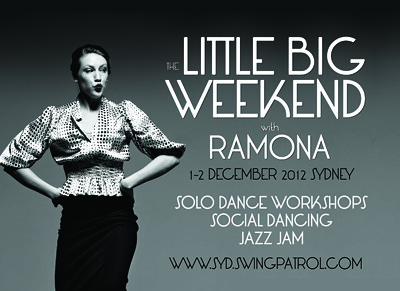
Thirdly, I arrived home on Monday, utterly shagged, my knees destroyed, and had to get shit together for the Little Big Weekend with Ramona, which started that Thursday. I was running this one on my own, and it was pretty much 100% sorted. Except for those little things I discovered on about, oh SUNDAY. But that’s how running events works – you discover little errors or mistakes or problems, you solve them, you rock.
I have to say, this was a seriously successful weekend.
Ramona did the Ramona thing: she was ridiculously professional and excellent company. Being in a range of classes with her, it was made very clear that there’s a real difference between being a regular teacher and being a world class teacher with ten years of teaching under your belt. The classes were fantastically structured and executed, and Ramona’s physical abilities were so far beyond what I’ve seen in workshops with other international teachers this year, I was blown away. And then, the class content!
I asked Ramona to teach things that I was really interested in, and then she DID. A class in soft shoe, a class in blackbottom, a class focussing on three different character dancers (Snake Hips, Josephine Baker and… mental blank). It was a solo weekend (!!), and the material was really quite eccentric. The classes sold out in 48 hours, we opened new spaces, the classes sold out again. And then to see a large group of people just lapping up this strange, bizarro wonderment, working hard, laughing and just relishing the Ramonaness…. it was a real delight.
After the workshop day, we had a christmas party (I didn’t run that one), then a late night party (I didn’t run that one either), and the late night party was A M A Z I N G. My standards were high after MLX. But I would even say that this was better than the late nights there. That could just be local pride. But, seriously, it was just fabulous.
There were a few other sessions on the weekend – a training session for a performance troupe, a ‘masters’ private class (masters = hardcore solo jazz nerds) and a small teacher training session – and Ramona was a real trooper. The work load must have been so tiring, but she kept rocking. And I’ve heard report after report from attendees gushing about the classes. I myself feel so inspired and invigorated. We taught on the Monday immediately after the weekend and got to test some things from the teacher training. It was exciting and inspiring and satisfying!

So, the Little Big Weekend with Ramona: wonderful.

Thirdly, Alice and I had two classes to teach on the Monday after the weekend, as part one of a three night block at a larger venue. We did a 1920s partner session (boy we wanted to do blackbottom!), then the first in a series we’re calling ‘beautiful basics’. This first basics class was looking at rhythm in lindy hop. It was a really nice coincidence to see Ramona emphasising rhythm so fiercely in her classes. We’d planned this class ages ago because we’re really into rhythm in our solo and lindy hop dancing, so Ramona’s approach helped confirm our feelings.

We worked very carefully on a class that began with a strong solo component (looking at the ‘step step triple step, step step triple step’ lindy hop rhythm, gradually adding in new fundamental rhythms – stomp off, kick ball change, hold), getting the students to dance out those rhythms in combinations. The goals were to work on bounce, on timing (syncopation, swing, etc) and on combining and changing rhythms.
We spent about three quarters of the class on that, and the students worked very hard – we were so impressed. Then we had them partner up, and we worked on putting those rhythms into swing outs. Swing out after swing out. The goal was to show how rhythms can be the core part of a swing out, and that shapes or ‘moves’ aren’t necessarily the most important part (though of course that’s fun stuff too).
It was really thrilling to see them suddenly go “Ah-ha!” when they understood how working on the rhythms on their own were an essential part of rocking their partner stuff. And their swing outs! It was really inspiring. So that class was a lot of work, but a lot of fun.
Next week we’re expanding that concept of ‘beautiful basics’ with a class looking at ‘making space for rhythm in lindy hop’. In that class we’ll take some basic steps or shapes (swing outs, under arm turns, etc) in a very basic ‘routine’, and then look at how we can make those basic steps a framework for rhythm or jazz steps. So the goal is to create swing outs or shapes that are flexible and relaxed, and to help students figure out how their connection with their partner can be open to improvisation.
I was quite struck by how this week’s class, which was quite simple in concept (make your swing out a jazz step and dance on your own, then rhythm-it-up, then make it into partner work again) could be so useful. The key was the practice and experimentation. And it was really nice to see the students then taking each of those rhythms and varying their shapes or emphases. Hopefully this next class will be just as useful. The goal with this one is to help students see how the most basic lindy hop ‘moves’ can be frameworks or outlines for more complex, textured dancing. The key is to be relaxed and self-reflexive, understanding how your own movements affect your partner’s, and how to be open to invention and improvisation.

Fourthly, I had pilates last night, after a day of busy appointments. I love pilates. It feels like a nice, gentle, low-impact, relaxing workout. My knees don’t hurt, I don’t sweat that much, I can be calm and properly mindful and in my body. And by GEEZ the work has improved my lindy hop.

And now it’s Wednesday, and I have no obligations! Well, I have stacks of post-event admin to do, but I’m giving myself a break, as I’m totally buggered. So of course I’m taking this time to write and write, rather than going out and doing something calming and non-dance related.

Tomorrow, of course, it’s on again. There’s a GREAT gig featuring three bands on tomorrow night at 505. The New Sheiks are from Melbourne (I squeed about their latest album here), and I’m really looking forward to hearing them. Then there are the Finer Cuts, who are from Sydney, and who played the christmas party. Most of their band members also played the late night Speakeasy party and were fabulous. And the final name on that bill is Pugsley Buzzard, who used to live in Sydney, but is now Melbourne based.
I’m really looking forward to the gig. I’m totally and completely over DJs (sorry, DJs) – live music is rocking my boat.

But, now, I have to add a caveat. The DJs at MLX made me realise that it’s really only ordinary DJs that I’m tired of. The quality of DJing at MLX was so vastly far beyond the ordinary DJs I hear, and have heard at other events during the year, it makes it clear that skillz are not universal. My own DJing, sadly, was not really up to snuff. I think I did an ok, job, but I definitely wasn’t up to my past standards. Assessing my own work, particularly on the Friday late night in the lindy hop room, I think I’d put me on the non-crucial sets next year.
In retrospect… heck, thinking about my DJing now, the problems are: I don’t DJ hardcore events enough these days, so I’m out of practice; I spend more time thinking about dancing than DJing, and am not on top of my own music; I’m not inspired, and I’m not nerding up my way through vast quantities of music each week. Basically, teaching and my own dance work have pushed DJing to the back of my mind. For now. I think this is a good thing. I’d much rather use band than DJs, and I’d much rather be dancing than sitting on my clack watching other people dancing. I’m also 38 now, so I reckon I should do the hardcore dancing now before my body totally asplodes. Time enough for DJing later.

So I’ve had a crazy couple of weeks. It’s been really, really great. I had a massage when I got back from MLX, which really helped, but I do feel as though I’ve pushed my dodgy knees a bit further than I should have. Curse you genetics! Now I’m thinking about next year, and about events in the future. I have some schemes, and some ideas for other events. I’d like to do something completely different and unusual. Something that we don’t see in Australian jazz dance. Now I just need some funding (to the arts grants!), some business skills (to the TAFE!) and a crack team of people to help me pull these things off. I love having the chance to combine my academic experience with my dance love. I figure all that time applying for and getting grants and scholarships during my postgrad years is going to be very useful in the near future.

Dancing, you are the finest. Organising and planning, you are the equal-finest.
Hetty Kate <3

I’m a little slow on this one, but writing about Ultrafox, and the most triumphant Sydney Lindy Exchange this past weekend have prompted me to write about Hetty Kate and her band(s).

Hetty Kate is great.


I wrote about her a little while ago on SwingDJs, saying

This past weekend Melbourne singer Hetty Kate did two really nice sets at Canberrang in Canberra. She did a truly lovely blues set at a late night and a general lindy hop gig at an afternoon gig at a winery (top shelf gig, that). I only got to hear two songs from the blues set as I was DJing at the same time ( :( ), but it was really magical. She had a light, delicate touch, rather than a gritty, down-low style, and had the dancers mesmerised. I was very, very sorry to have missed out.
I really liked Hetty Kate’s stage presence, and her singing style is clear and light and swinging – a real palate cleanser after all those blues shouters.

Hetty Kate played again for dancers this past weekend at SLX, and went down a treat again. I really enjoy the way she combines a light, elegant look and sound with a crunchier, sassier stage presence. I think my only regret about these gigs is that I don’t get to hear her playing with her own band(s). And I’m only fussing about that because I’ve listened to her recordings and I’m a fan.


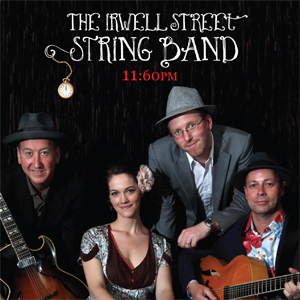
The Irwell Street String Band features some of my favourite Melbourne musicians – Sam Lemann (ukulele, guitar, mandolin), Andy Baylor (elec. mandolin, guitar) and Leigh Barker (double bass) – and I’d really like to hear the band working together as a tight unit.

…yes, that is a Baylor in there again. I’m a fan. And that’s Leigh Barker, and I’m a massive fan of his band the New Sheiks. I can’t remember when I last saw Sam Lemann, but well. Look:

(In A Little Spanish Town – Hetty Kate & Sam Lemann ukulele duo)

That Irwell Street String Band CD 11:60pm is really nice. There’s plenty on there that totally works for dancing, though I’d be thinking ‘sophisticated, smoothed out swing’ rather than ‘chunky, head-kicker, balls-to-the-wall lindy hop’. Which is why I want to hear that band playing together live. And if I’m going to be particular (which of course I am), I want to hear them in a more intimate venue, so I can catch every little string pluck and strum. My favourite songs on the album so far:

  • “I Go For That” – I’ve got this one in a shortlist called ‘wedding songs’, as it’d be a lovely song for a bridal couple dancing at a wedding. Particularly if they’re a couple with a sense of humour;
  • “Sing You Sinners” is a more delicate version of a dancing favourite, but it makes me want to move. Not sure I could manage delicate dancing, but the precision of this performance prompts me in a different way to Henderson’s. And I’m a DJ, so I like interesting reworkings of familiar songs.
  • “You Came A Long Way From St Louis” is probably my total favourite, but I’m not sure I’d play it for lindy hoppers. Maybe at a (very) late night in the back room when things had chillaxed a little I’d test some blues dancers or a flexible crowd. But it’s a really good example of Hetty Kate’s mix of sweet and salty.

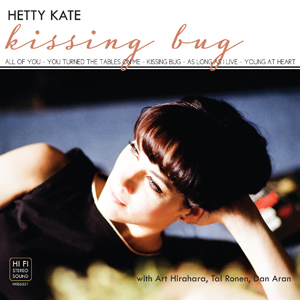
Hetty Kate’s album Kissing Bug is a slightly different animal. It’s definitely ‘groovier’ (in the lindy hop sense, not the velour pants sense), and listening now, I think it might be my favourite. Not so much for DJing or dancing, but for listening. I’ve got a bit of a resurging interest in ‘groove’ at the moment, partly because we have so much chunky hot jazz in our dancing world these days, but also because I think there was something very nice happening in the studio when this was recorded. Or at least that’s what I imagine :D
I probably wouldn’t play all of the songs on this for dancers, but I do like listening to it. If I was to DJ it, I’d go with “Kissing Bug”, because it’s cute. “Young at Heart” would make a really nice ‘kissing song’ (you know, the sort of dance where you hold someone close and kind of cuddle your way across the floor). “You Turned The Tables On Me” (one of my favourite songs) could work with more experienced dancers, though it has some moments which might puzzle newer dancing folk.

This album was recorded in New York, which’ll ping the antennae of some of the jazznerd dancers in our scenes. Some of the very, very best modern day jazz musicians are living and working in New York, and of course we know The Ear is an important spot for visiting jazznerds’ itinerary. I think the musicians are Iranian (?), though I’m not sure. Hetty Kate told me the story on the Sunday at Canberrang and I was kind of adrenaline charged/trashed at the end of a crazy weekend. But I do remember her saying that recording this was quite special.

So, friends, if you get a chance to hear Hetty Kate live, do. I know she’s been doing some work with blues dancers in Melbourne, and I think they’d be very special gigs. And if you can’t get to a gig, have a listen to her CDs. You can get them in person, on CD via Hetty Kate’s online store, or buy and download ‘Kissing Bug’ at CDBaby. And if you’re into 50s type, slightly different stuff, you might also like Uh-oh, her album with the 2020’s.

New CD! Ultrafox: Chasing Shadows [would DJ]

[edit: I wrote this almost a month ago but have been sitting on it.]

I’m not going to rave and shout about this album Chasing Shadows by Melbourne band Ultrafox, because this is not that type of album. It’s more thoughtful. While the tempos get quite quick, the energy feels more complex and intricate. It feels very much like the difference between lindy hop and balboa: it’s hot and fast, but you wouldn’t sweat, because you are too cool. This is a jackets-on, nice-dress type of album.

Having said that, ‘Vette’ opens the album with a supersweet bass intro that makes me want to leap up and dance. And I’m not one for nice-dress, jackets-on, cool and sophisticated dancing.

I should stop for a second here, to say, once again, that I was offered a copy of this album by Peter Baylor, in return for writing a review. You know I can’t say no to free CDs, and it’s a genuine pleasure to listen to Australian music and talk about it online. It’s even nicer to develop relationships with the musicians I get to dance to (dance with – we are together, in these moments, musicians and dancers) at events around the country.
So, to be clear, this is a solicited review. And, again, I had a moment of worry when I agreed to this deal. What if the CD sucked? And then I gave myself a talking-to. Look at the people on this album: Peter Baylor, Jon Delaney, Kain Borlase, Julie O’Hara, Andy Baylor, Michael McQuaid. Do you think it’s likely it’ll suck? No. It won’t suck. It doesn’t suck.

Peter Baylor leads Ultrafox, and even here in Sydney I’ve had a bit of a big Baylor week. My copy of Chasing Shadows arrived this week, and I saw Andy Baylor launching his CD Down Where the Banksias Grow at the Petersham Bowling Club last night. The Baylors are pretty important doods in the Melbourne (hells, Australian) jazz and acoustic music scene. When I say acoustic music, I mean the sort of music that doesn’t use a lot of amplification. Not that I’m against amplification, but this stuff has its roots in the days when a band had to shout real loud to be heard in a crowded bar rather than just twiddle a dial. Anyways, if you’re into jazz, blues, old timey, western swing… all that sort of stuff (as I am), then you’ll probably have heard of the Baylors.

Dancers who’re into Australian jazz will also have heard of Michael McQuaid, saxophonist, clarinetist, leader of The Red Hot Rhythmakers, The Late Hour Boys…etcetera, etcetera. Boy got chops.

If you’ve been dancing in Melbourne to a live band ever you’ll indubitably have heard Julie O’Hara sing. I remember talking to Julie at the 2006 Melbourne Lindy Exchange the day after Anita O’Day passed away and suddenly realising ‘Anita O’Day! Of course!’

And even I recognise more of the musicians in this band, though I’ve not been in Melbourne for four years now. Ultrafox: good, well-seasoned, skilled musicians. This is going to be good.

Ok, enough of that. Let’s get back to the music. And I’m going to talk about this as music for dancers and dancing. Because, for most dancers, the music is the thing. They’re unlikely to run up to the DJ and ask who was playing guitar on that last track. They’re more likely to let you know they dig a song by running about like crazed adrenaline junkies. Unless they’re balboa dancers. Balboa dancers never look like they’re in a hurry.

Even though Balboa developed in ballrooms with big bands (if you’re interested in this, you need to watch Peter’s great talk about balboa history), there’s something about the complexity of manouche which really suits this tiny, intricate, complicated dance. While lindy hoppers tend to be a little on the meat and potato side of things, balboa dancers are more discerning. They can dance super fast, they can handle the fact that manouche rarely (if ever) features a drummer, and they’re all up in Django’s business.

I’m going to keep returning to the balboa dancer as audience for this band because there’s a long association between balboa and gypsy or manouche jazz in Australia and overseas. There aren’t a lot of Balboa events in Australia (just one at the moment) and that one has hosted Mystery Pacific more than once. Duck Musique from Melbourne also have cred with balboa dancers.

There are, however, about a million second rate gypsy jazz bands around the world. So I’m always a little sceptical when faced with yet another Hot Club of Blahtown recording. But Chasing Shadows is solid stuff. Here, let’s get into the nitty gritty: dancers really just want to know which songs to buy from a particular album.

Firstly, Chasing Shadows covers a range of styles. Totally right-on when you consider the history of manouche, the importance of a waltz and what I’d (clumsily) call ‘Latin rhythms’. But lindy hoppers and balboa dancers aren’t really into that action. Having said that, ‘The Ruby and the Pearl’ on this CD is probably my favourite track. Couldn’t DJ it, do play it regularly for my own non-dancing pleasure. So if you’re flicking through song samples, don’t stop at just one song – the breadth of styles is one of this album’s strengths.

I would totally DJ ‘Vette’ for dancers. I was charmed by the clarinet, lighting up all that strummy-strum-strum string action which makes for such solid dancing. The balance of grounding rhythm (which dancers really do need), lighter melody and instrumental flourishes makes this super nice. Listening to Andy Baylor last night, with this CD in mind, I thought to myself “Really good musicians really do make a difference.” Manouche isn’t for babbies; if it’s good, it’s hard. I see a lot of very ordinary… shitty musicians at dance gigs, but I would pay extra for these guys. I would hire them for a gig. I would DJ this album.

I also really like ‘High Flyer Stomp’. It has that lighter edge, but with a really solid rhythm – the stuff dancers need. I’m also a total fool for a bit of fiddle. I think it’s the way it joins up all the spaces between the beats to really flesh out the swing that makes what we do jazz dancing. Or swing dancing :D

I guess what I’m saying here is that the instrumentals on this CD are really really good. This is where these guys truly shine. I think they have the best cross-over value for non-Australian DJs and dancers. But that’s mostly because I still stumble when I come across Australian vocals in jazz. I think this is parochialism on my part, and I need to get over it. Think of Eamon McNellis. Think of Hetty Kate. Heather Stewart. Australian voices, marked by the intonations and rhythm of Australian English, but very fine Australian voices. And I think Andy Baylor makes very powerful arguments when he talks about the vernacular in jazz. Or about looking for Australian folk music. I’ll get over this. With the help of artists like these.

What else would I play for dancers?
There’s a version of ‘Minor Swing’ here too. Yeah, yeah, I know, most of us are totally over this staple of the balboa/gypsy jazz repertoire. But I’d have a listen to this one – the vocals are interesting, and make for more stimulating dancing than you’d expect. I’d definitely DJ this one. The intro catches the ear, the rhythm is nice and clear enough for even the newest dancer, and Julie does some of her best work on this song.

‘Swing 39’. Another staple. Would DJ.

…look, it seems I’d DJ quite a lot from this CD. Especially the uptempo stuff. But there are other, really pretty songs like ‘Royal Blue’, which I’d play for lindy hoppers or at a quieter moment in a dance.

To sum all this up, I’m very glad I have a copy of this CD. It’s lovely. And I will DJ from it, and I’m pretty sure I’ll score big time with dancers. Oh yeah, giggedy piggedy. Hoorah for bands making good music and recording it so we can share it with our friends. Hoorah.

The only problem with this album is that you can only buy it in person from Peter Baylor at gigs at the moment. So if you’re in Melbourne, keep an eye out for him. If you’re elsewhere, drop Peter a line stringbuster@pacific.net.au and hassle him for a copy. It’s definitely worth the effort.

Australian hot jazz and blues

Brendan Young -> Christa Hughes
A rare and unseen outtake of Christa Hughes performing “St. Louis Blues” with the late Australian Jazz legend Graeme Bell on piano, who regrettably passed away in June this year. Graeme was 94 years old when we shot this unique jam session!! This is the last known footage of Graeme performing. Supported by a line up of venerable greats of Oz Hot Jazz including Bob Barnard, the late John McCarthy, Ken Flannery, Bryan Kelly and Don Heap. And some of these guys were pushing 80! This material never made the final edit of “You Only Live Twice – The Incredibly True Story of The Hughes Family” – The edited rushes of this rare grouping of talent is being lodged with the Australian Jazz Archives this month… — with Christa Hughes in Sydney.

linky

(sorry about the size of this – weirdo FB settings)

Christa Hughes plays the Speakeasy this Sunday with the Cope Street Parad (linky). You’d be nuts to miss it.

Swinging with Duke

This is a post about Duke Ellington and dance, because he is on my mind at the moment.

I’ve recently discovered the 1951/52 stuff by the Johnny Hodges band on this dodgy digital download album Pound of Blues is really great for teaching dance, particularly choreography which recognises strict phrasing. It’s good, solid stuff, and I’ve used it for DJing in the past, though not with any particular enthusiasm. The steady, predictable phrasing of songs like ‘Wham’ on this album do not really reflect all of Ellington’s compositions, as anyone who’s tried to choreograph to ‘Rockin in Rhythm’ will know. But Johnny Hodges was, of course, a musician who played with Ellington for a long time. One of the soloists the band leader would compose for, and organise compositions around rather than forcing them to fit into a musician-shaped hole in his band.
I’d like to say that this ‘Pound of Blues’ album reminded me of the orsm of Ellington, but that’s not true. Ellington is always on my mind. I love him. I love his music and I own a lot of it. A LOT. I’m a massive fan of the Ellington small group stuff, but I’m also nuts for the bigger bands.
The Never No Lament: the Blanton Webster Band 3CD set was one of the first serious Ellington CDs I ever bought (though it was a lot cheaper then than it is now), and I bought it because dancers and DJs I admire recommended it on the SwingDJs discussion board. It’s great, but as with many of the Ellington recordings I have, the quality isn’t so great. There’s a lot of surface noise (ie scratchy crackly rubbish) and the high pitched stuff sounds awful when I’m DJing. And all that from a CD.
This last point is important, because I recently bought myself another Ellington set, Decca’s Complete Brunswick and Vocalion Recordings 1926-1931. I’d somehow managed to miss this little chunk of Ellingtonia and I needed to rectify the problem. I went with CDs rather than the cheaper downloads because I’m finding download files – especially legit ones – are of such poor quality they make the songs unDJable. The rubbish files plus the scary sound quality of the recordings themselves are just unuseable on shitty sound systems.

I guess I do have kind of an Ellington problem. But then, he’s so interesting, he justifies a little obsessive collecting.
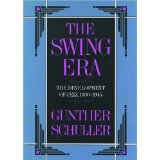
I used to have a long bus commute to uni which I’d spend reading my way through Gunther Schuller’s book The Swing Era: the Development of Jazz 1930-1945 and listening along with my whole Ellington collection on my ipod. I read music (haltingly), and Schuller spends quite a bit of his time examining scores in detail. I’m not entirely convinced by everything Schuller says, but Schuller’s is an interestingly scholarly approach to a musician who was as comfortable with concert halls as dance floors.
Today’s dancers are familiar with many of the soundies and film fragments featuring Ellington’s band. Mostly because they also featured dancers. The most famous of these is probably Hot Chocolate (Cottontail), with Whitey’s Lindy Hoppers:

My favourite is Bessie Dudley and Florence Hill dancing to Ellington’s band playing ‘Bugle Call Rag’ in the 1933 film Bundle of Blues:

Bessie Dudley was married to Snake Hips Tucker, and she appeared with him in Ellington’s 1935 film Symphony in Black. There’s a scene in that short film where Tucker’s character throws Billie Holiday to the ground, and you can’t help but think of the verisimilitude – Tucker was a brutal, violent man who abused Dudley.

Ellington’s relationship with dancers was strong and complex. He worked extensively with dancers at the Cotton Club and on film, and travelled with Dudley and other dancers on tours. And later, as his music became more complicated and challenging, his productions with dancers and choreographers like Alvin Ailey also became more challenging.
There’s an interesting article by Patricia Willard called ‘Dance: the unsung element of Ellingtonia’ (Australians can read the full text version here, but there are other versions available online if you google). In that article Willard writes

Duke thought and spoke in dance vernacular. Maneuvering a remarkably stable roster of assertive, quirky, occasionally aggressive individualists into a consistently identifiable and cohesive big band through the decades demanded an accomplished psychologist and master manipulator, which he was. He proudly referred to his role as “The Choreographer.” (Willard)

This idea of Ellington’s music as dance music (which Willard pursues in that article) is nice. Ellington himself said “Swing is not a kind of music. It is that part of rhythm that causes a bouncing, buoyant, terpsichorean urge.” (Ellington, quoted by Willard) This idea that Ellington was at once engaged in popular culture and able to move on to all that difficult artier music and concert dance is just one bit of proof of his versatility.

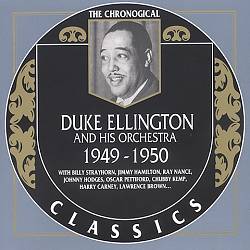
Most of my love for Ellington is centred on his earlier stuff and on those small group recordings. My interest tends to wane at about 1950, to be honest, but that’s not a strict rule. There’s a song called ‘B Sharp Boston’ which Ellington recorded in 1949 and which used to get around on those dodgy ripped compilation CDs as ‘Sharp B Boston’. I picked up the Chronological Classics Duke Ellington Orchestra 1949-1950 CD in about 2006, and discovered it was actually called ‘B Sharp Boston’, and that there was a bunch of other great stuff on that CD that makes for top DJing (I’ve written about this before in Duke Ellingon’s Difficult 1949-1950 period). ‘Joog Joog’, for example, is one of my favourites (I like to pair it with Doris Day singing ‘Celery Stalks At Midnight’). A fair chunk of stuff on this CD is, however, already edging over into dissonance and confusing timing which makes for challenging dancing.
These sorts of awkward combinations of note and timing really heralds bop. But years ahead of other peeps. Listening to even Ellington’s 30s stuff, you hear a hint of the dissonance that was to come. I tweeted the other day “It’s like Ellington heard collective improvisation in NOla jazz and went “hm. Dissonance.” In 1938.” And @twobarbreak replied “Look where all of Ellington’s players were from, and who they learned from. your hunches closer to right on than you think!”

Again, though, it’s fascinating that Ellington could produce excellently danceable songs like ‘B Sharp Boston’ and ‘Joog Joog’ at the same time as he was really getting into much more experimental stuff. By the end of the 40s Ellington had well and truly begun to explore crazy arse stuff that doesn’t always work for dancing. Well, unless you’re Ramona and Todd at ILHC this year

I read an interesting blog post recently (cannot remember where, I’m sorry – PLEASE let me know if you know the one I mean), where someone cleverly pointed out a couple of recent lindy hop choreographies that worked with this sort of ‘difficult jazz’. One of them was Giselle Anguizola and Nathan Bugh’s 2011 Classic Lindy entry in ILHC:

I keep an eye on Giselle, because she’s been involved in some interesting projects over the years, from Girl Jam to working with jazz bands on the streets of New Orleans. Both are interesting, not just as exercises in jazz dance and jazz dance skills, but in the enculturation of dancers in jazz tradition.
One of the things I really like about the way dancers like Giselle and Chance engage with bands on New Orleans streets is their recognition of turn taking. Soloists in a band take turns, even (especially) the vocalists. In these street jazz groups, the dancers function as soloists, taking their turn, and then stepping back to let the musicians shine. They’re not only responding to the music they hear, but also functioning as part of the band, and part of the performance. Most modern lindy hoppers barely manage to look up and see the band they’re dancing ‘to’, let alone take a moment out to admire what they hear.

And of course, all this talk of New Orleans jazz, solos and recognising individual talent within a collective ensemble takes us back to that idea of Ellington’s most radical work being a response to the interests of the musicians in his band, many of whom were from New Orleans or taught by New Orleans musicians. The most radical ‘art’ part of Ellington was perhaps his references to tradition and vernacular, everyday culture?

Other things about Ellington and dance I couldn’t fit in this piece of writing:

  • My new favourite ILHC 2012 clip, Melanie and Joshua in the Lindy Hop Classic category dancing to Ellington’s 1941 version of ‘Jumpin’ Punkin’s’:

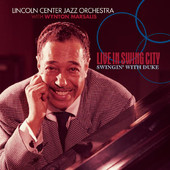
  • The Lincoln Centre Jazz Orchestra’s album Live in Swing City: Swinging with Duke.
    Probably the most overplayed, most popular, excellent modern big band swing album. Recorded live with a crowd of dancers, this album features the most accessible of Ellington’s work, and is an excellent gateway drug for new dancers interested in discovering swing music.
  • Todd Yannacone again, this time with Naomi Uyama dancing to Ellington’s ‘Main Stem’ in about 2006:

References:

Willard, Patricia, ‘Dance: the Unsung Element of Ellingtonia” The Antioch Review, 57.3 (Summer 1999): p 402

Schuller, Gunther, The Swing Era: The Development of Jazz, 1930-1945, Oxford University Press: USA, 1989.

Jazz hands


(image from mindlessmunkey)

To make the perfect jazz hands, you must relax your hands, then extend your fingers. It’s important to leave your palm relaxed.
If you just stretch out your hands, they look too uptight and anxious.
If you just let your hands flop there, they look as though they have nothing to say.
But if you wake up your fingers, keep your palm relaxed, maybe set your fingers together and let your thumb stand up, then lift your arms from the elbow, out to your sides… if you do all that, then you will have excellent jazz hands. And you will be jazz dancing.

To pwn or be pwnd


(linky)

So, should I go in this solo jazz comp at the end of the month? I have zero chance of winning, but there will be many chances to show off. I’m of two minds, though. The primary discouragements are:

  • the cost of entry
  • the long, tedious night of competition for one small block of showing off
  • looking like an idiot in front of people from my town and from other towns (the latter is most worrying – there are lots of peeps coming from interstate)
  • getting really stressed about it before the weekend

Primary encouragements:

  • chance to show off
  • a focus for my dancing – something to structure my own preparation besides teaching
  • promotion for my classes (this is a big one, but it could go terribly wrong if I go terribly wrong)
  • just something to do at a night I might not otherwise attend because #boring
  • getting over a fear of looking like an idiot and embarrassing myself

I’ve done this before, but I’m not a massive fan of solo comps that are just high tempos. I’ve found that most of the dancing in the solo comps I see up here ends up being a bunch of tricks with no reference to the music. And the jam battle at the Speakeasy the other week was so inspiring and exciting with its lower tempos (all sorts of people went in it and did good work) I don’t want to tarnish the memory.
I like mixed tempos in a solo comp because we rarely see people solo dancing at more moderate tempos where they’re forced to do good quality movement and can’t hide their fuck ups. And I have a better chance at slower tempos because I am, frankly, not 20 any more and my nearly-forty body can’t quite hack the higher tempos, and more importantly, the aftermath of preparing and competing for this sort of comp. Yeah, nanna got issues. Weep, wail and gnash the teeth.

What’s all this got to do with that version of Stomping At The Savoy up there? Well, that’s my favourite shim sham song, and I’m currently in renewed love with the Al and Leon shim sham. It’s my favourite routine at the moment because it’s both chillaxed and complex. The Big Apple is high energy, crazy complex and super fun. The Al and Leon shim sham, though, does some interesting steps, but really relies on the dancers being able to make chillaxed look good. It’s much easier to pwn with a super fast high energy song than with a slower, chillaxed song, and I like the way Al and Leon maintain chillax at all tempos, and still bring some really challenging shapes and rhythms.

Ah look, I think I’ve just convinced myself. Perhaps I should add some sort of lindy hop comp to the night so I can get my money’s worth?

Jazz dance and jazz music

Ok, so most people reading this will know that I’m now teaching lindy hop and solo jazz once a week (and have been since February). We teach one beginner lindy hop/partner dance class, and one solo dance class each week. The solo class cycles through historic routines, drop in sampler classes and material we’ve choreographed ourselves.
Our approach tends to be driven by technique, historical accuracy, understanding music and dancers developing their own personal style. That means that we don’t rush through choreography, we take a lot of time to teach each step and make sure people are doing things safely and properly. We also encourage dancers to experiment with steps in their own way (rather than getting them ‘right’), and we emphasise the fact that ‘looking cool’ or ‘looking sexy’ isn’t the goal with most eccentric jazz steps. Sometimes you want to look really weird or unusual or intimidating. I’ve found this quite exciting, as we teach a lot of women students, and for women students to be exploring ‘looking weird’ with enthusiasm… well, it warms the cockles of this cranky feminist’s heart. Also, their wackiness makes her lol. Double win.

I haven’t taught dance in YEARS (since about 2002 or so), so there’s been a steep learning curve as I figure out how all these things work. Though I have stacks of uni teaching experience, and I did have that dance teaching experience, plus about fourteen years of lindy hop under my belt, teaching dance isn’t like teaching uni, and the way we used to teach in 2002 is so yesterday’s news. Now we talk about posture and weight changes and rhythm ffs. And dancing to teach isn’t like social dancing or competitions or performances – you have to be very clear in your movements, be cognisant of what you’re actually doing with your body, and then – most importantly – be able to articulate what you’re doing in very few words.
INORITE. It’s HARD!

I would have been writing lots of posts about this stuff, but my brain has been busy with other things this year (hence the relative quiet round these parts… well, the lack of substantive posts anyway), and because I teach with a partner, I don’t really feel I can blabble about our class preparation, politics and preparation on the internet. But mostly I haven’t been writing about it because I just haven’t been able to get my brain together. Though I have had lots of ideas and things to say!

But here’s something I’ve just found on my laptop which I wrote on the coach to Canberrang last month. I’ve written a few things on those three-four hour coach trips to our nearest lindy hopping neighbour, but this one had been forgotten. Reading it now, it seems extra relevant to the way I think about dance and music. The square bracketed bits are things I’m adding now.

Here it is:


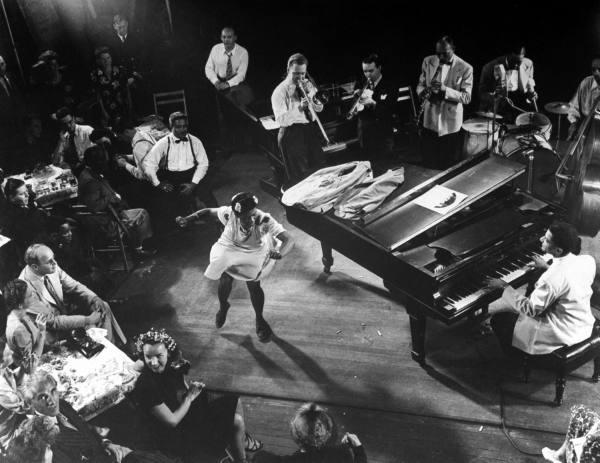
(“Pearl Primus performing to “Honeysuckle Rose” played by Teddy Wilson at piano, Lou McGarity on trombone, Bobby Hackett on trumpet, Sidney Catlett on drums & John Simons on bass during jam session at Gjon Mili’s studio” – Gjon Mili – New York – 1943 linky)

One thing I’ve noticed about all this work on solo jazz [that I do for teaching] is that my sense of musicality has changed. When I want to add some sense of music, I now move to my feet. I want to step out a rhythm or the timing with my feet, rather than wiggling my body.

I’ve also found a new pleasure and interest in the way jazz steps embody (or articulate?) specific rhythms. So a kick ball change [KBC] is a particular syncopated rhythm, a little different to a triple-step. And a fall off the log [FOTL] can be in plain time, or syncopated. And I like the way a boogie back can be syncopated with a kick ball change at the beginning, or a simpler step step step rhythm.

[I’ve also noticed that these steps are the basic vocabulary of jazz dance. You really need to know how to KBC and FOTL and so on before you can really learn good, complex historical choreography. The old school guys built things from the rhythm up, whereas today choreography seems to start with the bigger shapes. I had thought that the ‘steps’ (eg ‘the shorty george’ or ‘the scarecrow’) were the building blocks, but they’re not, really. The rhythms are the most important part, added to structures like ‘the shorty george’ or ‘the boogie back’. The rhythms are the thing.]

Congruently (or inevitably), this has led me to a renewed interest in some of my favourite musicians, particularly the ones who make complex use of timing. I like Bennie Goodman’s small groups for their sharp, precise timing and organisation, and I like a smaller group for the way each instrument plays a clear, specific role in the rhythm. I’m liking larger bands as well, but more for the way they layer up rhythms and melodies.

For me, all this interest is rhythm is the product of getting a handle on the shift from waggling my hands or arms or upper body to be musical, to moving my actual weight. Which of course means that my dancing is now rhythmic in a very different way. My weight changes – my actual dancing – is now musical and rhythmical in a fundamental way, rather than in a decorative or surface way. I’ve found all this bloody hard to get my brain and body around. It’s a lot easier to just waggle your arms about in the air. But learning to change weight in a particular rhythm, and to combine weight changes with staying on the same foot, but jumping up and down, is really hard.

I think it’s made my dancing a lot stronger. Teaching has helped me understand that good ‘styling’ isn’t something you add on like icing to a cake. Fundamentally sound technique is its own styling. Movement which begins in your core, and with changes in weight, has consequences on the rest of your body. I have begun to feel that what happens in your arms, for example, should be a consequence of what’s happening lower down in your body. So twirling your hands about in the air should be a direct result of movement beginning in your core or in your feet, rather than icing you slap onto your cake base.

But as I write that, I can’t help but think about people like Al Minns, who would ice technically sound movement with twirly whirly type hand movements. I guess the difference is that he was doing the twirly whirlies and good body stuff. Whereas a lot of modern dancers focus on the twirly whirlies rather than on sound core and weight changes.

[The trickle down effect of all this for me, has been to change my lindy hop. I’d’ thought that more solo dance work would mean that my lindy hop would get busier as I shoved more of these fun steps in. But that’s not been the case. I’m also doing a lot more concentrated leading these days, as I’m teaching as a lead and needing to keep those skills sharp. And because I’m finding our class content so interesting, I’m leading far more on the social dance floor as well.

So by the time I get to following in lindy hop, I’m finding that I’m quite happy to just blank out and follow. I know. It blows my mind too. But all that solo work, all that rhythm-from-the-ground-up stuff (as well as my new passion – pilates) means that ‘just following’ is now a very different creature. The basic triple steps of a swingout – they can be truly wonderful, magical things if you make them the very best rhythms-from-the-ground-up. And all that control and awareness of how my own body works that I’ve developed through solo dance and choreographing for classes (and breaking down other people’s choreography) has meant that my basic following is much more under control and at the same time a lot more relaxed.

I’d never have expected all this when I got so seriously into solo dance. But it’s such a nice surprise.]