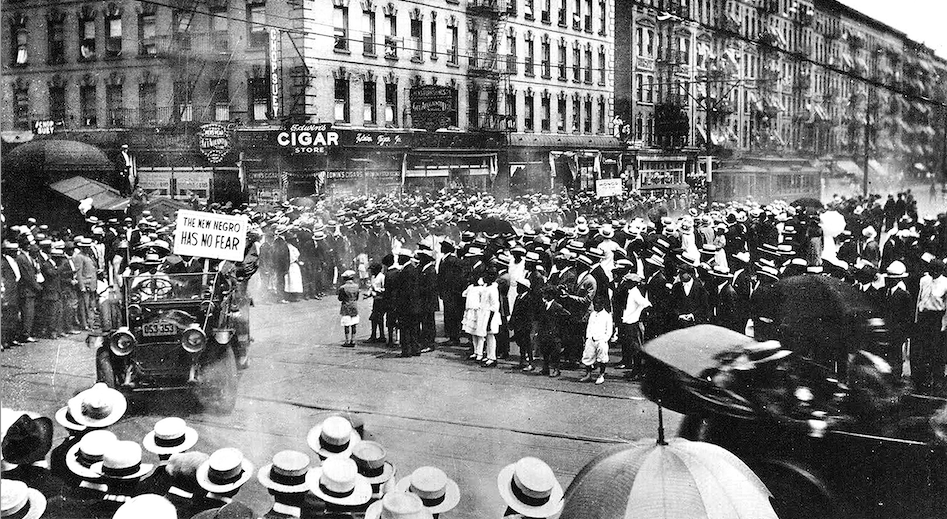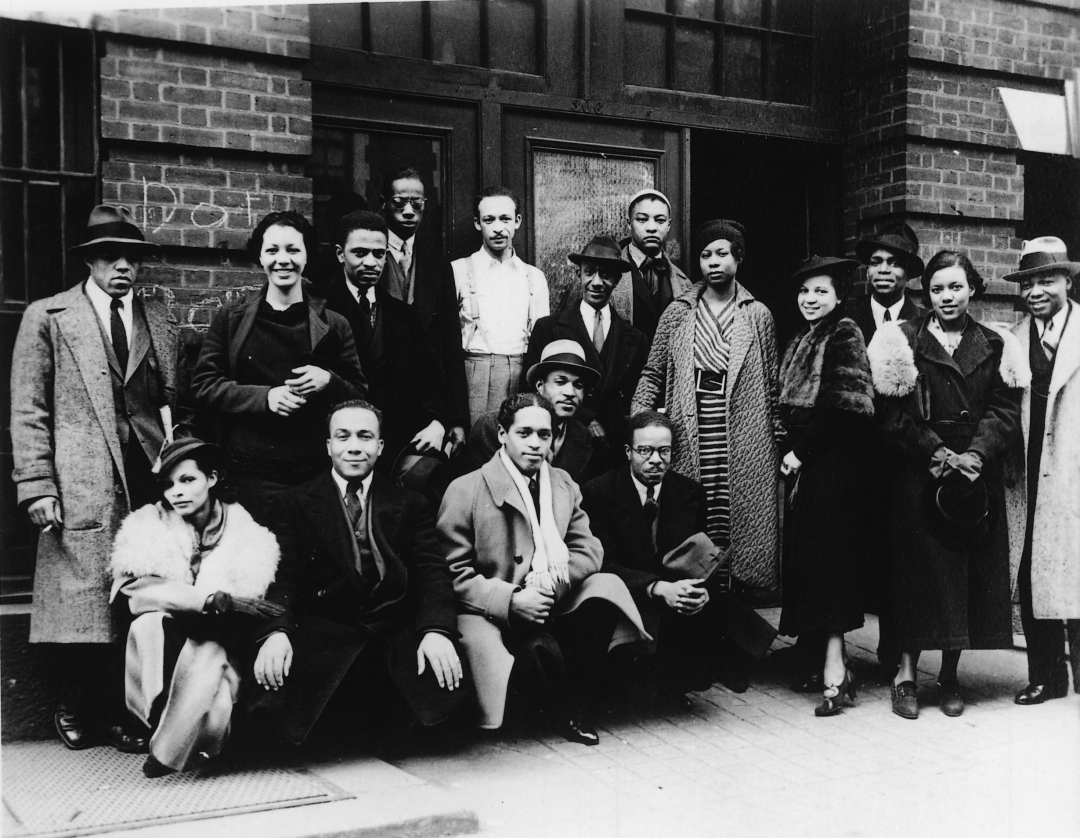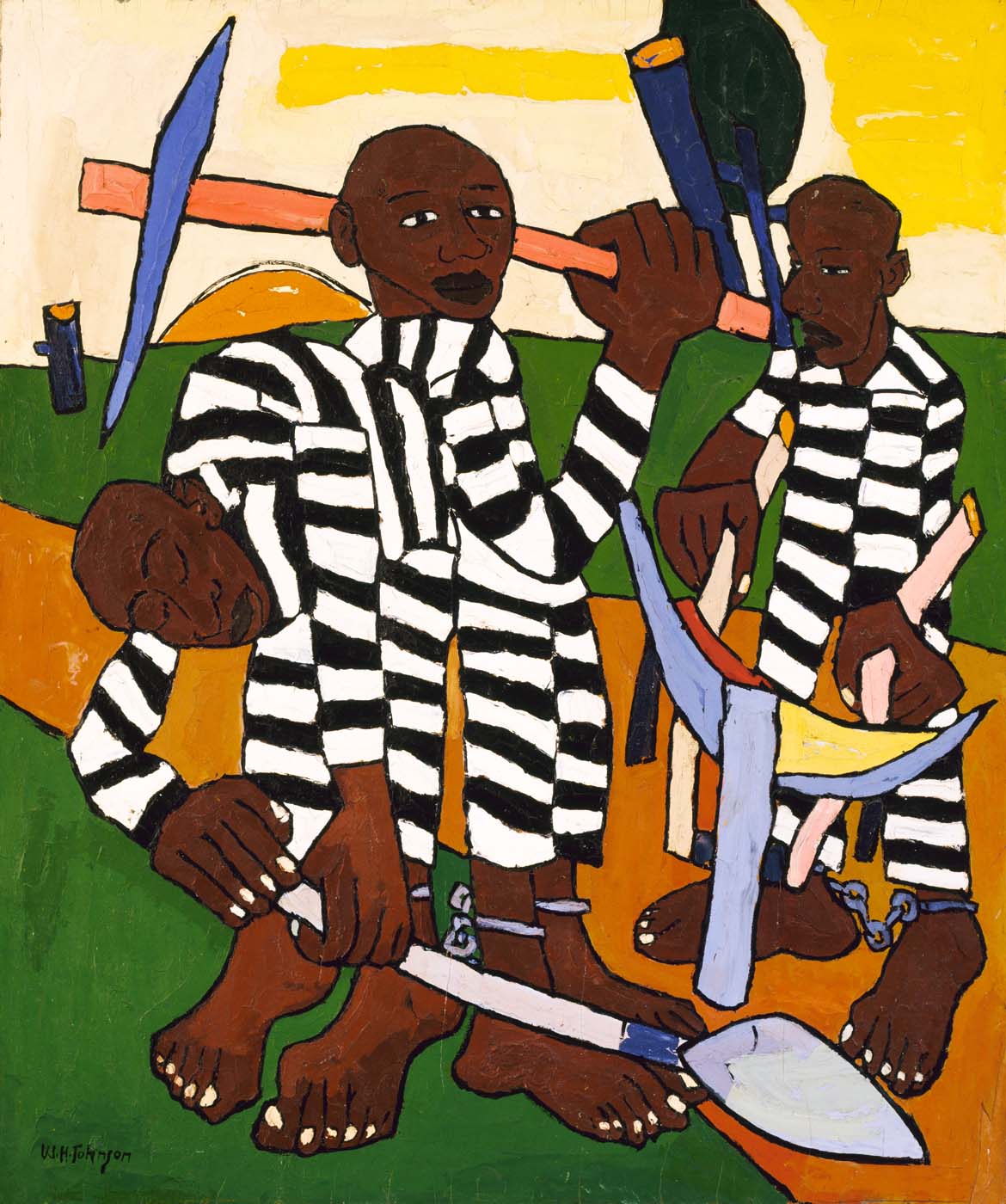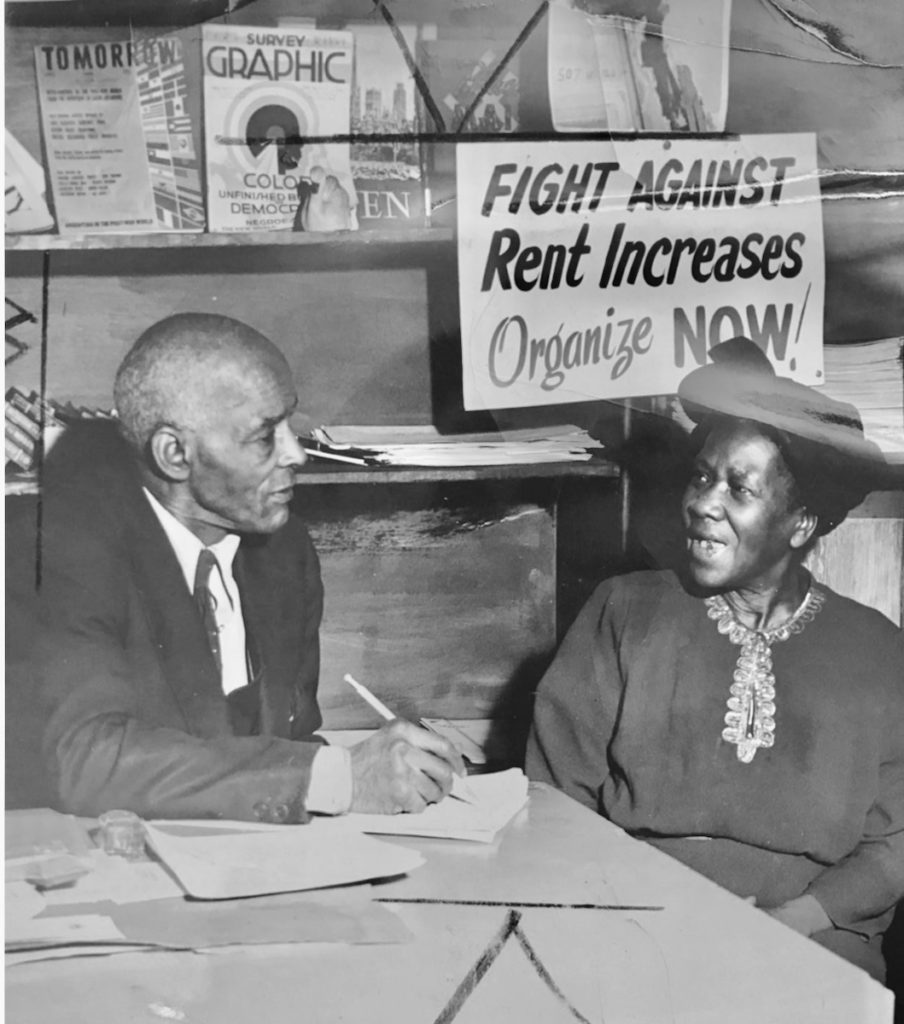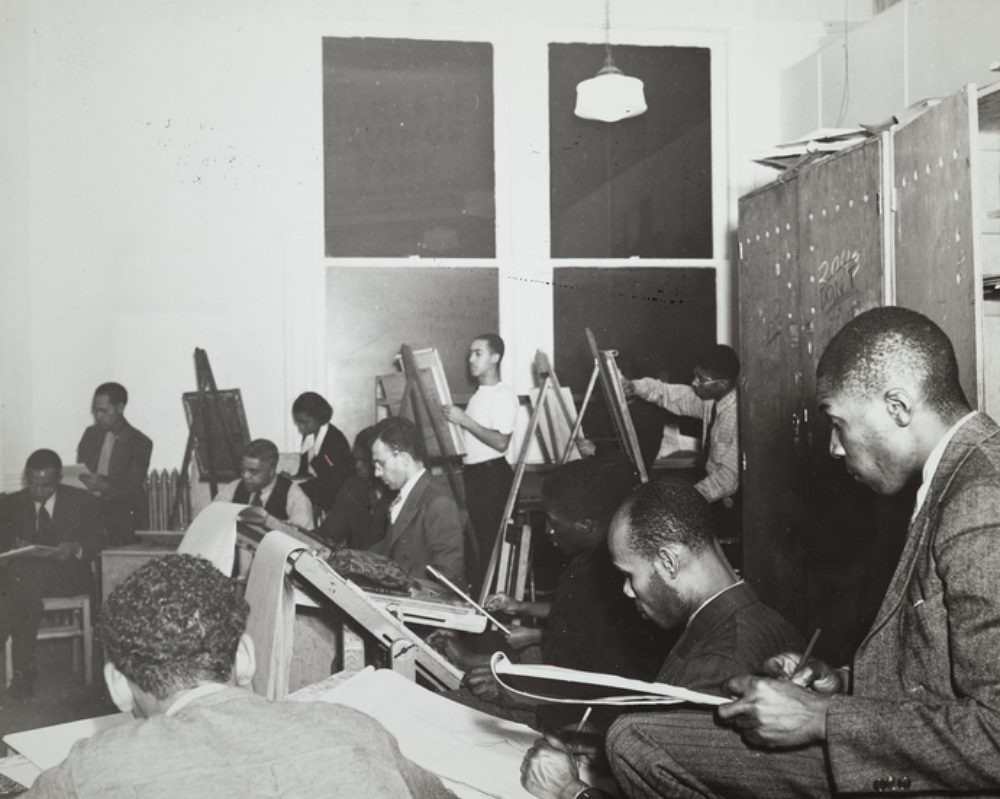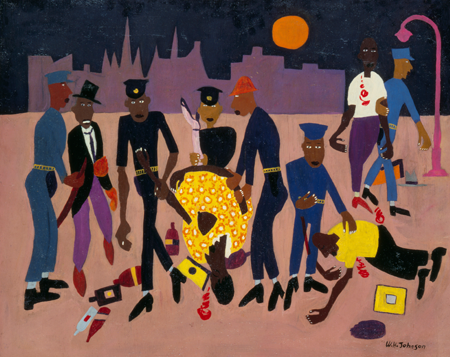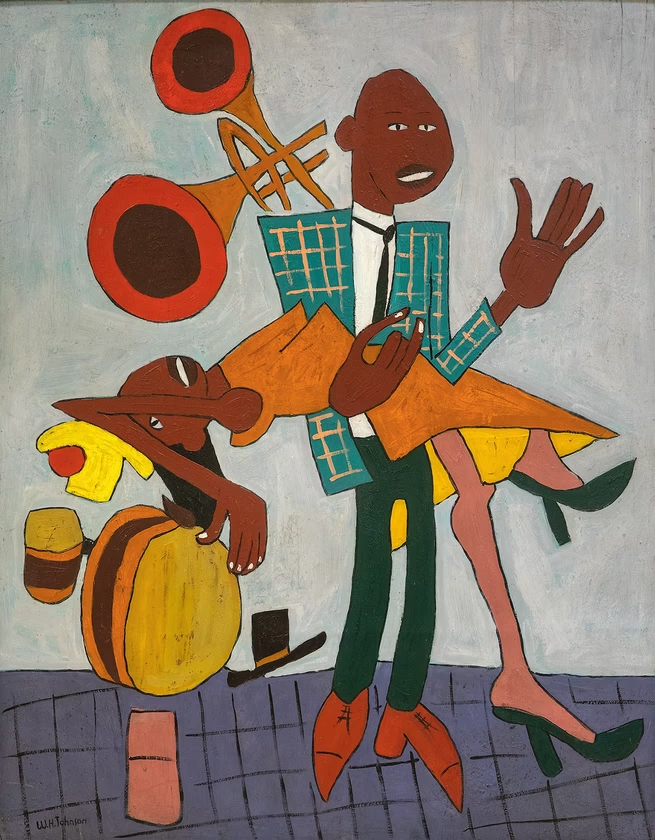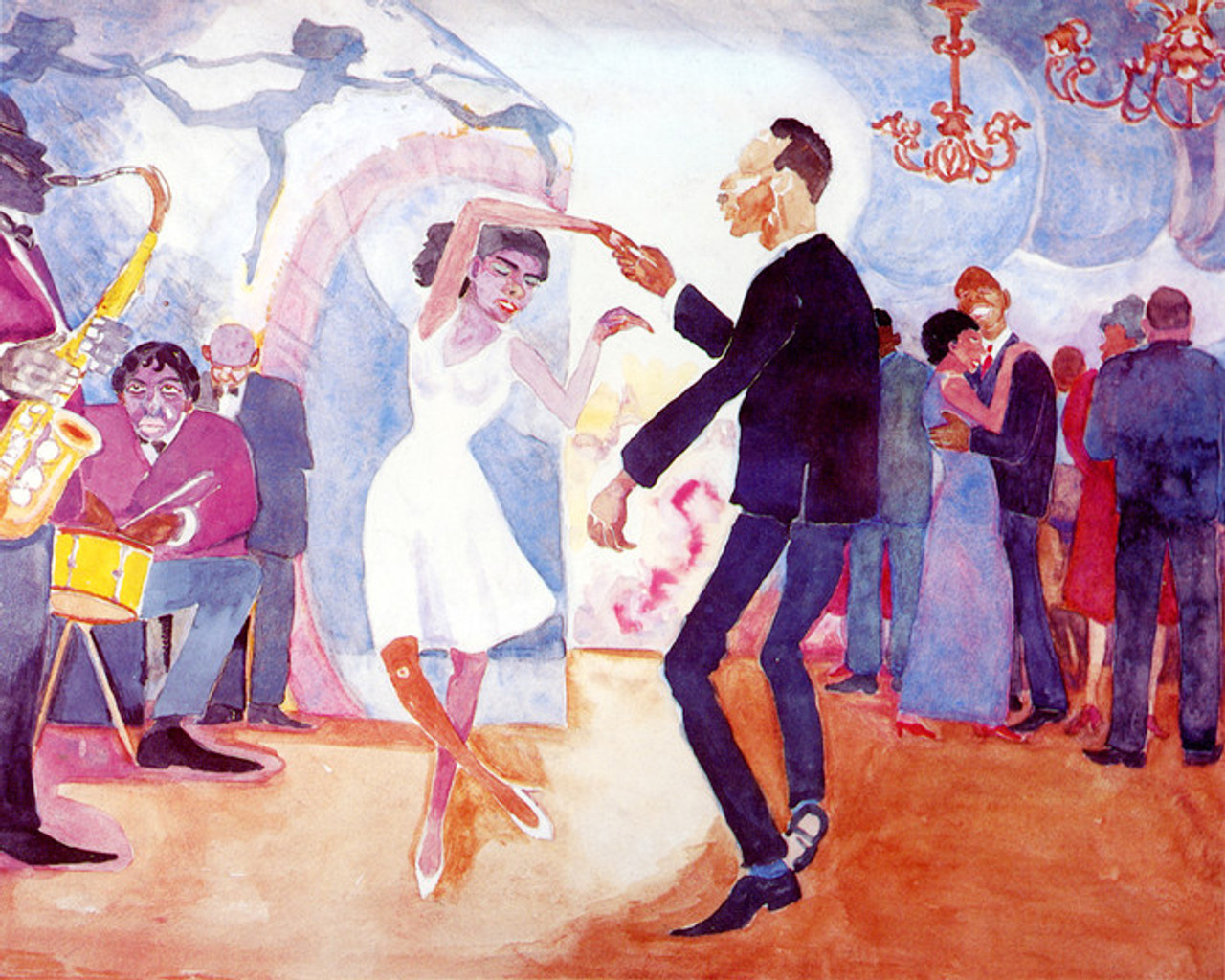
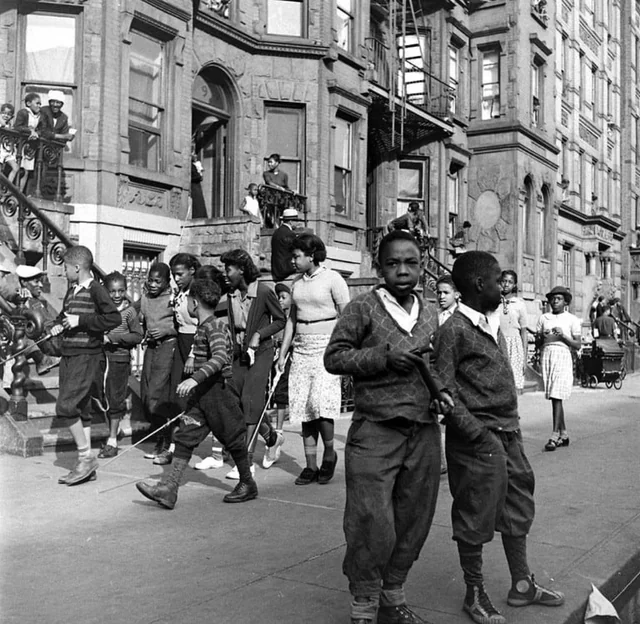
Lindy hop is a street dance. And those streets were full of political rallies, protests, and speeches

First, who am I speaking to?

To Black American dancers reading along:
It is insufferable of me to say all this to you. I apologise for whitesplaining your own history.
I am still figuring this all out in my head, so I’m going to write it out.
To everyone else reading along (especially white lindy hoppers and people who are part of a socially powerful group):
We can do better.

Nor am I speaking specifically to teachers with this post. I’m talking to my friends (and strangers) about the way we use history, and specifically Frankie Manning, in lindy hop culture today. More particularly, the way people who are not Black Americans use Black history.
I am endlessly, perpetually enraged and just plain shat off by white ‘dance historians’ who reduce history to a list of dates and ‘events’ they found in a newspaper or journal produced by white businesses for white readers. I am not a historian by trade or training (though I seem to have produced and published a heap of articles and dissertations that look at history and how we ‘make’ it), but I know that if we want to understand what happened in the past, we need to do more than read the accounts of history written by the victors. The victors, in the case of the USA, are white, able bodied cismen. And fuck knows I’m thoroughly sick of reading about them.

Second, I am 100% coming at this issue with an agenda, and that agenda is ‘place Frankie Manning in social and cultural context’. I have that agenda because most of the current ‘talk’ (ie classes, lectures, social media posts, pages on websites, etc etc) present Frankie Manning the way the Ken Burns would: as a singular genius who created great art alone. This is the ‘Great Man’ approach to history.

This approach is a product of 19th Century Angle-Celtic imperialism: the idea that great social and political events (and scientific and cultural and artistic…) are the product of ‘great men’. Heroes. It’s also total bullshit. Creative and scientific and political changes and events are always the product (or one step in a process) of a whole community. You know the line ‘behind every great man is a great woman’? We’ll, it’s more that ‘every great man is embedded in a community that makes his work possible’.

In the case of Frankie Manning, yes he was a talented artist. But he was also the child of a woman called Lucille, who moved north from Florida to New York in the Great Migration. So his world growing up in Harlem was made up of the thousands of other Black Americans who’d moved away from the violence and unemployment of the south. This whole world made him who he was. His work as a professional dancer was shaped by his ‘colleagues’ (other dancers, managers, venue owners, film directors and producers, competition organisers, band leaders, musicians, etc etc etc). His domestic life was shaped by the people he lived with (his single mother, his wives and lovers, his friends), his social life was shaped by his neighbours (a crowd of people living cheek-by-jowl in urban Harlem), his friends’ and friends’ families’ experiences at work, in social clubs, in churches, and in the neighbourhood.

People lived really close together in the overcrowded area, and people came from all over the country with experiences with horrible injustice. They were often the first free people in their family, or even were enslaved in their own life time. To be alive, to travel independently, to make choices about where to live, to be paid for their labour was political. They were political people.

So this is the important bit: you couldn’t live in Harlem in the 20s and 30s without seeing political rallies on the street, hearing speeches on the street about New Negro issues, hearing people (especially women) organising tenant rallies and actions… and so on (this is a good article to learn about how everyday and ordinary politics was in Harlem in the 1910s-40s). The people who moved out of the south had come from places where they couldn’t speak loudly on the street, couldn’t make eye contact with a white person, had no legal recourse when their families were lynched by whites. But in Harlem, the whole philosophy of the ‘New Negro’ was to find a new way of being Black. And that identity was founded absolutely in community.

Politics wasn’t just about joining a political party and voting in elections (though voting rights were at the core of the New Negro movement). It was about neighbours in a building getting together to make their landlord treat them fairly. Or it was about getting WPA funding for a community arts center. Or it was about going to a church meeting and being organised to bring meals to the needy.

You can see the roots of the Black Panthers in all this: political activism was centered absolutely on the community, and on social justice.

Third why teach this in a lindy hop dance class or in a lecture to dancers, or write it on a blog about dance, or in a social media post? Why should modern day lindy hoppers think about Frankie Manning as a man who is part of the Harlem Renaissance?

1. If we tell a story of Frankie Manning as a ‘Great Man’, he becomes a sort of ‘touched by god’ larger-than-life superhero.

2. But if we tell a story of Frankie Manning as part of a community, specifically, the community of the Harlem Renaissance, then we can teach the fact that Black Americans in Harlem (and elsewhere) weren’t just passively accepting slavery or segregation or white oppression. They were actively working to resist oppression. And activism like this has to be collective.

3. This is important for understanding history, but it also provides a model for political action today. The Civil Rights/Freedom movement of the 50s was a product of revolutionary New Negro politics, and reworking of their practices. The Black Panthers were a decentralised community organisation that explicitly drew on the politics of the New Negro that centered education and community care. The Black Lives Matter movement is the next step in that long political and intellectual and community legacy.

Some of the key features of this political heritage are:
– the role of women is centered and acknowledged (women are always present in actions, but not acknowledged in patriarchal movements eg white peace protest in the USA)
– grassroots activism holds everything together. These politics happen in community spaces including homes, church halls, beauty parlours, cafes. Spaces where women and children have power (unlike, for example, a law court)
– when politics and action happen in everyday spaces, everyone is exposed to it everyday
– the ‘street economy’ (eg drug dealers and users, sex workers and consumers, organised crime, etc) becomes an acknowledged part of the process. eg Black trans women during the AIDS crisis (1980s USA) were essential in organising community care and support, and gangsters like Casper Holstein became involved in funding community works.

This all means that we can look at the Harlem Renaissance as a way to understand how we can resist and be politically active today. So instead of thinking ‘oh, I can’t run for a senate seat, I don’t have the money, so I can’t change anything,’ we can think ‘I can organise a fundraiser in my local scene and raise money for the local women’s shelter’ or ‘When I go to the weekend dance event, I can choose the class taught by a Black teacher instead of a white teacher’… and so on.

Frankie as part of the Harlem Renaissance gives us a model for understanding how we can be part of a politicised community today.

I especially like it because it’s a good alternative to the political model offered by white patriarchy in Australia. I don’t want to join a major political party. I want to teach lindy hop in my local club’s games room, and show people a photo of the Silent Parade taken by a Black photographer, to show how the streets of Harlem were literally filled with political actions taken by ordinary people to challenge white violence in other states.

4. It can also show how, even if a person like Frankie Manning didn’t tell stories about politics when he was teaching white people in the 1980s, he was part of a politicised community. If we think of him as a product of the Harlem Renaissance, the short anecdote in his bio where he describes traveling to see Martin Luther King speak as an ordinary thing colleagues in a unionised workplace did makes perfect sense.

It also shows modern, white lindy hoppers that you can be a great artist, or a hardcore adrenaline junky lindy hopper AND go to a political rally with your workmates.

And to address Damon’s point on my fb post:

it seems very much of filling an agenda that doesn’t serve the point of most Lindy Hop related lectures.
Saturday is class squee day!

Today was week 1 of our lindy hop class block, and we had a lovely time doing swing outs and break steps and jazz and stuff. I squeed when they did their first swing outs. Does it ever get old? No. They always feel the feelings when they get out there.

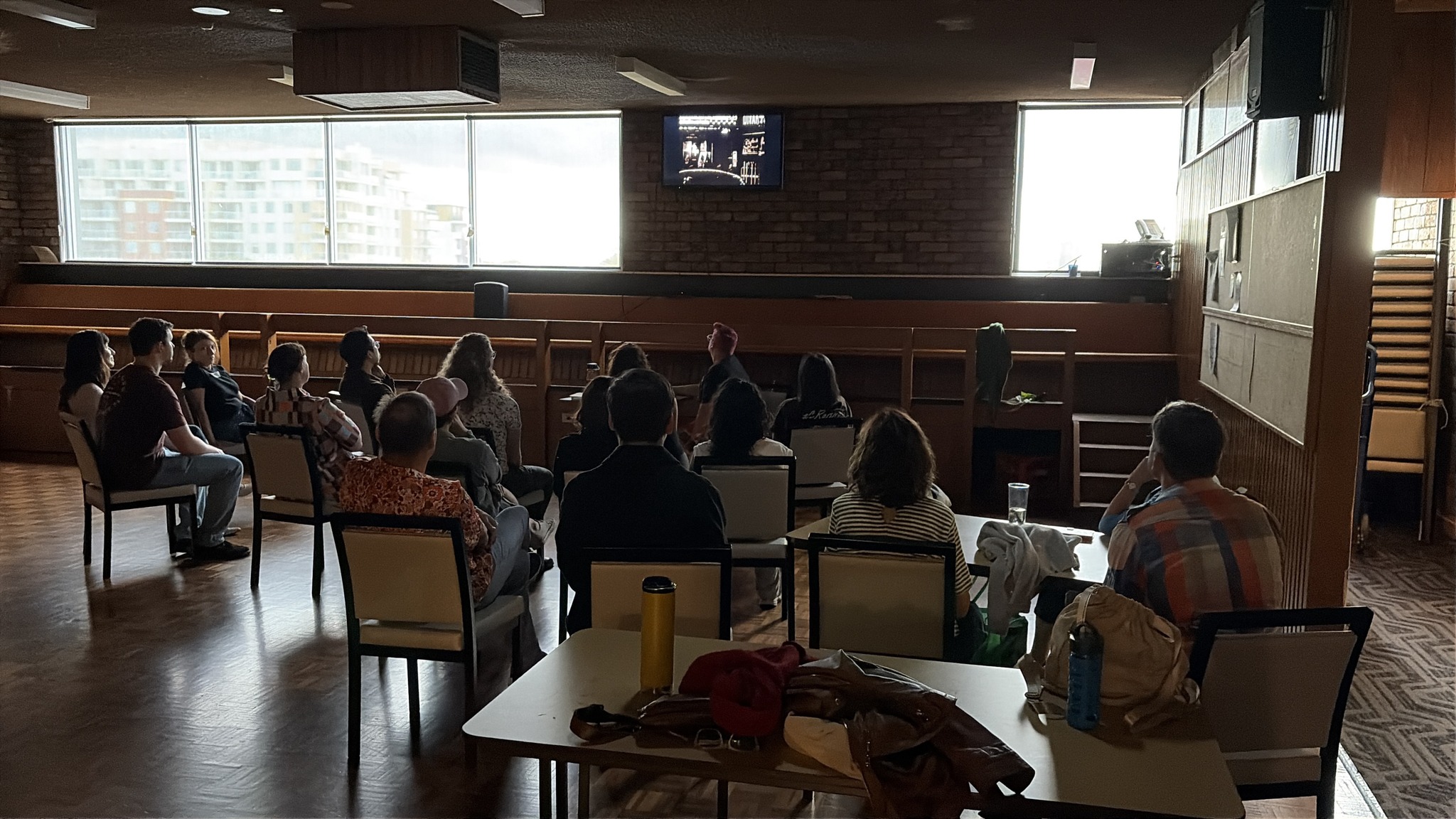
After the class I did a little show and tell with photos and videos. The goal was to explain who Frankie Manning was, and what it was like in Harlem in the 20s and 30s.
I really wanted to position Frankie and the other lindy hoppers as part of that Harlem community. Not individual superheroes. People who were part of a neighbourhood.
So I had photos and vids of dancing and music and community activism and poetry and theatre and art and the New Negro movement and renters’ unions and Harlem Renaissance and clubs and rent parties. I used a mix of photos of people and of huge bright paintings, videos, and gifs.

And videos of people doing mad air steps and swinging out.

Things that were cool:

  • we did it straight after week 1 class of the new beginner lindy hop block. Peeps were tired, but also relaxed and feeling happy and friendly.
  • we got to sit down and see the stuff we’d learnt in class done by the kings and queens
  • we all got to chat and get to know each other in a less formal environment. I used a script with some bits I’d read out (eg quotes from Frankie’s book), but mostly I used a casual chatty style. Because of the crew (my old friends, a bunch of rowdy friends, relaxed happy people) they interrupted to ask questions and point stuff out. PERFECT.

I strongly recommend doing a little film session like this with your students, in their class space. Helped develop cohort, really let them see what lindy hop was like danced by people like Frankie Manning, let them see who the people we talk about look like, etc etc.
I’d keep it to a shorter length (we took about 40 minutes), and I’d aim for a chatty relaxed style that keeps them engaged, rather than a long formal lecture where they fall asleep.

My favourite part was their reactions to the videos!
They’d laugh at stuff I’ve seen other people laugh at – pecking, weird crazy leg stuff, etc. They’d ooh and aaah at aerials.

And a really cool thing – I showed them footage of Frankie teaching a lindy hop class, because I wanted them to see how he taught, and the effect it had on people in the room. They all reacted the same way the people in the class in the video reacted! Laughing, oohing and ahhing, engaging. It was really cool to see.

Anyway, there’s a pic of some of the crew at the top of this post. After this session I found a HUGE projection screen in the storage room. Better buy a projector, aye?

I-go, you-go!

Irina in the Teaching Swing Dance group on facebook just asked:

Hey folks! I have a question I’d like to crowd source for. How do you teach rhythm to folks who don’t inherently understand it? As in those who can’t stay on beat and don’t know they’re off beat even after months or sometimes years of classes. I’m teaching a group class focused on this topic this month and I’d love to hear some tactics and success stories from y’all!

And since I’ve been teaching 30 minute drop in classes for the monthly Blue Rhythm Band gig, I’m full of excitement about teaching again. This is what I wrote:

Oooh! My favourite thing!

So I actually think that keeping time (ie finding the beat) and rhythm are the most important things in lindy hop. It’s how we connect with the music and our partners.
So when I’m teaching brand new dancers (heck, any dancers), I begin with a big apple style jazz warm up, where one teacher leads the group through a series of jazz steps, changing step on the phrase. This teaches students:
– to be present (ie they have to concentrate, so they stop thinking about work, etc)
– about phrasing (but with no obligation to find it themselves; if they’re not ready to hear it, then that’s ok, the teacher’s go it)
– about the beat (the teacher demos how to dance in time)
– to dance on their own before touching another human (much easier than partner dancing)
– to move on from mistakes rather than stressing about them; have to move on – the next step’s coming
– some basic jazz repertoire.

The teacher should be mindful about the rhythms they use. eg using simpler rhythms (single time or half time) first, then adding complexity. eg I might begin with walking on the spot, then walking + a clap on 8, then it becomes fall off the log with some shape.
It’s also good to give students some small victories in the first few seconds, so they feel confident. So start simple, then get more complex later.
-> this is 3-5 minutes. If they’re loving it, do another song!

After this we play i-go, you-go. I intro this by saying ‘now we’re going to play a game to learn the rhythm we’ll use all class.’

Then we play:
– I clap the basic rhythm (if it’s for lindy hop, it’s ‘slow slow, slow quick slow’, if it’s charleston it’s 8-1, 3-4 or however you think of charleston, etc).
It’s 8 counts (2 bars) in a moderate tempo (not too fast), swinging.
– They immediately repeat it back to me
– I clap the same rhythm….

This goes on in real time, with the same tempo. I move from clapping it to tapping it with different parts of my feet, with different feet, then step it out, then move it around. You can also scat it.
The other teacher is ‘on their team’ so they have a model for what to do.
As the ‘caller’ (they’re the responders), you pay attention to how they’re going. If they’re struggling, make it a bit simpler. Repeat something. If they’re all over it, add in elements like the shape of your body, where you place your feet, etc. The great thing about this is that if they’re not ready to work on these ‘extra’ things, they won’t see them because they’re too focussed on the basic stuff. Don’t stop and articulate this; just let it be there for the students to see when they’re ready.
Do not stop and explain things or correct or ‘break things down’. This is essential. This teaches them how to keep time _in real time_. It also teaches them how to learn-by-seeing and learn-by-doing. Just as we would on the social floor. This is one way you might think about building Black street dance tradition into your classes. But defs not the definitive or final way!

You don’t have to say ‘rhythm is the most important part of lindy hop’. By having it right up front as the first thing, you’re showing them that rhythm is important.
It’s ok to say ‘yes!’ or positive comments and noises when they really do stuff that impresses you. Show them how to be a receptive, appreciative audience.
The goals:
– learn how to learn without having a move ‘broken down’ for them verbally. They learn how to ‘break it down’ themselves, into the parts that matter to them – eg they might be ready for foot tapping, but not ready to see which foot it is; they might be ready for hitting the last 4 beats, but keep missing the first 4.
– get them used to moving on from mistakes without stopping to stress
– feeling confident trying instead of stopping to think before trying
– starting simple (clapping), then getting more complex (stepping the rhythm through space)
– they make a few mistake at first as people figure out how to play, but keep going. This teaches people that it’s ok to stumble through until you figure out what you’re doing. This teaches you to feel confident in mistakes. No one stops to correct you (and tell you you’re doing it wrong), no one judges.
– saying it’s a game is essential: game connotes fun, no pressure, play. ‘exercise’ or ‘rudiments’ feels like more pressure. Also, it’s fun.
– we start with this simple version so that they can learn how to play before we move onto more complex or challenging games later.
– they are all on one team (rather than one person clapping in front of the whole group).
By the end of this, 99% of them will be keeping good time and will have mastered the rhythm. They’ll also be a bit fatigued (brain wise), so change tasks.
-> this takes about 5 minutes max.

If it’s a normal class, I then have them play the same game with a partner, one-on-one. They take turns being the ‘caller’ and ‘responder’. You can have them do exactly the same thing (clapping the same rhythm with different shapes) or you can have them do different stuff (eg jazz steps, different rhythms, etc).
Goals:
– they learn to watch their partner and figure out rhythms from watching
– they start learning (from being a caller) that the goal isn’t to be best rhythm-composer, but best communicator of rhythm
– their weight changes and clarity of shape get really really good; it has to be super clear so their partner can figure it out. They’re not always aware of this.
– they learn to keep time and recognise and then reproduce rhythms
– Most amazing (and I only realised this after observing them carefully) they actually start orienting their bodies _towards_ their partners, with that lovely active balance (weight forwards, core engaged), the ‘perfect’ distance apart. So when they partner up in closed THEY ALREADY KNOW HOW TO HAVE ‘LINDY HOP BODY’ !!!!
-> this takes about 5 minutes.

From here they go on to partnering up.
I find that they are 100% ok with doing the nice rhythm (step step triple step), they keep lovely time, and if you play a nice song, they SWING IT. They also don’t need to be counted in, and can find ‘1’ easily.
All this takes about 15 minutes. I find that this investment in time gives them the skills to really _learn_. If you then move on to teach ‘moves’ by saying ‘please observe us, then reproduce it as best you can’ they are happy to just give it a go. You don’t need to break it down, they learn faster (and dance more), and they actually learn better and retain more.

Important things:
– never ‘correct’. Every time you correct a student (‘just one tip’ is a correction), you’re essentially telling them that they’re doing it wrong. This lowers self esteem and confidence, and actually makes it harder to learn. Happy people learn faster, retain more, and are braver and more confident.
– if you want to praise, make it process-oriented. ie don’t say ‘that was amazing!’ say stuff like ‘I saw X and Y get into a mess, then stop, laugh, take a breath, then restart. This was really effective’. This will give X and Y positive vibes, but it will also give the rest of the group info on what they might try, and it generally makes YOU feel fantastic, because you’re looking at your students to find good things, rather than looking at them to find bad things.
I have one hundred million things to say about this, and have posted about it a million times in this group (you can find it if you search for ‘i-go’, etc), and a lot of clever teachers have made suggestions and helped me learn about this stuff. It’s SO MUCH FUN!

Props:
I learnt this approach from taking classes with tappers Josette and Joseph Wiggan, and with Thomas Moon. Ramona Staffeld’s kind-but-clear approach to teaching helped us refine the approach. Classes with OGs like Chazz Young taught me that I can learn and do ok if I just keep trying and don’t have a teacher hold my hand. Josette taught me to not ask questions when I was confused, but to just have a go instead.

Our Swing Dance Sydney teaching group developed this approach together; I was just one person in the 6 person team.
The students themselves offered lots of feedback and suggestions on these things. We’d ask them ‘what did you think about this game?’ and they’d give us useful answers

How do you tell the difference between an 8 count move and a 6 count move?

[edit: This post Key Skills also addresses this topic]

Well, how?
This is one of those questions that comes up in the Teaching Lindy Hop fb group over and over again. I hear people asking it in classes and workshops all over the world. It’s like asking ‘can I take knitting needles on a plane?’ It will always get a lot of social media traction. It’s a good idea for a banging post.

But I think it’s also a good case study for examining some of the problems with out lindy hop is taught these days. So let’s go there.

I’ve taken a number of workshops where the best teachers in the world teach 6 count and 8 count moves, and explain how a follow might know which is which, and how a lead might lead the difference. But I’ve figured out that it’s also a bit of a straw man question. Why?

It begins with the premise that lindy hop is a series of moves. And to paraphrase Adrian Warnock-Graham from Montreal, lindy hop is movement, not moves. It can take any number of beats to move from point A to point B, and in any rhythmic combination. We tend to favour blocks of 4 beats because swinging jazz is in 4/4 time (4 beats to the bar), and 2 beats because we have two feet, and swinging jazz usually has the emphasis on every second beat. But even a fairly canonical figure like the swing out needn’t be restrained by an 8-count (two bar) timing. It can be as many or as few beats as you like (or can make happen).

So why are people obsessed with this question of knowing the difference between 6 and 8 count versions of a figure?

Because that’s the way they’re taught. It is routine to see lindy hop classes all over the world marketed as ‘8 count swing’. Teachers talk a lot about ‘8-count swing’ in class, distinguishing it from ‘6-count’. There are a range of reasons for this, some rooted in the 1990s, some to do with the wider modern-day partner dance community.

Kenny Nelson has written a very good blog post about it, Social Dances Have Names, where he points out that white dance teacher repackage and market lindy hop (in the USA) as ‘jitterbug’ and ‘East Coast Swing’ as a way of explaining a dance product (lindy hop). Gaby Cook argues in a facebook post that ‘east coast swing’ is a product of the Arthur Murray company (she provides references in that post).
What is East Coast Swing?

  • A dance product created by Arthur Murray, a white American male dance businessman;
  • A repackaging of Black dance (lindy hop) to make it palatable for white sensibilities (an issue I’ve taken up in this blog a million times before, and which is the topic of a chapter of my PhD dissertation);
  • Predominantly 6-count;
  • Marketed to newer dancers.

The history is a little different in Australia. Yes, all the above holds true for this country. But the link to Arthur Murray and even the phrase ‘east coast swing’ has largely fallen out of use. It was definitely how I was sold lindy hop in my very first classes in Brisbane in 1998. But you rarely hear it used today.
Instead, the emphasis on 6-count figures is tied to the popularity of 1950s rock n roll dancing, which was huge in Australia in the 1980s, heavily promoted by large dance associations (like the VRRDA), and provided teachers for the very first lindy hop classes in the country.

In Sydney in particular, rock n roll classes (and rockabilly) are very popular, bolstered by a healthy (and very fun) 50s live music scene and vintage/goth culture. So it’s not uncommon for a new dancer to take beginner lindy hop classes and beginner rock n roll classes at the same time. The two dances are further conflated by:

  • The same types of music used on both classes (or at least a lack of real swinging jazz in lindy hop classes);
  • A lack of attention to timing and rhythm in swinging jazz, and how that affects the way lindy hop works;
  • A lack of distinction between 6-count rock n roll figures and 6-count lindy hop figures in these classes;
  • Teaching mostly 6-count figures in beginner lindy hop classes, which then leads to the idea that rock n roll is ‘easier’ than lindy hop, and lindy hop is therefore ‘much harder’ than rock n roll;
  • An almost uniform belief that the swing out is ‘a really hard move’ in Sydney lindy hop teachers, and consequently a reluctance to teach it to beginner lindy hoppers.

So you can see how newer dancers, dancers who aren’t plugged into an international lindy hop community, or dancers who don’t know much about the history and music of lindy hop draw a very deep line between 6-count and 8-count moves in lindy hop.

Other factors contributing to this strange way of thinking about lindy hop include:

  • An emphasis on teaching figures in classes;
  • Class content composed entirely of set sequences of figures (ie ‘mini routines’);
  • Teacher-centered classes, where these set sequences of figures are called by the teacher, students are ‘counted in’ by the teacher, and the music treated largely as a metronome for marking out ‘the beat’.

In this class environment a ‘successful’ dance is one where the follow gets all of the figures correctly, and the lead leads all those figures correctly. There is no room for improvisation, no room for counting yourself in or experimenting with different timing for a figure, and a very strong emphasis on the leader and leading. We also see language like “What is the lead for this move?” as though there is only one, fixed way for a lead to move a follow through a figure, and only one figure matched to each set ‘lead’. This approach tends to create an anxiety in follows about ‘following properly’ (ie executing a figure perfectly, and exactly as the leader wishes), and a complete inability for students to count themselves in, understand or predict musical structure (like phrases, choruses, bridges, intros and outros, etc etc), swung timing, or improvise with shape and timing.

One of the most annoying consequences of this approach to teaching (for me, anyway), is men who usually lead all the time wanting me to dance with them, so they can ‘try following’. I’m generally not a fan of this, and often say no. I’m not a fairground ride. But the part that really fricking irritates me, is the way these men don’t actually ‘follow’. They feel what they assume is ‘the lead’ for a figure, then execute that figure, completely independently from me. You feel it most in a circle (where it feels like they’re running backwards, pushing your right hand around), swing outs, where they send themselves waaaay out past the limit of my arm, execute a made version of a swivel, and then run back at me, and of course as they move themselves through under arm turns with no reference to me.
I do try to be sympathetic to these men who just want to try something new, and only feel comfortable dancing with women because GAYPANIC. But I don’t. I’d really rather dance with someone who only follows, or who has never danced at all. Sorry not sorry.

But this approach to ‘following’ makes very clear the way these dancers understand lindy hop: as a series of moves (not movement), with set ‘triggers’ or leads for those figures that are performed at set times. There is no understanding of leading and following as a mutual process, where both dancers are communicating all the time, not only through those ‘leads’, but through every point where they touch, through looking at each other, laughing, smiling, talking, calling out, demonstrating jazz steps or rhythms, adjusting the way they move or groove in response to the music, and so on.

Surely you can see how all this sets dancers up for the idea that 6-count moves and 8-count moves are completely different things. And when they ask “How do you know the difference between 6 and 8 count moves?” they’re really saying “Give me a fail-safe, objectively neutral and fixed list of indicators so I can always follow/lead this move perfectly.”

So what do we do when students ask this?
I’d like to channel Sylvia Sykes here, who famously responded to the question “How do you dance lindy fast?” with “You do the same thing, only faster!” If Sylvia was asked “How do you know the difference between a 6-count and an 8-count version of this move?” I like to imagine her saying “The 6 count finishes earlier because the 8-count takes two extra beats.”

Because honestly, that’s the difference: one figure takes 6 beats, one takes 8 beats (and is therefore 2 beats longer). The 6-count figure is faster.
The follow up question, then, is ‘How do you know if it’s going to be a 6-count move or an 8-count move?” Because that’s really what people mean when they ask about knowing the difference between the two.
And my answer is: you don’t.

All sorts of things can change the length of a figure on the floor. A drunken random careering into your pass. Your partner losing their balance. A sudden urge to dance an iconic jazz step halfway through a bar. Random choice.
As a follow, you can’t ever know what a lead will do. And if it’s me leading, there’s no way I’ve planned any further ahead than the next beat.

As a follow, I just try to be mostly present in the moment. I feel that physical contact with my partner – their hand holding mine, my arm resting across their arm and my hand touching their shoulder, their arm around my side and back, their hand on my back. I look at their body and face to see how they’re feeling, whether they have a fun jazz to show me. I listen to the music and let it take me from point to point. I take care of the rhythm I’m doing (which is usually what the lead has suggested, but not always). I try not to fall over or run into anyone. I don’t know if this move is going to be 6 or 8 or 10 or 20 beats long.

But I do know if the lead is accelerating our movement, and I try to stay in contact with them so it can happen. Unless I don’t want to. Or can’t. So they may have aimed at a 6-count move, but it might become an 8-count move because I’m just too fucking tired to make it happen that quickly. Or because I need to add a couple of beats to make my logical-awesome jazz step work. Or because I missed the build up of energy. Maybe the lead thinks they’re increasing energy, but they’re just yanking me about? Who knows. And that’s why we can’t really know ahead of time whether a figure will be 6 or 8 count. Not if we’re actually dancing.

As a leader, I can choose to lead a 6 count version of a figure instead of an 8 count version. Maybe the music is telling me it needs a nice sharp BAM at the end of a phrase. Maybe I’m full of beans and dancing like a manic crazy person. If I do happen to be moving towards a shorter, faster shape, I need to start getting my shit together well before that point. I need to be properly connected to my partner, knowing exactly where their weight is, whether their torso and limbs and everything are safely under control. I have to have enough room on the dance floor, and be aware of the directions and speed other people are moving. You know, social dancing skills.
The magic thing about lindy hop and improvised social partner dances, is that all that stuff is happening usually outside your conscious awareness. If I had to consciously measure all these things, I’d die of stress and mental fatigue. I certainly wouldn’t enjoy dancing. When I’m dancing, there’s no planning. No thinking. Only feels. Which is why I need to practice if I’m going to dance on a busy dance floor in Seoul :D

There are lots of things that tell you, as a follow, if the lead wants to change the figure you’re doing at a certain point in time. They might have their hand over your head as you turn, and then bring that hand down in a comfortable arc to suggest and ending to your turn. Of course, you don’t have to do this; you can spin on forever. Or not spin at all. You are an independent, free and capable human being.
Or you might be in closed, and the lead uses the triple step after a step-step to make a send out from closed to open a faster movement, where that triple step is followed by another triple step. That’s a very standard way of feeding energy into a 6-count figure. Triple steps are, as you know, a very useful way of adding energy to movement, because you are adding an extra step, and you’re playing with the timing (making the rhythm slow slow slow quick slow) which makes it feel snappier and also swingier. This is, incidentally, why I RAGE OUT when I hear teachers tell students that they should drop the triple step when they lindy hop to faster music. What the actual fuck? That’s something a lead would say. A follow knows they need that extra step to haul arse. And we know that the triple step is the part of a swing out where we feed energy into the movement.

But I digress.

In sum, then, if you are asking ‘how do you teach the difference between 6 and 8 count moves?’, perhaps you should stop and look at your teaching, and consciously move away from focussing on moves, and towards movement. Move away from set sequences of figures, and towards ‘Try it in your own time’ sessions in class. And for the goddess’ sake, stop counting them in. Let them start ‘when the music tells you it is the right time’.

Trans Day of Visibility in JAZZ

Yo, tomorrow (31st March) is Trans Day of Visibility.

Considering the far-right’s desperate attempts to kill anyone who isn’t beige, it’s probably important to use your channels and classes to remind people that jazz music and dance, Harlem, and the Harlem Renaissance were (and are) queer as fuck.

Performers and musicians like Gladys Bentley made no secret of being queer and trans.
The Hamilton Lodge Ball was HUGE (we’re talking 7000 people of all stripes attending in 1932 alone) and showcased the early days of ballrooming/drag balls.

Trans activists (especially trans women of colour!) have been at the heart of queer activism since FOREVER (Stonewall was kicked off by a queer trans woman of colour!).
And if you can’t name half a dozen jazz musicians who were gay, you’re not paying attention.

Some resources:

Another post about this:
5 Ways to Be a Totally Ok-By-The-Gays Dance Teacher

1929 Studios’ post about this: https://www.instagram.com/p/CqbkPGuvdn4/

How to be a professional lindy hop teacher. How?

A famous international teacher wrote this in a public post on facebook today.

Hey y’all, real talk. I have encountered multiple people this week who have never taken classes from me, are not signed up to take classes from me, yet have told me they have seen my class recap videos and been practicing from them. The purpose of my recap videos is to help the people who actually have bothered to become my students and who have shown up to learn from me. Believe it or not, this is my livelihood, I make a living from teaching dance. I sell instructional videos from my website. Undermining that is an incredibly shitty thing to do. The same way I would hope you wouldn’t buy a friend’s band’s CD and then just turn around and burn copies for everyone you know (and would hopefully encourage them to actually support the artist and go buy their own copy), I would hope you would encourage folks to actually come take a class from someone who has built a career doing a thing. The easy option is I just don’t do recap videos anymore (shocking concept, but for much of my dance career, video recaps just weren’t a thing). But I actually care about students’ improvement and would love to provide that as a resource because I think it is helpful (as many folks also seem to), so the option I’d rather pursue is just be respectful of artists. Thanks.

This post was shared by a mutual friend. This was my comment:

I don’t buy this argument at all.
Recap videos are a brilliant way to market a teacher’s skills. They get people gigs, it gets people into workshops at events.

Recap videos often circulate between people who don’t have the money or opportunity to go to big workshops, and they’re an ongoing resource for a local scene. It’s also super common for someone to take a recap video back from a weekend to their home town, and then work on the material with their friends and dance partners (who may not have attended the workshop!) This is how dance knowledge permeates and spreads. It’s also a good strategy for people with low incomes to access knowledge.
To be honest, I have zero problems with people of colour, women, other marginalised folk doing this sort of ‘textual poaching’ from a white man 😃 😃 😃

This is not the same as people filming you while you’re teaching a class. That’s fucked up and not ok.
If you’re not ok with the way video footage circulates in the community, don’t let people film your recaps. Boom.
If you want to capitalise on the fact that your fanbase is sharing videos of you, learning from you, emulating you, get onto it! That is some powerful audience-engagement!
Things you can do:

  • Follow up on that conversation with that fan
    (which, tbh, is a hugely flattering thing for them to do), by saying something like “Oh, that’s so good to hear! We should organise a zoom session so you can ask questions as you work through things! I have pretty reasonable rates, and we can make it work for small groups.” This is effective because this fan is clearly ok with working from a screen (usually a tiny phone screen!), and a zoom session would be a step up! It’s not often that an audience makes their preferred mode of engagement so clear!
  • Regard that conversation as a fan being brave enough to approach their hero
    and respond with positive enthusiasm. Ask them questions about their dancing, ask them what they liked about the video, and what they’d like to do next. That fan will remember that conversation, take it home, and tell it to zillions of people. That sort of interaction gives teachers a rep as ‘a nice person’ and that rep convinces local organisers to hire teachers. You don’t have to put on a fake cheery persona; just respond like a decent human being to someone who’s telling you (in so many ways) that they think you are amazing.
  • Rethink the way you structure your recaps
    to take advantage of this free circulation and marketing. Add a little intro with details of how to reach you. Limit the content in the recap. Have students dance the recap material instead.
  • Don’t do in-class recaps at all
    but release them yourself from your own website (or a third party site), where you say to the group: “Give me your email addresses, and you can have access to the recap videos on my website” and then you can garner their email addresses for your marketing!
  • Be very clear in your T&C with organisers about recaps and filming them.
    I personally say to teachers that they are not obliged to do recaps, filmed or otherwise, and I make it very clear to all registrants that teachers may not offer a chance for them to film recaps (ie their registration fee does not cover the chance to film a recap).

The more I thought about this, the angrier I got.

In the replies to his post, where people offer suggestions for monetising or controlling the circulation of this footage, he says “I’m old school. I teach dance classes. Not trying to be a youtube/insta/whatever power user” and then another big name teacher chimes in with “this is great but it’s a lot of – more – work” and this made me furious.

Most of the people who put on events that host these sorts of teachers do it for free. They work very hard to give these teachers work and provide workshops for their local scene. There’s very little money to be made (most people hope to break even, or subsidise with other stuff). It _is_ a lot of work. And they do this _in addition_ to their day jobs, caring for families… and often, teaching weekly dance classes.

To hear a high profile teacher denigrate this type of work makes me VERY ANGRY. And yes, it is lots of work to do this sort of management and promotion. HAVE THEY ONLY JUST REALISED THIS?!

I hear this bullshit from white man musicians all the time. As though being ‘a musician’ means that you just ‘do art’ and the audiences magically come to hear you ‘do art’. NO BITCH, THAT IS NOT HOW IT WORKS. Being a working artist means you WORK. You work on your craft, but sorry, white man, that means doing promotion, profile management, networking, all that distasteful plebean stuff. You also put work into being good at working with others (sound crew, venue managers, promoters, bar staff), you develop a sense of brand or how you want to be promoted, you develop actual promotional material (a bio, some photos, and – god forbid! – a website).

Argh this makes me so, so angry.

Anyway. This is why over the years as an organiser, and as someone who’s also been the ‘talent’, I’ve realised that the ‘talent’ is interchangeable, but the people on the ground who run events, who work the door, set up rooms, and clean up after parties, are the really irreplaceable people.

Digital business tools for dancers: Sam’s hack.

Topic: useful admin tools for dance businesses

[NB not tools for social media marketing or graphic design. Just basic business tools]

Last year I did some research into the various tools a dance business uses, and discovered some useful things. Note, I am based in Australia, so some of our laws RE storing personal data aren’t shared by other countries.

If you’re running a business that teaches dance and runs parties and workshops, you need a few digital tools:

– a website
– an email tool
– a way to take payment digitally
– a way to organise registrations
– You’ll also need some sort of accounting software too, but your local tax laws and accountant’s preferences will help you decide what you’ll use.

We’re all usually bound by pretty tight budgets, so it’s fair to say that we want the best we can get, for the least amount of money. And we all know that the cheapest isn’t always the best.
But we also know that not all of us have the technical skills or experience running a dance business (not to mention time) to learnt to use a bunch of new computer things.

Anyway, this is what I found. It’s not an exhaustive list, and it’s pretty much just for me here in Australia.

Let’s assume we have two users.
User 1: New to running a local dance business, lots of good _dance_ and teaching skills, very little experience marketing, handling income and expenses, no real experience dealing with computer software, etc. Limited budget, time-poor. So, a regular dancer.

User 2: Experience running a dance business, experience with a range of software tools, dance and teaching skills. Time-poor, small budget. Wants to upgrade from older tools, reduce admin hassle, and streamline the process. So, the other type of regular dancer :D

From what I’ve seen, there are a couple of ways to get all the tools you need:
1. An all-in-one tool that handles email lists, digital sales (both online, or via a phone in person at a dance), a nice looking website (with the analytics you need)

2. A host of individual tools (eg a sales tool, an email tool, a website tool (whether it’s one you build yourself, or one out of the box)

The first option can be (and usually is) more expensive. There are cheapy options out there, but most of them don’t do all the things a small dance business really needs. Sometimes the more expensive complete packages are a bit limited (eg the email option only lets you have 500 addresses on your list; the website sales integration only works with a particular bank or shop front app).

But the first option is easier because:
– you don’t have to spend lots of time learning to use a lot of different tools.
– you have one account that you log into, from which you can add other users/admin accounts
– the integration of all the tools means you can see when user X buys a product, cross reference it with how often they open emails from you, and track their progress through your site. To my mind, this is the BEST thing. But it’s not so useful if you’re not at the point where you need or can make use of this data.
Downside of this option: price. It can seem super exy for a small business that doesn’t have any seed money.

By far the best of these options is Squarespace. It’s not the cheapest, in fact it’s quite expensive, but it saves you a lot of things:
– security is better because you don’t have a heap of random tools with different log ins that you share with everyone in your team;
– security can be weaker, because you only have that one point of entry to all these essential tools. Good thing is that squarespace is pretty secure.
– the website templates are really really nice, and look really professional. This is essential for a business that needs customers to trust it’s online shop.
– the website design can be changed via the code directly, or using the design tools in the main dashboard. You can create a page quickly, and move images and blocks of text around quickly.
– the shop front tool is beautifully integrated from the front end (the customer’s point of view). It looks slick and professional, which is good for developing trust.
– you can add approximately one billion trillion ‘extensions’ to the basic website. ie you can integrate a bunch of other tools, from accounting software, to email marketing, store fronts, your social media accounts, and printing. Yes, you can create your own tshirts and sell them through your site without having to handle printing or inventory.
– it will help you through buying a domain, which is often another sticking point for new businesses.

The downside of squarespace:
– it’s expensive
– learning to use the website building tools can be tricky (I found it challenging, and I have a lot of experience building sites from code to using builders)

The second option (lots of different tools) is often the cheapest option. But it’s ‘messy’. If you go this route, these are the tools I’d recommend:

– Square for sales. It’s secure, it has good support (ie people to help you), you can use it with your phone (so you don’t need to buy any sales hardware). It has a simple online shopfront (very basic, but serviceable, and not too ugly), and it’s the cheapest. Cheaper than paypal or Trybooking. And more flexible.
It is ‘basic’, but that’s it’s appeal: it’s not too hard to learn to use. But don’t expect too many bells and whistles.
You can take your phone to class, and then when people arrive and want to pay, you can do it all right there with just your phone. No cash, no extra hardware. Game changer in a covid world.
Equity: many of us offer free or discounted tickets for students, low income, etc. I haven’t checked it, but I’m certain Square would offer a ‘reduced’ or ‘comp’ sales option for your items.
– Does it handle your inventory (eg how many items you have left to sell, etc)? I assume so, but I’m not sure.
– Does it handle registrations (which is another way of talking about inventory)? I haven’t tested this.
I haven’t used a separate registration tool for years, as most of the modern online sales tools handle that as a basic feature. As dance event organisers, we really want to know how many people are coming, how many tickets we have left, and then we want to know info about each sale (lead/follow, etc). Not very complex stuff, really.

– Website.
I’d go with squarespace. I’ve used a range of website building tools, from blogging tools (eg wordpress), as well as building my own from scratch (and hosting on my own server at home), but I think that for the time and energy, squarespace gives you something beautiful that’s quick and easy to administer. And because you can create multiple accounts for the one site, you don’t get that ‘webmaster bottleneck’ that has plagued the dance world. It also handles all that domain purchasing stuff, which is SO important.
There are cheaper options (eg Square’s simple website option), but Squarespace also has some nice analytics in the basic package, so you can see which page is getting the most traffic, etc.

– Email. You must have a proper email tool (you can’t just create a list in your apple Mail or Outlook Express; that way lies horrific privacy and security dramas). Email and website are the two most important things you must have as a small business. So people can find you, and then you can reach out to them directly.

Mailchimp is still the big email player. It’s recently gotten more expensive (ie your basic account gives you a smaller number of email addresses in your basic list), but it has wonderful features. You can see who’s opening your emails, and which links are getting clicked in your analytics. The template building tool is lovely, and the emails come out looking really slick. It has some lovely automated features (eg a series of automated emails to help customers; a series of automated steps that create lists of people who open emails quickly for you).
But if you’re not doing any of this email marketing stuff, it’s probably overkill for you. And it’s expensive once you get past X number of email addresses.

Squarespace does have an email option, but it’s limited in terms of analytics. And it gets expensive when you add heaps of email addresses. And you WANT to have a zillion people on your email list. That’s the gold.

Personally, I go with Mailchimp, as I have had an account for years, and it’s been grandfathered in. And because I’m super interested in learning about email marketing. ie more than just spamming your audience with ‘buy! buy!’ emails. I’m interested in sending the right message to the right audience. eg sending links to the new beginner course rego page to the people who registered in the last beginner course of 2022.

The revivalist narrative will not die.

I keep coming across white organisations telling a ‘history’ of lindy hop that gives ‘the revival’ pride of place. ie white people claiming the modern lindy hop world as their own altruistic work.
So the term ‘revival’ is problematic because it implies that lindy hop was dead (replaced by rock and roll and/or bebop) before white people came along and brought it back to life. In this narrative, white people are heroes for saving ‘this wonderful dance’ and bringing it back to life.

Black people are totally absent from this story, except as venerable elders who teach eager white people. The white people are also credited with bringing these elders ‘out of retirement’ and back to the dance floor.
It’s all very problematic.

1. Lindy hop wasn’t dead. There’s a whole family of Black social partner dances that are thriving (Tena Morales’ event the International Swing Dance Championships showcases them every year, but white people don’t go to that and aren’t involved, so it must not exist).

2. Because it wasn’t dead, it didn’t need reviving. Declaring lindy hop ‘terra nullius’ (ie no people living in this territory) was white people giving themselves permission to take lindy hop. So the white people who ‘went looking’ for Black elders were pretty much just out on a bit of a colonial expedition. Just like Captain Cook expanding the British Empire, ‘discovering’ a huge big southern continent (‘Australia’).

3. Those Black elders, like Frankie Manning and Norma Miller and so on were still dancing, but in their families and homes and community spaces. Black spaces, to which white people did not have access. The story told most often about Frankie Manning, that his working in the post office was somehow less important or lower status than his dance career is classist and racist. The US Postal Service has a long history as an important employer and union locus for Black communities. It was good, solid work. Norma, of course, was running a dance business (managing troupes), Mama Lou Parkes was still dancing professionally… and so on.

4. The Black dancers who were involved in lindy hop in the 1980s tend to disappear in these revivalist narratives. Angela Andrew and other Black women have lots to say about the number of Black dancers out there lindy hopping in the 1980s, but they somehow disappear when white people tell the stories.

5. The white ‘ownership’ (appropriation) of Black lindy hop in that 1980s period is not only about selling places in classes and workshops (and thereby ‘creating community’ via economic relationships), but also about the exploitation of Black dancers working for white troupe managers (we won’t go into some of the more troubling accounts from that period).

RE the USPS:
I came across references to the importance of the postal service in Hidden Figures and the way it provided a pathway to the space program for Black women (SUCH a good book).

There’s also Philip F. Rubio’s book ‘There’s Always Work at the Post Office: African American Postal Workers and the Fight for Jobs, Justice, and Equality’ (which I haven’t read, but have read _about_.
This all makes the US govt’s cuts to the USPS a matter of institutional racism and white supremacy, rather than a push for smaller government generally (though I’d argue the two are the same thing).

The more I learn about the USPS as a site for unionising, civil rights activism and Black community empowerment, the more troubled I am by white histories of lindy hop that devalue the USPS in Manning’s life. If the civil rights elements of this workplace are ignored, then white ‘historians’ can continue with their bullshit about ‘Frankie never talked about racism in lindy hop, so it didn’t happen’. I’d say that Frankie, as with any other Black worker in America then and now, was very much aware of racism in the entertainment industry and in America generally, and was very careful about what he said to white people about it, and when.

As with the workers who continue to go back to places like Herrang, despite unsafe or inequitable working environments, when you don’t have the financial and personal safety of white privilege, you have fewer choices about the work you can do. And teaching middle class white kids to lindy hop might have suited Manning.

A practical covid management plan that is socially responsible

I’m currently working on a covid management plan for a dance school. I’m quite enjoying the process.
Here’s the process:

–The Plan–

Restating the org’s values

  • Which helped me understand how and why the org would develop a covid policy, what issues to focus on, and how to implement it,
  • Which ensured we were all on the same page.

Stating the covid plan philosophy

  • In this context, a philosophy is theoretical or ideological model for addressing concrete issues,
  • Which is basically applying the org’s abstract values to a concrete issue (covid),
  • Phrasing the philosophy as a list of clear applications of values to a specific issue (covid)
  • This could be a list of a hundred items, or a list of two.

Developing two goals for the plan

  • These are deliberately limited in scope (ie this isn’t a govt department managing the health of a whole city or state, it’s a small dance school),
  • They are very focussed and practical.

Putting all this into practical actions

  • There are four ‘actions’ which cover four general areas of covid management,
  • These actions can be phrased as ‘guidelines’ (ie covid rules) for the org, but they can also guide procedures.
  • They deliberately limit the scope of the plan to keep it very local and very practical.

So that’s the whole Covid management plan.
From here, I use the plan to develop:

  • Guidelines (or rules)
  • Procedures (eg if a rule is ‘you must provide proof of vaccination’, who does this checking, where do they check, what do they do if someone doesn’t have proof, what constitutes proof, etc etc)
  • Social media strategy to communicate all this, and also to provide information about covid that will encourage people to participate
  • Website materials (eg a public statement of the guidelines)
  • A handbook that contains all the procedures, contact info, covid facts, etc.

–Developing the plan–

At this point I have a first draft, and it’s been to the org’s boss for comment and approval to go ahead and develop it.
After some tweaking, I’ll send it off to the rest of the org (teachers and staff) to get their feedback, impressions, comments, suggestions, etc.
I’ll also do a model for public comment.

This Plan development process, and the plan itself, are guided by:

A key part of this process is an ethos of community strength, and collectivism. My experiences working on sexual harassment in dance has made it clear that top-down solutions are a) not effective, b) burn out the people doing the work, c) maintain existing power structures that _enable_ injustices like sexual harassment. As I learnt working on Melbourne Lindy Exchange (MLX) for years, you need to develop work practices that allow any one person to drop out or take a break at any time. Which is, of course, what flexible, healthy workplaces are all about.

–A final form?–

A key part of this plan is to be agile. It must be able to change and respond to social changes. Covid will change. The community changes.
An Important thing I learnt from working on sexual harassment stuff, is that we can’t just develop a code and leave it at that. That doesn’t work. We need to update it, to change and develop our approach, as we learn more, and as our communities change.
So putting this plan together, I’m assuming that it will need to be changed and updated regularly; I can’t just post it on the website and forget about it. There’ll be feedback from staff about the processes, there’ll be changes in covid, we’ll see things like the development of new vaccines and healthcare strategies.
This means that the Plan itself, and where it lives needs to mutable.
This is a very exciting idea. It’s a lot like lindy hop itself: you have basic structural elements, but it is, fundamentally, about innovation, improvisation, and responding to the needs of its users.

–Why am I doing all this work?–

I have a long history of writing and researching and lecturing, but I am rubbish at presenting my plans and projects in ways that make it easy for the audience to take my work and do their own projects with it.
So I’m deliberately learning how to:

  • Develop a plan
  • Present a plan to stakeholders who have different types of engagement
  • do good community/group consultation and engagement.

I’m also really interested in how social media management can be employed in social justice work, so I’m quite keen on using things like instagram, facebook, etc etc in new and interesting ways. Which, bizarrely (unsurprisingly?) circles back to my doctoral research and academic research, which was all about how small communities use media in unique ways.

–What have I learnt so far?–

One of the most exciting things I’ve learnt so far, is that if a project like this is equitable in design, it actually fights racism, misogyny, homophobia, etc. I think one of the most exciting things about the Camp Jitterbug covid plan, is that it came from the experiences of people of colour, people of a range of genders, people with lived experience doing activist community labour. It’s proof that anti-racist work is good for all of us.