Women’s History Month: *facepalm*

So you might have noticed a lack of WHM posts lately. Here is my litany of excuses:

– Hayfever has put me down for the last few days. Big time.

– We discovered a leak into the concrete slab of our flat last week, and have spent a week moving our ONE HUNDRED BOXES OF BOOKS and associated bookcases UPSTAIRS so we can then rip up the carpet in smaller sections to expose the slab. It is now ‘drying’. Sydney has had a spectacularly damp and mild summer, so this ‘drying’ is not happening. We will not discuss leaks, mould and allergy connections.

– I have some other projects on the go which have sucked up my spare brain time. I have, however, quite sore shoulders from so much computer work, so that’s a good thing. I guess. Writing: I did it. Websites: they are maintained!

– The theme I set myself just didn’t inspire me the way the month of women dancers did last year. It seems I am a dancer first and a music nerd second.

– I have a limited block of time set aside for dancing during my day/week, and that block has been filling up with teaching, admin for the classes, various DJing gigs, getting rid of some dance commitments (why is that harder than actually doing the jobs in the first place?), a workshop thing I’m running in May (which will be SQUEE), thinking about promotions and advertising in a long term way (rather than just responding to things), trying to sort out new sound gear for one venue (gee, that task has totally not been done), and then I take on ANOTHER DJing project, which will be super fun, but is perhaps overly ambitious for someone who is supposed to be giving up ocd impulses.

I told you it was a litany.

I had some ideas for posts:

– the role of all-women bands in the first fifty years of the 20th Century, and the contribution they made to jazz (big);

– women in the early days of the recording industry (in which vocal blues and blues queens played a big part, and in which race records are really important, because they marketed those blues queens to black audiences so effectively the white labels started trying to screw them over and steal their ideas and artists), most especially the women working for record labels;

– other stuff.

A couple of books have just arrived from teh interkittens, so I will read some of those and then forget to write anything down. But first, I’m going to ramble on with a long, poorly-referenced bundle of ideas which really need some proper thought. I should really have written about women in jazz history, shouldn’t I? But this is an interesting topic, and one I keep coming back to in my own reading. When I get done with two of my new books, I’ll have some more cleverly thought out things to say. But for now, here’s a big ramble.

I’ve also wanted to comment on Peter’s Jazz and the Italian connection post because it touches on some issues that I’ve thought about for a while. And that are bizarrely relevant to Australian mainstream politics at the moment.
To sum that one up, I’m not suggesting that this is what Peter is doing (because the man knows his shit), but I do think it’s misleading to argue that the exclusion of the ODJB was a consequence of ‘reverse racism’ or ‘political correctness’ favouring black artists. Which is what is argued by a number of truly dodgy scholars in jazz studies (I’m going to have to check my notes more thoroughly for those references – bare with me, k?)

From what I can tell, however, Peter is arguing something slightly different: that it is important to discuss the ODJB in a history of jazz. For all sorts of reasons. I’d certainly agree.

My interest would be in how the ODJB presented a more palatable ‘white’ jazz to mainstream audiences at the same time as race records (labels targeting black audiences) were selling ‘black’ jazz to ‘black audiences’ and live music venues were also presenting jazz in quite racialised terms (the Cotton Club itself is a good example – black musicians presented for white audiences). As Peter also implies, the ‘white’ and ‘black’ dichotomy isn’t all that useful. The Italian musicians (and French and… everyone else) were definitely ‘othered’ at the time – they weren’t ‘white’ (ie Anglo celtic), but they read or looked white, and that was important when the look of an artist was being established as a key marketing tool. So my question would perhaps be ‘What was to be gained by, and what were the consequences of making the ‘otherness’ of non-anglo celtic musicians invisible in jazz histories?’

What I think happened is that the favouring of black artists was a consequence of racism in the 1930s and 40s. In those moments when ‘the origination of jazz’ was first being written (by white authors) the ‘popular jazz press’ (ie newsletters, magazines, etc) and other writing about jazz favoured black musicians because this approach favoured myths about race and creativity.

Just like the Ken Burns ‘Jazz’ doco, this approach follows particular individual musicians, positioning them as unusual, almost magical figures who overcame poverty/geography/BEING BLACK because they were somehow touched with a magical gift. In reality, these few figures were hard working people who worked within black communities, and then the wider American culture, experiencing racism every day. Their skills weren’t ‘god given gifts’ but the fruits of hard labour as well as talent and community support, and the advantages of being male musicians in an industry that made it very difficult for women to get gigs. This is something George Lipsitz discusses in his work “Songs of the Unsung: The Darby Hicks History of Jazz.”

This approach to jazz history – telling stories of miraculous black achievement as an aberration from the norm – reinforces racist archetypes. If the stories were told as stories of hard work, the musicians positioned within communities which fostered and encouraged their creativity – the authors would have to revise their ideas about black and white creative practice. They’d have to accept the idea that musical genius happens in all communities, regardless of race or class or gender. But that the factors which make it possible to realise this genius are absolutely defined by class and privilege and power and opportunity. Here’s a long quote from Lipsitz discussing these things:

The story of jazz artists as heroic individualists also overlooks the gender relations structuring entry into the world of plying jazz for a living. Women musicians Melba Liston, Clora Bryant, and Mary Lou Williams can only be minor supporting players in this drama of heroic male artistry. Bessie Smith and Billie Holiday are revered as interpreters and icons but not acknowledged for their expressly musical contributions. Although [Ken Burns’] Jazz acknowledges the roles played by supportive wives and partners in the success of individual male musicians, the broader structures of power that segregated women into ‘girl’ bands, that relegated women players to local rather than national exposure, that defined the music of Nina Simone or Dinah Washington as somehow outside the world of jazz are never systematically addressed in the film, although they have been investigated, analyzed, and critiqued in recent book…” (15)

The ODJB was one of a number of white bands working at the time, and they were well positioned to take advantage of a new recording industry and the possibilities of clever promotion. I think that they are/were glossed over by many music historians not because they weren’t black, but because they didn’t shore up racist archetypes.

The other interesting part of Peter’s post discusses the role of Italians in the early days of recorded jazz (and jazz history). This is much more interesting. There’s a chunk of scholarship about discussing the role of jewish musicians in early jazz and radio, which I think can be helpful. And cities like New Orleans (and New York for that matter) had large migrant populations: jazz is (as Winton Marsalis goes on about, ad nauseum), a gumbo. It is a mix of cultures and musical traditions. So it makes perfect sense to explore the Italian contribution.

Lipsitz, George. “Songs of the Unsung: The Darby Hicks History of Jazz,” Uptown Conversation: the new Jazz studies, ed. Robert O’Meally, Brent Hayes Edwards, Farah Jasmin Griffin. Columbia U Press, NY: 2004: 9-26.
An interesting post about teaching dance

Sarah wrote this post Dance Teachers Shape the Lindy Hop Community in August last year, and it’s getting quite a bit of linky at the moment (mostly c/o Jerry’s FB page). I can’t believe I missed it when she posted it, but then I’m not really that surprised as I wasn’t exactly in the most organised state of mind at the end of last year.

At any rate, that post is just rippling with issues that resonate with me, here in my seventh week of teaching weekly classes and co-managing my own teaching venue, as well as continuing with my usual dancing commitments. I haven’t really read that post with a sensible brain yet (though that didn’t stop me launching in with a swear-laden comment – sorry Sarah), but I want to address some of those issues. I’m going to have to think carefully before I write, though, because teaching politics are far more complex than DJing or social dancing politics. I did do a chapter of my thesis on teaching dance, mostly making the point that the commodification of dance through classes (ie packaging up dance and selling it to punters in classes) is ideologically loaded, and I saw gender as a key part of this. How surprising, patriarchy and capitalism holding hands. Or they would, if they weren’t afraid they’d get gay germs. One thing’s for sure: the money involved in teaching makes it a far more laden topic than DJing. So I’ll certainly be coming back to stick my foot in it. And then in my mouth. Or my desperately over-laden metaphor.

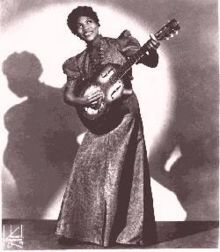
Women’s History Month: Sister Rosetta Tharpe!

Oh, argh. My life is making it difficult for me to find time to do proper service to these posts. And I’m a little tired of just defaulting to women singers. I’d really like to post some women record company administrators, or composers or other people in the music industry. But I guess that’s the point of this whole project: women in music have always found it hard to get into roles other than ‘songbird’ or, at the most, ‘songbird with piano’. A recent Riverwalk Jazz story ‘Not Just Another Pretty Face: ‘Girl Singers’ of the Swing Era’ almost does some solid gender talk in its discussion of women singers in the jazz age.

Incidentally, I’m sorely disappointed by Riverwalk’s only managing to do TWO shows about women in women’s history month. And after those, it’s back to the dick stuff. PLEASE, if I can manage to come up with around sixteen women musicians, surely one of the most famous, most prestigious jazz media can come up with more than two measly stories?

In researching jazz history I’ve come across some really interesting discussions of how particular instruments have been gendered. Krin Gabbard published an article in 1995 called “Signifyin(g) the Phallus: Mo’ Better Blues and Representations of the Jazz Trumpet,” (Representing Jazz, ed. Krin Gabbard. Duke U Press: Durham and London, p 104-130) which discusses the way trumpets functioned, discursively, as phallic imagery. Well, duh. This is partly why Clora Bryant is such an interesting example: woman with trumpet! OMG WIMMINZ HAS THE FALLUS!!! JAZZ IS RUINED!11

Linda Dahl goes into the gendering of musical instruments in Stormy Weather: the Music and Lives of a Century of Jazz Women (Limelight: NY, 1992). I don’t have the book right here in front of me (must buy!), but my notes remind me that she discussed the way music was ubiquitous in domestic life in the late 19th and early 20th centuries, and that this music was ‘home made’. Playing the piano and singing were considered essential parts of a young woman’s development, and were also often positioned in faith contexts – women played the piano or organ in church. Dahl also discusses the way the music industry was very difficult for women to get into, particularly for white women instrumentalists, how the musicians’ union was obstructionist in women’s careers, and the way territory bands were more accessible than mainstream bands. None of these things should surprise us. Indy rock has seen more women musicians than the mainstream (though they seem to be relegated to drums and bass rather than having access to the ultra-phallic lead guitar), and I’m still chasing down ideas about unionism and social power.

So Sister Rosetta Tharpe is an interesting figure. She played the guitar. She mixed church music and blues (shock!), she was a composer, a singer, a solo artist, a musician in a big band (Lucky Millinder’s, most notably), she pwnd all.

I’ve talked about Rosetta Tharpe before. Once as a Thursday cat blogging post, another as a discussion of how the way her guitar tuning was marked by race, class, geography and (implicitly) gender, in Retuning for white audiences – more sister rosetta tharpe.

It’s cool to compare this pretty explicitly sexualised image of the female form (Lonesome Road, with Tharpe singing with the Lucky Millinder band in 1941):

with this video of Sister Rosetta Tharpe singing ‘Up Above My Head’ with a gospel choir, 1960s). Dang – sister is workin’ that power. Safely contained by religion? I don’t think.


(via flopearedmule)

Women’s History Month: Eve Rees and her Merrymakers!

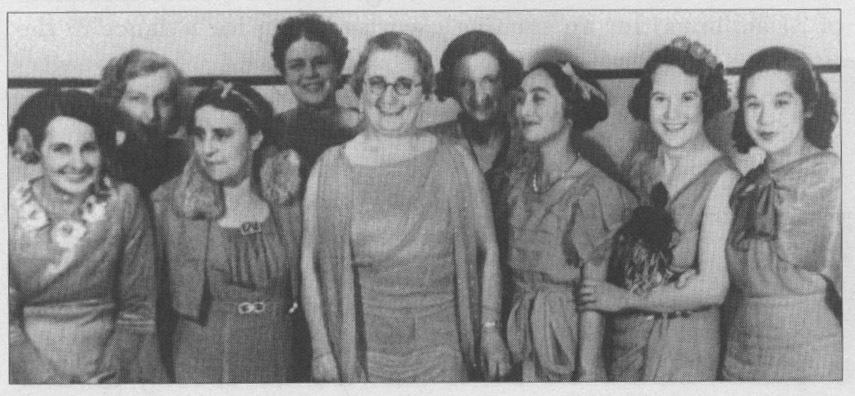
Eve Rees and her Merrymakers were an all-female dance band from Australia. They were very popular, touring extensively in rural and city Australia in the 1920s and to a lesser extent in the 1930s. Despite their popularity, it’s hard to discover much about them. A dodgy Trove search gives only three hits, and much of what I’ve found comes from books. I know! Today is World Book Day, so it’s appropriate It is not actually world book day, but that’s ok – we shouldn’t wait for WBD to read books :D . In fact, this image (of Eve Rees and her Merrymakers, including Grace Funston, Alice Dolphin, Marion de Saxe, Eve Rees (middle aged woman in centre), Stella Funston, Alma Quon, Gwen Mitchell and Lorna Quon) is taken from the book I’m about to discuss.

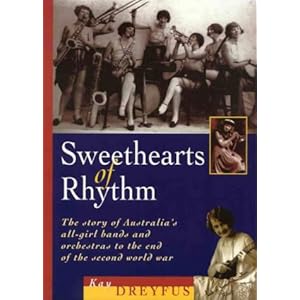
I totally forgot to do a post yesterday (yeah, yeah, whatever), so today is something special. A dear friend of mine, Corinne, gave me this book a few years ago:

(Sweethearts of Rhythm: the story of Australia’s all-girl bands and orchestras to the end of the second world war by Kay Dreyfus (Currency Press, Sydney, 1999))

It’s all about Australian all-women bands during the wars. The most famous of these sorts of bands is of course the American International Sweethearts of Rhythm. But there were actually heaps and heaps of these all-women bands in Australia and other countries. Mostly because so many men left for war there simply weren’t enough left behind to fill all the bands playing for the hundreds and hundreds of live music venues all over Australia. Remember, dancing was one of the most important popular entertainments during this period.

But all-women bands also served as titillation for male audience members, and initially as novelty acts for the broader community. Despite these issues, there is no doubting the competency of many of the all-women bands during the jazz and swing eras. After all, the mainstream jazz industry neglected 50% of the musicians on the basis of their sex, so 50% of that population were available for work when the labour pool shrunk.

Eve Rees and Merrymakers were one of the better known Australian all-women bands, managed by Rees, a capable and energetic business woman. Dreyfus quotes Alice Dolphin (who went on to lead her own bands):

The Merrymakers’ dance band at that time was extremely popular and I was invited to join them. The leader of the band was Mrs Evelyn Rees, a charming middle-aged woman who was well-liked everywhere we went. She was just ideal for the job.

What a tremendous amount of work we got! Every night, Mayoral balls, Country Women’s Association dances and balls (this of course meant travelling to country towns), Cafes, Lodges, Clubs, Weddings, Birthday parties, Jewish Greek and Chinese dances, Bar Mitzvahs, twenty first birthday parties and just parties, Military and Air Force dances and receptions of all kinds.

There’s more to be read about the Merrymakers in Dreyfus’ book, and I recommend picking it up.

References
You can read about the popularity of cinema and dancing in: Matthews, JJ, Dance Hall & Picture Palace : Sydney’s Romance with Modernity, (Sydney: Currency Press, 2005).

The Jeannie On Jazz blog proved useful in putting together this post.

Dreyfus has also written ‘The Foreigner, the Musicians’ Union, and the State in 1920s Australia: A Nexus of Conflict’ an interesting article about the role of the musicians’ union in the banning/boycotting of ‘foreign’ (ie non-British, ie non-white) musicians. This of course is relevant to recent talk about the Sonny Clay band and its role in provoking the ban on black musicians. And the Sonny Clay band was mentioned in the latest (third) episode of the Miss Fisher’s Murder Mysteries’ abc tv series set in the 1920s.

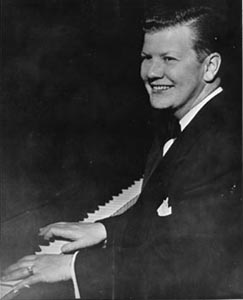
Women’s History Month: Billy Tipton!


(image lifted from wikipedia)

I’d never heard of pianist, composer, bandleader Billy Tipton before I was sent an email recommending him for this series of posts (I’ll leave that kind correspondent to out themselves in the comments if they like.) Everything I know, I’ve scrounged online.

Basically, Billy Tipton was born Dorothy Lucille Tipton in 1911, and was a keen pianist interested in a life in jazz. By 1940 he was living as a man, binding his breasts and otherwise dressing and identifying as male. It wasn’t until he died in 1989 that Tipton’s family discovered he was assigned female at birth.

I don’t know the exact reasons for Tipton’s living as a man, but I want to include him in these Women’s History Month posts because he draws attention to the limits of single definitions of masculine and feminine. And one of the clearest points to be made about Tipton’s story is that living as a woman musician limited (and limits today) your profesional opportunities.

Sweet Georgia Brown by Billy Tipton

Women’s History Month: some thoughts at day 6

It’s women’s history month again, and I’m listing a different woman musician from the first half of the century every day (as I explain here). Last year I did a different woman dancer every day, and that was super great fun. I’m enjoying the women musicians, but I haven’t really had a chance to research or push myself, as I’ve been away at a dance event for most of this month. And today, I’m still feeling a little tired and rough, so I’m not really ready to push myself. Tomorrow. Tomorrow.

I did decide in that first post of the month that I’d only dance as a lead this month, as a way of exploring International Women’s Day and Women’s History Month and what it means to be a woman dancing. Well, actually, I just decided that on a whim, without much thinking at all. I don’t follow much these days as I’m really trying to get my leading up to snuff, and the best way to get better at dancing is to dance. And as every lead knows, the real challenge comes on the social dance floor, when you need to come up with a series of moves, connect with your partner and attempt some sort of creativity all at the same time.
We won’t even mention the battle to maintain the fitness and aerobic capacity lindy hop demands.

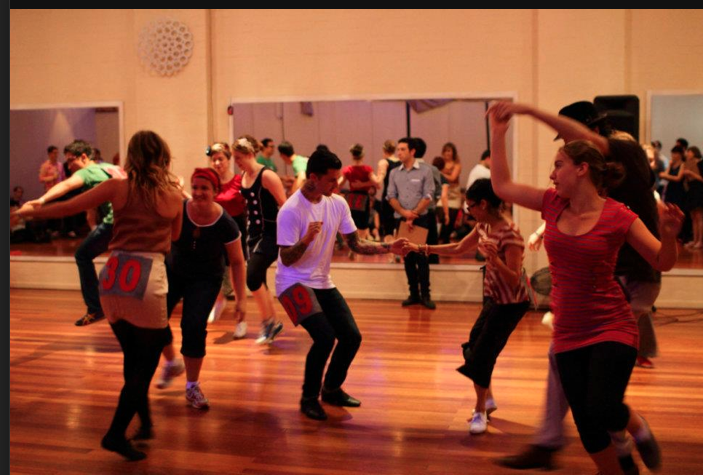
I have to say, it hasn’t been hard, because I get to dance with amazing dancers, most of whom are my friends. And I’ve learnt so much in the past month or two it’s kind of scary – I suddenly find myself stretching and expanding my skills, pushing myself to try things that I’d never have tried before. But it’s certainly meant a bit of rethinking the way I operate socially at exchanges and dance weekends. My weekend pretty much felt like this:

I mean, the biggest change for me this past weekend in Melbourne was simply spending very little time with men. I have lots of lovely male friends, but I only danced with two of them this weekends, and I discovered that I just didn’t end up spending as much time catching up with blokes as I usually do. :( I think that’s mostly because I’d be chatting to some chicks, and then a song would start and one of them, or I would say “let’s dance!” and then we would, and then afterwards I’d end up mixing with chicks and chatting. Rinse repeat. This of course means that the men in the dancing scene need to man up and start with the following, because I refuse to miss out on their dancing wonderfulness! Good thing Keith and I got to DJ together, or I’d hardly have spent any quality time with a bloke at all this weekend. And that is UNACCEPTABLE.

Workshops on Sunday were fun. I learnt a LOT. And I did a private class with Ramona on Friday, which kind of broke my dancing for a bit, and then suddenly it all came back together and I was a dancing machine on Saturday night. Blues dancing: still a bit too dull for me atm. But then, only boring people are bored, and that’s doubly true of dancers – only a boring lead is bored. I need to woman up.

The DJ Dual with Keith went really well. In fact, I had the most fun DJing I’ve had in ages and ages. We ended up trading three songs until the last moment when we played alternative songs. I think we would have liked to continue for another hour or so, trading single songs, as we got more confident and figured out the skills and tactics we needed. But we’d been DJing for an hour and a half by then, so we might’ve gotten a bit tired. And I had to go in the jack and jill, and I’m not sure it would have been ok for me to DJ the competition I was in. Overall, it was nice to have a bit of a challenge, and it was nice to work with a friend I like and have lots in common with musically. But he is a bit of a sly dog, and wouldn’t tell me what he was playing next, most of the time, so I had to keep on my toes. But that was actually even more fun. DJ Dual: LIKE.

NB There were THREE women leads in the jack and jill competition, and one got through to the finals (in a group of six leads)!!11!1 That photo above is one I lifted from Faceplant – sorry I can’t remember whose it was. It’s of the J&J, I’m in there, and so is at least one of the other female leads.

Now: NEED MORE MALE FOLLOWS!!!

I ended up catching up with lots of internet friends over the weekend as well. Which is always a bit of a push, but well worth it. The best part was walking into a cafe, saying “Hello, I’m Sam, nice to meet you!” and then barrelling into an hour of solid, hardcore talking as though we’d known each other for years. Which we have, really. Just not in person. This trip I went for smaller catch ups, rather than bigger groups, because I wanted to get a chance to actually connect with everyone and I often don’t get that at bigger meet ups. But that also meant I didn’t get to see everyone I wanted to. Oh well, good thing I go to Melbourne regularly! I’m planning another trip in May for the Frankie Manning birthday celebrations, so I’ll see if I can fit in the people I missed this time. But that sucks, because you’re still missing people! And then there are all the dance people I want to see off the dance floor! This is, of course, why exchanges are so much fun and so challenging – so many friends descend on one city for just one weekend you really need an enormous dance floor to connect with them all!

Righto, I’d better write up today’s jazz woman!

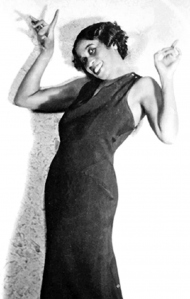
Women’s History Month: Blanche Calloway!


I’m a bit pushed for time today, as I’m in the middle of a dance weekend, but, well, I’m also hardcore. I’ll look up some less well known women later in the month when I have more time. :D

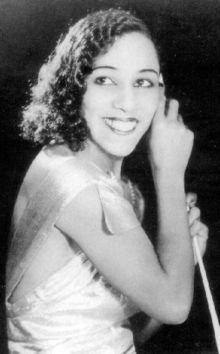
Blanche Calloway was Cab Calloway’s older sister, and was a musician, bandleader and composer in her own right.

This is a song she composed and recorded in 1934 with her male band the Joy Boys:

(Blanche Calloway – Catch On)

Women’s History Month 2012: Lil Hardin Armstrong!

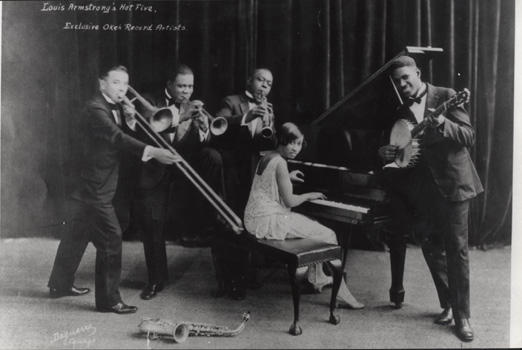
Sure, she was married to one of the most famous men in jazz, but Lil Hardin was – much more importantly – an accomplished singer, pianist, composer, arranger, band leader and business woman.
Hardin was a part of King Oliver’s Creole band, Louis Armstrong’s Hot Five, lots of other smaller projects, and of course led her own band. She’s popularly credited with pushing Louis Armstrong into a career of his own, outside the Oliver band.

Hardin recorded with Armstrong’s Hot Five in 1927, playing the song ‘Struttin with some Barbeque’ which she composed.

Louis Armstrong – Struttin’ With Some Barbecue

NB: I’m trying to list a different woman jazz musician every day for Women’s History Month. You can read this post for more info.

Women’s History Month 2012: Mary Lou Williams

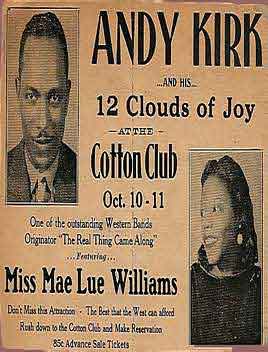
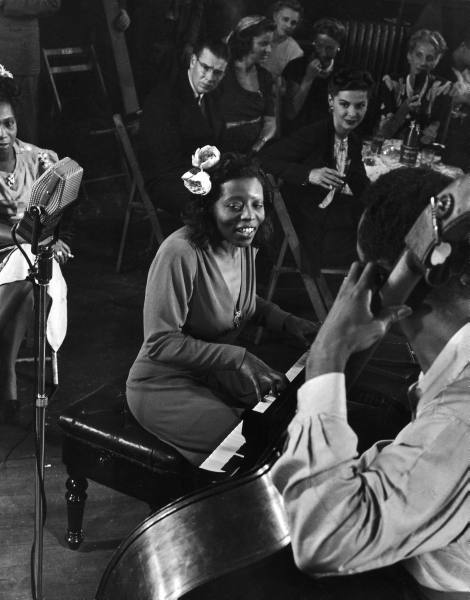
Mary Lou Williams was a phenomenal piano player, and one of the few who’s generally (though not hugely) well known in the lindy hopping world. She’s probably best known for her work with Andy Kirk’s band – as pianist and arranger but she went on to become an well known public figure and performer.

Read more about Williams here in this fascinating biography (which is where I found that image at the top of this post).

Williams composed, arranged and played on this 1938 version of ‘Little Joe From Chicago’, as well as heaps of other well-known songs by the Kirk band.

(Andy Kirk and his twelve clouds of joy – Little Joe from Chicago)


(An untagged photo of Mary Lou Williams in the Gjon Mili Life Magazine collection)

NB That’s Pearl Primus in the back, to the left.

Women’s History Month 2012: Ina Ray Hutton and her Melodears!

Women’s History Month is here again, and this month I’m going to do a different woman jazz musician every day. I’m away in Melbourne for a weekend of actual, real live dancing, so I’ve pre-written this post. Hopefully it publishes properly.
I’ve started by stealing a post from last year because I haven’t had a chance to research this properly (you can read all my pathetic excuses here in this post.)

Here’s a whole band full of amazing jazz women: Ina Rae Hutton and her Melodears!

linky

You can read more about Hutton in this good little Guardian article from last year (which is where I found that cool photo).