Pay the rent

what should we do when a white teacher rewrites history to make them look virtuous?

I’m not sure if this question from a fb discussion refers to deleting comments, or about teaching practice.
If it’s the former, then it’s a matter of poor social media management. It’s quite common for inexperienced SM managers to delete difficult posts. With more experience, SM managers learn to engage with this sort of comment in a more constructive way. So I’ll set that aside as a separate issue.

If it’s the latter (and I paraphrase), ‘What should we do if a white teacher presents a false or misleading view of history to make themselves look like a really good person,’ then that’s a different issue. Again, I’m not really sure how to address this, because Black people have been telling us the answer for years. We just haven’t been listening.

So I’ll present another question:

How should we respond to white teachers who whitewash the black history of Black dance?
How should we respond to white people in positions of power who tell a story of black history where white crimes and Black suffering are marginalised?

White teachers who don’t talk about the Black history of a dance are deliberately devaluing the impact of colonialism, of slavery, of segregation, of racism, (all white actions) on Black experience. If we, white people, don’t acknowledge the white actions of the past, we can avoid being held accountable for our ancestors’ behaviour. If we establish our white ancestors as ‘good people’, we defend and develop our own right to talk with authority about the topic (dance).

In fact, ‘dance’ is stripped of its racial markers and becomes just ‘dance’ rather than ‘black dance’, or ‘Black dance’. That’s a good example of cultural appropriation – taking the culture of another people. And in this case, then commodifying it – making it into a product from which we benefit financially. It’s also a good example of colonialism: white people invading black country, taking the bits they want with violence, then retelling the history of that country to hide their own brutality.

So how should we respond to this?
Our own power and ethnicity make a difference. Our role in reparation and repair is commensurate with our own privilege. In other words, the more power we have, the more we can and should do. So, middle class white people who have and still do benefit from Black oppression, you have a lot of work to do.

If Black dance is cultural country, and white dance teachers today are cultural imperialists, then what should we do?
As Aboriginal Australians say, we must “pay the rent”. I’m going to use this example from Black activist thinking to answer:

Since the, 1970’s there have been repeated calls by Indigenous activists for non-Aboriginal Australians to ‘Pay the Rent’ to the rightful Indigenous land owners for the occupation of land in Australia and/or in recognition of Indigenous sovereignty.

Since then, the ‘Pay the Rent’ scheme, has been actively operating to provide, opportunities for non-Indigenous Australians to support initiatives controlled by the traditional land owners in their struggle for self-determination and economic independence.

Today ‘Pay the Rent’ is a reasonable, rational and responsible way of ensuring the survival of the oldest living culture in the world.

It is a significant contribution to the process of Reconciliation, and embracing its philosophy is a sign of growing maturity among today’s ‘Australians’.

(source: https://www.invasionday.org/pay-the-rent-campaigns)

So here’s a good model for ‘what we should do’ when faced with white colonialism in dance:

– White people should support Black projects and activism.
With money, with signal boosting, with personal support, by contributing labour. _Support_ is the key word. Not co-opt or invent alternative responses.

In this specific case, then, white people, it’s time to pay the rent. I know I personally can’t change the way Egle and other teachers like her (and there are plenty of them) think and act. But there are other things I can do:
– Instead of watching their videos or attending their classes or events, I can watch videos of Black dancers, and attend Black run events.
– Instead of giving these teachers my money, I can donate to funds like the Frankie Manning Foundation, or the Maputo Swing fundraisers.
– I can stop sharing and promoting events, routines, music, and other cultural product by white people, and _start_ sharing and promoting Black dance and music.
– When I hear a white teacher give an historic dance step a new name, I can butt in with the original Black name. I can interrupt white mapping of Black country. Yes, even in class. Speak truth to power.
– If I hear a white teacher teach an historic step without name-checking the Black choreographer or Black history of that step, I can interrupt and say their name. Speak truth to power.

If all these sound familiar, it’s because Black people have been asking you to do these thing for YEARS. You just haven’t been listening.
If all these sound boring or uninspiring, it’s because it’s not about YOU and your creativity. It’s about you getting out of the way so that Black artists can reclaim Black country.
If these sound intimidating or scary, it’s because white imperialism is an act of terror and cultural theft. Be brave. Stand up. Pay the rent.


Run with me!

If you like jazz and adrenaline, then you might like my new project, Run With Sam. It’s free, it’s easy, and you don’t need any special gear.

Want to start running?
Run with me!
I’m full of good intentions, but I don’t always follow through. So I wouldn’t mind a bit of company.

I’m using interval training to get from zero to being able to run for 30 minutes.

Do some teacher training!

Ok, dancers, another thing you can do, while you’re not allowed to lindy hop because you might kill someone.

Do some teacher training, on your own or with your teaching team:

  • Learn about the history(s) of dances, and how you will integrate that into your classes so it’s fun and useful, and not just a bunch of lecturing at students;

Do an online lecture/tutorial with a dance historian, to get all your ducks in a row and learn about a particular moment in history, or a particular dance.

  • eg I once did a private with Loggins to learn the difference between two-step and other dances.
  • You could do a session with Teena Morales-Armstrong about black dances from the 50s onward (Hand dancing? Fast Dancing?) so you can stop saying shit like ‘black dance stopped after lindy hop in the 50s.’
  • How about a session with Marie N’diaye about chorus lines and what they actually _did_ in their working days?
  • Do a session with a teacher like Anders Sihlberg about how to structure a class, how to move from a particular move or technical thing to a whole class that’s actually fun;
  • Do a session with someone like Sylwia Bielec about how to train your staff and structure a syllabus
  • It’s usually really hard to get these people to stay in one city for an hour so you can drain their brains. Take advantage!

    There are other fun topics you could work on:

    • Developing a solid OH&S policy that actually addresses sexual harassment in a sensible way (oh, and germ safety :D );
    • Putting some affirmative action policies in place, so that you can actually get some diversity on your teaching team: people of different ethnicities, different body shapes, genders, etc;
    • Sketching out a funding plan for the next few years to take advantage of any funding that’s coming up (think arts, sport, health, economic development, small business, etc)

    And so on.

    they are not shocked

    They are no ‘outraged’ because they are not ‘shocked’. There is nothing shocking about racist violence perpetrated by police because it is normalised. It is seen as legitimate violence. It is this legitimate violence that was not only used to steal the country and assert white dominance but also maintain it through the oppression of Aboriginal people.
    source

    How to be ‘public’ dancers in a covid19 world

    I think you all know that I took a break from teaching and running classes last year in about June, before I went away for a long trip. I found it gave me a real break, and I liked it. Though I truly missed the actual teaching part, I didn’t and don’t miss the everyday pressure of management and promotion.

    I pivoted a bit, and put more energy into DJing, running live band gigs and weekend events, and I got a bit more into pattern drafting (completely non-dancing related creative fun). And then I started doing 3 days a week of dance practice with a partner, and I was much happier. It’s been many years since I just did dance stuff for my own pleasure and satisfaction. More, please.

    This week I’m actually beginning to feel like being creative in a dance-related way. I was really inspired by the little bit of the WHO fundraiser I saw. It was so nice to see people in my timezone and region (Asia) doing normal dance stuff (Vietnam were social dancing), and to hear and see Sing talking about dance <3 And it was lovely to be an audience and listen to friends DJ. I liked it because it was a new thing for me. When I stopped running the classes, I feel a disconnect a few other dance friends have expressed lately. What should I write in email newsletters? Who was I talking to? What did I have to say? I felt like my personal voice was subsumed by the 'voice of the business', and I was uncomfortable with that. So now I'm working on 'stuff I love' and 'stuff I want to do‘.

    I’ve been thinking that small events and projects are going to come first in the post-COVID and living-with-COVID world, for safety’s sake. And that a smaller, local focus will perhaps be much more fulfilling and personally stimulating than huge-market stuff. Whether it’s a small class, or a small party where people just socialise in a normal human way, with talking and food and drink and music and dancing, rather than the strange modern lindy hop way, which is nothing but dance.

    This hard reset could be a good thing for all of us. As Jon Tigert says in a fb discussion, “Im much more fulfilled by local interactions,” and perhaps this could be a much better, healthier and sustainable direction for lindy hop. Small scale, fulfilling participation in local culture, that can focus on equity and justice and joy and satisfaction on a smaller, more sustainable scale. Rather than thinking ‘I have to spread and preserve lindy hop’, we can think ‘I want and need to have meaningful social interactions because we could go back into iso any time, and I know I miss this real human contact. It’s what feeds my heart.’

    And our ‘marketing’ could take that angle: real social interactions that help us get through hard times.

    Bunya pines and murri knowledge

    There are a bunch of bunya pines in Ashfield park, and a huge one up on Charlotte Street. The pine cones are epic huge. HUGE. And edible.

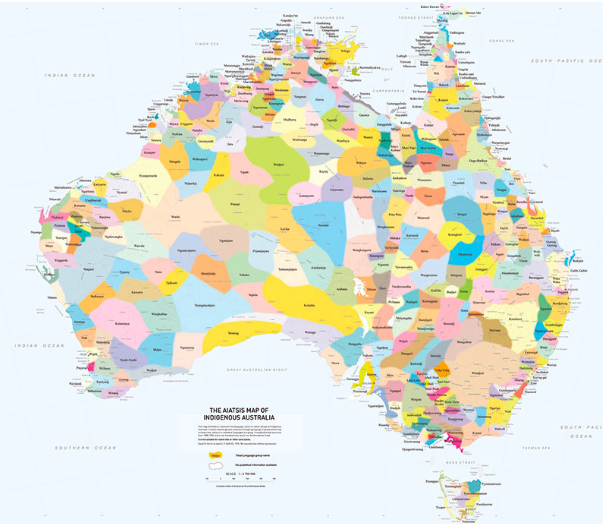
    They only grow wild in Gubbi Gubbi, Waka Waka, and Yuggera country, places which have been called South East Queensland since invasion.
    A story about Bunya Dreaming festival.

    Queensland is a huge state, and the land it covers now is the country of a whole host of Aboriginal and Torres Strait Islander people.
    The Bunya Pine grows in only a small part of this territory, in country cared for by three people (Gubbi Gubbi (aka Kabi Kabi), Waka Waka, and Yuggera.
    I used the AIATSIS map and the The Australasian Virtual Herbarium map to figure this out.

    There are other stands of Bunya Pines in other parts of Australia, but they are much smaller.
    Bunya pines fit into the ‘bush tucker’ family of noms, and I know my local Sydney foody friends have been experimenting with using their nuts to make pesto.

    This website is a useful tool for learning about agreements treaties and negotiated settlements in Australia.

    Landrights in Western Australia and the Yindjibarndi people

    Some very good news.
    The High Court has upheld the Yindjibarndi people’s native title rights to their land.
    Fortescue Metals Group applied to appeal these rights, and got a big ‘nope’ from the High Court.

    The Yindjibarndi people live in what has been called Western Australia since invasion, but has been black country for 40 000 years. If you look it up on this great map, you’ll find them in blue on the far left of the continent, above the most eastern most bit.

    You can read about the Yindjibarndi languages here, on this epic good map.

    Languages are important, because you can trace who lived where by the languages they speak. A people will share some linguistic elements (and languages) with neighbouring people.
    Language is culture, and the number of people speaking a language can tell you about that people’s history.
    The Stolen Generations interrupted the transfer of language and culture between generations in many areas. Reconciliation Week is supposed to be (in part) about making amends for the Stolen Generation.
    You cannot understand Australian history without reading the Bringing Them Home (1997) report.
    Please note: this Report warrants a Content Warning for sexual violence, neglect, persons who are deceased, and so on. If you are an Australian, particularly if you are not a Aboriginal or Torres Strait islander Australian, you should try to read this Report.

    What is Native Title?

    Useful things to think about in regards to native title today:

    • water rights (who owns them, who can buy or sell them);
    • mining (who has access to land to mine);
    • continuous occupation of land (and proof thereof, including rock paintings and burial grounds).

      Note: native title is determined by the High Court. There are 7 High Court judges, 3 are women, none are Aboriginal or Torres Strait Islander. It’s worth noting that one of them, Justice Virginia Bell was a volunteer at the Redfern Legal Centre in the 70s, a centre that provided legal support for the 1978 Mardi Gras protesters (the first mardi gras march), for local Aboriginal community members, and other civil rights activists.
      Read more about the Redfern Legal Centre here.

    Mervyn Bishop and Vincent Lingiari

    I like to think of Frankie Manning’s birthday as the day we white people kick off a week of deep diving into supporting black civil rights. Here in Australia, it’s reconciliation week. This land is home to the oldest culture on earth. And some of the most persistent and terrifying racism.

    If you don’t have the stomach for reading about the horrors of black history here and in the US, focus on digging out and supporting black artists, thinkers, activists, workers. Be the person who clears a space so they can stand. Still your voice so they can speak.

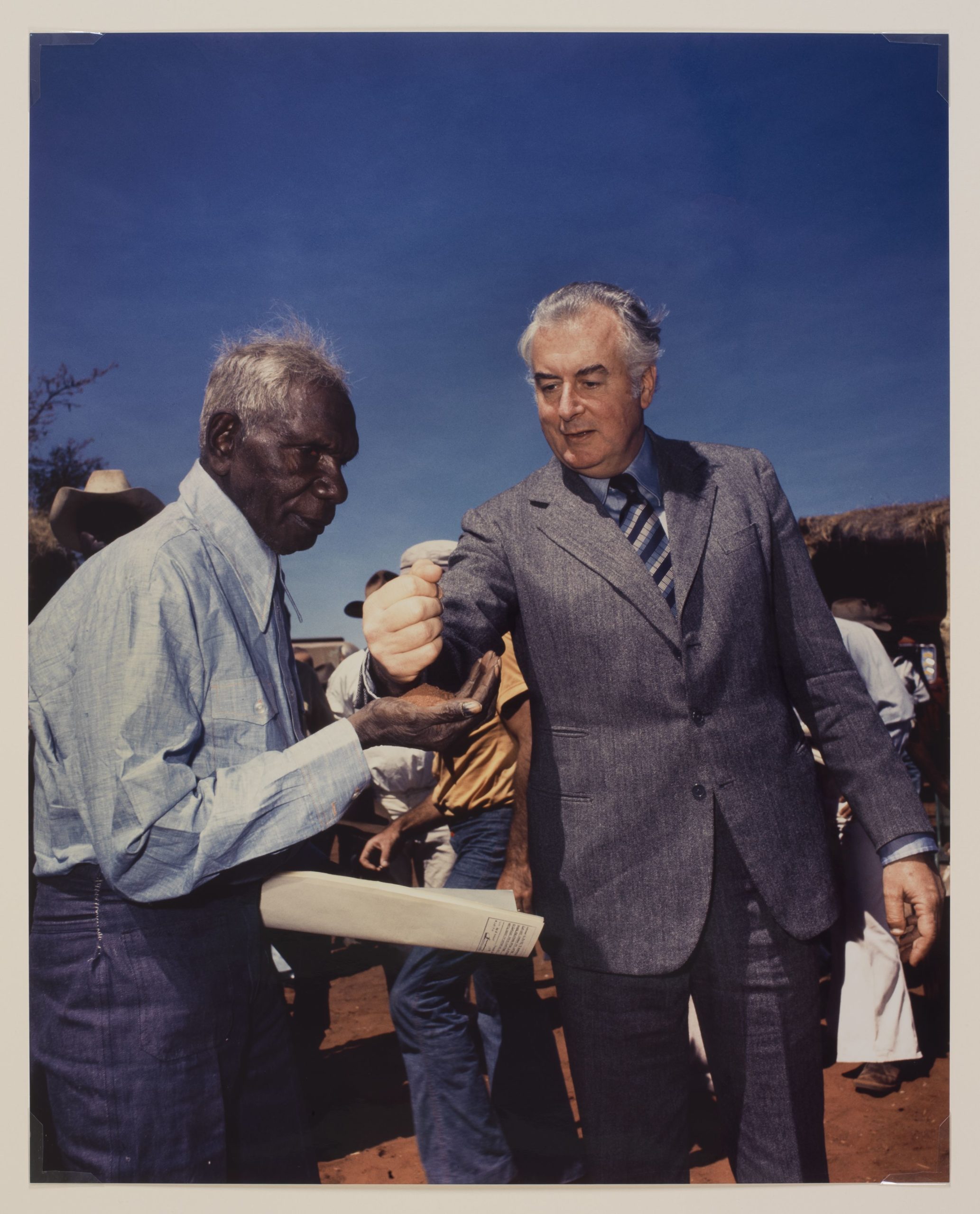
    This iconic image is by aboriginal photographer Mervyn Bishop. He composed and shot the image.

    …on 16 August 1975, he covered a historical event at Wattie Creek in the Northern Territory. This significant moment in Australian history followed a nine-year strike over the working conditions and request for traditional lands to be returned to the Gurindji people. This photograph captures Prime Minister Gough Whitlam pouring soil into the hand of Aboriginal rights activist, Vincent Lingiari on the occasion of the successful passing of the revolutionary act of parliament.
    (source)

    -> land rights + labour rights + black civil rights
    Useful topics to follow up:
    – Wave Hill Walk-Off (1966-1975)
    – Gurindji people
    – Vincent Lingiari
    – Aboriginal Land Rights (Northern Territory) Act (1976)

    Queer black men

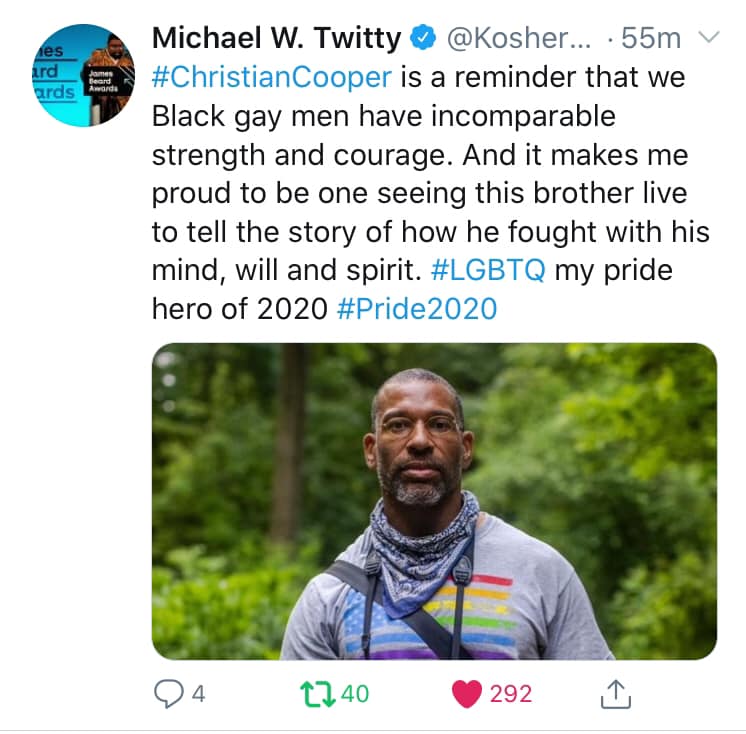
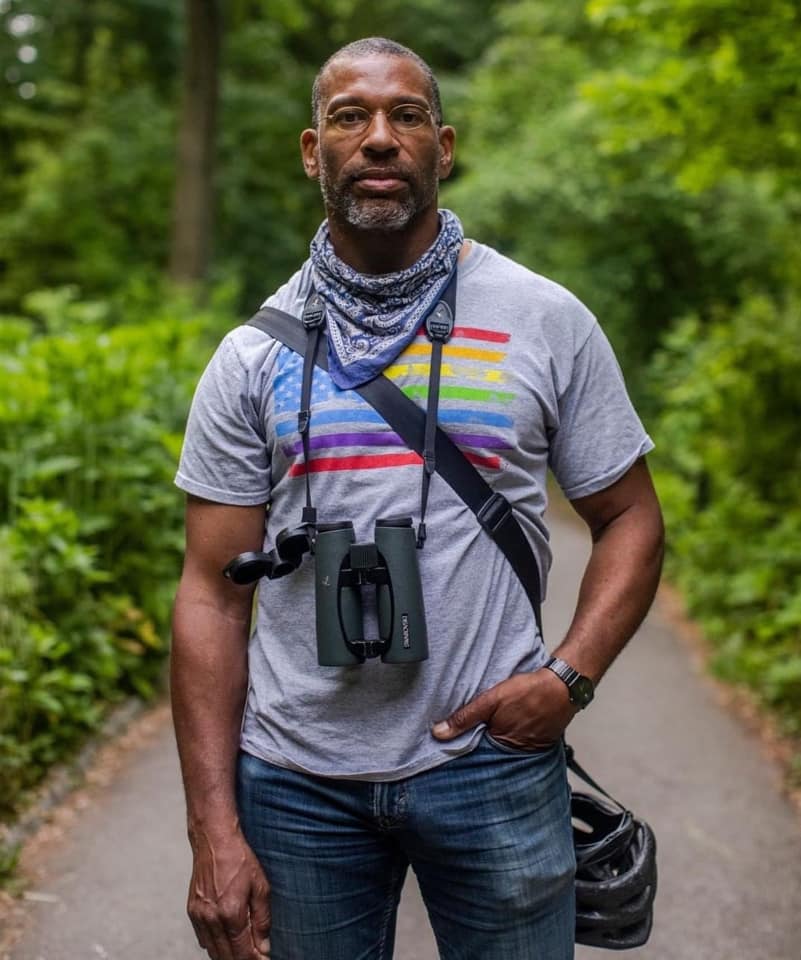
    I really like the way this story is reframed to focus on a queer black man as hero by this queer black jewish man*.

    *Michael Twitty is a cook and scholar who focusses on the black jewish food traditions of America and the African diaspora. He has a book, goves good twitter, and could tell you exactly what ingredients were in a cake walk prize.


    I want to keep sharing photos of black men like this, rather than bad white people, because they are an antidote to the bad news. ❤️✊🏽

    And this is why we need queer histories of jazz dance. Without them, it’s too easy for white people to position themselves as saviours ‘reviving’ the black dance of a doomed or negligent people. “Black gay men have incomparable strength and courage.” White people, it is not ok to position ourselves as ‘preserving’ black culture. Just get out of the goddamm way.

    If you’re interested, queer black men’s experience in dance under slavery is one of Tommy DeFrantz’ research interests. His book ‘Dancing Many Drums’ has some good bits on this tooic.

    Black history did not end in 1940.

    If we only talk about Harlem in the past (the 1920s and 30s), we ignore the fact that ‘Harlem’ is a living community today, and through time, with the resiliency of a people with a history much longer and more interesting than jazz. If white people tell a history of Harlem that ends in 1940, they are stealing the _ongoing_ story of black strength and creativity.