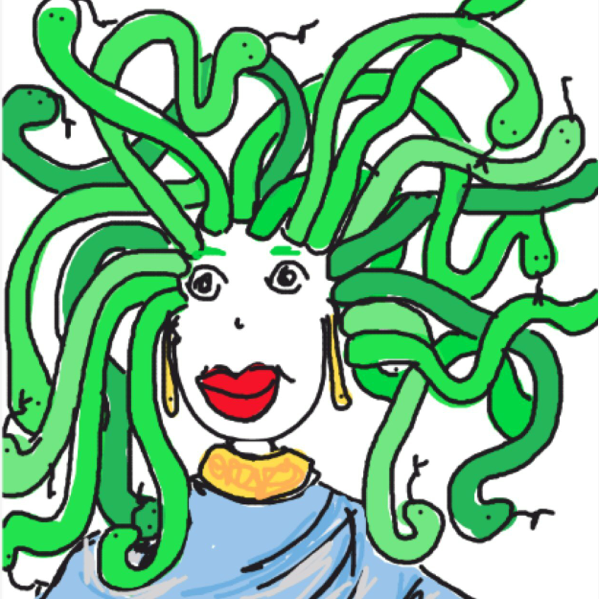
Took my new soccer ball to the park. Dance’s made me awesome at ambi-kicking. Cracked a sweat. Scared the dog. Got scouted for the Matildas.
Masks can’t hurt
Tl;dr Masks can’t hurt. Wear them. But prioritise hand washing, not touching your face, and keeping distance from others.
Unless you’re in the US where shit is out of control. Then wear a mask.
Another of Daniel’s great pieces. Again, the unsafe workplaces of ‘essential workers’ are big contributors to transmission. Rather than focussing on individual responsibility and blame (fines for nonmasking), we need to address workplace safety and equitable wages. If your first (unsafe) job pays too little to feed your family, you’ll get another unsafe job, and double down on your risk.
And can we interrogate the phrase ‘essential work’? If it’s so essential, why is it paid so poorly? The phrase is code for forcing vulnerable people into unsafe work: you _have_ to do it; it’s essential.
But of course, it’s the work that’s considered essential, not the people.
The danger posed by the mask discourse is distraction. A distraction from what we already know, with certainty, about the virus and how it is passed on. From the drivers of this new outbreak, which are still workplaces, social events and family gatherings, most of which involve close and prolonged contact and are not covered by the mask mandate. From what works to control outbreaks, including aggressive contact tracing, testing and isolation. From banning the events and settings where transmission can occur. From dealing with huge gaps in lockdown arrangements that exempt essential workers, even though precarious work arrangements caused this second wave. And from the trust in our public health experts that characterised our early response.
No. Don’t run your dance event.
Everybody knows that a big international lindy hop event is the definition of a perfect pandemic super-spreading event?
– You get a heap of people together from different regions
– They do a heap of exercise, and they generate lots of saliva and snot and then they rub it all over their faces and and hands…
– And then they touch a zillion different other people, and they touch a zillion more, and then you have eleventy zillion people covered in goobs
– Oh, and everyone is shouting and laughing and coughing and sneezing and blowing respiratory droplets everywhere, including all over nondancing audience
– Then there’s a band full of people on a raised platform, blowing respiratory droplets out of canons and all over the crowd and each other.
That’s pretty shitty, right. But it gets worse.
The virus has an incubation period of 1-14 days. That means:
– You could get the virus, leave your home, fly to the event, attend the week long event, and fly home. All before you showed symptoms.
– You could be contagious during this period. And not know it.
– Even if you only dance with 2 people the entire week, they may then go on to dance with 10 people and 20 people respectively. Who dance with anywhere from 2-50 people. And then they dance with 50 people… and so on.
– But you’re also coughing and touching elevator buttons and eating at the buffet breakfast.
– And you’re standing in line at registration. You’re toting about a bag and sweat towel and drink bottle. All covered in germs.
– All inside an air conditioned hotel with a closed air circulation.
Even if you think you’ll wash your hands and wear a mask, do you have the hygiene skills of an experienced surgeon who never makes mistakes and never gets fatigued?
No. You do not.
And that’s if only _one_ attendee is infected with the virus. Can you be sure that _all_ of the attendees are clear?
Even before we look at the health costs, what are the financial costs?
– Flights are far more expensive, and more likely to be cancelled with no notice. Can you handle a cancelled teacher at the last minute?
– What teacher would work at the event without a massive cancellation policy and huge pay rate? An idiot or a less-good teacher.
– Could your budget handle a smaller ticket sale?
– Insurance rates and policies have changed; are you properly insured?
– All staff will need additional hygiene and safety training. We can’t get organisers to do this to prevent rapes at events.
– You will need to provide masks and gloves, and know how to dispose of them all safely. And so will all your staff. If they’re prepared to take that risk.
– You won’t be able to use wristbands (because they need to be removed for proper hygiene), which means you’ll need a new rego system;
– You’ll have to clean all the class and workshops spaces to a much higher than usual level.
And what are the social costs?
– Your staff are going to be doing lots more work. And it’s stressful, skilled work.
– Your
….look, it’s not going to work. And it’s irresponsible to try.
Speculation:
We know that sexual harassment and assault tend to happen within a spectrum of exploitative behaviours. If we see an event where workers are routinely underpaid, overworked, asked to do things they don’t want to or that are unsafe, then we are likely to see sexual harassment as well.
So if we see a dance even being run at the current moment, then can we assume that an event taking risks with the virus is also risking the safety of workers and attendees in other ways? ie are they ok with hiring sexual offenders and with putting attendees and workers in positions where sexual harassment and assault happen?
Black music, white bands: Racist discourse in lindy hop institutions
Eric Heveron-Smith
fb post 25 June at 05:47A question was posed on a Facebook group called Swingopedia, and I have decided to finally voice my answer. Hey, it’s quarantine, I don’t have any gigs to lose right now…
“I’ve noticed that music trends in the global swing dance community have changed, since I started in 1995.
I’ve heard a mix of Big Band, RnB, Groove, Soul, Hip Hop, lounge/elevator jazz in early 2000s, Gypsy Swing, Ragtime etc. I’ve even heard Madonna!
What do you believe constitutes swing music and what style of music should we be swing dancing to?
Also should musicians only play recreations of original classics by Basie etc or should they be creating their own music?”I got a lot of opinions about this. I’m a bass player, trombonist, and singer. I’ve been playing the Lindy Hop scene since 2004, with Solomon Douglas, Jonathan Stout, Michael Gamble, and basically anyone else you can think of. I co-founded Moonshine Rhythm Club. As much as I love playing with all the musicians in this scene, my opinion and my approach to music definitely diverges from a lot of them. And I think it also addresses the lack of a serious Black presence in lindy hop.
Here’s what I think:
The way we approach this music, AND this dance, is not at all in the spirit of those who created it.Let me unpack that just a little bit. Back in the day, musicians were inventing new music that they dug, and that made people want to move their bodies. So they drew big crowds of people who invented new ways to move their bodies to it. That’s it. Does it feel good? Does it make you want to move your body? Then move your body. How? I dunno, let’s make something up together. Does it sound good? Is it fun? If not, whoops, nobody showed up to your gig.
Today, we have a historical dance taught with a preservationist mindset, and we play historic music with a preservationist mindset, or we almost reverse-engineer what music needs to be played so that we can dance this specific dance to it.
We are starting to see more new, original swing music, and I love that. But it still falls within pretty strict guidelines. We are also starting to see more swing audiences actually caring about the music itself, not just as a utilitarian function to dance to; I would definitely credit Michael and Jonathan and the Lindy Focus community for encouraging that, and I think the transcription projects have been a big part of that. It’s been really cool playing at Lindy Focus the past few years and seeing crowds of people standing by the stage just DIGGING the music.
But when you think about what was happening in the 30s and 40s with music and dance, it was a popular movement, and an organic thing. You wanna know what happened to Black musicians and audiences? They didn’t stop playing music, and they didn’t stop dancing. They created new genres, and they created new ways to dance to them. Every single decade up to the present. How can you expect to attract Black musicians and dancers to a scene that is frozen in time?
So ok, what am I proposing instead? I don’t have all the answers, for sure. And yes, I am still a musician that loves playing vintage jazz, and loves playing for dancers. But I look at musicians like Kansas Smitty’s, Bria Skonberg, Jazz at Lincoln Center Orchestra, Gunhild Carling, and so many others that play amazing, badass, swinging, move-your-body music, and who aren’t even CLOSE to cutting-edge far-out modern jazz, and I hear crickets from the lindy hop community.
Here is my point. There is SO much music out there that swings. Modern stuff. Stuff that feels really good, deep in your body, and makes you want to move and groove. And because it doesn’t fit the specific historical constraints of the dance that this community commodifies and REPLICATES, lindy hoppers want nothing to do with it.
Like, how can you ask the question “what constitutes swing music” or “what style of music SHOULD we be dancing to,” and then turn around and act bewildered that you don’t have more BIPOC in the scene??
I envision a world where the historical preservation of swing music and dance can meet the modern world, where there are all kinds of dances being done to all kinds of killer music. You don’t have to drop the preservation stuff, you SHOULDN’T stop studying and presenting and talking about the history of jazz and swing and lindy hop. But what you have done is put walls around this whole situation, and it keeps you in, and it keeps a whole lot of other people out. It’s religion, in the restrictive sense of the word. And if you ever manage to notice how many badass vintage jazz musicians don’t bother with the swing dance scene anymore, it’s because they don’t fit. They got too big for the walls.
Personally, I would love to be able to continue playing swing music for lindy hoppers. But I can’t tell you how many frustrating gigs I’ve had where either the audience barely noticed there were real musicians on stage, or I was playing with really poor musicians, but nobody really cared because they fit the constraints of the dance. I think my favorite gigs are where some people are dancing (whether it is a dance or not, because they feel it in their bodies), and some people are listening (because they actually hear and enjoy the music), and I can stretch out with my fellow musicians beyond the artificial, misinformed, dance-centric constraints of “around 3 minutes song length, not too fast, not too slow.”
Oh yeah, I thought I was wrapping up, but that’s another thing I gotta address. Not every song has to be danceable for every person. That’s another aspect of the utilitarianism of music in the dance community. You think that because all we have are 3-minute songs from the swing era that that was what musicians did live. I can’t possibly believe that’s true. Not gonna go too deep down that rabbit hole, but here’s something to think about: as soon as the long-playing record was invented, Duke Ellington released a 12-minute version of Mood Indigo, and it is glorious. My favorite version of that song ever. SO swinging, so beautiful, makes me want to move, makes me want to play.
Jazz is a living art form. It’s an improvisational art form. The very best times I’ve had playing jazz with people, we’ve found our way to the special spark, the moments that make people look up and shout, the moments that inspire dance. If I’m hired to perform a utilitarian function for your specific dance style, and I’m fired when I go outside the specific constraints, you’re not gonna get my best. You’re not gonna get the magic, the spark. You are missing out. (I have a couple dancer friends in Rochester who figured this out years ago, and started going to the international jazz fest there and checking out all sorts of amazing music. They GET it.)
Music and dance have been co-created since humans have existed. In my opinion, the lindy hop community is creating neither one right now. I don’t think it has to stay that way; but you’ve gotta tear down the walls, if you want it to change.
(Disclaimers. 1. Even though I’m speaking somewhat harshly about the scene, I still love parts of it, and I love a lot of the people in it, and when I play at Lindy Focus and walk around those hallways, I’m proud and glad to be part of it. 2. I’m talking about some historical stuff in here, but I am far from a swing historian. Michael Gamble, Jonathan Stout, Jon Tigert, and a bunch of other musicians and dancers probably know quite a bit more than me about the specific history of the music and dance. The depth of my musicianship is what makes me feel like I have something to offer with this commentary.)
I have problems with the American-centredness of this post. He is generalising from what he sees in the US (at huge events) to the entire world. And it just doesn’t hold up. I’d argue that the ‘mega-event’ is a very different animal (and product) to smaller events that focus on a regional audience, or even hyper-local audience. The usual issues apply to a huge event: you need to entertain trillions of people, you have to appeal to the widest audience (rather than niche audiences), you have a lot of money at risk, you need to do quality control. You and and should (perhaps) use this big budget opportunity to do more big band gigs. The events he’s talking about are largely in the US, and these are unlike things you see in other countries (with the exception of Camp Swing It, which is MASSIVE). So you end up with a relatively homogenous, palatable menu of music and dance held in a boring big hotel, isolated from the local host community.
Because he’s generalising from big US events, he ignores all the smaller, more interesting events. There’s no Upside Down here. No Rhythm Korea. No Jazz BANG. He also conveniently ignores the work being done by Black event producers. Teena Morales, anyone? She’s been running the biggest events in the US for years. And she runs the Houston Jazz Dance Festival, which has all-Black musicians and teachers, and is firmly positioned within the modern Black community’s culture.
He says:
“But when you think about what was happening in the 30s and 40s with music and dance, it was a popular movement, and an organic thing. You wanna know what happened to Black musicians and audiences? They didn’t stop playing music, and they didn’t stop dancing. They created new genres, and they created new ways to dance to them. Every single decade up to the present. How can you expect to attract Black musicians and dancers to a scene that is frozen in time?”
Well, they’re at Teena Morales’ event, doing dances that actually relate to them, with people who make them feel welcome. But let me address this issue: how to attract Black dancers to lindy hop. I’m guessing he means the US? This issue is a lot like the issue of attracting people of colour to other institutions. It won’t work if you don’t deconstruct or analyse whiteness itself:
As result of the invisibility of whiteness, diversity initiatives are often about including diverse bodies into the mainstream without critically examining what that mainstream is” (source: Diversity Means Disruption ; I speak more about this here: A Lot of White People Will Be Uncomfortable).
And if we’re going to deconstruct whiteness, we also need to deconstruct patriarchy, because white supremacy is built on the dominance of heterosexual masculinity.
If I follow that thinking, to truly change the nature of jazz and music in the lindy hop world, do we need to kill off the mega-event?
Here’s the thing. Covid19 has already done this. This is another thing that I see missing from so much of the online talk about lindy hop culture: this moment of change/crisis is the result of a global pandemic. Push has come to shove. BUT, white people have the time and energy to dig into ‘racism’ because they are in iso, or because their usual lives have been disrupted. Black people and marginalised people are busy trying not to die, whether they’re killed by disease, an dangerous ‘healthcare’ system, or the police.
So why does this white male musician assume that things will go on as they did before? They’re not going to. The world has changed irrevocably. The mega-event is not coming back any time in the next few years. That means the the existing market/audience for the mega-event will have disappeared (we know the lindy hop ‘generation’ is only about 5 years long). We also know that all the necessary infrastructure for a mega-event will also have disappeared: international airlines have folded; the arts are in disarray, from sound engineers to restaurants; international guests will not be visiting the US with its unchecked covid. It would also be horrifically selfish for dancers to attend a mega-event… lindy hop = superspreader.
So I think the question has to be,
What will jazz music and jazz dance look like in a covid19 world?
At first I was all ‘no one wants jazz dance during a plague’ and then I remembered that people really want music and dance during hard times. Who gets to dance will be the issue.
My government has taken advantage of the virus to introduce frightening laws, and expand awful powers. The same company that runs our offshore-detention camps for refugees is in charge of the quarantine hotels. Poor, refugee, and migrant people have been detained in housing commission towers for fear of covid spread. The federal police have expanded search and detain powers. … and so on.
The people who are suffering most from this are the Black members of our community.
I haven’t quite gotten there in the thinking, but I think that it’s obscene to consider running a mega-event in this climate. I mean, I have huge, massive ethical problems with fundraising for white people to transcribe Black recordings so white people can play them for white audiences in THIS moment. It’s a great promotional gig, but how does it fight white supremacy?
So if we can’t do mega-events, what do we do?
The same thing marginalised events and dance communities have already been doing: smaller scale events that cater to the local community’s needs and interests. And by local community, I mean the musicians, sound engineers, DJs, dancers, teachers, performers of a particular city. There’s no budget to fly in the same old crew of white men. So we get local. And that, as with governments*, means we have a more diverse body.
We subsidise local dancers on lower incomes with volunteer spots. We see a more sustainable labour model generally. And we see greater diversity in event types and event staff and attendance. The thing about smaller events, is that they often don’t enforce those rules about what bands should play. For all sorts of reasons. But you’ll get the odd funk number, you’ll get 10 minute songs, and you’ll get a range of tempos. Because the organisers don’t have the ‘knowledge’ to control the music like that. And they don’t particularly prioritise that issue – they’re trying to find the light switch or get the key for the late night party.
I think that this ‘definition’ of ‘good music’ is a matter of power and privilege, not objective value or ‘truth’. As the OP says, insisting on ‘good songs for dancing’ gives us a boring menu, and promotes a conservative palate. This in turn gives us boring dancing. None of those sparks of real creativity and emotion.
I think that DJing plays a big part in this. The lack of diversity in the highest profile DJing ranks is a direct result of some serious gate keeping: DJs are selected for their social skills (do they network like a white man?), their availability (do they have the money and time to drop everything for a weekend gig? Or do they have kids and family to care for?), and then, finally, their music taste (how do they talk about songs – loudly in a crowd, or with a quietly brilliant set at 11pm?). This type of musician hierarchy and power structure marginalises anyone who’s not a straight white guy.
If we want to see more diversity in the songs being played by musicians, we need more diversity in the cohort of musicians.
Which means WHITE MEN NEED TO STOP RAPING AND HARASSING EVERYONE ELSE.
And
WHITE MEN NEED TO STOP _EACH OTHER_ DOING THIS SHIT.
* Local governments have more women, poc, and other marginalised groups represented. As we move up tiers of government (state, federal, commonwealth, etc), we see diversity disappear and white patriarchy at work.
….RE sexual assault in the jazz music scene:
That’s my next job. I was starting work on it before covid, by deliberately setting up gigs and sessions that promote women musicians (ie sessions that are safe workplaces). But it’s been derailed. I figure we can use the methods we’ve developed in the dance world to tackle the music world.
One of the things we’ve found in Sydney, is that if we address sexual harassment and assault, we get a safer, more diverse scene generally. More people of colour, more queer folk, more trans folk, more kids.
This why this OP musician needs to address his own power as a white man in America. He is one of the obstacles we need to deconstruct.
Michael Gamble
fb comment on above post
25 June at 10:30Hey friend, we have talked about this a bunch, and I know we have a lot of common ground, so i feel comfy talking about this “publicly” with you. I also wanna say I appreciate that going out on a limb can be stressful, and I respect you getting into it regardless.
That being said, I think you’re coming at this from a strange angle, one that on the surface looks extremely relatable (I see a “successful” post/video/blog/etc on this topic about once a month for, I dunno, the past 15 years or so) but to me totally falls apart when you zoom in. My issue is that the thing you’re critiquing isn’t some firm opinion that anyone holds, it’s just the emergent properties of a bunch of different people’s subjective taste. And I’m pretty sure you’re ok with it on the micro level, you just don’t like the overall effect, yeah?
Like, I play music in a style I like. To you it’s narrow, but for me it’s actually a wild experiment in combining elements of different swing era rhythm sections with elements of early new orleans & chicago looser collective improv, moving familiar riffs to new contexts, and yes, paying homage to inspiring classic (but never heard live by current audiences) recordings. There’s a ton of room to play there for those of us that are deeply in love with the performers, arrangers, and composers of that era, and importantly, the current dancers, instructors, and organizers are also deeply educated fans of a wide range of old styles, and enjoy playing in that space – that’s why they hire these bands. (They’ve been geeking out on these rare recordings that they and their friends uncovered over the course of years of musical archeology, and look!-> someone’s playing that live?? Hell yeah I’m gonna hire them, that’s a dream come true!!) And unless I read you wrong, you probably think that’s cool, you just wish that wasn’t ALL there is, or something?
Here’s where I point out that there are a million other places to play music, to dance, and to explore like, every iteration of every art under the sun. The WCS scene has much more modern taste. The Blues scene, and especially the Fusion scene know how to break the mold and push boundaries. (also, there was a generation of Bebop dancers at the Savoy, and there is a push within the modern lindy movement to explore that.. which I think is great. Just FYI!) Do you know about those? The swing scene isn’t this philosophy-driven “preservation movement” in the way you’re making it out to be; it’s a loose collective of folks that happen to have a lot of taste in common. That’s…it. Trying to say their taste should be different is just… weird to me.
Like, there’s nothing stopping anyone from experimenting with other flavors like those scenes do, or like another theoretical new scene could do. There are plenty of folks that don’t dig Ella Fitzgerald & Chick Webb, Billie Holiday & Teddy Wilson, Jimmy Rushing & Count Basie. I wouldn’t wanna live in a world where what we’re doing is the only thing.. and it’s not!
I think that’s my other issue with this type of takedown —> do you realize how small the modern swing scene is? Like, compared to virtually any other hobby or “art scene”? It’s a niche within a niche within a niche. We are people who love what, in our evaluation, is actually a very broad range of dance and music forms that one could spend many lifetimes studying and never master. We’ve carved out a little space to do our thing. And still people feel the need to tell us to stop. All. The. Time.
Last thing: I see “this” being the thing that’s blamed for lack of blackness in our scene very casually, on a regular basis. Y’all, the causes of that are soooo much worse than this one singular artistic impetus. Our scene alienates black folks in basically every way that appears on the racism bingo card. Don’t make vintage music the scapegoat for this. Our scene has historically welcomed and elevated racist individuals and ideas for as long as I can remember, to our shame. Also, though it is somewhat rarer (remember: niche within a niche within a niche), there are a lot of great black musicians that play great swing and early jazz. Mostly we honestly just can’t afford them. (yet) And yes, also the overall whiteness of our scene makes it a less attractive place to seek work, which makes sense. THAT is something we can change. I can’t even remotely pretend to speak for any black person in this, but I think at the very least you are making a ton of assumptions about what’s causing what, and there’s a lot more going on.
(and here’s my social media caveat – my life is nuts right now and I totally don’t have time for an extended FB debate, AKA what the hell am I doing?? Regardless, I do love you, Eric Heveron-Smith!)
I’d add this as an example of Michael’s missing some of the political point:
“My issue is that the thing you’re critiquing isn’t some firm opinion that anyone holds, it’s just the emergent properties of a bunch of different people’s subjective taste.”
There’s a chunk of literature about how ‘individual taste’ isn’t about individual subjective choice, but about cultural forces. So while these aesthetics might seem ‘subjective choices’ from the inside, they’re clearly part of broader patterns and structures of patriarchy and white hegemony. As soon as we see patterns, we can look for the forces that are invisible to the dominant group because they are so ‘normalised’.
ie we have normalised the idea that a bunch of white people playing Black music at an event promoted as ‘preserving the past’ is a good thing. We haven’t engaged with the idea that white people are gaining cultural power from this work, that modern Black musicians are marginalised, and that only seeing white people on stage supports the myth that Black people don’t like jazz or do it well.
This is another difficult bit for me:
“There’s a ton of room to play there for those of us that are deeply in love with the performers, arrangers, and composers of that era, and importantly, the current dancers, instructors, and organizers are also deeply educated fans of a wide range of old styles, and enjoy playing in that space – that’s why they hire these bands. (They’ve been geeking out on these rare recordings that they and their friends uncovered over the course of years of musical archeology, and look! someone’s playing that live?? Hell yeah I’m gonna hire them, that’s a dream come true!!)”
My feminist brain is saying “Who is ‘those of us’? And ‘their friends?’?”
Who is running these large events?
Who is managing the music?
It’s mostly white people, and mostly white men.
My follow up question would be, “If white men are doing the music stuff, what jobs do women do on these events?” and “What jobs to people of colour do on these events?” Are they handling the low-profile stuff like catering or volunteer management or budgets? Events like Focus spend a lot of time convincing people that music is the most important part of an event. The jobs men do. When punters might say, “Actually, the person who met me at registration and made me feel welcome was the most important person I met this weekend.”
The dominant discourse of modern lindy hop prioritises and values the work that white men do most highly.
Here’s another issue:
“The swing scene isn’t this philosophy-driven “preservation movement” in the way you’re making it out to be; it’s a loose collective of folks that happen to have a lot of taste in common. That’s…it. Trying to say their taste should be different is just… weird to me.”
This is a misleading premise.
This isn’t how ideology works. If it’s a fascist state, it might. But hegemony in the modern capitalist patriarchy works in a different way. We don’t have a scene spokesman standing at a mic declaiming, “We will only enjoy bands from 1935-1945. We will only dance to bands from the US.”
…wait. :D
But hegemony is more subtle. We get this message that ‘preservation is prime’ from a whole heap of sources and texts:
- The only bands that get hired at mega-events are preservationist bands led and staffed by white men. Each of those independent messages tells me that big organisers don’t value the work of women or people of colour. It also suggests, implicitly, that the only _valuable_ or ‘good’ musicians are white men.
- The only DJs who play those mega-events are white. And often white men (those the latter is changing, I’d argue that most of those white women DJs (myself included) are people who engage with dance in a particular way: assertive, relatively ambitiously, etc -> characteristics usually ascribed to hetero white men).
…and so on.
I’m interested in how this works in places like Seoul. There we see white bands flown into the country for big gigs. And they’re the same bands we see at American mega-events. But we also see local gendered and ethnicised relationships of power at work. Interestingly, Sage Minn’s band, one of the very few in Seoul, has women members. I wonder if it’s because they’re playing western music, Korean mores and values don’t apply in the same way? I actually saw a fab conference paper about pop culture in Seoul a few years ago that discusses this.
“Like, there’s nothing stopping anyone from experimenting with other flavors like those scenes do, or like another theoretical new scene could do. There are plenty of folks that don’t dig Ella Fitzgerald; Chick Webb, Billie Holiday; Teddy Wilson, Jimmy Rushing; Count Basie. I wouldn’t wanna live in a world where what we’re doing is the only thing.. and it’s not!”
…so you can do all that other stuff, just not here?
“I think that’s my other issue with this type of takedown —”
This is where this post gets a bit defensive. The original post was actually really gentle (I thought). But you know that saying, “When you’re accustomed to privilege, equality feels like oppression.”
If you’re used to adulation, a little light supposition feels like a take down.
“Last thing: I see “this” being the thing that’s blamed for lack of blackness in our scene very casually, on a regular basis. Y’all, the causes of that are soooo much worse than this one singular artistic impetus.”
This is a deeply problematic comment. I’ve seen this quite a lot in white discussions about racism (I actually did a Masters on it). If we only define racism as white cops killing Black kids, or KKK lynching Black men, then anything ‘less’ can be positioned as ‘not-racism’.
But we know that racist discourse is far more complex. All those white DJs and white bands and white MCs? That’s racism.
Here’s an example:
“there are a lot of great black musicians that play great swing and early jazz. Mostly we honestly just can’t afford them.”
This is racism.
In this sentence he is literally saying that he/we** do not value Black musicians enough to pay them what they’re worth.
It’s racism because of what is not said, and because of the implicit valuing of ‘historic’ Black work, and devaluing of contemporary Black work. We’ll only raise a zillion dollars to fund the transcription of work by dead Black men; we won’t shell out some of that money to pay living Black men and women a living wage.
More importantly, this statement presented with no facts or evidence, will become a ‘truth’ repeated all over the scene. It will become what we describe in cultural studies as a ‘myth’: a valuative statement that is repeated so often it becomes a ‘fact’ with huge, powerful status.
The effect of this type of cultural myth is that other events and organisers won’t book Black bands or artists because ‘they’re too expensive’. And the myth will grow.
But why. Why is a Black musician more expensive? Does he mean that he’ll only hire a brilliant Black musician, but won’t hire a less awesome Black musician, and is quite ok hiring mediocre white men musicians?
I can’t continue down this reasoning: mediocre white men. Oh to have your confidence and power.
**The way he elides ‘we’ and ‘I’ is telling – he positions himself with an important ‘many’/majority, rather than taking responsibility for his own choices. This establishes his position as part of a powerful ‘many’.
“and here’s my social media caveat – my life is nuts right now and I totally don’t have time for an extended FB debate, AKA what the hell am I doing??”
While I have sympathy for him, I’d like to remind the white world that Black Americans have been fighting like demons while their society rapes and murders them with official sanction. Women work on sexual harassment and assault issues while they are being harassed every day.
This is why we call it disruption: it disrupts the status quo. And if you’re a white man, it’s often the first time you’ve had to do this work while also managing your daily dramas.
As a final note, I’m gonna quote Audre Lorde:
For the master’s tools will never dismantle the master’s house. They may allow us temporarily to beat him at his own game, but they will never enable us to bring about genuine change (source: Audre Lorde, Sister Outsider
In this context, I mean that accepting the premise of the original post is misleading. Following the instructions of a powerful white man will not help us deconstruct racism. We need to do something completely different.
I’m going to direct you to this post.
Diversity Means Disruption.
Why hire First Nations people into your mostly white structure and expect/want/demand everything to remain basically the same?
… diversity and inclusion policies and initiatives … are often shallow exercises as they are seldom created to challenge and disrupt whiteness within and outside the sector. We cannot change institutional racism without first changing institutions and without disruption, nothing will change.
Covid19 provides an opportunity for this disruption. Or does it? In the US and here in Australia, people of colour are disproportionately affected by the virus and its effects. They’re too busy fighting racism to think about jazz. Here is a really clever twitter thread, where the writer Abu Owaisi connects up the Victorian government’s locking 9 housing commission towers, the SES removing donated goods, white journalists’ influential commentary, and the devaluing of work by migrant community groups.
So, allies, time to dismantle the master’s house. Let’s do something completely new.
Drawing a line from pathologising Black bodies to lindy hop
What if Doctors Stopped Prescribing Weight Loss?
Women, and particularly women of colour, are less likely to have their health concerns addressed by medical professionals. Doctors and health care workers are more likely to emphasise weight loss as a ‘cure’ for various ailments than any other therapy.
This interesting article discusses how medical discourse pathologises fat or unskinny bodies, and works to control the appearance of women. If we go a step further and think about how this ‘ideal’ female body is marked by race and presented as ‘healthy’, we can also see how Black women’s bodies are therefore positioned as unhealthy. And of course, a woman who doesn’t fit this skinny white ideal is also branded lazy, weak-willed, even amoral.
If we think about Grey’s brilliant piece about vintage wear in the jazz dance world, we can see how an emphasis on ‘vintage aesthetics’ (which aren’t vintage at all, but contemporary bodily values mapped onto an imaginary past) not only penalises Black women’s bodies, but punishes Black women’s pride and joy in their embodies Blackness. In other words, a Black woman who feels happy and good when she’s dancing is punished for this joy by modern lindy hop culture. Her ‘weight’ is seen as a moral failing, and her body shape literally doesn’t fit into the ‘acceptable’ costumes (and choreography) of ‘popular’ white lindy hop.
Most importantly, she’s taught to mistrust her own joy and pride. She is told that her body is proof of a moral failing. That pleasure she finds in her body is misplaced. She is encouraged to doubt herself and her body, and to punish herself with starvation.
You can see, of course, how a person in this state of mind, doubting her thoughts, mistrusting her body’s feedback, is perfectly positioned for sexual and physical abuse.
This article is good for the way it discusses Dr Metz’ respect for and centering of her patients’ thoughts and feelings, rather than arbitrary medical rules.
They talk a little more about Towne’s diet as Metz thoughtfully frames the conversation, asking, “Does your body give you feedback after you eat that?” instead of offering prescriptive advice about what to eat or avoid, as a different doctor might have. (source)
I’m going to go a step further, and ask you to think about how the way lindy hop is taught repeats these patterns. Are we given arbitrary rules about how to hold our partner’s hand, or are we asked to experiment with what feels good, and trust our own bodies and feelings?
And then I’m wondering: how can we truly decolonise lindy hop, and other popularised Black dance, when we are pathologising the Black bodies and Black ways of being in the world that created them?
References:
I’ve written more about the issue of ‘vintage wear’ and dance in Vintage fashion and lindy hop: let’s add race, 14 February 2018.
Virginia Sole-Smith, What if Doctors Stopped Prescribing Weight Loss?, Scientific American, July 2020.
Grey Armstrong, Dance Communities and Time Travel, February 2018.
What is Black?
A friend on fb mentioned that it’s tricky to get a handle on how words can be used in different ways in activist literature, and it’s even harder to negotiate this stuff when you’re trying to learn about a particular social justice topic with the goal of doing activist work. She made a really good point: if you want to be an ally you want to understand and use the definitions and language of the people you’re working with. You don’t want to impose your own beliefs.
This is the sort of thing I’ve taught undergraduates quite a few times, and it’s one of my favourite topics. How do you read and evaluate a source, when you have a political goal in mind? It’s a skill, and one we can learn. Anyhoo, here are some of my thoughts.
How To Read Stuff
When we do a literature review widely on a topic, we find lots of different opinions and ideas, and many of them clash. In fact, it’s also totally legit to change your ideas about words or topics over the years… or months or days… as you read more, and learn more. And the very best part is that new things are being written all the time. New ideas to stimulate your brain and get you excited about the world.
Asking Questions About The Text
Something that helps us evaluate each text (each book, article, post, etc), is to ask some questions about the text itself. This questions is also called ‘textual analysis’.
- Who is the author?
What is their gender? Their ethnicity? How do they identify themselves? Do they identify themselves? What else have they written? Are they associated with a particular institution (a university, a government department, a think tank)? - What is the context of this text?
Where did you find it? Is it a magazine article? A journal article? A book? A tv series? A film? A speech? When was it produced? - What ideology does it express?
What are the values it portrays? Does it respond to other ideologies? Is it feminist? Activist? Racist? Does the author say things like ‘I position myself within Black radical feminism?’ - What other texts and authors does it reference?
Does it say good things about Martin Luther King? Does it talk about Stuart Hall? Are its references all white? All male? All straight? - Does it drop any jargon?
Does it use words that have particular meanings, eg ‘Black’; ‘gender’; patriarchy’; the ‘establishment’; ‘rational thought’?
All these words are used in different ways by different discourses and ideologies.
Go In With A Goal
There is a lot of fun stuff to read and watch and listen to. But it helps to stay on track. Ask yourself:
What do you want to learn?
What are your goals?
Discourse: The Relationships Between Texts, And Sharing Ideas
In my area (of cultural studies), the word ‘discourse’ means ‘all the words and articles and tv shows and songs and stories on a topic’. So when we talk about the discourse of ‘Blackness’, there are a trillion different texts involved. Some of them agree, a lot of them don’t. And we will argue a lot about what is relevant.
Academic discourse encourages disagreement or critical discussion. It’s common for a specific journal to have an author publish an article, then someone else publish a response article in the next issue. There are famous fights between authors that have led to screaming matches at conferences. But there have also been excellent discussions where authors have gone on to work together and do great work that changes the world.
Now, this friend was referring to two different texts, and was wondering how to read these two different ideas when they seemed to be very different. I think this is a brilliant question. It’s the core of critical thinking, I reckon. So I had a go at answering. The next section of this post uses some close textual analysis to see what each text is saying, and how we might read them together to develop our own ideas about this topic.
Ideology: The Ideas That Explain The Connections Between Texts
The next useful term is ‘ideology’. Ideology is, basically ‘ideas about the world’ and there are lots of competing and contrasting ideologies at work in any one discourse. So in this ‘Blackness’ discourse, we can see the queer Black American masculinity of DeFrantz’s ideology, but also the feminist Latina ideology at work. They have common elements (they both talk about gender, about ethnicity, and about race), but in different countries and cultures. If the two authors met at a party, they’d probably have a lot to talk about and agree on.
How can both these articles be ‘true’ at the same time?
Let’s do some textual analysis.
The articles we’re looking at are:
- Collaborator Sally, Black or Afro-descendant?, 21 April 2014.
- Thomas DeFrantz, Dancing Many Drums
Excavations in African American Dance, November 2001.
- Who is the author?
Tommy DeFrantz is an American man who identifies as black and gay.
In the second piece you’ve referenced, the author is ‘Collaborator Sally’, and we can’t find out much more about them than that.
If you do a search for DeFrantz’ work (in academic publishing, youtube videos, etc), you’ll find a bunch of articles, books, videos and so on. And you’ll discover he’s a university-based academic, working at a very prestigious American university.
This doesn’t mean that DeFrantz is a ‘better’ source than Collaborator Sally, but it does mean that we know _more_ about him. And his position as a peer-reviewed author means that his work has been interrogated and discussed and thought about by a lot of people. - What is the context?
The DeFrantz text is a section in a book, published by DeFrantz. The second is a post/article in a Spanish language magazine that has a range of articles discussing gender, politics, and ethnicity. One is written in English, the other in Spanish.
Neither is more important or more valuable than the other, but they are writing for different audiences. While they’re both talking about the African diaspora, one is talking about being a Black man in America today (and during slavery), and the other about being a Black woman in Latin America today. - Which is ‘true’?
It’s a trick question. Both definitions of ‘Black’ can be true at the same time. For a Latin-American woman the word ‘Black’ can be something she reclaims from negative use in her country/region. For DeFrantz, ‘Black’ is a word he uses with other Black folk, often in a casual setting.
The supercool thing about this, is that they both understand that words are tricky, and don’t have fixed meanings.
This idea has its roots in cultural studies: the idea that words are just sounds or marks on a page, until someone reads them and interprets them. The _way_ we use them is informed by who we are. So as a white, middle class Australian woman, I don’t feel any ownership (or right to ownership) of the word ‘Black’. For authors like DeFrantz, ‘Black’ is a powerful word for identity and culture, and when he uses it, he’s saying something about who he is, and the culture he belongs to.
So what do we do with this analysis?
Ideas or Practice?
Some academic discourse is all about theory. Some is more practical. For example, I tend to think of myself as a ‘pragmatic feminist’, a term I borrowed from Nancy Fraser. She argued in one of her books that ‘women’s studies’ as a discipline has no value if it doesn’t involve practical activism – feminism. So, for me, ‘doing feminism’ is about doing political activism. And in this case, doing what I can to improve the world for people who are marginalised. As Maya Angelou once famously told a bunch of graduates: now that you are empowered, you have a responsibility to empower others.
You can see in that last paragraph how I took the ideas of two different feminists (one Black and one white, both women, both American and writing in the 80s) to develop my own political ideas. My choosing these two tells you something about me – my age, my background, etc.
I found Tommy DeFrantz’ work very inspiring when I wrote my PhD on dance. Who he is as a person was important to this.
I met him at a conference, and speaking to him was extra inspiring: he’s a dancer. He wanted to go out to dance and to hang out and socialise. He didn’t mind that I was just a student and he a visiting scholar. He was a gentle, clever man with a great sense of humour. And the things he said in his paper about Afro-futurism and film and dance were exciting. I’m not a Black, gay, American man, but I can find his ideas and ways of thinking useful and exciting.
Back to the original point: how can I use the different definitions of ‘Black’ in my practice, as an activist, and an ally?
The word ‘praxis’ is a combination of this thinking and ideology and actual practical work.
What is Black?
The nice thing about all this is that the word ‘Black’ can be used in lots of different ways.
It can be a powerful political and ideological tool. eg in Australia, Black or Blak is a political and cultural way of talking about being Aboriginal or Torres Strait Islander. It can involve ethnicity (ie culture and identity – who you are, what you wear, the language you speak, the way you were raised, your beliefs, the food you eat, etc), politics (who you identify as and with as a citizen, whether you engage in activism or political action, etc), etc. Lots more than just skin colour.
I read a really nice article the other day where a Samoan woman was explaining to her son that he wasn’t ‘part Samoan’; he _was Samoan_. I’ve also heard Aboriginal and Torres Strait Islander people say the same thing: you’re not part Aboriginal, you _are_ Aboriginal. You _are_ Blac(k).
This is very powerful and important because white colonial powers spend a lot of time and energy dividing people of colour into groups, and then trying to ‘breed out’ the blackness. Racism is about believing one ‘race’ is better than another. White supremacy is about believing that whiteness and white culture is better.
In Australian history, ‘integration’ policies were about ‘breeding out’ blackness. Children with lighter skin were taken from their Black parents and fostered with white people, while their darker skin siblings were not (there is a great film called Sapphires which has the most touching, wonderful scene at the end where a girl is reminded of this by her grandmother). This ‘Stolen Generations’ of Australia is an example of how white governments tried to break Black culture by removing Black children from Black parents and ‘making them white’.
The phrase “I’m Black and I’m proud!” in 1960s civil rights discourse is a good example of how identifying as Black can be empowering. This reclaiming of a word is a bit like saying ‘queer’ in the queer community in the 80s. A term of insult becomes a shout of pride:
“Yes I am Gay! And it’s beautiful!”
“YES, I am BLACK, and I am PROUD of that, not ashamed!”
- Collaborator Sally, Black or Afro-descendant?, 21 April 2014.
- Thomas DeFrantz, Dancing Many Drums
Excavations in African American Dance, November 2001. - DeFrantz, Thomas. “Believe the Hype!: Hype Williams and Afro-Futurist Filmmaking.”
Unpublished paper. Spectacle, Rhythm and Eschatology: A Symposium.
University of Melbourne, Melbourne, 24th July 2003.
Playing jazz music in the age of COVID
So we know that musicians need/want to work. And we also know that their work (and creative practice) involves risky behaviour. So how do we make sure musicians minimise risk, for themselves and their audiences?
The best model is really to have musicians develop safe work practices, then peer-pressure their colleagues into doing things the safe way. Then as a group presenting these safe methods as a solution to employers.
Because the laws of each city and country vary, and advise given is varying, musicians need to take the facts about covid spread, and adapt them to produce their own working model.
I think that sex workers are a great parallel. They know that STIs like HIV/AIDS are a real risk in their work. But they also know how to minimise risk. They’re good at hygiene. They set boundaries with clients. They’re good at disclosure when necessary. But all of course, only if they work within a safe workplace, and aren’t disempowered by their work being criminalised. If they are empowered by legal protection, they can set rules that minimise their risks, without having to also worry about police (arrest or blackmail/’protection’.)
In the case of both sex workers and musicians, we know that abstinence isn’t a good option :D Both groups want to and need to work in their chosen industry. We can also assume that both groups are specialists in their work and workplaces, and can develop safe (or harm minimising) work practices.
So if we work with this as a model, what can musicians do to minimise the risk of getting and spreading covid?
We know how to prevent the spread of covid, and it has parallels with HIV/AIDS:
- Wear an effective prophylactic
- Know how to use and dispose of prophylactics properly
- Practice good hygiene (washing hands, and washing hands properly; cleaning tools properly)
- Avoiding disease-specific transmission.
- Being able to set rules and then enforce them, even with bullying employers or clients.
In terms of a musicians’ work:
- Wear a mask. And it has to be an effective mask that still allows them to do their job. So while a sex worker could choose to wear a hazmat suit, they go with condoms and dams instead. Similarly, musicians must choose which type of mask does the job, but doesn’t impede their work.
- Know how to put on, wear, and then remove and dispose of masks without touching them. This takes training.
- Regular hand washing. Not dumping spit from a brass instrument onto the floor. Cleaning instruments regularly and properly. Not sharing mics. Keeping mics clean and stored correctly. Wiping down mic stands. Not touching audience members or other musicians.
- Understanding that covid spreads via respiratory droplets, which are spread by snot and spit in the air (as aerosol transmission) or via surface contact (wiping your nose, shaking hands, then than person touching their own nose). So this means not touching your face while you play gigs. It also means keeping 1.5m from other people, and having the right ventilation.
- This is the most important one. Once musicians have some good processes and rules in place for themselves and their groups, they then present them to employers as a list of solutions that they take as a requirement for a gig. They’re in a good position to do this atm, as venues are desperate to make $$.
When you write it out like this, you can see some obvious challenges. eg not touching other people in your band? Hard. So perhaps you develop a ‘bubble’ (to use NZ’s powerful language), and you only play with people who are inside that bubble. Any new people who come along to sit in with your bubble must take additional precautions.
None of these things are set out as ‘rules’ in government guidelines. But they take what we know about the virus and minimising risk, and then apply it to this specific case.
But once we have these sets of industry-specific guidelines (‘safe jazz’ vs ‘safe sex’), we need to communicate them to all the musicians, and we need individuals to adopt and enforce them themselves.
Peer pressure! Because jazz is so male dominated, and so dominated by straight white men who are already very good at enforcing hierarchies and specific behaviours, they could actually be really good at this. At this stage, though, I’m seeing jazz musicians normalising unsafe behaviour by talking about what they’re currently doing, by teasing or shaming musicians who do stricter harm reduction.
So, musician friends, how are you minimising risk while playing at the moment?
Here are things you’ve listed already:
- 4. DOING OUTDOOR GIGS
This is a good one. But does wet weather contingencies (eg awnings overhead) maintain the harm reduction of not having walls or ceilings? - 1 and 2: WEARING MASKS
Another useful one, but it’s being applied inconsistently.
– Some of you have said that the audience have to wear masks, but only if they’re not eating or drinking.
– Are venue staff wearing masks?
– Are musicians wearing masks? And then, more importantly, are they wearing effective masks (ie clean and effective), and
– are they _not_ touching or contaminating masks?
– Do they dispose of masks correctly?
– If you’re wearing masks while traveling to and from gigs (which Chris has illustrated), are these same guidelines being applied?
Good options:
Venues provide masks for musicians, punters, and staff. They are a requirement in booking the gig.
Bands provide masks for the whole group.
Bands spend time before the gig refreshing training about how to use a mask safely – eg how to put a mask on or take it off if you’re playing sax :D And when that’s impractical, how to use a mask while traveling together to gigs.
Disposing of masks safely is super super important. Are they being chucked on the floor of the band’s van like an old coffee cup? Or disposed of properly.
…and so on. You can see where I’m going with this.
THE most important part will be having high status, high visibility musicians practicing safe jazz, and then being really cool while they do it. :D
Sit down, white people.
So it seems that white people are having trouble dismantling racism in the lindy hop world.
Despite at least 30 years* of hard work, we haven’t seen dancers deconstruct systems that privilege white men (for DJing, teaching, MCing, band, and other high profile gigs).
Because the people with the power are white men, who, when it comes down to it, just don’t want to give up their own spot on a prestigious teaching/DJing/band/event team.
I can count on the fingers of one finger the number of times I’ve seen a white person give up a high profile gig _publicly_ for a person of colour. And that was a genderflex person. I know people** surely do this stuff in private…
…wait. Do they? I know women and trans folk who do. But straight white cismen? Hm.
Basically, if we want shit to get sorted, white bros have to sit the fuck down. Or better yet, book the room, put the kettle on, and get in the kitchen to keep the cake coming, so everyone else can get shit done.
You know, watch and learn, rather than trying to manage other people into doing what they want. Again.
I know that my job, as a white woman, is to shoosh. It’s to be that person who clears the path so that Aunty can get to her seat and sit down comfortably before bringing the smackdown. I know that my job is to get people of colour – particularly women of colour – onto stages, with microphones in their hands to talk about anything they like. To give them the physical space in a class to do and say and teach anything they want. I also know it’s my job not to interrupt a group of black women deep in conversation in the bar, even if I really want to hang out with them.
Sit down and listen, white people. The adults are talking.
I’m actually a fan of letting go of how we (white people) have been doing things _generally_. Maybe waiting for black leadership to get behind isn’t the way forward?
It’s something I’m really interested in.
Instead of assuming that things are basically ok as they are, they just need more melanin, we could start by assuming that we’ve been making a mess here, white people. So stop with the white supremacy. White ideas do not reign supreme; white ways of doing things are not the best.
White people: instead of pushing for assimilating poc colour into white institutions, why not just assume the institutions are inherently racist, and learn something from Black culture about how to do things in different ways?
It’s an idea I’ve been chasing in my thinking about gender roles in lindy hop.
White people: instead of trying to salvage 1950s gender roles and the way they’ve been mapped onto lindy hop, why not just assume _these_ institutions are hopeless, and learn something from Black culture about how to do gender? I mean, Black dancers have been trying to tell us for years and years: we don’t do gender like that, so don’t go reading Black heterosexuality like it’s white heterosexuality. So, white people, why don’t we just believe them? Is it that we just don’t trust Black people to truly be right?
So I’m thinking (especially in this moment of pause, where covid19 is giving us a chance to reboot), why don’t we just assume the way we’ve been doing things in lindy hop is dumb and restart?
I know white people and especially white men, abhor a power vacuum, and perceive alternative modes of interaction as vacuum (do straight white men see in the egalitarian spectrum?), but hold off trying to fix things for just a tick.
Nathan Sentance wrote a great article called ‘Diversity Means Disruption’, and I went to town on it here, so I won’t go into it again now. Also it is bedtime for me
*People have been talking and acting on this same old shit since lindy hop got popular with white people (again).
**And by people I mean white cismen.
covid19, HIV/AIDS, and community responses
A straight white male musician recently commented in a discussion about covid19 that covid19 and AIDS have not had the same effects on the community. I disagree.
Actually the comparison with AIDS is particularly powerful because it _did_ see a community shut down social spaces and completely change cultural practices. Gay men closed bath houses, changed the way they used beats, and started setting up community-led responses. It’s important to remember that in the late 70s and early 80s beats, bath houses, and other forms on anonymous sex were central to gay male culture in the US, UK, and Australia. Having a number of sexual partners, and being sexually active (often in public or privatised public places) was very much the norm.
There’s a substantial degree of heterocentism at work in a dismissal of the comparison of AIDS and covid. ‘We’ didn’t close down cinemas at the height of the AIDS crisis, but popular cruising spots (including queer porn cinemas) were closed in various American cities.
The gay community’s response to AIDS was impressive in part because they/we were already politically active and organised. There were grassroots networks in place to spread information.
The greatest obstacle to managing AIDS in the early days was conservative governments downplaying its significance because it was considered ‘a gay disease’.
In both cases, behavioural change is the most effective way of managing the disease.
As a side note, the majority of HIV cases (centred in Asia) are the result of intravenous drug use. We also know that sex work is another high risk activity. In the latter case, again community activist groups have been central to reducing the spread of the virus.
And, in both covid and AIDS, we know that poverty is the greatest contributing factor to mortality. Social and cultural change would reduce the spread of these viruses, specifically, reducing poverty and racism.
Stop AIDS and covid: vote, and vote for socially conscious parties.
ACON has released an updated statement on covid19 and casual sex. ACON was originally founded as a community group focussing on HIV/AIDS awareness in the gay community in Sydney. You can see how their skills in community health education regarding AIDS/HIV have stood them in good stead in terms of providing a _trusted_ source of information about covid19 for Sydney’s gay community.
Slavery in Australia
CW: slavery, race, violence. This article contains disturbing images. Aboriginal and Torres Strait Islander people should be aware that this article contains the names and images of people who have died.
The Australian PM Scott Morrison said on Thursday morning (on 2GB) that “It was a pretty brutal place, but there was no slavery in Australia.”
This is a big fat lie. It’s such a bald faced lie, it’s beyond laughable. It’s… shocking.
Slavery in Australia:
- ‘Blackbirding’, where people from Pacific Islands were kidnapped, transported to Queensland, and forced to work on cane farms. With the introduction of the White Australia policy, any of the survivors (many died) were deported.
- Indentured labour on properties.
Black men were forced to work for rations on rural properties. The most famous example of this is the Gurindji people (Northern Territory) who were forced to work for white pastoralists on Wave Hill Station with no pay, unable to leave. In 1967 Vincent Lingiari led a walk off, where Black workers started protesting. This eventually led to the Aboriginal Land Rights Act in 1976. - Indentured domestic labour.
Black women and girls were forced to work for rations in white people’s homes. They were unable to leave, and were frequently the target of sexual assault. - The Stolen Generations.
Black children were taken from their parents and institutionalised (placed in ‘care’) or with white families. In both cases they were physically restricted from leaving. - Stolen Wages.
Black adults and children were forced to work for whites, and told their pay had been taken into care by their ’employers’. To quote the attached article,…the Queensland “Protection Acts” in force between 1939 and 1972 required the wages of Aboriginal and Torres Strait Islander workers be paid to the protector or superintendent of an Aboriginal or Torres Strait Islander district, reserve, settlement or mission.
This money has never been received by black workers or their descendants.
- Protectorates, Reserves, and Missions.
Aboriginal people were forcibly restricted to white-run institutions, where they worked for nothing, were not able to marry who they choose, were separated from family, and brutalised by white staff. These institutions continued until the 1970s.