Sit down, white people.

So it seems that white people are having trouble dismantling racism in the lindy hop world.

Despite at least 30 years* of hard work, we haven’t seen dancers deconstruct systems that privilege white men (for DJing, teaching, MCing, band, and other high profile gigs).
Because the people with the power are white men, who, when it comes down to it, just don’t want to give up their own spot on a prestigious teaching/DJing/band/event team.
I can count on the fingers of one finger the number of times I’ve seen a white person give up a high profile gig _publicly_ for a person of colour. And that was a genderflex person. I know people** surely do this stuff in private…

…wait. Do they? I know women and trans folk who do. But straight white cismen? Hm.
Basically, if we want shit to get sorted, white bros have to sit the fuck down. Or better yet, book the room, put the kettle on, and get in the kitchen to keep the cake coming, so everyone else can get shit done.

You know, watch and learn, rather than trying to manage other people into doing what they want. Again.

I know that my job, as a white woman, is to shoosh. It’s to be that person who clears the path so that Aunty can get to her seat and sit down comfortably before bringing the smackdown. I know that my job is to get people of colour – particularly women of colour – onto stages, with microphones in their hands to talk about anything they like. To give them the physical space in a class to do and say and teach anything they want. I also know it’s my job not to interrupt a group of black women deep in conversation in the bar, even if I really want to hang out with them.

Sit down and listen, white people. The adults are talking.

I’m actually a fan of letting go of how we (white people) have been doing things _generally_. Maybe waiting for black leadership to get behind isn’t the way forward?
It’s something I’m really interested in.

Instead of assuming that things are basically ok as they are, they just need more melanin, we could start by assuming that we’ve been making a mess here, white people. So stop with the white supremacy. White ideas do not reign supreme; white ways of doing things are not the best.

White people: instead of pushing for assimilating poc colour into white institutions, why not just assume the institutions are inherently racist, and learn something from Black culture about how to do things in different ways?

It’s an idea I’ve been chasing in my thinking about gender roles in lindy hop.

White people: instead of trying to salvage 1950s gender roles and the way they’ve been mapped onto lindy hop, why not just assume _these_ institutions are hopeless, and learn something from Black culture about how to do gender? I mean, Black dancers have been trying to tell us for years and years: we don’t do gender like that, so don’t go reading Black heterosexuality like it’s white heterosexuality. So, white people, why don’t we just believe them? Is it that we just don’t trust Black people to truly be right?

So I’m thinking (especially in this moment of pause, where covid19 is giving us a chance to reboot), why don’t we just assume the way we’ve been doing things in lindy hop is dumb and restart?

I know white people and especially white men, abhor a power vacuum, and perceive alternative modes of interaction as vacuum (do straight white men see in the egalitarian spectrum?), but hold off trying to fix things for just a tick.

Nathan Sentance wrote a great article called ‘Diversity Means Disruption’, and I went to town on it here, so I won’t go into it again now. Also it is bedtime for me

*People have been talking and acting on this same old shit since lindy hop got popular with white people (again).
**And by people I mean white cismen.

Pay the rent

what should we do when a white teacher rewrites history to make them look virtuous?

I’m not sure if this question from a fb discussion refers to deleting comments, or about teaching practice.
If it’s the former, then it’s a matter of poor social media management. It’s quite common for inexperienced SM managers to delete difficult posts. With more experience, SM managers learn to engage with this sort of comment in a more constructive way. So I’ll set that aside as a separate issue.

If it’s the latter (and I paraphrase), ‘What should we do if a white teacher presents a false or misleading view of history to make themselves look like a really good person,’ then that’s a different issue. Again, I’m not really sure how to address this, because Black people have been telling us the answer for years. We just haven’t been listening.

So I’ll present another question:

How should we respond to white teachers who whitewash the black history of Black dance?
How should we respond to white people in positions of power who tell a story of black history where white crimes and Black suffering are marginalised?

White teachers who don’t talk about the Black history of a dance are deliberately devaluing the impact of colonialism, of slavery, of segregation, of racism, (all white actions) on Black experience. If we, white people, don’t acknowledge the white actions of the past, we can avoid being held accountable for our ancestors’ behaviour. If we establish our white ancestors as ‘good people’, we defend and develop our own right to talk with authority about the topic (dance).

In fact, ‘dance’ is stripped of its racial markers and becomes just ‘dance’ rather than ‘black dance’, or ‘Black dance’. That’s a good example of cultural appropriation – taking the culture of another people. And in this case, then commodifying it – making it into a product from which we benefit financially. It’s also a good example of colonialism: white people invading black country, taking the bits they want with violence, then retelling the history of that country to hide their own brutality.

So how should we respond to this?
Our own power and ethnicity make a difference. Our role in reparation and repair is commensurate with our own privilege. In other words, the more power we have, the more we can and should do. So, middle class white people who have and still do benefit from Black oppression, you have a lot of work to do.

If Black dance is cultural country, and white dance teachers today are cultural imperialists, then what should we do?
As Aboriginal Australians say, we must “pay the rent”. I’m going to use this example from Black activist thinking to answer:

Since the, 1970’s there have been repeated calls by Indigenous activists for non-Aboriginal Australians to ‘Pay the Rent’ to the rightful Indigenous land owners for the occupation of land in Australia and/or in recognition of Indigenous sovereignty.

Since then, the ‘Pay the Rent’ scheme, has been actively operating to provide, opportunities for non-Indigenous Australians to support initiatives controlled by the traditional land owners in their struggle for self-determination and economic independence.

Today ‘Pay the Rent’ is a reasonable, rational and responsible way of ensuring the survival of the oldest living culture in the world.

It is a significant contribution to the process of Reconciliation, and embracing its philosophy is a sign of growing maturity among today’s ‘Australians’.

(source: https://www.invasionday.org/pay-the-rent-campaigns)

So here’s a good model for ‘what we should do’ when faced with white colonialism in dance:

– White people should support Black projects and activism.
With money, with signal boosting, with personal support, by contributing labour. _Support_ is the key word. Not co-opt or invent alternative responses.

In this specific case, then, white people, it’s time to pay the rent. I know I personally can’t change the way Egle and other teachers like her (and there are plenty of them) think and act. But there are other things I can do:
– Instead of watching their videos or attending their classes or events, I can watch videos of Black dancers, and attend Black run events.
– Instead of giving these teachers my money, I can donate to funds like the Frankie Manning Foundation, or the Maputo Swing fundraisers.
– I can stop sharing and promoting events, routines, music, and other cultural product by white people, and _start_ sharing and promoting Black dance and music.
– When I hear a white teacher give an historic dance step a new name, I can butt in with the original Black name. I can interrupt white mapping of Black country. Yes, even in class. Speak truth to power.
– If I hear a white teacher teach an historic step without name-checking the Black choreographer or Black history of that step, I can interrupt and say their name. Speak truth to power.

If all these sound familiar, it’s because Black people have been asking you to do these thing for YEARS. You just haven’t been listening.
If all these sound boring or uninspiring, it’s because it’s not about YOU and your creativity. It’s about you getting out of the way so that Black artists can reclaim Black country.
If these sound intimidating or scary, it’s because white imperialism is an act of terror and cultural theft. Be brave. Stand up. Pay the rent.

Do some teacher training!

Ok, dancers, another thing you can do, while you’re not allowed to lindy hop because you might kill someone.

Do some teacher training, on your own or with your teaching team:

  • Learn about the history(s) of dances, and how you will integrate that into your classes so it’s fun and useful, and not just a bunch of lecturing at students;

Do an online lecture/tutorial with a dance historian, to get all your ducks in a row and learn about a particular moment in history, or a particular dance.

  • eg I once did a private with Loggins to learn the difference between two-step and other dances.
  • You could do a session with Teena Morales-Armstrong about black dances from the 50s onward (Hand dancing? Fast Dancing?) so you can stop saying shit like ‘black dance stopped after lindy hop in the 50s.’
  • How about a session with Marie N’diaye about chorus lines and what they actually _did_ in their working days?
  • Do a session with a teacher like Anders Sihlberg about how to structure a class, how to move from a particular move or technical thing to a whole class that’s actually fun;
  • Do a session with someone like Sylwia Bielec about how to train your staff and structure a syllabus
  • It’s usually really hard to get these people to stay in one city for an hour so you can drain their brains. Take advantage!

    There are other fun topics you could work on:

    • Developing a solid OH&S policy that actually addresses sexual harassment in a sensible way (oh, and germ safety :D );
    • Putting some affirmative action policies in place, so that you can actually get some diversity on your teaching team: people of different ethnicities, different body shapes, genders, etc;
    • Sketching out a funding plan for the next few years to take advantage of any funding that’s coming up (think arts, sport, health, economic development, small business, etc)

    And so on.

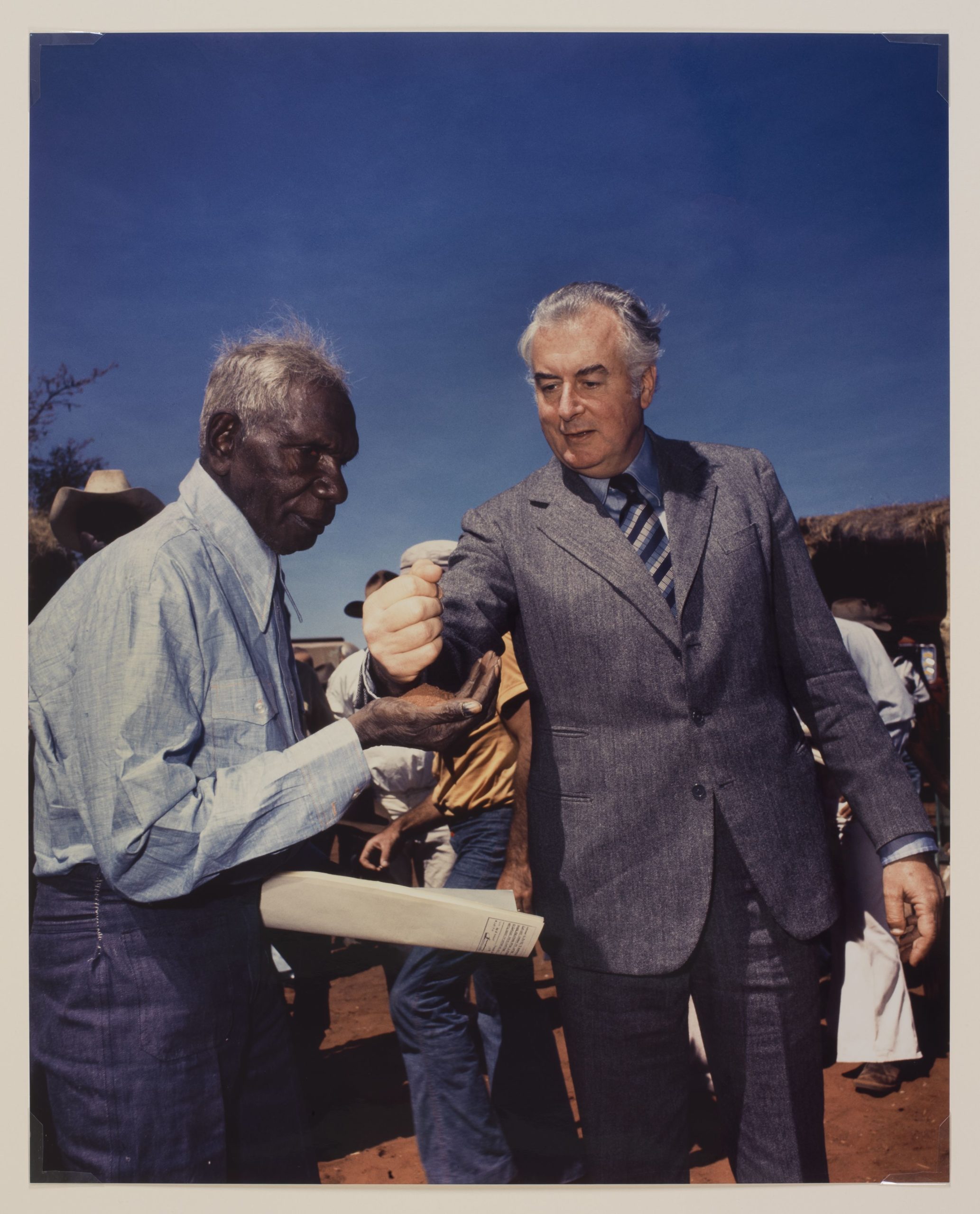
    Mervyn Bishop and Vincent Lingiari

    I like to think of Frankie Manning’s birthday as the day we white people kick off a week of deep diving into supporting black civil rights. Here in Australia, it’s reconciliation week. This land is home to the oldest culture on earth. And some of the most persistent and terrifying racism.

    If you don’t have the stomach for reading about the horrors of black history here and in the US, focus on digging out and supporting black artists, thinkers, activists, workers. Be the person who clears a space so they can stand. Still your voice so they can speak.

    This iconic image is by aboriginal photographer Mervyn Bishop. He composed and shot the image.

    …on 16 August 1975, he covered a historical event at Wattie Creek in the Northern Territory. This significant moment in Australian history followed a nine-year strike over the working conditions and request for traditional lands to be returned to the Gurindji people. This photograph captures Prime Minister Gough Whitlam pouring soil into the hand of Aboriginal rights activist, Vincent Lingiari on the occasion of the successful passing of the revolutionary act of parliament.
    (source)

    -> land rights + labour rights + black civil rights
    Useful topics to follow up:
    – Wave Hill Walk-Off (1966-1975)
    – Gurindji people
    – Vincent Lingiari
    – Aboriginal Land Rights (Northern Territory) Act (1976)

    Queer black men

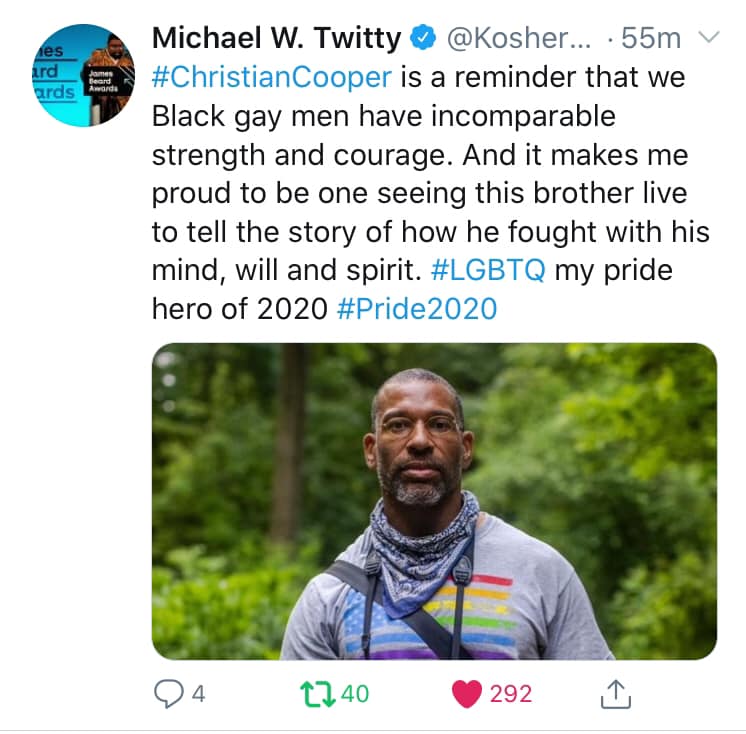
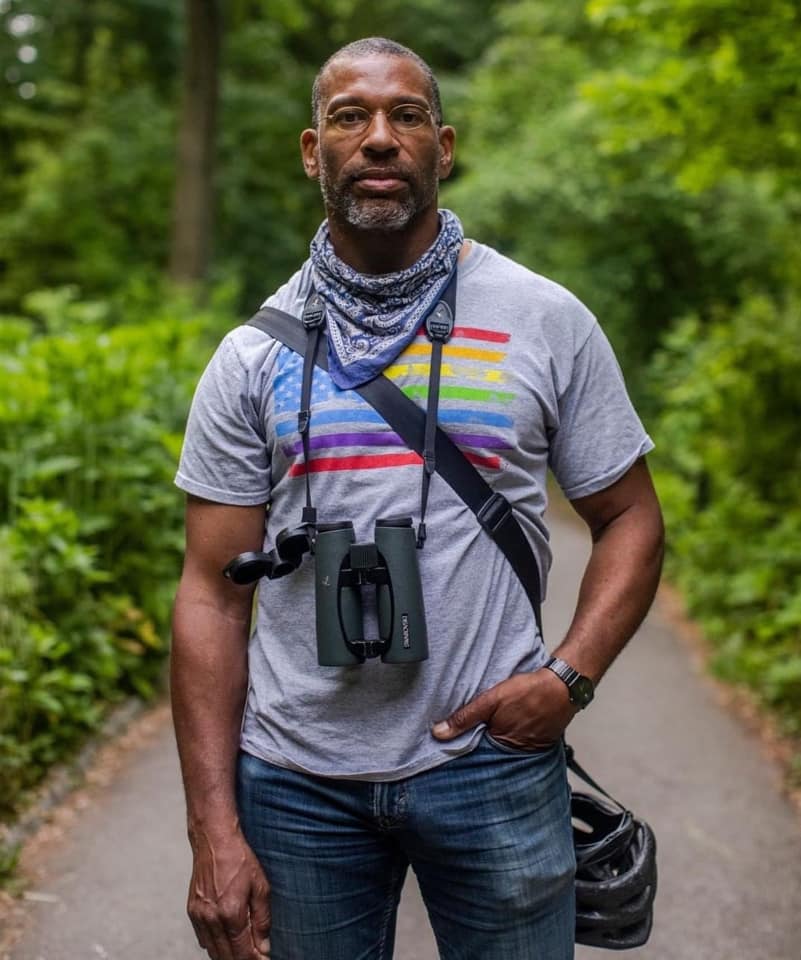
    I really like the way this story is reframed to focus on a queer black man as hero by this queer black jewish man*.

    *Michael Twitty is a cook and scholar who focusses on the black jewish food traditions of America and the African diaspora. He has a book, goves good twitter, and could tell you exactly what ingredients were in a cake walk prize.


    I want to keep sharing photos of black men like this, rather than bad white people, because they are an antidote to the bad news. ❤️✊🏽

    And this is why we need queer histories of jazz dance. Without them, it’s too easy for white people to position themselves as saviours ‘reviving’ the black dance of a doomed or negligent people. “Black gay men have incomparable strength and courage.” White people, it is not ok to position ourselves as ‘preserving’ black culture. Just get out of the goddamm way.

    If you’re interested, queer black men’s experience in dance under slavery is one of Tommy DeFrantz’ research interests. His book ‘Dancing Many Drums’ has some good bits on this tooic.

    Black history did not end in 1940.

    If we only talk about Harlem in the past (the 1920s and 30s), we ignore the fact that ‘Harlem’ is a living community today, and through time, with the resiliency of a people with a history much longer and more interesting than jazz. If white people tell a history of Harlem that ends in 1940, they are stealing the _ongoing_ story of black strength and creativity.

    Sorry Day

    Today is world lindy hop day and Frankie Manning’s birthday. But it’s also Sorry Day.

    For me, Sorry Day is the more important occasion. But I think that Frankie would be down with that: apologise, remember the past, move forward with hope and good will.

    [edit 10 minutes later]…maybe do a bit more than ‘move forward with hope and good will.’ Me, I’m adding ‘Do what you can, when you can. Because life is short, and we should take care of each other. And take care of the music.[/]

    Will we be running dance events in May 2021

    We’re still in iso here in Sydney. And while Morrison is talking about and early opening, even if the states do go ahead, we will see a second wave before the end of 2020.

    Even if we do get out of iso, we will be adhering to safety measures (washing our hands, covering our mouths, not touching people, keeping 1.5m apart) for a much longer time.
    Dancing is a high risk activity: all that touching, but also the respiratory droplets blown everywhere by all the panting and puffing and open mouths. Not to mention musicians and their germ-blower instruments.
    We won’t be lindy hopping (or solo jazzing) until we get a vaccine, and we’ve seen that vaccine work reliably.

    Beyond that, we don’t have the infrastructure to support weekend events. Private venues (eg dance halls, etc) are just devastated by the iso restrictions. Public venues (town halls etc) will either be closed and repurposed, or under extremely strict rules (eg no more than 10 people at a time, hardcore hygiene and cleaning, etc). The people who run events will still be recovering financially (eg we still have outstanding debts from Jazz Bang), and will need to develop new seed money sums, or new sponsorship options.

    Music and the arts generally are fucked in NSW and Australia. No sound engineers, lighting specialists, etc etc – all those people who support the artists on stage. They’ll have all started looking for other work and have other commitments to support families and pay rent.

    Insurance will become a serious issue. I’ve already had emails from my insurer about new conditions. I personally don’t want to risk legal action for endangering people. And if we start doing things like taking temperatures at dances, we take responsibility for health, and open ourselves to legal action. And I know I don’t want to have to face the Worksafe issues of putting volunteers and staff in unsafe conditions.
    Beyond that, the market for big dance events will change. The bulk of the market for these events are those ‘intermediate’ dancers – people who aren’t new, and aren’t super long time dancers (though JB is an exception on this – this older/newer group is our market). We’ll need to find new ways of targeting those markets.

    But those avenues of advertising and market development will have changed. Dance schools will have gone out of business, and/or teachers will have had to redirect their energies to things like working from home, new jobs, etc. If we do start up classes again, it’ll take a few years to get up to speed and redevelop the labour force (unpaid volunteers, primarily) to run regular and big events. It’ll be like starting new scenes.

    Five years is a long time in dance world. That’s a generation of dancers. I’ll be 51. All our dancers generally will be older – the difference between 22 and 27 is huge when it comes to family and day job commitments.
    And of course, my greatest fear is our OGs. Older black Americans. Black americans are four times more likely to die of COVID19 than white americans. And older people are even more vulnerable. I personally cannot countenance the thought of dancers starting dancing again and deliberately endangering the communities that gave us these dances and music.

    I’m wondering whether we’ll see people super-keen to do dancing after covid19, or if we’ll see people too afraid to touch other people after covid19. To be honest, I suspect (considering things my epi friends say), we won’t have ‘after covid19′ for many many years. It will be how we live. A seasonal disease that we manage with degrees of isolation and quarantine until a vaccine is found, and then administered to the entire population.
    We may be able to start doing smaller events in privates spaces (eg our homes) in 2021, but only mid-way through.

    But it’s not all tears.
    I’ve been thinking about alternative models for delivering jazz dance and jazz music. Unlike the 1980s, before we saw this new generation of dancers, we have the internet. It’s the perfect tool for delivering audio and audio-visual content. And if we get to the point of small groups gathering in private spaces, we’ll have bands again. And if we can get a few dancers in there, then the bands will be able to learn and relearn playing for and with dancers. So I think the pre-pandemic move towards smaller events will stand us in good stead in the coming years. We’ll get really really good at doing small, quality events that value safety like Jazz BANG.

    The saddest thing of all, is that jazz is social. It invites us into each other’s company. To hold each other close. And breathe wet air in each others’ faces :D

    how do you get women leads?

    Sydney now has a very strong culture of ‘anyone can lead or follow if they like, and it’s ok if you just want to do one and it happens to align with your gender ID’.

    There are a number of reasons for this – a queer swing dance school who also run a big event; women leads on the floor; women teachers who teach as leads; people being publicly intolerant of anti-social behaviour; a growing ‘be good to each other’ discourse in event promotion, etc.
    And where I write ‘women’, please include transwomen. I’ve noticed it’s easier for normcore folk to include transmen in their ideas of ‘men’, than it is to include transwomen in their category ‘women’.
    It’s also been super important to see how welcoming and supportive our scene has been of people who’ve transitioned while being in the scene. ie they first presented as one gender, then transitioned to another. On the whole, teachers and dancers have been openly supportive, and more importantly, no-big-deal about changing pronouns, etc. It may have been harder for them one-on-one (all new things are tricky), but on the whole, it’s been ok. Not perfect, but ok. More work to do there.

    Note: if a scene is ok with women leads and men follows, it is more welcoming to transpeople and queerpeople. Because a scene that has flexible ideas about gender and dance is a more welcoming, safer place.
    If my leading has ever helped pave the way for a shy dyke lead or transwoman follow, then I feel very proud. It was worth it.

    etc etc

    One of the most interesting things I’ve noticed, is that this general trend has been working in concert with peer-motivated anti-sexual-harassment actions. ie women are more likely to say no when a creeper asks them to dance, and they will also step in and check in on other women if they see creepers maccing on them.
    There’s also been a scene-wide ‘fuck that; we do not tolerate harassment or assault’ public discussion from teachers (even if the organisational policies haven’t been in place).

    And _this_ trend has seen us get a more ethnically diverse cohort of dancers. In part because one of the main creepers was targeting asian women. Boy, did he get his arse handed to him. And because women of colour just get fucked off by carrying the double burden of racism and sexism.

    I noticed that once he and his gross mates were absent from events, we saw an increase in men following. It seems that this racist creeper was also intimidating other men _implicitly_. And that the men who liked to follow also liked women who lead (or the women who’d had a gutful of that creeper).

    So when we addressed all these issues – sexuality, ethnicity, gender, etc – at the same time, we saw a general improvement in the vibe of parties and classes. People felt more comfortable being themselves.

    And then it snowballed, and we saw exponential improvements.

    So if your goal is ‘more women leads’, you need to address a range of issues. You’ll get a bunch of lovely good results as a consequence.

    But speaking as a woman lead, things that were important for me:
    – Teachers who openly said ‘women are leads as well as men’. The importance of this cannot be overstated. I remember the handful of times I’ve heard teachers say it in the last 20 years. But don’t be afraid to be pro-active on this. Not just saying ‘anyone can lead’, but “Women can lead.”

    – Teachers saying to me “Don’t ever stop leading.” A woman teacher said this to me quietly one night after class, and it was the most important thing anyone has ever said to me about dancing.

    – Seeing women teachers lead socially.

    – Seeing other women ask women teachers to lead them socially.

    – Having women teachers ask me to dance (and lead)

    Things I wish people had done:

    – Stepping on students in class who say ‘you’re being the man/boy?!’ with surprise.
    I’ve never heard a teacher say this, but it would be solid gold if they said “hey, follows, don’t say this to your partners. It makes them sad.”
    I’ve only ever been at two weekend events where no one has said this to me. In 22 years of lindy hop classes and workshops. Each time someone expresses surprise and expects me to justify leading, it wears me down just a little bit. So a) fuck you women follows, and b) teachers, get your students’ backs.

    – Never used gendered pronouns in class, or used gendered language and concepts to describe leading.

    Things that shat me to tears:
    – Male teachers who try to make me try a move as a follow in class, when I’m leading. Sure, it might help my learning, but would you ask a male lead to do this, even if you knew they followed? And also, whatever your norm is, do this thing: treat women leads like they are leaders, not follows who sometimes lead.

    – Teachers who kept ‘forgetting’ to use gender neutral language.

    – Teachers who use sexy jokes in class, because most of those jokes were heterocentric and/or relied on the idea of a lead being a straight man.

    Should every lindy hopper know these people?

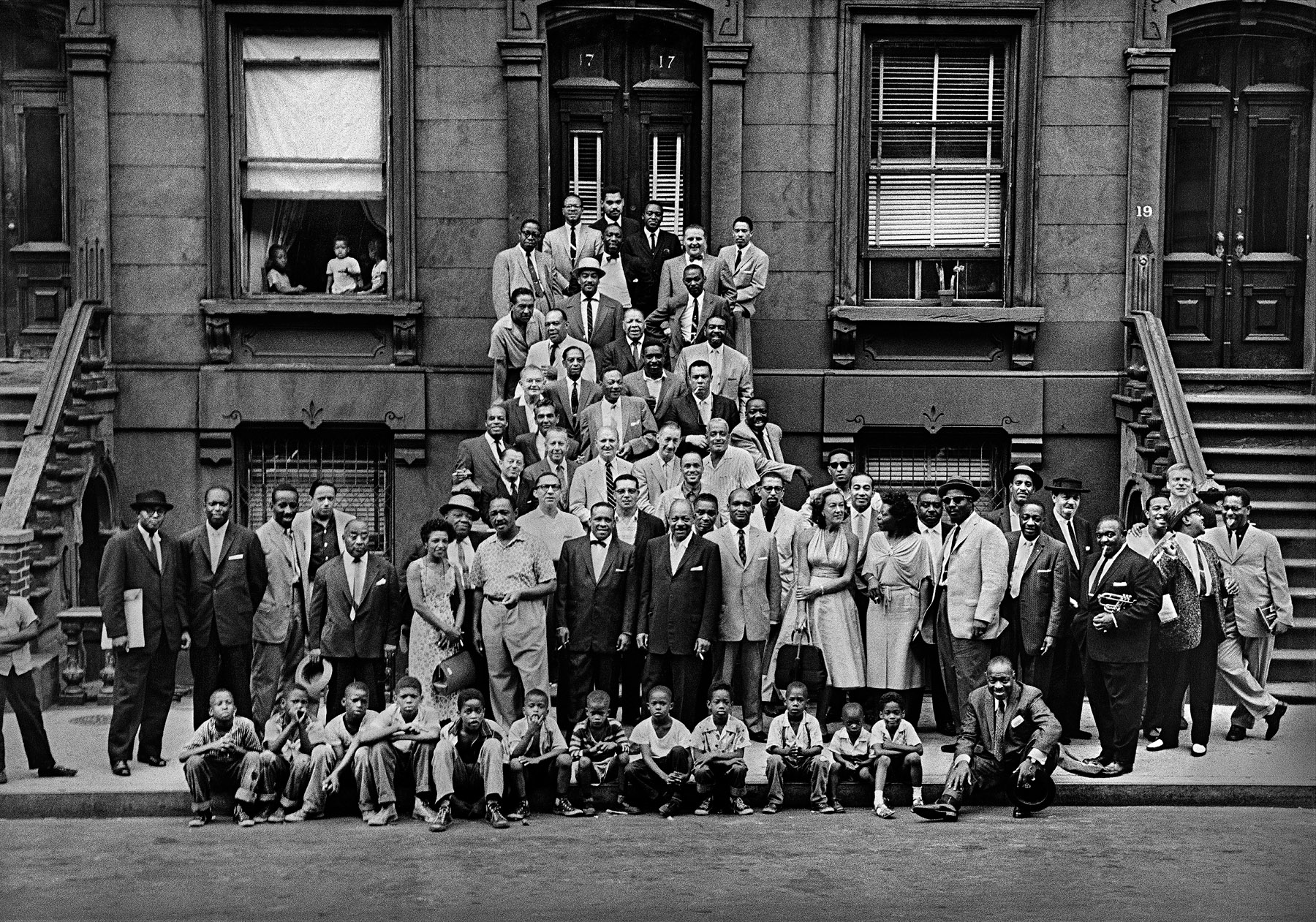
    Art Kane’s famous photo of jazz greats, titled “Harlem 1958”; approved for one-time use only. MUST CREDIT: Photograph by Art Kane – courtesy Art Kane Archive NOTE: this is a downsized low-res photo for web use

    I feel a bit preachy saying “These are some band leaders every lindy hopper should know”…. but then, shouldn’t every lindy hopper eventually get to know Count Basie, Benny Goodman, Fletcher Henderson, Chick Webb, and so on… ? It doesn’t seem too much to ask, does it?

    I mean, isn’t it kind of part and parcel of learning a historic dance form, that you learn about the people who made the music that they did this dance to?

    And if we namecheck the OG band leaders, surely they’ll also start asking why we don’t have many women band leaders on those lists? And if they don’t, shouldn’t we point it out?

    And if they see pictures of those band leaders and realise so many of them were black, and then look at the band leaders on stage in their local scenes and see that they’re all white, surely they’ll ask some questions about that?

    And if they see that jazz was born in black working class neighbourhoods, won’t they start asking how come jazz is a middle class white people thing now?

    I don’t want to get all Revivalist Evangelical on the kids, but I do think those kids should learn about the elders and custodians of this knowledge of jazz… #blacklindyhopmatters

    (photo of course ‘A Great Day In Harlem‘ by Art Kane in 1958)