
…it’s that time of year, I’m thinking about DJing hardware. I think I want to upgrade from the imic

to something serious. Well, to be honest, right now I use the imic as the output for my headphones and go straight from the laptop headphones jack to the sound gear. Which isn’t ideal. But somehow I got into the habit when I was first using my headphones – I couldn’t get DJ1800 to work with the headphones while itunes played through the imic. I think it’s a DJ1800 issue. DJ1800 is not very excellent – perhaps I need to fix my software solution…
…look, well, I’ll have a go with the imic talking to the sound gear with itunes, and DJ1800 playing through the headphones jack to the headphones. Maybe that will help with some skanky sound problems I’ve been having lately…
there are many cute things in this universe

This is only one of them.
do i need to go on?
There are many disturbing things about this Prada ad, but the one that really makes me squirm is the female figure’s body shape and posture. Weirdly pre-pubescent almost-breasts, super long legs… she walks like a catwalk model even without the silly shoes. And that type of walk (helllooooo pelvis) is actually a bit tricky to master.
Do I need to go on? I mean, surely I’m not the only one who has trouble with the gender stuff here.
hot and anxious
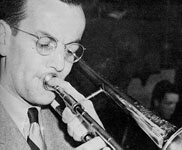
While it might perhaps be the most recognisable song of the ‘swing era’, I don’t like ‘In the Mood’. Glen Miller can go screw himself. I know that he had some action going on, but I’m adamant. In fact, I’m standing by my line, and not liking his version of that song. I don’t like dancing to it, and I don’t particularly like listening to it. No, no, I don’t.
I do, however, very much like There’s Rhythm in Harlem by the Mills Blue Rhythm Band (1935). That online version there, though, unfortunately doesn’t feature the very recognisable In the Mood melody line.
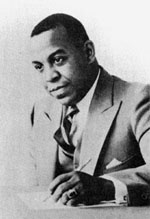
I also have a song called Hot and Anxious (1932) by Don Redman (who wrote stuff for the McKinney’s Cotton Pickers – that’s him to the left there), which also pwns the Miller version. Having said that, I’m not entirely sure they’re different songs… or different versions.
… wait, let me get my learn on.
Gunther Schuller tells me that Hot and Anxious was arranged by Horace Henderson for Don Redman (and his orchestra) in 1932. He also writes that In the Mood…
…has an interesting history. A riff tune, built on blues changes, it was composed by the black reed instrumentalist and arranger Joe Garland. But as is so often the case in riff pieces, it was based on a motif that had kicked around a long time and was simply assembled, notated, and put by Garland in a specific copyrightable form. It appears that the trumpeter Wingy Manone first used the basic In The Mood lick from 1930 on a Chicago-style recording called Tar Paper Stomp. He recorded it again, rechristened as Jumpy Nerves, in 1939, just four months before Miller’s In The Mood recording. But by that time Joe Garland had picked the riff up and had used it in his 1935 composition and arrangement of There’s Rhythm in Harlem for the Mills Blue Rhythm Band. But long before that (March 1931) Horace Henderson had incorporated the riff as the second strain in his Hot and Anxious, recorded by both his brother Fletcher’s band and Don Redman’s.
Joe Garland took his 1935 arrangement with him when he left the Blue Rhythm Band along with Edgar Hayes, and recorded it as In The Mood for Hayes in early 1938. Next he offered it to Artie Shaw, who played but never recorded it, on the one hand thinking the simplistic riff a little beneath his own musical ambitions and on the other hand finding Garland’s arrangement too long to fit on a ten-inch disc.
When Garland offered In the Mood to Miller, who was undoubtedly looking for strong new numbers for his Glen Island Casino booking, Miller grabbed the piece. With the precise skills of a first-rate surgeon Miller trimmed Garland’s arrangement down to essentials, retaining the two initial strains, building in two solo sections (a saxophone exchange between Beneke and Klink, and a Hurley 16-bar trumpet solo over an Aflat pedal point) to the famous fade-away ending with its riff repeated three times at ever softer dynamic levels, then suddenly roaring in ff a fourth time for the final climax. … [and here Schuller continues with an in-depth analysis of the score and recording]…
No official word has ever been offered as to how the arranger’s credits are to read. Two things are clear, however, from the aural evidence itself… [and Schuller describes this evidence in detail]…
It is ironic but in the nature of the popular music business, that Miller became a millionaire on In The Mood alone, unlike his three arranger helpmates – [Joe] Garland, [Eddie] Durham [once trombonist with Jimmie Lunceford’s band], and [Chummy] MacGregor [Miller’s pianist] – who did not share in the financial rewards. Durham reputedly received all of five dollars for his contribution. (The Swing Era, Oxford University Press: Oxford, 1989: 674-675).
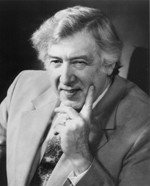
I recommend Schuller’s histories of jazz. The Swing Era is awesome – it’s a big, fat book, and you can pick it up on amazon for a tiny amount. I don’t have Early Jazz, but it’s on my wish list. While his analyses of each musician are complemented by some seriously in-depth analysis of the score, it’s still accessible. And listening along is really fascinating – you learn an awful lot.
more lovely swedish action
(From here).
That’s Hanna, Mattias and Sakarias. No girly girl action there.
I realise I’ve been spelling Sak’s name incorrectly. These guys are all members of the Harlem Hot Shots, and I think they’re the best of the post-revival (or revival) generation.
Speaking of no girly action…“>!.
While I’m at it, here‘re some of the Hot Shots doing some Tranky Doo/Keep Punchin’ Big Apple action. Sweeeeeet.
And finally, of course, Frida takes no prisoners:
more youtube ‘blogging’
Herrang is home to the bestest vernacular jazz dance camp/festival in the world. Last few years they’ve followed up the camp with a competition in Sweden – the Battle. I use a clip from a previous year for teaching and papers at conferences.
This year the lindy hop didn’t really blow my brain, but there is some sweetness in the ‘authentic jazz competition’. Mostly in the person of one Zacharias Larsson. This boy is a giant, young Swede – quite possibly the sweetest thing. And my personal jazz dancing hero.
Check out the first clip below. That’s Zach in the white shirt and beige trousers.
(From here).
For my money, he’s the only one really bringing it – less with the show pony, more with the dancing (though he’s certainly not shy of a little showing off).
Look, here’s some more – from the finals:
(From here).
Oh yeah, that’s the action. Try to look past the flailing in the foreground (sorry, friends, but that’s not very interesting stuff – better than anything I could pull, but still… I really am tired of girls dancing dancing sexy and twirling their hands about like belly dancers – HARDEN UP!).
And, finally, peer past (even more) flailing to see him pull some serious sweet action here:
He really is pulling some sweet dancing there. If we were to get all nit-picky, he’s definitely working the ‘authentic’ stuff – as in dance steps which have some historical weight. Technically, he’s a dream. Musically, he’s awesome. And aesthetically – as a package – he makes it all work. My favourite in that last one is the way he works it quite small until the music gets big, then he brings out the nice high kicks (a la cake walking goodness).
He’s not only a nice person and a fabulous dancer, he’s also a fully sick teacher. He and Frida have been long term dance partners (though she’s getting more into the American scene these days). Here’s a photo The Squeeze took in Melbourne in 2002:
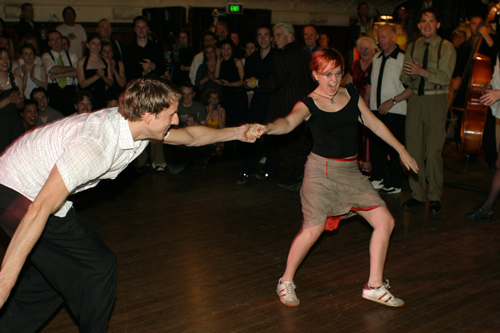
That’s them at full stretch, kickin’ it lindy hop style.
i like it
Even though it’s some sort of stereotype, I like it that both In and Out and Saving Face end with dancing scenes. Kissing and dancing. Really, what could be nicer than kissing someone you love while you’re dancing?
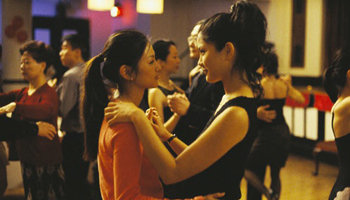

I’m just a big old nanna.
i made a good post
but the computer eated it.
How do I feel about gearupgirl? Not too happy. Cycling should be so easy we don’t a special ‘get girls into it’ site. But cycling in Sydney is scary. I haven’t done it yet, but The Squeeze is doing it after dinner.
no google doesn’t go here
Best blogging of google-freaking-out-Australians-street view.
NB The Squeeze and I rushed straight to look at the Taj Mahal (no, not the blues musician) last night and were Disappointed. We settled for pretending the cyclist in front of our old house was me.
trev got pwnd
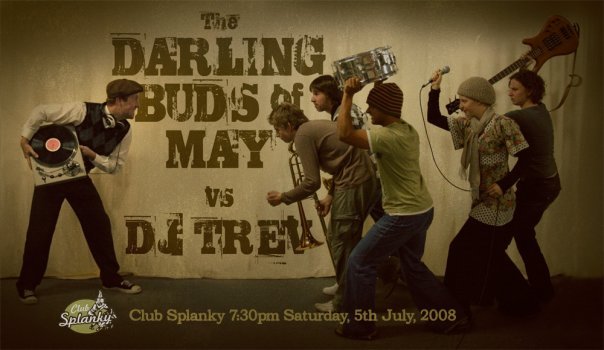
But this image pwns all.