Live Music and Dance Economies + beer

I’m afraid this isn’t a terribly well written or thought out post. Spring has struck, my sinuses are buzzing with histamines and my brain is running slow and foggy. But I wanted to join up all these issues before I forgot them.

So this is a story about liquor licensing, live music economies (financial and cultural) and dance cultures. It’s not terribly well researched or referenced, so please do go on and explore the issue rather than relying on my dodgy interpretation of events. I mean, buggered if I really know anything about liquor licensing in Australia and within Australian states.

The ABC story Live music injects $1b into economy (Lucy Carter and staff, Posted September 19, 2011 10:56:27) discusses a report on the economic value of the Australian live music scene commissioned by “industry stakeholders including the Australian Council for the Arts and the Australasian Performing Right Association (APRA)”.

  • The study was limited to live music performances in pubs/bars, clubs, restaurants/cafes and nightclubs in Australia.
  • the venues included in the study were limited to those in live music venues licensed by APRA that staged live music during the 2009/10 financial year.
  • The study included only revenue generated from venue-based live music performances.

(pg 4)

The basic point here is that live music makes a significant contribution to the state and national economies, and is therefore important. This gains particular relevance in the context of ongoing battles over noise restrictions, the gentrification of urban spaces and the rezoning of areas where live music lives.
I need to note, here, that live jazz in Australia does not have broad appeal. It tends to cater to a much older demograph than most of the live music discussed in that report. But I think this is important. If live music is equated to ‘youth culture’ in popular discourse it marginalises an increasing (and increasingly influential) demograph and market: older audiences. I also think it’s important for jazz to reposition itself as a product for a more diverse audience. Bands like Virus in Melbourne did this well in the early 2000s, and New Orleans of course can pull this off because live music – of all types – is so thoroughly embedded in the mythos of the place. But live jazz is positioned as ‘art’ music rather than popular music in Sydney. Frankly, I think there should be more live jazz in everyday community spaces (like pubs), and this live jazz should be representative of the whole spectrum of ‘jazz’.

…though, personally, I want more of the hot jazz and less of the twiddlyfiddly arty stuff. Because it was designed and built as popular music and lots of fun to dance to.

My attention was caught by the fact that this was a study of venues serving alcohol and licensed by APRA because there’s been a recent discussion on Bug’s Question Of The Day FB page about paying cover charges, buying drinks and tipping at live music venues. The full question (15th September) reads:

I’ve noticed that, not only in New Orleans but every scene I’ve been to, dancers don’t want to pay a cover charge or tip the band. I’ve also heard from venue owners that dancers are notorious for not buying drinks. Why are we as a community resistant to supporting the musicians and venues? Do we not know any better? If so, how do we educate the community?

Drinking and tipping and cover charges at live music gigs are an issue for lindy hoppers because most dancers don’t drink much while dancing. Simply because it’s a demanding game, and drinking impairs your dance skills. So a venue that depends on drinking to cover the cost of live music is not going to make it, financially, if their clientele is made up entirely of lindy hoppers. The amount dancers drink really depends on the gig – the time of day, the vibe and so on. So they will drink, just not at every gig, every time. If we were to depend on live music for our entire scene, I think a reasonable standard of dancing would require spaces that focussed on dancing, rather than drinking. Ballrooms, dance halls and cabaret clubs with more physical room and a greater emphasis on dancing as well as bars and pubs where the social focus is more diverse.

I don’t think it’s a terribly good idea to promote drinking generally in a culture like Australia’s where binge drinking is a serious social issue, but I don’t want to suggest that I think drinking is wrong or bad. Basically, lindy hop events aren’t like other social events at licensed venues in Australia, and I think it’s a really good thing (and the thing I enjoy most about dance events) that young men and women (and older men and women!) can enjoy social events and dancing without getting shitfaced. I think that social and cultural practices and spaces should be centred on more than just drinking, not that social and cultural spaces should exclude drinking. Diverse cultural spaces make for diverse and vibrant communities, cross-generationally.

I don’t drink, so I don’t buy alcohol at live music gigs. I’m not a huge soft drink fan, so I don’t buy softies. I’ll buy a mineral water with lime, or some chips. But I like pubs. I like their casual drop-in culture where you can meet friends for a quick drink or a long meal. I like the way live music is an important part of pub culture. But I’ve been been struck by the differences between Melbourne pub culture (which I really like) and Sydney pub culture, which is a lot less pleasant.

There are different laws and licenses in each Australian state, and local licensing laws are often regulated by local councils – eg in Melbourne local city councils regulate licenses. A venue can lose its liquor license if it breaches noise level laws or serves under age customers. I have some problems with the way licensing works in Sydney, mostly because licenses are very expensive, and geared towards larger venues subsidised by on-site gambling (whether a TAB, Kino or pokies). Licensing in Sydney seems (at first and cursory glance) to promote pubs and licensed venues as places to get totally shitfaced, rather than places to meet friends, share a meal, listen to a band, play trivia, read, laugh, talk or get shitfaced. They’re simply more diverse community spaces in Melbourne than in Sydney. While even I’d drop into a pub in Melbourne on my own to drink or eat at the main bar, I’d feel a lot less comfortable at most Sydney pubs, because I’m not there to drop a million dollars in the pokies or the TAB or to drink a jug of beer on my own at lunch time.

This is where my knowledge really breaks down, but the way licensing works is affected by the influence of Clubs Australia, an influential interests group representing social clubs (like RSLs, Sporting clubs, etc). Pubs and clubs are different, legally and culturally, but in Sydney large corporations own a string of pubs and interests in clubs. Their main source of income from these businesses is gambling, or more specifically, pokies. Pokies are a scourge on the earth, encouraging people to sit and drop coins into a machine for hours and hours at a time. This type of gambling targets lower income earners and I think it’s promoters are ethically fail. Pokies also degrade the conviviality of a local pub – people sit in front of a machine rather than a bar, conversation is impeded by the loud noises and attention required to pull a lever. Live music and pokies are fundamentally incompatible: you can’t make good music in a room full of pokie machines. And pubs depending on pokies for revenue will devote valuable floor space (whole rooms!) to pokies rather than less profitable bands.

There’s been speculation about the effect of pokies on pub culture, and news articles like this Daily Telegraph one from earlier this year suggest that a focus on pokies has led to a neglect of drinkers. Of real, live people. I’d argue that chain pubs, run by an absent owner, are not community-oriented spaces at all. And pubs that are most culturally and socially relevant spaces are local spaces. Which is why one suburb in Melbourne can host so many small pubs – each serves a particular local clientele and offers a specific ‘experience’. Grand Final afternoon is perhaps the best example of this sort of localised specialisation, but the live music culture is just as useful an illustration of the cultural value of smaller, independently owned and operated pubs.

The federal government is currently considering revisions to the legislation affecting pokies, and Clubs Australia is spending an awful lot of money on advertising to drum up opposition to the changes. I’m curious to see how it all pans out. There are very few convincing arguments for promoting pokies, and many convincing arguments against it.

And here is where I’ll have to leave my discussion of pokies and licensing specifics, as I’m a bit histamine-crazy and generally ignorant of the facts. But I wanted to link up this news article, reference that Bugs Question, and the also something about the recent sale of the Unity Hall Hotel in Balmain to a corporate entity who owns a chain of pubs.

Unity Hall hosts one of Australia’s best jazz bands every Sunday afternoon. Musicians passing through town regularly drop in to play a few songs, so you’ll see all sorts of brilliant Australian (and visiting) musicians. For my money, this is the best dancing music in town. Dancers go there to dance, and there’s no cover charge. The bar staff charge the locals less for drinks than dancers (which is totally ok by me), but dancers who do turn up (and who pretty much count as regulars, though not necessarily locals) always buy drinks and chips and maintain a good relationship with bar staff and musicians.
While this is the best opportunity for hardcore dancing, it’s a small venue, and dancers need to share it with ‘nondancers’. Or, in other words, ‘normal folk’ who like to dance but don’t spend a million hours on dance classes. Because it is in a non dancer-run space, dancers need to engage their real social skills. Talking. Hanging out. Dealing with dickheads off the street. I think it’s a good place to learn floor craft (safety first!), to engage your social skills (conversate!) and to enjoy and support quality live music. Unity Hall isn’t as ‘good’ a pub as the best independent pubs in Melbourne – it does have a TAB taking up lots of space, and pokies, and it isn’t properly cross-generational (though it’s getting there), or multicultural (though even Melbourne pubs don’t really rock the multiculturalism). But it’s one of the better Sydney pubs, and I really hope the it doesn’t change for the worse with its new owners.

The sale of the Unity Hall hotel is indicative of how many pubs in Sydney are run: by big businesses who own a chain of pubs and treat them as warehouses for the real money makers – pokie machines. This is a bit shit when you compare it to Melbourne where there’s a strong independent pub culture, which results in brilliant food, child/family friendly pubs (which are also popular with the young and hip), live music venues and bar staff and owners who know their clientele and give a shit. Basically, venues which are owned and operated by members of the local community for the local community are more likely to give a shit about the local community and be important community spaces. Whether you’re looking for awesome food, locally sourced beers, live music, somewhere to dance, somewhere to talk, or just a quiet spot for a quick pint at lunch time.

I know my perception of Sydney pubs as community spaces is biased by my experiences in urban Melbourne (and I don’t mean to feed into the Syd/Melb rivalry), but I think state-based licensing laws are significant when we’re talking about dancers’ obligations at live music venues. Honestly, if licenses were less expensive, venues wouldn’t be so dependent on drinks’ sales and gambling to cover their costs. They could operate on a smaller profit margin, offering more specific and niche services – good food, niche music, smaller premises – and not need to rely on shit like pokies and promoting binge drinking. They could be more responsible and responsive community spaces.

[Edit: I need to read
A history of machine gambling in the NSW club
industry: from community benefit to
commercialisation” by Nerilee Hing
]

Right Now It’s a Pleasure

It’s much easier to be pleased when you’re not a seething mass of anxiety. So today, I am far more easily pleased than I was last week. I’m not sure whether this moment of calm will last, but for now, I’m just going to enjoy it.

Earlier today I was pleased by Thomas McCarthy’s new film Win Win. It’s no Station Agent, but it pleased me.
Then I was pleased by a nice panini in a cafe full of middle aged Italian men enjoying a widescreen television presentation of the tennis.
Right now I’m really enjoying Abigail Washburn singing Everybody Does It Now.

Tomorrow it might be very difficult to find something that pleases me. But right now it’s a pleasure to just sit here on the couch and listen.

Let’s Dance! (in which I score a free CD and then brag about it)

One thing I don’t say to myself very often is “Gee, I wish I had another version of Jersey Bounce.”

I’ve really been enjoying the recent rash of smaller combos and knock-about street jazz type bands coming out of places like New Orleans and Seattle (bands like Smoking Time Jazz Club, and dancer-populated Careless Lovers.) There’s something about the DIY ethos of dancers learning to play instruments and then making the music they love dancing to. It’s exciting, as dancers move from just responding to and occupying music, to actually making it.

But I have to say, it’s a refreshing change to be presented with a big, solid band full of highly skilled, experienced musicians. And a band that’s well managed is a gem.

We’re all used to the sort of big bands that are hired to play at smaller exchanges and local events. They’re made up of a range of ring-ins and local musicians, pulled together for the night or a couple of gigs. We’ve seen all those faces before. The band leader is usually the guy who put the gig together, not the guy who drills the band each week in practice, who seeks out serious charts and arrangements, tailoring them for individual musicians. And most of these bands are less than inspiring for dancing or listening*. It’s not really surprising that dancers started getting interested in smaller, more dynamic bands.

Today, there simply isn’t enough work for more than three or four big bands (if you’re lucky) in a single (decent sized) Australian city. Even in 1920s Chicago,

the job, as South Side newspaper columnist and orchestra leader Dave Peyton insisted, created bands and held them together. Cabaret, dance hall, and vaudeville theater employment gave life to jazz groups:

The job makes the orchestra. If you lose the job and loaf a few weeks, you haven’t any band. Our field is a narrow one. Your men can’t afford to loaf long and the first bidder takes them away from you. The job is what you want to worship.

(Kenney, William Howland, Chicago Jazz: A cultural history, 1904-1930, Oxford University Press: New York, 1993, xii)

Even if your city is as large and creatively together as Sydney or Melbourne, you still see a lot of the same faces in each of the bands. And each of those guys in modern big bands is also working other projects, other musical styles, just to make a living. Jazz today is a catholic enterprise; there are lots of different styles, and 1930s/40s classic big band swing is just one of them. And you hear it in the big bands. Musicians’ styles and solos are influenced by a far wider range of music than in the original swing era, and while they might bring talent to a big band, there’s rarely the unity of style and focus in a modern big band that really makes them work as a living, breathing animal.

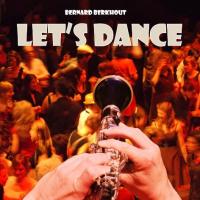
So Bernard Berkhout’s Orchestra’s Let’s Dance! recording is a pleasure.

I have to say, very clearly here, that I was sent a copy of this CD unsolicited. I often have reservations about reviewing bands’ CDs, especially in the swing dance world, as the pool is just too small for me to feel comfortable about reviewing things honestly. But I wasn’t asked to review the CD, I was just sent an email with the line

The CD is now out and I would like to send you a copy.

Awesome. I said “sure” and then I had a new CD. I win!

And I was bloody relieved to hear the actual music. I wasn’t going to have to make nice and fake some positive comments. This album is so fucking good. It’s a delight to hear a solid, tight big band pumping out the shit that made lindy hoppers lose their bits in the olden days. When the oldies talk about music, this is what they mean. Shit is hot. The sound quality is fabulous. The songs are all familiar, the arrangements are tight, the solos are nice, the rhythm section rocks.

I’d heard about this CD before through a thorough piece on its production and intentions on Hey Mr Jesse (ep 67), but also via the SwingDJs thread ‘Recording technique recommended for a new big band album’. I’d been interested in the community consultation that had gone into the album, and into the band. It’s an effective way of marketing a product: give people a feeling of ownership or participation, and they’re more likely to give a shit about the end product. Works with dance events, and it seems to work with CDs for dance bands. I had thought about buying the album, but having to buy a physical CD rather than downloads put me off. Buying in euros from Europe means a dodgy exchange rate and expensive shipping to Australia. So I’d put the album to the back of my mind, on my mental ‘to buy’ list for when I had a few more dollars in my DJing bank (though it’s only $AU20 including postage, which is pretty bloody decent). So a free copy was very welcome. I was curious. Also, I am a tightarse. And it’s very flattering to be sent stuff.

First off, the CD’s packaging is sweet. I don’t care much about this stuff usually (unless we’re talking Mosaic or Bear Family sets), mostly because I tend to rip the CD into my computer, then pack the physical CD away then forget about it. But this packaging is nice. It’s a cardboard case, which is great for shipping long distance. Jewel cases tend to arrive in pieces. Pieces that scratch the buggery out of the CD. And there’s a nice booklet listing all the musicians. Sweet.

To use an annoyingly overused phrase, the album does everything right. Songs are about three minutes. I’m finding dancers more and more tolerant of longer songs these days, probably because of their experience with live bands. But three minutes is a good length. Creating a good dance song in three minutes is a craft, like writing a short story. Get in, set it up, let it roll, finish it up with a bang. This shorter length means there’s less room for long, boring, wanky solos. Thank fuck. The solos in this album are concise, well-crafted and occasionally fucking GREAT. I dunno if they’re transcribed from original recordings (this whole album smacks of painstakingly accurate recreationism), and to be honest, I don’t much care. I’m here for the party, and I’ll think about the finer details later.

Most importantly for a lunk-head dancer like myself (and I am boringly lunkheaded when it comes to what I like for dancing), the band has a chunkingly solid rhythm section. It’s a machine, a power house pumping the band along. This is what a big band does right: four people shoveling the coal, stoking the boiler. A guitar, a piano, a drummer, a bass player, give or take one or two. This is what I really miss in smaller hot street-jazz type combos. I miss those four blokes laying down a good, chunky, layered rhythm.

These guys in Berkhout’s Orchestra give the rest of the band space to explore melody and solo, just getting on with their own job: holding shit together, telling even the newest dancer where the beat is. A good, solid rhythm section lets the rest of the band fuck about with fancy ways of adding/embellishing the swing, the delay that makes for excellent lindy hop.

You know how I know the rhythm section rocks? Because the sound quality is really nice. I don’t know how this was recorded, but I do know it’s nice. Good enough for me. I know it’s cool and interesting to try to recreate the exact same studio and mic set up and whatever from 1920s and 30s recordings. That’s great. Particularly if you’re listening to a CD at home on a decent sound system or good headphones. You can just sit there and soak in every echoey clunk, you can strain your ears trying to find the individual strum of the guitar or clarinetist drawing breath. Less excellent, though, is that sort of action when you’re dancing in an echoey town hall, heart pounding in your ears, trying to keep yourself and your partner safe, surrounded by two hundred people dancing in and out of time. And I’m a DJ. I’m looking for recorded music that works in shithouse conditions.

I’m usually DJing on shitty sound gear. Mishandled set ups in dirty pubs. Inadequate self-powered speakers in echoing church halls. Sure, things can be better at exchanges, but the bulk of my DJing happens in my home town in less than perfect conditions. So I need the best sound quality I can get. Because I’m then going to squeeze that brilliant sound through my shithouse laptop soundcard, down a raggedy RCA cable and into a mixer I don’t really know how to use.

To be honest, I’m completely over bands who are so into recreationism they eschew the awesomeness of modern technology. It seems kind of pointless. You think Jelly Roll Morton would have settled for dodgy sound when he could have heard himself played back in glorious stereo wonderment? If King Oliver or Genny Goodman or other band leaders of that day had had access to the sound technology we have today, you can bet your bottom dollar they’d be using it. They’d be wanting their music to sound as GOOD as possible.

I also find the recreationism that uses olden days tech so obsessively a little culturally naive. There were all sorts of politics going on in the recording industry in the swing era, and the whitest, most popular and palatable bands got access to the best technology and promotion. So those shitty recordings by black artists doing the most provocative, progressive music at the time were the result of shithouse social politics and economics. Recreating that is a bit like recreating bullshit racist dance sequences from films. You’re kind of missing the point.

Do justice to this magic. Do your best playing, and use your best technology.

Berkhout’s producers have done a pretty good job on this.

But I’m a DJ. Just because I love a song or an album, doesn’t mean this is going to be good DJing fodder. So I took this album to my most challenging gig. It’s a fortnightly dance in a large, echoey hall with a bullshitly inadequate sound system. The dancers are mostly new, even complete first-class beginners, and I usually do the first set of the night after the drop-in casual class. There are some more experienced dancers coming along, but this is a mixed crowd, and they don’t really have much time for shit DJing. If the DJ is rubbish, they walk up to Newtown’s main street full of bars and cafes. I find anything lo-fi just disappears into the high ceiling at this venue, and ends up sounding like shit. So I tend to DJ hi-fi and new bands almost exclusively there. Because I am chicken shit.

So I put this CD to the set in that setting. If it could work here, it could work anywhere.

I did my best to set it up properly. I think new music deserves that. So I started with some Big 18, a bit of Gordon Webster (current flavour of the month), some Mora’s Modern Rhythmists, and then it was time to bust out ‘Jersey Bounce’. Instant success. The floor was PACKED. Even the most jaded, heard-it-all-before experienced dancers were up and working it. Yes, we’ve all heard ‘Jersey Bounce’ a million times before, we know every note. We’ve heard every version. But this one is just fucking GREAT. WIN!

I played a few other modern bands in that set, from small to large, from New Orleans to New York. I also played ‘St Louis Blues’ from the Berkout CD, and it went down just as well. This isn’t always the most successful song with lindy hoppers. The tempo and rhythm changes often confuse new dancers. Not this night. WIN!

To be honest, if I’d thought I could have gotten away with it, I’d have played the entire CD, song after song. But there were a handful of other DJs in the room, DJs who’d pick up on that sort of stunt. And I have a rep to protect.

In future, though, this CD is going to be on my go-to list. When I need something solidly swinging and absolutely brilliant for solid lindy hop to introduce the music to beginners, this is on the short list. When I need a hi-fi recording to cope with a difficult sound set up, this is what I’m going to play. When I need a high energy, pumping song to kick a jam into gear, this is going to cut it.

I have been shamelessly pimping this album to all the DJs I know. It’s also an album I’ll recommend to new dancers or people looking for an easy entry point to classic swing.

I could conceivably get tired of this album in the near future. But not before I’ve played it so many times dancers audibly groan when they hear the first two notes of the song.

Yes, you do need another version of ‘Jersey Bounce’. Buy this CD.

* There are exceptions, plenty of them are American and well known with dancers. In Australia, the JW Swing Orchestra, for example, particularly around 2002, specialised in Benny Goodman arrangements, practiced regularly and was seriously tight. The Ozcats here in Sydney are a fully sick Bob Crosby tribute band, but they’re really not a hardcore swing era big band like Benny Goodman’s. Still, the Ozcats is made up of some of Australia’s tightest, most professional and experienced musicians. Who’ve been doing this thing for a looong time. And of course, bands like Melbourne’s Red Hot Rhythmakers are fully sick.

Currently Listening To…

LaTosha Brown singing ‘I Know I’ve Been Changed’.

This is really good stuff. Brown is with Porto Franco Records, where you can find some other lovely music.

I’ve also just bought Natalie Merchant’s latest album ‘Leave Your Sleep’. Dealing with the label’s online store was pretty bloody painful, but this album is well beyond worth it. I adore Merchant, and have ever since 10,000 Maniacs. I especially like ‘House Carpenter’s Daughter’. I really like the way Merchant’s explored American folk music.

This isn’t jazz or dancing music (in the lindy hop sense), but it’s brilliant. And Merchant is such a major name these days she can attract the very best musicians. She did a tour with the Carolina Chocolate Drops, and ‘Leave Your Sleep’ is interesting for dancers in that it features Wynton Marsalis on a couple of songs. I can imagine you could probably dance to ‘The Janitor’s Boy‘, but I wouldn’t force it, myself. The album is cool because it’s a collection of songs Merchant sang to her daughter when she was a babby, and includes poems she set to melodies herself.

My favourite song is ‘Bleezer’s Ice-Cream’, which is wonderful. It has the best lyrics:

BLEEZER’S ICE-CREAM
Jack Prelutsky (1940 – )
I am Ebenezer Bleezer,
I run BLEEZER’S ICE-CREAM STORE,
there are flavors in my freezer
you have never seen before,
twenty-eight divine creations
too delicious to resist,
why not do yourself a favor,
try the flavors on my list:

COCOA MOCHA MACARONI
TAPIOCA SMOKED BOLONEY
CHECKERBERRY CHEDDAR CHEW
CHICKEN CHERRY HONEYDEW
TUTTI-FRUTTI STEWED TOMATO
TUNA TACO BAKED POTATO
LOBSTER LITCHI LIMA BEAN
MOZZARELLA MANGOSTEEN
ALMOND HAM MERINGUE SALAMI
YAM ANCHOVY PRUNE PASTRAMI
SASSAFRAS SOUVLAKI HASH
SUKIYAKI SUCCOTASH
BUTTER BRICKLE PEPPER PICKLE
POMEGRANATE PUMPERNICKEL
PEACH PIMENTO PIZZA PLUM
PEANUT PUMPKIN BUBBLEGUM
AVOCADO BRUSSELS SPROUT
PERIWINKLE SAUERKRAUT
BROCCOLI BANANA BLUSTER
CHOCOLATE CHOP SUEY CLUSTER
COTTON CANDY CARROT CUSTARD
CAULIFLOWER COLA MUSTARD
ONION DUMPLING DOUBLE DIP
TURNIP TRUFFLE TRIPLE FLIP
GARLIC GUMBO GRAVY GUAVA
LENTIL LEMON LIVER LAVA
ORANGE OLIVE BAGEL BEET
WATERMELON WAFFLE WHEAT

I am Ebenezer Bleezer,
I run BLEEZER’S ICE-CREAM STORE,
taste a flavor from my freezer,
you will surely ask for more.
twenty-eight divine creations
too delicious to resist,
come on, do yourself a favor,
try the flavors on my list.

Don’t you just love the way the words just roll out of your mouth? This song features Marsalis. It’s gorgeous.

I’m also hot for Sharon Jones and the Dap Kings’ newer song ‘Better Things’. I think it’s my favourite of their songs ever.


linky

I’m kicking myself for forgetting to get Gillian Welch’s new album The Harrow and the Harvest on my emusic credits. ARGH. It’ll have to wait til next month, I think.

And I’ve been listening to a heap of new jazz bands and some old stuff as well. But that stuff is all kind of the same. These people here are a bit more interesting. Except The Palmetto Bug Stompers. They’re interesting.

Women DJs in the lindy hop and blues dancing world


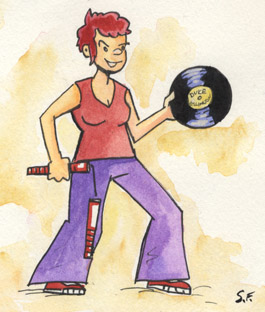
(This is a picture of me my friend Scott drew for my birthday)

I wrote in my last post: Bug’s Question Of the Day is a regular thread on Faceplant (just search for ‘Bug’s question of the day’ over there). I keep typing replies and then deleting them. I want to engage, but sometimes my responses are too long or too hardcore or too stroppy for that sort of public talk. Over here, I figure I can write my replies and keep them within the context of my blog and broader thinking about dance and DJing and gender and stuff…

This question is from the 16th July:

‎”At an upcoming blues event, I noticed there are six DJs – Five men and one woman. Another upcoming blues event this month has six men and one woman. Six out of six DJs at ILHC will be men. In general it seems that while there are some prominent female blues and Lindy DJs, the majority of DJs getting regional and national event gigs are male. Do you agree that this is true? Is it true in West Coast as well? If it’s true, why?”

There were all sorts of replies to the original question, some were quite shockingly sexist. I was surprised – stunned! – by serious comments from blokes that women simply don’t make good DJs because they have rubbish taste in music (too romantic or fluffy), can’t read the crowd, don’t obsess over music, aren’t competitive or … well, you can see where things are heading. I’m not surprised to read that sort of thing in a discussion by swing dancers. There are an awful lot of swing dancing idiots when it comes to gender stuff.

I want to include the replies in that thread before my comment, so you can see where my thinking was at when I wrote this. I wrote a shortish version of this post in reply to the comment there on FB, but it didn’t really do what I wanted it to do. Also, I was uncharacteristically cool in my reply. I think that’s because I hadn’t actually read the other comments properly. Yikes.

Byron Alley I’ll say that this isn’t my original opinion but I thought I’d share what a *female* DJ told me about this phenomenon. She said that the reason you don’t see as many female DJs in general, or as many DJing at the top level, is that she felt that to be a good DJ you need to have a kind of obsessive/competitive personality, the kind that makes you spend hours looking for the right new song, or digging up obscure facts about artists so that you can do a set of “songs from 1941 with the word “blue” in the title” that nobody is aware of but you.

Bear in mind that this came from a woman who was a DJ herself, so she wasn’t saying that NO women have these traits–just that more men do. I thought I’d post that because it wasn’t something that had occurred to me personally one way or another.

What I notice personally is that at the events I’ve run, where I’m always looking for good DJs and even to help train new ones, most of the time it’s guys. Guys are much more likely to volunteer, to think they can do it even when they’re not good at all, and ALSO to actually be good DJs. Women in my experience have been less likely to want to try it out, or to push for DJ slots. And of the few women who DJ, there are still fewer that have received good reviews. On average, the female DJ’s I’ve hired have been less likely to keep people dancing as long (eg. people go home earlier), keep the energy up, or get good reviews from other people. This isn’t even my own opinion–when I’ve been away and had other people DJ, I’ve asked my staff and patrons for feedback on all of our DJs and this has been the trend. I’m just passing on the results.

The three problems that have come up with the less skilled female DJs have been: 1) an overall lack of energy in sets (songs are more likely to be chill, subtle, even romantic), 2) less ability or inclination to read the crowd in deciding what to play next, and 3) less extensive music collections than many of the male DJs, leading to less ability to find “just the right song” for the moment.

On the very interesting plus side, even the mediocre female DJs were more likely to get good reviews…. from other women! So this had led me to wonder if maybe part of the problem is that most of our venues have fewer men than women. If the female DJs appeal more to the women but not the men, then it’s possible that what happens is that the men want to dance less even though the women want to dance more, which leads to everyone being even less satisfied because everyone dances less.

I expect to get flamed my above comments either way, but I need to at least point out that some of my very favourite DJs are women. Locally in Ottawa we have Claudia Petrilli, Jody Glanzer and Natalia Rueda. Natalia was actually a huge exception to everything–I heard her spin her first set and she was literally good from day one. (Not like I’m biased…) And globally Tina Davis is one of my favourite DJs ever.

The last thing I’ll say is that a lot of research has shown that women tend to negotiate less than men for jobs in general. A female friend of mine did research in that area. And in the swing scene, a lot of how people get gigs is by putting themselves out there, contacting organizers and saying “I’m available, pick me” and working out a deal. So even if the number of great DJs is equally distributed among both genders despite all I’ve written here, I’d be willing to bet that fewer women are running after DJ slots than men. I know that once again, my personal experience strongly confirms that.

I’ll end by saying that in a dance scene where there are more women than men dancing, I’d really LOVE to see more female DJs. I don’t think anyone should be pushed into doing something they don’t love, but then again, I never wanted to DJ until circumstances forced me to, and I’ve learned to love it over time.

And ladies… if you’re a great DJ, then get out there, contact the organizers of events you’re interested in and MAKE them hire you. It may work better than you think.

17 July at 00:23 · Like · 3 people

Greg Avakian Yes, it’s true.
Men are more geeky about collecting stuff. It is to a large degree how we define ourselves. “I have this and that”. Yes, it’s generalization and no doubt there are women who have great jazz and blues collections (Tina Davis, Devona Cartier, Suzanne Sluizer, Emily Smith etc.), but when I see a bunch of people who self-identify as DJs, they are usually men. Or boys.
What does it mean? Ladies, get involved!

17 July at 00:27 · Like · 1 person

Greg Avakian Interesting comment Byron about the music that women tend to choose. I agree -and considering that *for fusion dance events* I tend to like stretchier, subtle rhythms and chill vibes, I thought that (- in general -) the women who applied to this year’s fusion exchange kicked the men’s asses.
PS: I agree also that you will get flamed. :P

17 July at 00:34 · Like

Andrew Harrington This doesn’t answer the question at all, but is it maybe the same phenomenon that leads more men to become musicians?

17 July at 01:14 · Like

Stephanie Robinson Out of curiosity, do you think leaders and followers have different relationships to the music that would lead them to pursue/not pursue DJing? As a follow, I follow my lead before I follow the music–that is to say, I try to dance in ways that will fit the music, but I first defer to my lead and whether he’s giving me the space to get creative. When i dance with a new or rhythm challenged lead who is not keeping time with the music, I will follow his off-count lead out of politeness (and I die a little inside each time I do it).

Do leads, who are entrusted with being creative for 2 people in ways that fit the music, have a different relationship to the music than follows?

17 July at 01:26 · Like

Denise Shepler bluesSHOUT this year has 2 men and 6 women, so I’d say that’s an indication that there are good female dj’s out there.

17 July at 01:35 · Unlike · 5 people

Bob Free I think it really depends on the venue – I have nearly 50% male/female DJs at my venue – but I do have to work hard to maintain that balance (women DJs are harder to line up, because there are fewer of them and they are in demand). Many of the venues I go to, the instructor DJs – so it depends on who is teaching.

17 July at 01:35 · Unlike · 1 person

John Joven Maybe it just depends on the scene. In Chicago blues dancing, there are 5 females and 4 males who regularly spin at the blues events.

17 July at 02:05 · Like

Larry Colen I think there may be more woman djs at DHB this weekend. Last night I think it was 2 men and 4 women

17 July at 02:20 · Like

Elizabeth Gonzalez I thought this was part of ‘stacking the dance floor with good dancers’ as alluded to in the other BQOTD about event planning…

17 July at 02:55 · Like

Anna Sutheim The Minneapolis scene is actually somewhat skewed towards female DJs.

I would hazard a guess that scenes in which male organizers and teachers are predominant also have mostly male dj’s, and vice versa.

17 July at 04:38 · Unlike · 1 person

Devona Cartier over all across the lindy and blues scenes, there ARE more men djs then women djs. i think its far better balanced in the blues scene, than for swing though.

I feel strongly that there is no fundamental reason why women cant be just as good at djing as men, or why they wouldnt be just as interested. also, i feel that there isnt any fundamental difference in the type of music men or momen would pick. the reason there might be differences is more an issue of environment than gender. …more to come…

17 July at 05:22 · Like · 1 person

Claudia Petrilli well, I’ll be damned. Since I was tagged, now I feel like I need to add my two cents.

I have to say that I CERTAINLY have a Geeky/nerdy/obsessive-comp​ulsive type of personality and that I have spent many an hour “looking for the right new song, or digging up obscure facts about artists”. Was this what lead me to become a decent DJ? I definitely think so. If it wasn’t the main factor, it definitely played a major role. Getting to be a decent dancer obviously helped, as well.

And while I enjoy “chill, subtle, even romantic songs” they are not my favourite to DJ. I was shocked that just a couple of days ago, Natalia Rueda commented that a certain -very good, lead in our scene might like my sets so much because I tend to play mostly slow song. That burned. But I do have to say that as the night progresses, I do tend to mellow out my sets. Depending of the crowd, that is. It always depends of the crowd. And the event. But right now I’m mostly talking about weekly dances, not events with a theme. Lots of thinking and re-thinking to do here.

17 July at 06:38 · Like

Devona Cartier for me personally:
1) i did not start djing because i was a collector of music. im not a person who is obsessive over sidemen and statistics. honestly i care much less about who the artist is, what the song title is, what year it was recorded, or what album it is from. it has been explained to me in the past that ‘the reason more men dj then women is because men are into those kinds of details (like they are with sports) and women are not’. aside from the fact that i dont even know if that is true of men and women across the board, i dont think that is required to be a good dj, much less makes you one.

when i began djing i knew very little about those kinds of details. i knew what my music collection sounded like, and i could put songs together based on an intuitive sense of how songs suited each other and the crowd. over the years, i have explored why i intuit what works and have learned detailed, concrete, information about the music. the details become interesting not based on themselves, but how they relate to each other, and the pattern as a whole. for example, knowing the recording date of a song allows me to compare it to other tunes of that year and what the dance style of that year was, to gain understanding of what kinds of sounds influence dance in what way. then i can watch what the dancers are doing in front of me and match their dance style with a particular sound that suits it.

do i come at djing from an intuitive place because im a woman? i dont know. (also i dont think i care.) i DO hear it said that ‘to be a dj you should know the specific details of the music such as x, y, and z.’ i think thats a load of crap and if its keeping more intuitive types of people from starting to dj then its a shame. to be a good dj you need to know and understand your music. even knowing who the artist is doesnt really matter. knowing the patterns and elements of the music is far more important, and you dont need to give a damn about how many home runs someone had in their career.

2) I do not tend towards “chill, subtle, romantic songs”. i would be insulted if someone assumed as much because im a woman. actually i would be insulted id someone assumed anything about how i dj based on my gender. as i cycle through the female djs i know i dont think thats true of them either. Byron Alley its possible that that is something local to your area.

i also think that its possible that ladies having less inclination to read the crowd may just be something that is true locally to you. it is not true in my experience. among the imtermediate level djs i have expernce with women are MORE likely to change what they had in mind to play to suit what the crowd wants, and men are more likely to just plow through with their music agenda.

collection size: it does not make a good dj. i know people who have very large collections and are very poor djs. i also know djs who have smaller collections who are fantastic. i would expect that anyone starting out as a dj would have a smaller collection, which is probably not really a bad thing seeing as they have more oppertunity to learn their collection well.

17 July at 08:38 · Like · 4 people

Devona Cartier the competitive spirit: yes, you are more likely to succeed as a dj if you have it. women are just as competitive (if not more so) as men. conside how many women enter jack and jill comps.
i do believe that women are more likely to underestimate themselves, and that men are more likely to overestimate themselves. You will get more gigs if you are pushy about your abilities.

again, me personally: i know im a kick ass dj. I endevor to wipe the floor with all other djs. i do not contact events and tell them they should hire me. i am certian that leads to me getting less gigs. im just not comfortable “boasting” to events like that. i have no idea if that is a tendance of women, but if it is, well thats a good reason that there are more men hired.

lastly: i think the real reason that there arent more women djs, is that their arent many women djs. it like out of sight out of mind. women may not even consider it because its just something other women arent doing. atleast, one of the reasons there are more up and coming djs who are women in the blues scene, is there were more women djs already.

17 July at 09:04 · Unlike · 5 people

Susan Brannigan Whenever a question like this comes up, I suspect what Devona said above: women are, for whatever reason, more likely to underestimate themselves and men are more likely to overestimate themselves.

I used to teach skiing, and there were traditionally 9 levels where skiers would rank themselves. Men most frequently thought they were better skiers than they actually were, while women often though themselves less skilled than they actually were. Why is this? I have some ideas about this, but there’s probably no good reason to get into it now. ;)

I’m glad to hear there are a lot of female DJs out there. I would like to see/hear more. :)

Tuesday at 02:33 · Like

Clyde Wright DC seems to have about an even number of male/female Blues DJs. In WCS, there seems to be more men than women. In Lindy men edge out the women by a tad. Argentine Tango seems fairly well split. Salsa, there’s more men than women. I think it varies between city and scene dramatically.

Tuesday at 05:07 · Like

Damon Stone Without any planning, DHB had exactly 2 men on the planning staff out of 10 positions, 4 male teachers out of 10, and 2 male deejays out of 7. I don’t know what that has to say about anything, except that this isn’t really too unusual for us. Our deejays were awesome, and I have some pretty damn exacting standards and prerequisites for my deejays. There are certainly a number of women who are excellent deejays in the circles I run around.

Tuesday at 07:05 · Like · 3 people

Luckily Devona Cartier was there to set those idiots straight. She made some brilliant comments – things that were just plain old common sense. I haven’t heard Devona DJ, but she’s been around for a while, and I’ve heard many good things about her work. I especially liked the way she declares: “I know I’m a kick ass DJ. I endeavour to wipe the floor with other DJs.” It’s exciting to hear a sister stepping up and declaring pride in her abilities, but also competitive confidence. Here I am, if you think you’ve got it, bring it. But prepare to be pwnd.

At any rate, I wrote some things in reply to all this. What follows is what I wrote at the time, but didn’t actually post on FB.

I think Devona makes a brilliant point: there aren’t more women DJs because there aren’t women DJs. I think you need critical mass (ie a certain number of visible women DJs), good support and encouragement for new women DJs and then working conditions which continue to encourage women DJs.

My suspicion about DJing: It’s like cycling. The key indicator for numbers of cyclists in a city is whether women feel safe cycling. If women feel safe cycling in your city, you numbers of cyclists will be high over all. I also think that if you have lots of women DJs in your scene, you probably have a pretty good DJing culture. Good as in supportive, collaborative, creatively challenging, exciting, stimulating, rewarding, etc. As Devona says, women DJs like to kick your arse as well. They just might need to be encouraged to get their boots on in the first place.

I can only speak about Australian DJs, and then only from my own POV. I’ve been DJing since 2005, managing DJs at big events since 2006 and I also coordinate DJs for local events. I haven’t traveled overseas to DJ, but I have DJed interstate at most Australian events. My experience has been with blues and lindy DJing. I have a long way to go before I become anywhere as near as good as some of the international DJs I’ve danced to or heard.

I’d suspect that most of the comments above mine apply to a US context. This is important because these national scenes have different DJing cultures and different approaches to remunerating DJs for large, small and medium sized events. There are specific local DJing cultures even within Australia.

Firstly, the women DJs that I have met and worked with in Australia are just as likely to be crazed, obsessive music collectors as men, are just as likely to obsess about software and hardware, to fuss about working a crowd or managing relationships with event coordinators, to pour ridiculous amounts of money into their collections, to jump on the chance to nerd out in music conversations. They just don’t always talk about it in the same way as men. Or shout out their opinions in public fora.

Secondly, the ability to DJ well, to combine songs creatively, to work a crowd, to develop and know a good collection, isn’t gender specific. I know as many excellent female DJs as male and I have good, satisfying and creative working relationships with both men and women DJs.

Thirdly, it’s difficult to quantify the women/men DJs in Australia. I suspect women, who may make up a larger proportion of DJs at at smaller local events are underpresented at larger interstate events.

If I were to make an observation about gendered tropes in DJing, it would be that women DJs tend to nurture professional relationships in different ways. They’re more willing to take direction from event managers, they’re less confrontational and they’re more collaborative in their relationships with other DJs (particularly other women DJs).

I’ve also noticed that some male DJs are more willing to put themselves forward for gigs and to get them (even if they’re not that skilled), and for some women DJs to be less confident about their skills and to miss out on gigs (even thought they had better skills). I’ve also noticed that women will step up if they get even a little bit of encouragement. But men are less likely to actively say “what was good about my set? what sucked? how can I improve?” This is most true of DJs who’ve been around for a while.

But there are exceptions to these tropes. I’ve worked with difficult, stroppy, pain in the arse women DJs, and I’ve worked with collaborative, socially right-on male DJs. I’m also defining ‘good DJs’ according to a particular set of criteria which reflect who I am and how I work on events. I will not tolerate rude, aggressive or threatening behaviour from anyone, whether DJ or organiser. I need DJs to be on time to gigs, to take feedback at the event and before. As a DJ I need to be treated with respect – I will not tolerate rudeness or being fucked about. I am also committed to good working conditions for DJs at events I’m involved in.

It’s important to note: no Australian event pays to fly DJs in to an event. No event pays DJs more than $30 an hour, most pay $20 or $25 per hour. We only started paying DJs in about 2003 (depending on event and city). There’re only 3 events that don’t give DJs both free entry and pay for the gig they work. I believe that all DJs should get free entry + basic pay if it’s a big event. If your event can’t afford DJs, then you need to rethink how you prioritise items in your budget.

A quick note about the comparative ‘value’ of live music and DJed music: while I would prioritise live bands for dances (because they’re fun), they’re not always a viable option (cost, lack of contacts, venue restrictions, etc). DJs are an important part of many swing, blues and balboa scenes. Simply put, if you want to dance, you have to have music. If I’m running an event the two most important things in my budget are a) music, and b) dance floor. If I can’t get a good band, I’ll get a DJ. To not pay that DJ is to say to them “I do not value your work, and I do not value music.” Or, more realistically “I won’t pay you because I’m pretty sure I can get away with fucking you over. You’ll be so grateful for the gig you won’t challenge my arsehattery.” I’m not particularly keen on attending an event that places so little importance on music.

Local events may pay their DJs and give them free entry, may just give free entry, may just pay. It’s usually negotiated individually. Again, I always pay DJs and always give them free entry, because they’re what make a DJed social night work. I don’t distinguish between new or experienced DJs in that respect.
This low pay is no doubt a key factor affecting who gets into DJing. If it paid more, I reckon we’d see more DJs, and different DJ behaviour.

In all these cases, it’s possible to make gender less important. As a DJ coordinator for larger events, I actively encourage newer DJs who have promise, no matter what their gender. I also seek out DJs that I mightn’t have heard of, or who mightn’t have approached me for gigs. I try to see as many DJs as I can when I travel to events, I maintain contacts in other cities and grill them about their up and coming DJs, and I ask dancers which DJs they most enjoyed.
This way I’m not relying on DJs presenting themselves to me; I can seek them out. I’m also prepared to take risks with newer DJs or lower profile DJs if I think they might be ninjas. I just put some support structures in place at events so we can recover if something goes wrong (eg put them in non-crucial spots, make sure I’m around if they need me, have an experienced DJ ride shotgun for them, make sure they know I’m happy to answer questions at any time).

I also try to give useful, supportive feedback to DJs I work with and I encourage DJs to give me feedback in return. I try not to approach giving feedback as ‘you tell me what you love and hate about me, I’ll tell you what I love and hate about you’ because that’s nasty. I’ve recently learnt that it’s more useful to say “Ok, we had some problems at point X. What was your experience? How would you have changed things?” and I wait til they’ve told me their opinion before I offer mine. I’ve found doing this talk in person is more effective than in email, especially with female DJs. ie female DJs just don’t answer emails with these questions, whereas male DJs are more likely to. I think the body language and chance to make sure both of us are on the same page in person is more encouraging for women DJs. I find that the least flexible DJs are least willing to do this sort of talk. I’m less willing to hire the sorts of DJs who aren’t open to feedback because I get sick of telling them to stop doing X because it makes me cranky and forces confrontations.

Some traits are gendered: women are often more collaborative, men can be more aggressive and assertive. But there’s no reason a man can’t learn to be collaborative or a woman assertive. You just have to be prepared to fuck up a few times, to take feedback gracefully, to employ that feedback, and to be ok with being wrong. You also have to be ok with being _right_ and to pursue the stuff you love and are good at. Or want to be good at. I think men are often less willing to risk losing face (through being wrong) and women are less likely to risk confrontation by assuming they’re right.

I think the fact that I’m a woman affects how I work with women and men DJs as a DJ and as a DJ coordinator for events. I hire DJs who are professional, and I won’t waste my time with some arsehat who’s aggressive, difficult and unprofessional. No matter how good a DJ they are. I’ve known other (male) DJ coordinators who wouldn’t share that approach. But then, I’ve also known female DJ coordinators who don’t tolerate bullshit from difficult DJs, and male DJ coordinators who hate conflict and won’t tell a pain in the arse DJ when to step back.

Numbers of Sydney DJs: There are about 7 lindy DJs with solid skills, and only 2 of them are men. We have a few more blues DJs (3 or 4 male DJs), and there are a few floating lindy DJs who DJ occasionally. All the larger fortnightly social events (blues and lindy) here are managed by women.

When I was living in Melbourne (I started DJing there, and left in 2008) there were slightly more women DJs than men holding down the regular local gigs and not seeking out high profile slots, in lindy, blues and balboa. But more men DJed the bigger events. I don’t know what numbers are like now.

I coordinated DJs for MSF (one of Australia’s larger events) in Melbourne this year, and we had 8 DJs in a live-music heavy program. 5 DJs were women, 3 were men. I preselected for musical style (to suit the event’s program), professionalism (will be on time, have all their gear, be easy to work with, etc), proven track record as a DJ (ie mad skillz), public interest (ie DJs who’re popular with dancers atm), availability (some DJs on my short list were traveling o/s, couldn’t commit to the gig in time, etc etc). The hardest thing to do is knock a DJ back. It breaks my heart to tell a ninja DJ who’s also tops to work with that the program is full as a goog and can’t squeeze in another DJ.

When I was learning to DJ, and now, I’ve noticed that women DJs, particularly new women DJs, but also experienced women DJs, at local and larger events, are almost always far more likely to work collaboratively with other women DJs to learn new things, and to figure out how a sound set up works. They’ll huddle over the sound desk, physically quite close, saying things like “What do you think?” and “What if we tried this?” and “Do you reckon…?” In a similar situation most male DJs will say “It works like this” or “The set up at X is like this, so this much work here too”.
Some men will work collaboratively, but they are almost always less likely to say “I don’t understand” or “I don’t know how that works” or “What do you think?” Particularly if they’ve been DJing for a while. There are exceptions, but they are in the minority.
I do both approaches – I’m pushy but I also try to be collaborative. :D

8tracks: Crazy Ear Worms

linky

Image from shorpy.

This is an 8tracks set of songs that drive me CRAZY: it is impossible to get these melodies out of my brainz. They all have shocking earworm melodies. They’re also all AWESOME!

title artist album bpm year length

W.P.A. Louis Armstrong and the Mills Brothers The Complete Louis Armstrong Decca Sessions (1935-1946) (disc 6) 155 1940 2:48

I’m An Old Cowhand Frankie Trumbauer and his Orchestra (Russ Case, Charlie Teagarden, Jack Teagarden, Matty Matlock, Jack Cordaro, Eddie Miller, Roy Bargy, Carl Kress, Artie Miller, Ray Bauduc) The Complete Okeh and Brunswick Bix Beiderbecke, Frank Trumbauer and Jack Teagarden Sessions (1924-1936) (disc 7) 179 1936 3:08

All The Jive Is Gone Andy Kirk and his Twelve Clouds of Joy Andy Kirk: Complete Jazz Series 1936 – 1937 206 1936 2:39

Charlie the Chulo – Take 2 Barney Bigard and his Jazzopators (Ray Nance, Juan Tizol, Ben Webster, Harry Carney, Duke Ellington, Jimmy Blanton, Sonny Greer) The Duke Ellington Centennial Edition: Complete RCA Victor Recordings (disc 10) 225 1940 3:10

Seven Come Eleven Benny Goodman Sextet (Fletcher Henderson, Charlie Christian, Artie Bernstein, Nick Fatool, Lionel Hampton) Charlie Christian: The Genius of The Electric Guitar (disc 1) 234 1939 2:47

Mutiny In The Parlor Gene Krupa’s Swing Band (Chu Berry, Helen Ward) Classic Chu Berry Columbia And Victor Sessions (Disc 1) 137 1936 3:06

Wipe It Off Lonnie Johnson and Clarence Williams acc. by James P. Johnson, Lonnie Johnson, Spencer Williams Raunchy Business: Hot Nuts and Lollypops 122 1930 3:20

Sweet Violets Putney Dandridge and his Orchestra (Richard Clarke, Johnny Russell, Teddy Wilson, Arnold Adams, Ernest Hill, Cozy Cole) Complete Jazz Series 1935 – 1936 176 1936 3:06