
The weather is fairly shit (it’s cold and rainy) and I’ve been ill with a craptastic cold since Friday, so spirits are low here at chateau de snot.
Today I finally felt a bit more normal and had managed to get a better night’s sleep last night. This cold did impede my research, but it didn’t stop me sewing yesterday. Not sewing terribly well I discovered today, but yesterday I took a lot of care and time to make a skirt that’s kind of mutant and a collared shirt that’s… well, let’s just say interesting. I am trying to get better at making collared shirts with set-in sleeves. I haven’t sewn anything in about six months, so it’s all a bit challenging. But sewing’s not really all that complicated, and it’s difficult to forget how to do it. I have made one white collared shirt so far, and it’s a bit bung. The problem really is the colour. I look really, really bad in white, and this style really doesn’t suit me – too much white fabric and too much shoulder-structure-action. Ah, well. I’ll have another bash tomorrow.
Being ill in our noisy house has finally convinced me that we probably should move somewhere quieter and on a quieter street. The Squeeze is agreed: quieter house would be good. But our house is large and has a garden and is renovated. So it’ll be a smaller (and probably crapper) quieter flat. The thought of moving is anxiety-inducing, of course, but it’ll be worth it for the chance at better nights’ sleep, uninterrupted by loud trucks. So I’ll start looking into that this week. Sigh.
We’re off to Tasmania for Devil City Swing on Monday, going a bit earlier so we can have a bit of a non-dance related holiday. I’m looking forward to just being away. There’s some dancing involved, but no major sets (one band breaks night – blurgh – and one late night – the first of the night, so not a terribly great spot). I’m sucking it up, though, as it means I’ll be able to go home earlier on the early night and the band breaks set is the DJ version of community service, I’ve decided. I’m still packing injury, having overdone it a bit with the cranky poo last week, so no – or very, very little – dancing for me over the weekend. Good thing the DCS exchange is not a hard-dancing event – there’ll be lots of people to talk to. And, if I play my cards right, plenty of little bubbies to squeeze (Hobart dancers tend to bring their bubs to dances – can I get an amen?!).
On other, DJ related fronts, I have a lindy set on Saturday night at the Roxbury, which I’m hoping will be as fun as the previous weekend, which was a big night. It was the Friday of a long weekend, though, so I can’t really expect the same size crowd. And I did have a bit of a crappy technical experience (wtf’s new about that? I have decided I suck with technical stuff – must get my learn on IMMEDIATELY to rectify this). But I am looking forward to it. I’m also down for a blues night on Sunday, which’ll be good as there’re blues workshops on that weekend. This week is also balboa week at the Bald Face Stag (urkiest venue ever), but I haven’t heard back about that. I’m up for the challenge though: one day I will be a badass balboa DJ.
I am, as a consequence, trying to get on top of my music so I can play some decent sets in the coming week. There’ll be at least four of them, possibly five, in all the major dance styles, I’m going to need to have mad skillz and a clue about my entire collection. I do have some lovely new things from emusic, though, which is always exciting. I’ve also sorted out my technical problems (knock on wood), so things should be a bit smoother. A visit to Hobart does mean, however, a trip to the best music shop in the country:
Music Without Frontiers
147 Collins St, Hobart, TAS 7000
p: (03) 6231 5411
It does not have a website. It’s also very tiny. And it has the best range of jazz I’ve ever seen in a real, live shop. And its divided into ‘nostalgia’, ‘classic’ and ‘bop’, then with a separate section for blues (subdivided into jump blues and trad blues). Then that side of the shop moves into soul and funk. It’s an absolutely fabulous collection. I’ve been there a million times, but I’ve never quite gotten to the other 3 racks of CDs. It carries _everything_: opera, country, alt., pop, etc. EVERYTHING. And the guy knows everything about each CD. He’s also a bit loopy, but then, you’d have to be. And he’s just had to deal with the opening of a JB HiFi, which sucks arses. He needs a website. He always cuts me a deal on my CDs, and is very occasionally patient when I want to preview stuff. I spend a few hundred bucks there each visit, and I see him about two times a year. And every CD I’ve bought from him has been really amazingly great. More expensive than the internets, but then I’m buying from a real person, the only person in a small city who bothers to bring quality music to the people, regardless of label or fad.
On a slightly related front, emusic has decided to fucking FAIL me just as I was getting seriously addicted. Those of you who have accounts will know that they’ve decided to carry Sony products. This means that they’re increasing prices (by a really big amount) and also limiting access only to people who are in the US or Europe. Unless you already have an account with them. This means that my 50 songs per month account, which cost me about $14.99 will now only get me 35 songs per month for the same price. There will also be – apparently – ‘<12 song album deals', where you can download an entire album for the price of 12 songs. But only on select albums. This is actually a super bargain for me, as most jazz albums (especially the older ones) are around 20 songs. But let's just wait and see which albums will be marked for the deal. I wish I'd downloaded all the Chron Classics I'd had my eye on; now they'll be far more expensive and less awesome a find. It's all a big shit, really. I've been expanding my musical purchases with emusic, particularly in terms of shopping outside jazz and blues, and in buying music from indy labels. I'll wait and see how the 12song deal goes, but I think I might ditch my emusic subscription for buying CDs from amazon or downloads and CDs from places like CDbaby.
There are far more interesting and coherent posts about the emusic changes over at flopearedmule here and here.
And I’m finally going to get my arse over to a Sydney Jazz Club gig to see some live music. Watching George Washingmachine at the recent Darling Harbour Jazz Fest (which wasn’t terribly great – stage FAIL) I was reminded of the awesome musicians in this town. None of whom we see at lindy hop gigs. But I’m going to get it together and go check out some of the hot shit in this town:
The Bechet Night: Bridge City Jazz Band – David Ridyard, Frank Watts & Nesta Davies
Friday 19th June 7:30pm
Club Ashfield – 9798 6344
Note the glorious venue: Club Ashfield. The worst freakin’ part of Sydney is the RSL/club/gambling culture. Pubs here SUCK ARSE, in part because they are so dependent on pokies and gambling for revenue. Liquour licenses are expensive, and it’s not really possible for little pubs to get by without pokies. There’s not the same community pub culture in Sydney as in Melbourne. This is a very great shame.
But I’m interested in the music. So I’ll go check it out. Anyone in the neighbourhood is welcome to join The Squeeze and I. We will not be dining in, but instead getting our noodle on in the main drag of Ashfield, which is a gastronomic universe away from the Ashfield Club. Possibly not a universe we should be occupying. Or even visiting (Gotgastro.com offers a disturbing amount of evidence).
I’m also planning on going to see the Ozcats (legends of Australian jazz) on July 31 at the Drummoyne RSL.
I have to pause at this point and say:
GET A FREAKIN WEBSITE.
And, please, not one with comic sans. Man, jazznicks are crap at internet. I feel like hiring myself out to them, if only to save myself the pain of reading their websites or having to try and find a paper jazz newsletter so I can learn about them. These guys are _so_ into social media, but the sort of social media that involve paper and nannas talking hardcore at the bar.
I am also considering a trip to the Newcastle Jazz Festival (28th-30th August). The names on the program are pretty good, but mostly, I’m thinking about a fabulous hostel I stayed at in Newcastle years ago. It’s an old, converted mansion on the beach and was just about the most fabulous hostel I’ve ever stayed in (this one, I think).
I am a big fat jazz nerd. But at least my shirts are interesting.
Category Archives: djing
last night
Last night I danced a few dances. About four in total, with a (poorly executed) big apple. I’m not sure today!
Noticed:
– dancing is freakin’ hardcore exercise.
– I have no dance fitness.
– my dance muscles (including all of the ones in my thighs) are not ready for hardcore dancing just yet.
– dancing is the best.
I also livetweeted my DJing. Meh.
djing for balboa… again, and not terribly well
Last night I DJed for balboa dancers again. That makes three times, ever. I’m not sure I’m much good at it. I can’t quite figure out what they like and whether they’re really into the stuff I’m playing. They’re very kind and thank me for my DJing, but I’m not quite sure I’m cutting it. There are a few challenges: I don’t dance balboa very often and I’ve never attended a hardcore all-bal weekend or event. I don’t lead bal very often at all, and I don’t really understand the way balboa dancers use space or the music, so I’m not so good at reading the floor – it all looks small and tight and lowenergy to me. Because I don’t go to balboa dancers, I have no idea which songs are ‘popular’ or favourites, so I have no careful ‘safety song’ list.
So far I’ve noticed they like: ‘Jive at Five’ – Basie (1939). Ellington’s ‘Rockin’ In Rhythm’ (1931) went down well last night, as did some Katharine Whalen (Just You Just Me). Mora’s Modern Rhythmists’ ‘Tar Paper Stomp’ has gone down well in the past, so I tested them with Wingy Manone’s ‘Jumpy Nerves’ (1939). I’ve talked about all the songs that use the ‘In The Mood’ riff before, and ‘Jumpy Nerves’ is just one of them. It’s a nice little song – it doesn’t feel rough and fast or aggressive. It’s about 177bpm, but it feels mellow. The familiar riff often makes people feel a bit more comfortable as well.
I also did a little shark jumping, playing some Bob Wills. I love ‘Stay A Little Longer’, but I’m fairly sure it won’t work for lindy hop. It’s solid western swing, and the the rhythms don’t quite work for 8 count lindy. I was wondering if balboa dancers could do something with it. Well, people really liked the song (once they got over mocking me for the hardcore western-ness of it), but they did find it tricky to dance to. I don’t know if I’ll play it again.
I think part of my problem with DJing for bal dancers is that I’ve not seen lots of very experienced bal dancers social dancing. I’m thinking of the international doods who dance bal hardcore. I’ve not sat and watched a crowd of them dancing all weekend. Nor have I listened to a weekend’s worth of music. So I have no clue about the ‘elite’ bal scene (ie, I have no idea of what to aim for). I don’t know much about the history of the dance, either.
Look, here’s a clip of two very famous olden days balboa dancers, Hal and Betty Takier. The ‘balboa’ bits are usually recognised as the stuff in closed. But bal isn’t necessarily all in closed position unless it’s (to use the nomenclature but not to imply any ‘rules’) ‘pure bal’:
I have done a bit of research and asked a lot of questions, but all I really ‘know’ is that bal developed during the 30s and continued. As with lindy hoppers, there was a preference for big bands (which I suspect was a consequence of local culture – big ballrooms (where most people danced) hired big bands to fill big spaces, and because big bands were mega popular). Swing was super popular in the 30s and early to mid 40s, and the ‘dixie’ sound of 20s New Orleans was considered a bit naff – sort of ‘old news’ – though it was popular withe NO revivalists. By the 40s bebop was developing and live music culture was changing a bit. All this means is that there were lots of things going on in the 30s and 40s, musically. And we can infer that this meant some of it was popular with some people. I suspect then, as now, there were different patterns of taste and influence, depending on the age, interests, location, class and so on of individual dancers and small pockets of dancers.
What do balboa camps or events in the US look like?
Asking people overseas, watching clips of famous bal dancers and hassling visiting dancers or well-traveled dancers isn’t all that helpful either, really. While such and such might be very popular in LA at the moment, each local scene has different musical tastes. These are shaped by a range of factors a) the music teachers play in class, b) what teachers say about music in class, c) what local DJs are playing, d) dancers’ exposure to different tempos and styles – what they hear in all these spaces – and whether they’ve danced to these different songs. The usual ideas apply to tempos – more experienced dancers are better equipped for dealing with (and enjoying) a wider range of tempos and musical complexity. New dancers are often happy to dance to anything, but they can feel too intimidated to try something fast if they’re not dancing with someone they feel comfortable with.
So while I might be thinking ‘I’ll play X, because my friends overseas love it, I’ve seen it in dance clips from comps, so I’m assuming locals have also watched these clips and are into it too,’ it’s more likely that a small class group will only have heard music from their classes. The strongest influences on local music tastes are still teachers, particularly for dancers who spend most of their dancing time during the week at classes. This is particularly true of students with the local McDonalds dance school – I’ve noticed it in Melbourne, and here in Sydney, that their musical tastes are largely homogenous, mostly because their teachers tend also to look within their school for musical tastes and dancing influences. Which isn’t really surprising – we do tend to keep to our peer groups and to the opinions and examples of people we admire and have contact with. Thing is, my knowledge of balboa and music for dancing to balboa is so limited that I don’t even know what’s ‘cool’ with this small group of local dancers.
I don’t want to slag off the local bal teachers, mind you. I’ve always found bal dancers and teachers to be particularly welcoming people, and to be very supportive of my DJing (far more than lindy hoppers) and also to be most prepared to experiment with new music and new dancing ideas. Part of me, though, suspects that the small, specialist/fanatics pond which encourages such a nice, friendly and supportive culture also inhibits a broader overview of music and dancing styles. But I also suspect that idea is bullshit: often the most hardcore fans have the most hardcore knowledge of the object of their fanaticism. And balboa – as with blues to some degree – is pretty specialist in Sydney and Australia. These dancers are also disproportionately well-traveled; many of them travel overseas to balboa festivals.
Of course, the easiest solution to my balboa DJing quandary is to get out there and dance some freakin’ balboa. But there are a couple of impediments here: my injured foot is in no way ready for hardcore balboa learning and dancing, and I’m just not that into dancing bal. If I had to choose between bal and lindy, I’d choose lindy every time. And because my dancing is so limited (as in non-existent) these days, I can’t imagine ‘wasting’ a dancing opportunity on bal. In fact, if I had to choose between lindy, bal or jazz these days, I’d be 100% jazz; I just find it most interesting and challenging.
All this just goes to show that to be an excellent DJ for dancers you have to:
a) dance the dance they’re into, and dance it frequently;
b) travel a lot – as a dancer and DJ – and pay attention to the music and dancing you see going on around you;
c) learn a lot – watch video clips, read about music and dance, eavesdrop on discussion boards and take classes;
d) keep your finger on the local community pulse; just cause it’s cool in the US, doesn’t mean it’ll fly in Sydney;
e) make changes slowly and gradually, don’t assume you can just drop in and change dancers’ worlds;
f) be prepared to be wrong most of the time. Keep your eyes and ears open, and be prepared to change your opinions and ideas about DJing as you DJ;
g) accept that though there’s some underlying logic and some consistencies in how people respond to music and how you can manipulate the responses of a crowd, at the end of the day, you have to stop thinking and just go with your instincts and feel what’s going down. Just like dancing.
I’m enjoying learning how to DJ for balboa dancers because it is so challenging. It’s making me rethink everything I’ve assumed about musical tastes and dancer/DJ responses.
Right now I’m working with these assumptions:
a) Bal dancers in Sydney are more comfortable with a range of tempos than local lindy hoppers are: bal doods are happy in the 160-250bpm range, and will happily have a bash at anything faster. Lindy hoppers in Sydney are most comfortable in the 120-160bpm range, though they will stretch if you’re sneaky and take care to not overwork their energy/fitness (hopefully we’ll see an increase in tempos, but only if teachers in class get the tempos above 115!!).
b) Bal dancers can work with lowenergy/high tempo combinations, but lindy hoppers have more trouble (I find experienced dancers are ok, but newer dancers need to be fired up with higher energy to work with higher tempos… but that could just be how I work as a DJ; the theory needs wider testing).
c) Bal dancers are more interested in the type of music I currently love – early 30s stuff. They like a variety (as most rooms full of diverse people do), but they’re interested in exploring this earlier stuff. Most of this earlier stuff is a bit faster, so they’re happy with the stuff play.
d) Some stuff just screams ‘lindy hop!’ But I’m not quite sure where the line is – when something stops being bal and screams lindy hop. I suspect it’s entirely subjective. But I’m also fairly sure it has something to do with the rhythms and the horizontal feel of the music. I can’t really explain that further beyond a feeling that bal feels more like early swing and hot jazz than like later swing that’s super swingy. I could be wrong there, but I just don’t have the experience to judge that yet.
Anyways, here’s the set I played last night. It was a small crowd, with only about six leads to about twelve follows. It was a small, after class gig (and people’ve been dancing and learning intensely for a couple of hours already), so the emphasis was on ‘practicing’, low-stress dancing, socialising and touching base with people. After-class gigs also have a stronger focus on the teachers and a group of people who know each other quite well, so the social dynamic is a bit different to a general en masse social dance. It’s a pub venue, so people are also buying drinks and drinking. The sound system is decent, the floor is small.
(title artist bpm album length)
I’ve Got To Think It Over Willie ‘The Lion’ Smith and his Cubs 164 Willie ‘The Lion’ Smith And His Cubs 2:37
Call Me A Taxi Four Of The Bob Cats 175 1938 All Star Jazz Quartets (disc 2) 3:13
The Wedding Samba Bob Crosby and the Bobcats 187 1950 Bob Crosby and the Bobcats: The Complete Standard Transcript 2:30
Flying Home Benny Goodman Sextet with Charlie Christian 167 1940 Charlie Christian: The Genius of The Electric Guitar (disc 1) 3:16
You’ll Wind Up On Top Bus Moten and his Men 182 1949 Kansas City – Jumping The Blues From 6 To 6 2:47
We’re Muggin’ Lightly Leo Mathisen’s Orkester 227 1942 Leo Mathiesen 1942-43 Terrific Rhythm 3:03
Jive At Five Count Basie and his Orchestra 174 1939 The Complete Decca Recordings (disc 03) 2:51
Jumpy Nerves Wingy Manone and his Orchestra with Chu Berry 177 1939 Classic Chu Berry Columbia And Victor Sessions (Disc 5) 2:53
The Mayor Of Alabam’ Frankie Trumbauer and his Orchestra with Jack Teagarden 206 1936 King Of The Blues Trombone – 2 3:14
Bei Mir Bist Du Schoen, Part 1 Benny Goodman Quartet with Martha Tilton 176 1937 RCA Victor Small Group Recordings (Disc 2) 3:27
Just You, Just Me Katharine Whalen 181 1999 Jazz Squad 3:22
Stay A Little Longer Bob Wills and his Texas Playboys 232 The Tiffany Transcriptions (vol 2) 3:07
Let’s Misbehave Boilermaker Jazz Band 196 2006 You Do Something To Me 2:52
Zonky New Orleans Jazz Vipers 203 2006 Hope You’re Comin’ Back 5:06
Minor Swing Jonathan Stout and his Campus Five 202 2003 Jammin’ the Blues 3:24
My Blue Heaven Jimmie Lunceford and his Orchestra 170 1935 Swingsation – Jimmie Lunceford 3:16
Rockin’ In Rhythm – Take 2 The Jungle Band with Duke Ellington 190 1931 The Duke Ellington Centennial Edition: Complete RCA Victor Recordings (disc 05) 2:53
Twenty Four Robbers Fats Waller and his Rhythm 196 1941 Last Years (1940-1943) (Disc 2) 2:43
Charlie the Chulo – Take 2 Duke Ellington 225 1940 The Duke Ellington Centennial Edition: Complete RCA Victor Recordings (disc 10) 3:10
Stomp It Off Jimmie Lunceford and his Orchestra 190 1934 Swingsation – Jimmie Lunceford 3:09
Honeysuckle Rose Bob Wills and his Texas Playboys 180 The Tiffany Transcriptions (vol 7) 2:12
As you can see, I have – once again – some music without dates. Back to the discographies. I find I’m having to go in there regularly to update my collection. I could just pay for a subscription, but I quite like visiting the library – free student shows in the cafeteria or in the concert hall, books, vinyl collections to raid, human beings to meet, and it’s right near the FREAKIN’ OPERA HOUSE in circular quay. Win!
I am currently obsessed with Willie the Lion Smith. He didn’t head up too many bands, but he was an important pianist in lots of other people’s bands. I’m also coming out of a Bob Crosby fad. More NO revival stuff, but it’s sweet. I need to see the Australian Bob Crosby ‘tribute band’ the Ozcats real soon, so I can compare. Those two Crosby songs are quite different in sound and style, so they don’t sound too ‘samey’.
That Benny Goodman small group stuff is very popular with balboa dancers, I’ve noticed. The teachers played some in class, and I’ve heard other Australian bal DJs/teachers talking about it. I’m suspecting it’s perhaps a fad; I love it and think it’s marvelously complex, but it can be a bit lower energy. I prefer Willie The Lion Smith for that sort of feel, partly because he’s higher energy. At any rate, that particular song is a V-Disc recording. Or so Benny Goodman says in the intro. But the wikipedia entry says that VDiscs weren’t started until 1941, so either the date on that recording is wrong (which is from a large, fancy Charlie Christian boxset who’s accuracy I hesitate to question) or the wikipedia entry is wrong. Whatever. I like the live intro. This song was played in class and drew people onto the floor immediately.
I love Bus Moten. I play a few of his slower songs for lindy hoppers a lot. This song has a lovely, cheery feel and feels nice and bouncy. Bus’ vocal style is mellow and laid back, and he has quite a nice, light voice. The lyrics are way dirty, but you can just pretend he’s singing about … well, something else. People liked the song. I haven’t played this for dancers before.
I love that Mathisen song. I haven’t played it for dancers before. Mathisen is a Danish pianist who sounds like Fats Waller. This song starts out sounding a bit like Goodman – kind of tinkly and ‘chamber jazz’, but it has a bit of an edge and is a little hotter. A minute in the vocals begin, and the tone changes completely – it feels hot and more like Fats Waller with lots of silly chuntering vocals that actually feel wonderfully rhythmic rather than obscuring or impeding the beat. Some of the lower sax parts remind me of MBRB and that brand of New York early 30s hotness. Though Mathisen is a pianist, the song doesn’t focus on his playing the way Fats’ recordings tend to.
I don’t know if this worked for balboa dancers. I think I’ll test it on lindy hoppers. I know I’d love to lindy hop to it.
‘Jive At Five’ is a safety song, and filled the floor again after that last, faster song. It also feels laid back. It’s an old favourite with most lindy hoppers who’ve been around a while. It makes me think of Frankie Manning.
‘Jumpy Nerves’ I’ve discussed above. It was a nice transition from the mellow JaF, and kept the mellower vibe that’s quite important for smaller after-class gigs I’ve noticed.
I freakin’ LOVE ‘Mayor Of Alabam”. It’s the combo of Teagarden vocals (he’s my MAN), the bouncy, sprightly rhythm and melody. Another example of vocals working with the rhythms rather than drowning out or obscuring the beat.
‘Bei Mir Bist Du Schoen’ is an old bal fave from Melbourne. I love this version for Martha Tilton’s vocals and the laid back, slightly minor treatment by the rest of the band. It builds and builds energy but doesn’t quite explode. It’s a good builder to follow with a high energy song. Also, it’s a good version of a song which is overplayed in a poorer, horrible version.
The Katharine Whalen song was a strange choice for me. I’d listened to it in the afternoon and thought it might work for bal, whereas it’s not so great for lindy. This is, essentially, the Squirrel Nut Zippers (some of whom are in the Asylum Street Spankers and the Firecracker Jazz Band). I chose it for the good, hi-fi quality, the chunky beat and Whalen’s vocals to follow on from Tilton’s (Whalen’s a bit like Madeline Peryoux, but BETTER). I wanted to pump up the energy, and hi-fi is a good way to go. I was priming the room for the Bob Wills song, which is high energy, but perhaps too tricky for bal.
Then the Boilermakers as a ‘recovery’ song – they’re popular in Sydney and the sort of music people’ve been dancing to bal to in Melbourne… not sure it works for this crowd, though.
‘Zonky’ was perhaps a mistake. I was flogging a dead horse – too much of the same, hi-fi, hot stuff. It’s too long a song, too. But I love it and didn’t think people could hack the McKinney’s Cotton Pickers’ version. Also, I was talking and not 100% focussed.
‘Minor Swing’ is a bal fave and was a calculated floor filler.
‘My Blue Heaven’ because people were getting tired, but still wanted to dance. This is a good song, but the vocals aren’t properly mixed – the rest of the band goes really quiet, which sucks. Otherwise, it’s quite mellow and nice, and people know the melody.
‘Rockin’ in Rhythm’ is the fushiz. I love this sort of Ellington stuff. It went down ok, but people were kind of over hardcore dancing by then, and the leads were buggered.
The Fats song is quite well known, and someone requested some Waller. Which wasn’t hard to accommodate.
‘Charlie The Chulo’ is my passion. I keep coming back to it. I don’t think it’s so great for lindy hop (though I’ve seen some great dancing to it). I thought I’d test it on the bal dancers. But perhaps it was too full on for too late in the night. Some people liked it.
The last two were really just fillers til we ended the night. An early night at 10.20pm, but an hour’s worth of DJing was really all I was up for. I love ‘Stomp It Off’ and it always goes down well with dancers. People liked that version of ‘Honeysuckle Rose’ as well. It’s a dancers’ fave, but I never play it, ever, mostly because I HATE that late Ella version with all the scatting. This Wills one is nicer. Though I did get more ribbing for the western guitar.
Then I rode home. I love riding to and from DJing in Leichardt – it’s a quick, 15minute ride on a safe route, and it gets me warmed up for DJing and then lets me work out my post-DJing excitement on the way home. I managed to dodge the rain last night and had a lovely ride home in the cool, quiet evening. Sydney rainy season rocks: it’s not bitterly cold and windy as it would be in Melbourne on these sorts of days.
Generally, it’s a set of music I really like, but I think there’s a bit too much experimentation in there. I really DJ bal like a complete bub DJ who’s a new dancer – I just don’t know what’s ‘familiar’ and ‘safe’, I try too many ‘new’ songs that I love and which don’t necessarily work for dancing. But they ask me back for DJing, so I mustn’t suck that much.
If you’re interested, here are a couple of bal clips I quite like:
AnneHelene and Bernard 2006 Bal Rendezvous. I like this couple’s dancing. They’re French, and very nice people. I really like his relaxed, fluid upper body. A lot of bal leads (who happen to be men) tend to carry way too much tension in their upper body, so they look stiff and uncomfortable to dance with. I don’t know how to just the quality of this couple’s dancing, but I like his relaxed, flowing style. It makes me want to dance balboa.
Marcus and Barbl in 2003. An oldie but a goody. They stuff up a few times, but I don’t mind. No one can strut like a camp German man with a moustache.
every day is blog amnesty day for me
…because I feel no shame, and publish every entry I begin. For which I apologise.
I was just thinking: why do I alway recognise an Ellington song? Is it the arrangements or the soloists? Ellington’s band carefully showcased each soloist with personally tailored and arranged solos/parts for specific people. So I guess it’s a combination: parts and whole.
Then I was thinking about my obsession with various jazz pianists. I thought I might do a post with little bios and pics of each one. Then I got distracted. But here are some I love:
Willie ‘the Lion’ Smith. Wasn’t a big band leader, but did a zillion songs with a zillion bands. One of my favourites is a song called ‘4,5, and 9’ with Leadbelly in 1946 from a CD my mum bought me at the Smithsonian in Washington. It’s (the song, not the Smithsonian) fairly sparse – piano, guitar, harmonica, male vocals. It has a rolling, rollicking rhythm that makes me want to roll and rolllick around the house. You can’t lindy hop to it. You can only roll or rollick.
Fats Waller Duh. Was a band leader. Died younger than we’d like, but not surprising considering his lifestyle. His band was famously loyal and stayed with him for a very long time. He began his career with bands like the McKinney Cotton Pickers in New York. I love his light, tinkly playing, his chunky left hand rhythms and his lovely lyrics. I love the combination of light-hearted humour and melancholy.
Mary Lou Williams You tend to find women in jazz bands at the piano or behind the microphone, mostly because they were considered ‘ladylike’ musical pursuits. No tubas here. Williams was in Andy Kirk’s band, and was important not only because she could play like a demon, but also because she was a badass arranger. She didn’t sing (that I know).
There are plenty more, but these are the ones I’m currently interested in.
I was going to write something else about something else, but I’ve forgotten what it was.
Oh, that’s right. I’ve been playing Flight Control on The Squeeze’s ipod touch. I’ve been getting quite high scores. I don’t like any of the other games. I don’t play computer games at all, usually.
I was hardcore into sourdough recently, but my interest has waned. I am now interested in … well, nothing much else, food-wise.
On other fronts, I’ve been doing an awful lot of reading about jazz, jazz history and jazz studies. Soon my brain will blow up. I think I’m procrastinating about another book I have to read and review for a journal. I’d better get onto that one quick-smart. But I just can’t be arsed – I know how it’ll end, it’s not hugely well written, and while the content is very interesting, I just can’t stick with it.
My foot has been much, much better. But yesterday and today it was a bit sore. Podiatrist in about a week for an update, and a verdict on whether or not there’ll be dancing again in my future, ever. Let’s cross our fingers, shall we?
There is a cafe on the main drag of Newtown called Funky which made me a freaking wonderful prawn raviolli the other night. It was home made pasta, in large sheets, folded around some perfectly prepared prawns, in a light, fresh tomato, tiny-bit-of-cream and smidge-of-butter sauce. It was simple and perfect. I was amazed. The manager is a lovey and always seats me carefully when I come in on my own every other Friday evening for a quick before-DJing dinner. It is a delight to eat there. Especially as the cafes on that strip can suck bums. But it’s really too nice to be called a cafe. And on the last few Fridays they’ve had a small, very excellent latin combo playing in their tiny restaurant. They had a double bass, guitar, bongos, vocals and … something else last Friday. They were so good I wished I could dance salsa. I didn’t even feel I needed to read my book, they were so nice to watch and listen to. And I do like a quiet sit-and-read on my own over a nice meal in a restaurant. I know it’s not cool, but it’s one of my greatest pleasures – eating alone in a restaurant.
That’s all I’ve got for now, I’m afraid.
the trouble with linear jazz narratives + more
In the earliest parts of my researching into jazz history, I tried to set up a sort of ‘time line’ or map* of musicians and cities and bands. Who played with which band in what city at what time? Then where did they go? This approach was partly based on the idea that particularly influential musicians (like Armstrong) would spread influence, from New Orleans to New York and beyond.
But drawing these time lines out on pieces of paper, I found it wasn’t possible to draw a nice, clear line from New Orleans to New York, passing through particular bands. Musicians left New Orleans, went to New York, then back to New Orleans, then off to France, then back again to New York. The discographies revealed the fact that a band recorded in different cities during the year – they were in constant motion, all over America. Furthermore, musicians didn’t stick with one band, they moved between bands, they regularly used pseudonyms and even the term ‘band’ is problematic. The Mills Blue Rhythm Band, with its dozens and dozens of names, was in fact a shifting, changing association of musicians, and did not even have a fixed ‘core’ set of players. Perhaps this is why the MBRB is so important: many people played with them, and they were a band(s) which moved and changed shape, a loose network of musicians who really only existed as ‘a band’ when they were caught, in one moment, on a recording. Or perhaps on a stage (though that’s far more problematic). I wonder if that’s why it’s so hard to find a photo of them? Perhaps the ‘Mills Blue Rhythm Band’, as a discrete entity didn’t really exist?
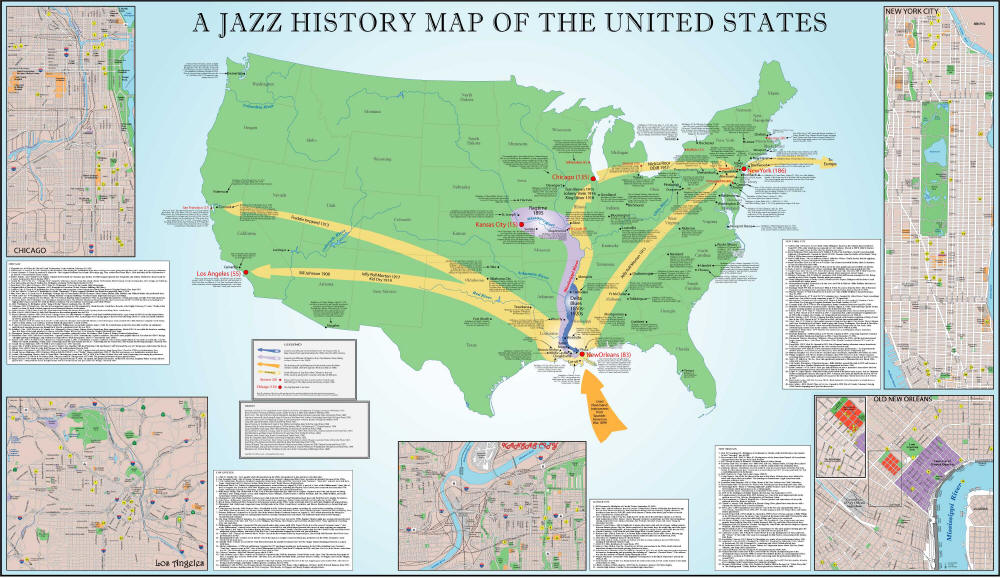
The more I read about jazz and ‘jazz’ history, the more convinced I am by the idea of ‘jazz’ as a shifting series of relationships. I think about cities not as fixed locations, but as points on a sort of ‘trade route’ or even as a complicated web or network of relationships between individual musicians (which is, incidentally, how I think about international swing dance culture – the physical place is important, but it’s not binding).
Right now I’ve followed some references backwards to an article by Scott DeVeaux called Constructing the Jazz Tradition, which is really interesting. It not only outlines some of the political effects of a coherent ‘narrative’ history of jazz, but also the economic and social effects of positioning jazz as a ‘black music’, with interesting references to consequences of the ‘jazz musician as artist’ for black musicians. Read in concert with David Ake’s discussion of creole identity and ethnicity in New Orleans as far more complicated than ‘black’ and ‘white’, this makes for some pretty powerful thinking.
I’m very interested in the idea of a ‘jazz canon’ and of the role of people like Wynton Marsalis, the Ken Burns Jazz discography, jazz clubs and magazines developing during the 30s and 40s devoted to New Orleans recreationism and the whole ‘moldy figs’ discussion. The tensions surrounding the Newport jazz festival also feed into this: the Gennari article (which I discuss in reference to its descriptions of white, middle class men rioting at Newport here) pointed out the significance of a festival program loaded with ‘trad’ jazz – for black musicians and for the popularising of jazz generally. I’ve also been reading about the effects of this emphasis on trad jazz for superstar musicians like Louis Armstrong.
O’Meally and Gabbard have written about the way Armstrong’s public, visual persona is marked by ethnicity.
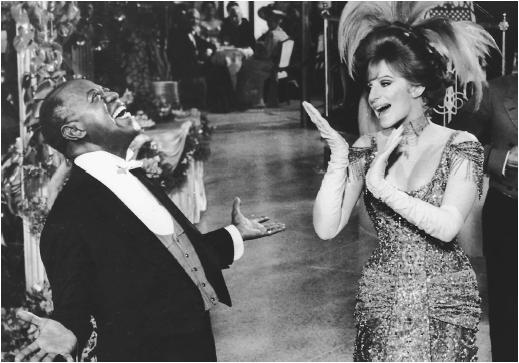
Armstrong was known for his visual ‘mugging’, or playing the ‘Uncle Tom‘ for white audiences, particularly on stage. Eschen writes
…as the struggle for equality accelerated, Armstrong was widely criticized as an Uncle Tom and, for many, compared unfavourably with a younger, more militant group of jazz musicians (193)
This, as Eschen continues, despite the fact that Armstrong was actually an active campaigner for civil rights in America, and overseas.
The trad jazz movement – or ‘moldy figs’ pushing for the preservation of an ‘authentic’ jazz from New Orleans – effectively pushes Armstrong to continue as Uncle Tom – unthreatening black man clowning for white audiences. A narrative history of jazz which emphasises a beginning in New Orleans and a consistent, clearly defined lineage of musicians and styles also, more subtly, relies on an idea of the black musician as powerless or unthreatening. DeVeaux makes the point that positioning jazz (and jazz musicians) as artistic loners who do not ‘sell out’ with commercial success:
Issues of ethnicity and economics define jazz as an oppositional discourse: the music of an oppressed minority culture, tainted by its association with commercial entertainment in a society that reserves its greatest respect for art that is carefully removed from daily life (530)
In this world, the ‘true’ jazz musician is ‘black’ (in a truly singular, homogenous sense of the world), he is poor and he is mugging for white audiences.
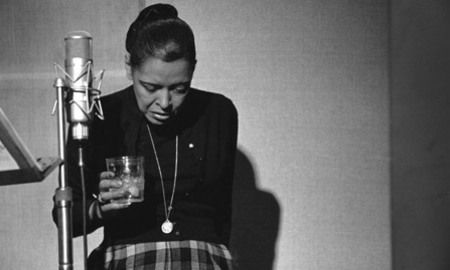
Billie Holiday becomes a particularly attractive representation for this idea of the ‘jazz musician’: poor, black, addled by drugs and alcohol, a history of prostitution, yet nonetheless, a creative genius pouring out, untainted in recording sessions (and I’m reminded of the ‘one take’ stories) and tragically cut short.
All of this is quite disturbing for someone who really, really likes jazz from the 20s, 30s and 40s. Am I buying into this disturbing jazz mythology? It’s even more disturbing for someone who found similar themes in contemporary swing dancers’ development of ‘narratives’ and geneologies of jazz dance history. As DeVeaux writes (about jazz, not dance), though, this is
The struggle is over possession of that history, and the legitimacy that it confers. More precisely, the struggle is over the act of definition that is presumed to lie at the history’s core (528)
I wonder if I should suspect my own critique of capitalist impulses in contemporary swing dance discourse?
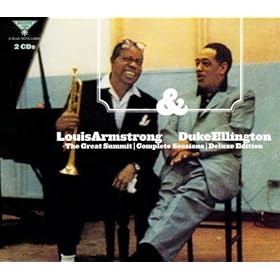
I don’t think it’s that simple. Gabbard discusses Armstrong’s work with Duke Ellington, including the filming of the 1961 film Paris Blues (in which Armstrong starred, and for which Ellington contributed the score) and the recording of the ‘Summit’ sessions:
…at those moments in the film when he seems most eager to please with his vocal performances, his mugging is sufficiently exaggerated to suggest and ulterior motive. Lester Bowie has suggested that Armstrong is essentially “slipping a little poison into the coffee of those who think they are watching a harmless darkie”.Throughout his career in films, Armstrong continued to subvert received notions of African American identity, signifying on the camera while creating a style of trumpet performance that was virile, erotic, dramatic, and playful. No other black entertainer of Armstrong’s generation “with the possible exception of Ellington” brought so much intensity and charisma to his performances. But because Armstrong did not change his masculine presentation after the 1920s, many of his gestures became obsolete and lost their revolutionary edge. For many black and white Americans in the 1950s and 1960s, he was an embarrassment. In the early days of the twenty-first century, when Armstrong is regularly cast as a heroicized figure in the increasingly heroicising narrative of jazz history, we should remember that he was regularly asked to play the buffoon when he appeared on films and television (Gabbard 298)
You can see a clip from Paris Blues here.
Armstrong’s performance gains meaning from its context, from the point of view of the observer, from his own actions as a ‘real’ person (Armstrong was in fact openly, assertively critical of Jim Crowism and quite politically active) and from its position within a broader ‘body’ of Armstrong’s work as a public performer. Pinning it down is difficult – it’s slippery.
The idea of layers of meaning is not only interesting, it’s essential. This physical performance of identity, tied to the physicality of playing an instrument reminds me of the layers of meaning in black dance. And of course, of hot and cool in dance, and the layers of meaning in blues dance and music. Put simply, what you see at first glance, is not all that you are getting. Layers of meaning are available to the experienced, inquiring eye. Hiding ‘true’ meanings (or more subversive subtexts) is important when the body under inspection is singing or dancing from the margins. Tommy DeFrantz discusses meaning and masculinity in black dance during slavery:
serious dancing went underground, and dances which carried significant aesthetic information became disguised or hidden from public view. For white audiences, the black man’s dancing body came to carry only the information on its surface (DeFrantz 107).
Armstrong’s performance is more than simply its surface. As with any clown, the meanings are more complex than a little light entertainment. Gabbard continues his point:
In short, Ellington plays the dignified leader and Armstrong plays the trickster. Armstrong’s tricksterisms were an essential part of his performance persona. On one level, Armstrong’s grinning, mugging, and exaggerated body language made him a much more congenial presence, especially to racist audiences who might otherwise have found so confident a performer to be disturbing, to say the least. When Armstrong put his trumpet to his lips, however, he was all business. The servile gestures disappeared as he held his trumpet erect and flaunted his virtuosity, power, and imagination (Gabbard 298).
This, of course, reminds me of that solo in High Society that I mentioned in a previous post. There’s some literature discussing the physicality of jazz musician’s performances, but I haven’t gotten to that yet (though you know I’m busting for it). I have read some bits and pieces about gender and performance on stage (especially in reference to Lester Young), and there’re some interesting bits and pieces about trumpets and their semiotic weight, but I haven’t gotten to that yet, either.
Sorry to end this so abruptly: these are really just ideas in process. :D
To sum all that up:
- The idea of a jazz musician as ‘isolated artist’ is problematic, especially in the context of ethnicity and class. Basically, the ‘true jazz musician who doesn’t sell out by making money’ is bad news for black musicians: it perpetuates marginalisation, not only economically, but also discursively, by devaluing the contributions of black musicians who are interested in making a living from their music. Jazz musicians are also members of communities.
- Linear histories of jazz are problematic: they deny the diversity of jazz today, and its past. Linear histories with their roots in New Orleans, insisting that this is ‘black music’ overlook the ethnic diversity of New Orleans in that moment: two categories of ‘black’ and ‘white’ do not recognise the diversity of Creole musicality, of the wide range of migrant musicians, of the diversity within a ‘white’ culture (which is also Italian and English and American and French and….), of economic and class relations in the city, and so on.
- ‘linear histories’ + ‘musician as artist’ neglect the complexities of everyday life within communities, and the role that music plays therein. These myths also overlook the fact that music is not divorced from everyday life; it is part of a continuum of creative production (to paraphrase LeeEllen Friedland and to refer to discussions about Ralph Ellison – which I will talk about later on).
- Music and dance have a lot in common. They carry layers of meaning, and aren’t simply discrete canvases revealing one, singular meaning to each reader. They are weighted down by, buoyed up by a plethora of ideas and themes and creative industrial practices and sparks.
References
DeFrantz, Thomas. “The Black Male Body in Concert Dance.” Moving Words: Re- Writing Dance. Ed. Gay Morris. London and New York: Routledge, 1996. 107 – 20.
DeVeaux, Scott, “Constructing the Jazz Tradition: Jazz Historiography†Black American Literature Forum 25.3 (1991): 525-560.
Eschen, Penny M. “The real ambassadors”. Uptown Conversation: the new Jazz studies, ed. Robert O’Meally, Brent Hayes Edwards, Farah Jasmin Griffin. Columbia U Press, NY: 2004. 189-203.
Friedland, LeeEllen. “Social Commentary in African-American Movement Performance.”
Human Action Signs in Cultural Context: The Visible and the Invisible in
Movement and Dance. Ed. Brenda Farnell. London: Scarecrow Press, 1995. 136 –
57.
Gabbard, Krin. “Paris Blues: Ellington, Armstrong, and Saying It with Music”. Uptown Conversation: the new Jazz studies, ed. Robert O’Meally, Brent Hayes Edwards, Farah Jasmin Griffin. Columbia U Press, NY: 2004. 297-311.
Gennari, John. “Hipsters, Bluebloods, Rebels, and Hooligans: the Cultural Politics of the Newport Jazz Festival.” Uptown Conversation: the new Jazz studies, ed. Robert O’Meally, Brent Hayes Edwards, Farah Jasmin Griffin. Columbia U Press, NY: 2004. 126-149.
Lipsitz, George. “Songs of the Unsung: The Darby Hicks History of Jazz,”Uptown Conversation: the new Jazz studies, ed. Robert O’Meally, Brent Hayes Edwards, Farah Jasmin Griffin. Columbia U Press, NY: 2004: 9-26.
O’Meally, Robert G. “Checking our Balances: Louis Armstrong, Ralph Ellison and Betty Boop”. Uptown Conversation: the new Jazz studies, ed. Robert O’Meally, Brent Hayes Edwards, Farah Jasmin Griffin. Columbia U Press, NY: 2004.
276-296. (You can see the animated Betty Boop/Armstrong film O’Meally references here.
*The jazz map was found via jazz.com, but they don’t list the url for the map in context.
There’s something seriously addictive about historic ‘jazz maps’. I think it’s because they’re imaginary places. My latest find: New Orleans ‘jazz neighbourhoods’.
Marty Grosz and his Honoris Causa Jazz Band, Hooray for Bix!

Marty Grosz and his Honoris Causa Jazz Band, Hooray for Bix! Despite the scary album cover (this was released in 1957), there’s some nice stuff on this album. I’m getting a bit tired of New Orleans revival bands (especially the ones from the 50s and later), but Marty Grosz is a guitarist, and this is reflected in the music – there’s a little less emphasis on the brass. Well, comparatively speaking. I’m still not liking the shuffle rhythm from the drummer on some tracks (it’s just NOT RIGHT for NO stuff), but there are a couple of songs I really quite like and will play for dancers. In an ideal world I’d stick to the originals, but some of those originals are really scratchy.
In an interesting turn of events, emusic is now releasing the Chronological Classics albums as well as the ‘Complete Jazz Series’ albums, though they seem to be the same albums. I’m not sure whether there’s a sound quality difference, but even CC wasn’t perfect sound quality – it’s more for people who’re looking to collect everything from an artist during a particular year. Which you can do with these series.
recent emusic adventures
My emusic account ticks over on the 19th, and I’ve managed to hang onto some of my downloads til today… and there are still some left! It’s too easy to use them up, though, especially when you’re an ob-con tempted with the option of ‘going complete’ with an achievable artist… such as Jimmie Noone or the McKinney’s Cotton Pickers. But I find I really can’t absorb much more than my download limit per month. Well, not if I also want to keep listening to my existing collection and knowing it well enough to DJ with any sort of competence.
But this is what I’ve downloaded recently:

Lavern Baker Sings Bessie Smith. Just a few songs. I had a couple of tracks from this already from compilations, but I noticed it’d been added to emusic lately (that ‘music you might like’ thingy is very convincing) and figured I’d download a few things. Namely ‘Gimme a Pigfoot’. I’ve just come across a really slinky Billie Holiday version and thought I’d like the Baker one. And I do. She’s no Bessie Smith, but she don’t suck. There are moments, though, when I wish Baker’d follow through on her big, arse-kicking intros; she tends to back off a bit a few bars in. Bessie wouldn’t.

Duke Ellington and His Famous Orchestra 1941: The Complete Standard Transcriptions. Just a couple from here, but versions I didn’t have. I’ve really enjoyed a few tracks from the Bob Crosby album in this series, and thought I’d give these a punt. Nice. No surprises, but slightly better quality than some versions of these I already have, and ‘John Hardy’ is a bit quicker (and snappier) than the one I had. Transcripts are interesting because they were recorded for the radio, some of them live. Digging through the discographies has made me realise just how important broadcast radio was to jazz and to music in the early days. Live broadcasts were de rigeur, and important to musicians’ careers.
Jimmie Noone, Wingy Manone, Doc Cook and His 14 Doctors Of Syncopation, Andy Kirk and other scratchies. Mostly obsessing over these doods.
But I can never go past a little hifi or good quality saucy blues.

Big Mama Thornton’s ‘Ball n Chain’. Just the song ‘Gimme a Penny’. Because that’s all you need, really. Well, that and ‘Hound Dog’, because some skinny-arse white boy ain’t got nothin’ on this sister.
The Bluesville Years Volume 11: Blues Is A Heart’s Sorrow (you don’t need a photo for this one). I’ve downloaded various bits and pieces in this series. The quality is fab. The artists are amazing. The songs are super, excellently saucy. Not at all G-rated.
There are lots more, but this is the sort of thing I’m enjoying at the moment. Gotta go eat pizza now. :D
some things about djing that other DJs’ve taught me
Here are the most useful things I’ve learnt about DJing, from other DJs:
1. Begin as you mean to go on. Russell from Canberra used that line, and it’s useful. If I don’t want the tempos to be too low during the set, I try to make my first song the slowest I’ll go during that set. No lower. From there, the only way is up.
2. Come in loud and proud – get that party started. Andy from Melbourne taught me the most useful tip for DJing blues I’ve ever learnt. He plays a loud, spankin’ blues set – no quiet kissing and cuddling. I once heard him start a set in the back room at a late night at MLX by yelling “let’s get this party started!” and playing some loud, chunky hippity hop. Only Andy could get away with that shit – his energy and enthusiasm is infectious.
3. Be really into the music you’re playing.
Trev from Perth is a big, fat music nerd. He loves the music he plays. Sometimes I find myself getting frustrated with DJing for dancers because I’m not happy with the music I’m playing. I feel like I’m playing stuff I don’t really like as a way of compromising between what I do like and what I think they like. But Trev doesn’t seem to compromise – he plays what he likes. What he loves. I find that I do a better set and have a much better time DJing when I play music I love, and when I (consequently) really get into the feel of dancing. I figure, if it’s good music, people will dance despite themselves. And as DJs, we’re really doing this as a community service (as well as as a chance to show off), so why not buy and play music we like?
djing report
Last night I did one of the funnest sets ever. It was the first night of the balboa weekend (there are a couple of big name bal couples in town) and I was given a ‘lindy/bal’ brief. I figured I’d play hot jazz that makes for spankin’ lindy hop, with some more ‘complicated’ ones in there for bal. I have only ever DJed for bal dancers once before, but I’ve been asking people and looking up the sorts of things that bal people like to dance to. From what I can gather, they like hot jazz that makes for spankin’ lindy hop. There used to be an emphasis on New Orleans revival stuff, but I think that’s shifted a bit.
2nd set, 9-10pm Fri 1 May, Roxbury, Sydney Balboa Festival 2009
(title artist bpm year album last played)
Rag Mop Bob Crosby and the Bobcats 164 1950 Bob Crosby and the Bobcats: The Complete Standard Transcript 1/05/09 9:10 PM
Joshua Fit De Battle Of Jericho Kid Ory and his Creole Jazz Band 160 1946 Kid Ory and his Creole Jazz Band 1944-46 1/05/09 9:13 PM
Whoa Babe Lionel Hampton and his Orchestra with Lionel Hampton, vocal 201 1937 The Complete Lionel Hampton Victor Sessions 1937-1941 (disc 1) 1/05/09 9:16 PM
A Viper’s Moan Willie Bryant and his Orchestra with Teddy Wilson, Cozy Cole 153 1935 Willie Bryant 1935-1936 1/05/09 9:20 PM
Truckin’ Henry ‘Red’ Allen and His Orchestra 171 1935 Henry Red Allen ‘Swing Out’ 1/05/09 9:23 PM
The Back Room Romp Rex Stewart and his 52nd Street Stompers 152 1937 The Duke’s Men: Small Groups Vol. 1 (Disc 2) 1/05/09 9:25 PM
Solid as a Rock Count Basie and his Orchestra with The Deep River Boys 140 1950 Count Basie and His Orchestra 1950-1951 1/05/09 9:28 PM
Hey! Ba-Ba-Re-Bop Lionel Hampton and his Orchestra 135 1945 Hamp: The Legendary Decca Recordings 1/05/09 9:32 PM
St. Louis Blues Ella Fitzgerald 183 Ella Fitzgerald In The Groove 1/05/09 9:37 PM
Call Me A Taxi Four Of The Bob Cats 175 1938 All Star Jazz Quartets (disc 2) 1/05/09 9:40 PM
Bearcat Shuffle Andy Kirk and his Twelve Clouds of Joy with Mary Lou Williams 160 1936 The Lady Who Swings the Band – Mary Lou Williams with Any Kirk and his Clouds of Joy 1/05/09 9:43 PM
Jive At Five Count Basie and his Orchestra 174 1939 The Complete Decca Recordings (disc 03) 1/05/09 9:46 PM
Shortnin’ Bread Fats Waller and his Rhythm 195 1941 Last Years (1940-1943) (Disc 2) 1/05/09 9:48 PM
Algiers Stomp Mills Blue Rhythm Band with Henry ‘Red’ Allen, J.C. Higgenbotham, George Washington, Edgar Hayes, Lucky Millinder 219 1936 Mills Blue Rhythm Band: Harlem Heat 1/05/09 9:51 PM
Mr. Ghost Goes To Town Mills Blue Rhythm Band 192 1936 Mills Blue Rhythm Band: 1933-1936 1/05/09 9:55 PM
Seven Come Eleven Benny Goodman Sextet 234 1939 Charlie Christian: The Genius of The Electric Guitar (disc 1) 1/05/09 9:58 PM
Stomp It Off Jimmie Lunceford and his Orchestra 190 1934 Swingsation – Jimmie Lunceford 1/05/09 10:01 PM
Peckin’ (-3) Duke Ellington and his Orchestra with Johnny Hodges, Cootie Williams 164 1937 Duke Ellington: The Complete 1936-1940 Variety, Vocalion and Okeh Small Group Sessions (Disc 2) 1/05/09 6:09 PM

(that’s the Mills Blue Rhythm Band there (well, part of), stolen from the internet)
I started with some NO revival stuff to follow up from Sharon’s set (she’d just played some Boilermakers and something else in the same vein). I’m also a bit nuts about that Bob Crosby album atm, especially that great ‘Rag Mop’ song. I’ve never played that version of Jericho so early in a set before – it was interesting to see how it went down. I’ve found that this NO revival stuff doesn’t work at the Roxbury, ever. But Sharon had warmed the room and the bal nuts (including a lot of out of towners) were up for it. Yay.
Then I played ‘Whoa Babe’, which I freakin’ love: it makes me feel like dancing like a crazy, manic fool. Kind of dodgy transition from Bechet, but I wanted to ditch the NO stuff and get back to the Savoy. Then ‘Viper’s Moan’ to drop the tempos a little, but get us towards the sort of sound I’m really into atm (that song isn’t as overplayed here as elsewhere). Plus, Willie Bryant = A1. I love ‘Truckin” and Henry Red Allen. I love the lyrics. This was sort of my homage to all that truckin’ business that’s been getting about in the US at gigs like ULHS, etc. Plus, I was half planning to play ‘Peckin’ next, for the comedic value. ‘Truckin’ is actually a bit mellower, and feels more laid back, which I think the crowd needed as they were getting a bit frenetic and the non-hardcore-bal doods were looking a bit forlorn. That mellower feel tricks people into thinking the song is slower than it is, and I didn’t want to let the tempos get below 160 if I could help it.
But then I played ‘Back Room Romp’. It sounds and feels higher energy, even though it’s slower. Again, I wanted to get the people on the sidelines up with something a bit slower. I’d also noticed the people dancing every song were looking a bit shagged. ‘Solid As A Rock’ and ‘Hey Ba-Ba-Re-Bop’ were crowd-pleasing favourites. I wanted a ‘newer’ sound (funny how 1950 and 1945 are ‘new’ in this context) with the ‘smoother’, hardcore swinging sound of that later classic swing period. Lower tempos to revive people, higher energy to get them up and dancing.
‘St Louis Blues’ is still my fave from that Ella album. I’m not sure what’s happened to the date on that one – gotta chase it up now I’m home. It’s mid-30s, though, or perhaps ’38, ’39, after Webb had died and Ella was leading his band. It’s a fucking great song: high energy, live at the Savoy, absolutely A1. I keep meaning to play other stuff from that album, but I’m not sick of this one yet. And I rarely get to play faster stuff. It got people pumped.
‘Call Me A Taxi’: my 2nd Crosby song of the night, and perhaps a mijudgment. People were still dancing, but I’m not sure it did what I wanted. I should have stayed mega highenergy. But this is a great song for bal as well as lindy and it has lots of rinkytink piano, which I love, and which I wanted to use to get to Mary L Williams and Fats. ‘Bearcat Shuffle’ is lighter and feels kind of friendly – it’s not a big wall of sound. It has a lovely piano line that makes me want to shorty george. It also screams ‘swing out, bitch!’ This was a resting tempo song.
‘Jive at Five’ because I was thinking of Frankie. This is a nice song – lighter and friendly, and while it’s a bit quicker than ‘Bearcat Shuffle’, it actually feels a bit slower. It went down with bal doods really well last time I played it, so I gave it another whirl. Also, I love it. And: more piano-centred stuff.
Fats and my overplayed version of ‘Shortnin’ Bread’. Which I still freakin’ love. It starts mellower and tinklier (like the last few songs), but it ends with a nice, fat, full shouting chorus that makes people crazy.
‘Algier’s Stomp’ is so great. I’m not sick of it yet. Lighter, but chunkier than the previous songs. Less with the piano, more with the chunky rhythm section (yeah! great dancing!) and the brass, incl best baritone sax solo ever (well, after Zonky). Why, hello there Mr Henry Red Allen, it’s good to see you again. This is something I know bal doods have liked in the past, plus it screams ‘lindy HOP MOTHERFUCKERS!’ to me.
Then ‘Mr Ghost Goes To Town’ by the MBRB again. Russ was hanging shit on me for thinking about playing a 2nd song by Fats earlier, so I was all ‘HA! I mock your DJing rules!’ The hi-fi Mora’s Modern Rhythmist version of this song gets played a lot (esp up here), so I played this original, chunkier, aweseomer, faster version. It was familiar for the crowd (so they got up to dance if they hadn’t been), it feels a bit slower, but it’s actually chunky and driving. I have some reservations about the bunch of solos in the middle, but the sax solo redeems it.
Energy was way up in the room by then, so I went hardcore with the Benny Goodman sextet and ‘Seven Come Eleven’. I love this song more than anything. It’s a bit too complicated for lindy hop, and doesn’t really have that badass, driving energy that makes you swingout. But I figured it’s just right for balboa. It went down well. At this point Dave said to me “Hammy! In their face!” because it was so quick. It’s not _that_ quick, for baldoods, but it’s complicated so it feels like hard work.
Then I played ‘Stomp It Off’ because I wanted some Lunceford. This is another lighter sounding song, but it’s still quite quick, so it doesn’t drag. This is one I’ve played a lot, and tend to play after something very fast because it sounds slower and allows me to keep the tempos up but also keep people dancing. Bal doods like it.
Then I closed with ‘Peckin’ because it’s GREAT and in honour of Ellington’s birthday this week. I didn’t get to play it directly after ‘Truckin’, but still, it rocks (“well you talk about the truckin’ when the peckin’ is (ill?)!” At this point Russ and I were heckling the crowd and demanding pecking. They failed, so we obliged ourselves.
Ah, DJ humour. How sophisticated it is.
This was a really, really fun set to play. I love the bal doods: they eat up the tempos. I get to play the more complicated stuff I tend to leave off for lindy hoppers. They’re also interested in the early 30s stuff I really love. This is where my musical passions lie atm. It was a crowded room with lots of crazy dancing. I had an absolute ball.
I did worry that I was playing too much fast stuff, but people told me I wasn’t. And reviewing the set, I did vary the tempos more than I thought I did. I think it was lots of fun to DJ because I was actually in the set properly. I worked the tempos in the wave, but I also worked the energy levels in the songs, and this is something I haven’t had the brain to do lately. I felt like I did a much better job last night than I have in ages. It was a bit tricky to see the crowd, though (the lights were on over our heads in the DJ booth, but the floor was dark) and sometimes I felt I couldn’t quite work the people who were sitting down.
Seeing as how it was MayDay, I was thinking ‘fight the power’ and ‘for the workers!’ but I’m not sure how well that came through. But I figure 2 tracks by the Mills Blue Rhythm Band – the hardest working gigging band of the 30s – were a pretty good flag-flyer for that.
And while I didn’t get to play ‘Shiny Stockings’ for Frankie (Russ handled that – phew), I figured he’d have dug a hardcore Savoy set like that. Also, I saw some knickers when the follows were twirling, and I _know_ he’d have liked that.
Then Russ played a fun set that worked a different vibe, which was really nice – I think he did a lot of stuff I didn’t in my set, so between us we managed to cover a wide range of styles. Also, I danced TWO SONGS and then danced some solo stuff a bit. I’m paying for it today, but man – those endorphines!
BTW, this is a useful site for info about early jazz. Thing is, it’s about the worst, most terribly un-userfriendly site in the universe. This is the problem with a lot of jazznick sites: crappy layout. But if you do manage to navigate it, you’ll find some fab pics, info and even sound.
billie and louis again

In the spirit of my last post, have a listen to this lovely version of ‘My Sweet Hunk O’Trash’. It’s Billie Holiday and Louis Armstrong singing together a couple of years after that film New Orleans was released.
Recording details:
Louis Armstrong and Billie Holiday with Sy Oliver’s Orchestra: Bernie Privin (trumpet) Louis Armstrong (vcl) Sid Cooper, Johnny Mince (alto sax) Art Drellinger (tenor sax) Pa Nizza (tenor sax, Baritone sax) Billy Kyle (piano) Everett Barksdale (guitar) Joe Benjamin (bass) James Crawford (drums) Billie Holiday (vocal) Sy Oliver (arranger, conductor)
New York, September 30 1949
7543 My sweet hunk o’trash De 24785, DL8701, Br (E)05074, De (F)MU60363, AoH AH64, Br (G)10159LPBM
It’s a lovely example of two musicians playing with timing and phrasing. It’s a nice song, but it’s their delivery, their to-and-fro that makes it nice. The rest of the band isn’t terribly interesting; this is a song showcasing the vocals.
I probably wouldn’t play this song for dancers. The emphasis on the vocals means that you really have to listen properly to what they’re saying and how they’re saying it, and that’s not really something you can do when you’re dancing. It’s also really slow, not juicy enough for blues dancing, far too slow for lindy hop. The vocal showcasing means that the rest of the instrumentation is understated. There’s not much going on behind Louis and Billie. This can make for fairly dull dancing; when you’re dancing, you look for a range of rhythmic and melodic layers. The more aural interest, the more interesting the dancing. Sometimes it’s nice to dance simply, but when the tempos are this slow, you’re really looking for something more.
Having said that, there are worse songs you could play for dancers.
Btw, if you’re as concerned about the racial subtexts at work in New Orleans as I am, check out this article, which goes a little way towards addressing those issues (let’s not talk about my desire for ‘owning’ jazz just yet. This white girl knows she’s got some work to do).
I am currently reading my way (very, very slowly) through David Ake’s book Jazz Cultures. There’s a refreshingly sophisticated approach to race and ethnicity in this book, and though I’m only in the first chapter (I keep stopping to chase and note references), he’s already upsetting black/white dichotomies with a discussion of Creole music and culture in New Orleans and complicating issues of whiteness and blackness which are going a long way to reassuring me about jazz studies literature. I don’t have much to write about that yet, but I will eventually.