
There’s a man upstairs in our bathroom banging and hammering and sawing. It’s really loud. Bathing without a shower is difficult, but not that bad. It’ll be nice when we get our shower back, though.
Meanwhile, I’m still on the c25k, and did the first run of week 5 today. It’s a nine week program, so I’m over half way. This is the point, though, where most people tend to give up. I actually feel quite good. It’s not as difficult as I thought, probably because it starts so gradually and then builds progressively. Today’s program involved:
a 5 minute warm up walk
5 minute run
3 minute walk
5 minute run
3 minute walk
5 minute run
5 minute cool down walk
I was surprised that I could do all the running bits without having to stop, and I remember thinking as I finished the first run ‘Woah, I just ran five minutes without stopping. Haven’t been able to do that in years.’ I still breathe really loudly (though not as loudly as I used to) and I certainly couldn’t hold a conversation at the same time (which is the ideal running pace). But I didn’t have to walk during any of the running bits and I felt pretty ok the whole way.
I actually quite like the sessions. Thirty minutes of exercise is a tiny amount, but it’s time well spent – no dilly dallying about – and it leaves me feeling really good. I have pretty bad snots at the moment because our bathroom is being ripped to bits, but that’s not affecting my running the way it used to. I have some new aches in my left foot, under the arch, but that feels like a hamstring issue, and I have very tight calves, so I always need to stretch my hamstrings. So, generally, I feel pretty good. I’m knocking on wood as I type, as I can’t really believe this is going so well.
There are a few things that seem key to the usefulness of this approach to training. Firstly, the audio cues on the ipod are essential. It tells me when to start running, when to start walking, when I’m half way. Secondly, the music is really good. I choose songs that either pump me up, or warm me up (or down) gently. I might end up using spoken podcasts later, as they distract me from the exercise and make the going easier. After this, the steady progress, with a structure to the sessions that changes weekly (and more frequently as you progress) makes the sessions more interesting. And I think the most important part is having clear goals.
One of the things that’s made it difficult to stick to a serious exercise program in the past is the lack of goals. Learning tranky doo is fun, but once you have that under control, it’s difficult to feel motivate. One routine after another is also kind of dull. Working on dance stuff with a partner is nice, but I think that without clear goals you tend to get a bit distracted and demotivated. I guess that’s why competitions are so useful.
So I really like the couch to 5k program. I’m especially happy with the fact that I can run five minutes without stopping. No pain in my feet, and I can actually breathe. It’s very satisfying. To think that I’ll be running half an hour without stopping soon is almost beyond the imagining.
One of the other things I like about it, is feeling my muscles toning up. I feel as though my jubbly bits are kind of being compressed and firmed up into muscle. The muscles I have underneath the jubbly are slowly being revealed. I’m fascinated by my arm muscles, which are entirely the result of cycling. I can’t believe cycling gives you arm muscles. But then cycling in a hilly city is challenging – you work harder. You use your arms to control your bike, and you tend to overwork your arms if you’re too tight in your shoulders and too weak in your core. But I’m also beginning to feel stronger and more stable in my core, which is fab. I’m also finding it easier to activate my lats (so important for dancing) and other individual muscle (and groups) which in turn makes it easier to reduce the energy I spend. Using the right muscles for the job means that I become more efficient in my movement – less flobbering about out of control, less overusing the wrong muscle.
So while I’m muscling up, I’m also finding that other, tighter muscle groups (my lower back, my shoulders) are loosening up. As the rest of my body steps up and starts doing its job, those places can relax and stop doing more than their fair share. It’s all very interesting. I’m especially exploring the way these changes affect my dancing and other activities. I can feel myself becoming more stable. I have more energy and greater stamina.
This is also making me the most annoying student in classes on Tuesday night. Hollywood style lindy hop (as in west coast not east, centred on dancers like Dean Collins rather than the Whitey’s Lindy Hoppers) is a foreign country. It’s fascinatingly technical, using the same principles as the lindy I’m used to, but in different ways. It’s complex, and yet when it’s done right, it’s very energy efficient.
I’m particularly fascinated by the swingout. This type of swingout uses much the same principles of momentum and dynamic energy, but in a very different way. The thing that makes a swingout so amazing is that the follow moves towards the lead, then turns and changes direction, moving away from him. This simple process is actually really complex, in terms of energy and momentum. It’s too easy to lose all your energy and momentum when you change direction, so the challenge is keeping that energy in your bodies, and yet still changing direction.
This type of swingout involves a more thorough ‘leading’ of the follow, but it also seems to use a less ‘natural’ approach to movement… that statement could perhaps be the product of ignorance, but it seems as though the lead has to be more aware of energy and where the follow is and also where he is. I use a gendered pronoun deliberately. I’m the only female lead in the class, and I’m finding the gender stuff is quite different in this type of scene. An emphasis on vintage dressing seems to reflect a more conservative approach to gender roles. Women follow, men lead. There’s also been less emphasis on improvisation within the swingout.
For me, improvisation (within the swingout and elsewhere) is the follow’s opportunity to ‘speak.’ A decent lead doesn’t ‘allow’ the follow time to speak, but actually incorporates these contributions into their leading. So the two really do function as a team. The more comprehensive leading seems to micromanage the follow’s movement, and it’s been tricky figuring out where and how I should add in my jazz steps (I follow in the second class and usually socially – I rarely lead socially these days, which I am about to change).
The classes this week did look at variations on the swingout, and this was really interesting. It also meant that I had to stop and learn the basic footwork and shape of this type of swingout properly. I’m also wondering whether I should adopt this type of swingout when leading in class. That’s the sensible thing to do, but I worry that it will mean I’ll lose all memory of any other swingout completely. Which is kind of bullshitty, as any swingout I have now is no doubt so riddled with personal habits and problems it’s already kind of broke. Learning a new swingout will make me conscious of all these idiosyncrasies and make it possible to rebuild a stronger swingout.
At any rate, I’m thoroughly enjoying being in classes again. It’s so new, it’s challenging. I’m also out of practice, in terms of knowing how to learn in class, and I’m quite enjoying the way this makes everything more difficult. I am also the type of student who asks questions and really likes to get things right, so I’m annoying everyone. I still find leading makes more sense. I just have no sense of what my body is doing when I’m following. I’m really not aware of my body and muscles and so on when I’m following. I think it’s because when I’m leading I not only have to understand what I’m doing, but also be aware of my follow and what’s happening in their body, so understanding my own body becomes the first part of understanding momentum and how we make it work between us. What I don’t understand is why I can’t figure this out when I’m following.
This stuff makes it really difficult to follow in class. I can look at the moves and understand how they work, and I can also figure out how I’d lead it, but the lead I’m working with mightn’t, so I have to let them figure it out. But because I can’t feel the follow (because that’s me), I don’t really understand what’s going wrong/right in our partnership at that moment. Meanwhile, I find it really difficult to stop concentrating on the lead and to start engaging with following. Part of me wonders if I should just give up on following altogether. But then the rest of me refuses to be beaten.
I still haven’t found a good yoga class. Sigh.
But I have spent some lovely time in the library this week, reading some really good stuff on Frank Trumbauer, Bix Beiderbecke and Jack Teagarden and listening along to my music as I go. I’ve also been digging into the library’s music collection, listening to some of their neat stuff as I read. It’s all been really really interesting. These guys are interesting because they were white, very popular and also totally top notch. And there these moments where they recorded with African American musicians in the 20s and 30s and I think ‘how the fuck did this happen in segregated America?’ I’ve also come across interesting references to the Original Dixieland Jazz Band, a band popularly considered a crappy novelty band who claimed they invented jazz. They didn’t. But while they weren’t the most awesome band, they were very influential, and I keep coming across musicians and bands they worked with who were very good. This stuff is also interesting because Bix, Tram and Teagarden worked in Paul Whiteman’s band. I generally think of Whiteman’s stuff as a sort of wet, watered down jazz with strings and sweet arrangements. But this sort of dance music was super popular. And while I don’t like it much at all, the sales of this stuff bolstered the recorded music industry generally, which in turn made it possible for artists I do to have recorded. I don’t think it’s actually that simple a connection, but there’s definitely a complex relationship between class, race, musical aesthetics (sweet or hot?) live performances, venue ownership and management, radio broadcasting and recorded music during this period.
I don’t know that much about this yet, but it’s definitely caught my eye. I hope I’ll have time during the semester to chase these thoughts down. Probably not. Classes start next week, and I’m going to have to do some clever catching up after BBS.
Right, that’s enough of that.
Category Archives: academia
digital resources… mostly
This post is really just to track a range of online sources I’ve used today. I’m really interested in the relationship between different tools, and between online and face to face tools. I want to frame this post/discussion by pointing out that swing DJs are interested in music primarily as dancers and as DJs for dancers. So their interest in music and dance and history is almost always tied to the physical experience of dancing. And dancing is ALL about the body, no matter how intertubed you are. Dancers also tend to have quite extensive online networks, networks of friends and acquaintances which crisscross their country and the world. I just know that if Peter wasn’t actually playing music as I type, he’d be chiming in with useful tweeted comments and links.
The body pwns the intertubes any day.
I read this thread on SwingDJs this morning, which directed us to: this story about hot jazz in a full-text issue of Life on Google books.
I replied in the thread on swingdjs, but also in a post on my own blog, here.
Reading the list and thinking about hot jazz as I wrote that post, I was reminded of things I’d read in books (!), one of which is also available in full text on google books here.
I have also found full text versions online, but I can’t remember where. If you start with The Jazz Study Group @ Columbia and Jazz Studies Online you’ll probably eventually find them all.
But while I was reading these things in books, I came across references to a series of photographs and films which are very popular with dances – by Gjon Mili. Mili is best known amongst dancers for his short film Jammin’ the Blues which is available on youtube along with other films he made featuring jazz musicians (I link them here.)
There’re some iconic photos of dancers in Life magazine in their ‘Life goes to…’ series. These are available in Google/Life’s online collection. Gjon Mili also did some very interesting photos as part of a photo shoot for Esquire in a Jam Session series.
I’ve already written about magazines and jazz ad nauseum.
Meanwhile, that original Life article listed ’30 good hot records’. Which made me think about canons. And discographies as canons. There are various online versions of discographies, but the good ones aren’t freely available online. Boo. Hiss.
Canons and discographies made me think about following particular musicians, and all this talk about ‘essential’ lists of jazz musicians and songs made me think about the Great Day In Jazz photo, which has a documentary film attached, and which Rayned used to structure his Yehoodi Radio show, which you could stream online.
After I’d written that post earlier today, I was still thinking about these issues. And I remembered seeing a note attached to an Australian photo from the 20s in an online collection. I eventually found the photo on flickr.com in their flickr commons (with which I am obsessed) by typing ‘bands jazz sydney’ into the search box, getting this list. This is the photo. I was particularly interested in the comment that black American bands were banned in Australia from the date of this photo (1928) until 1955 (when Louis Armstrong visited Australia). I wondered if it was true.
So I asked twitter. This led to a discussion between (mostly) The SwingDJ, DJRussellTurner, a discussion witnessed by all the people who followed one or all of us on Twitter.

TheSwingDJ was sceptical.
DJRussellTurner tweeted clarified the Rex Stewart thing.
DJRussellTurner suggested a distinction between ‘band’ and ‘musicians’, and then linked to an an article by Alec Morgan in the journal Scan which used the original photo and added
But, not all musical imports were welcomed by Sydney’s moral guardians. Sonny Clay’s renowned Jazz band, The Colored Idea, arrived here from the USA in 1928 to play the burgeoning nightclubs. After a couple of white women were found in a hotel room with the Afro-American musicians, the band was escorted back to the ship and told never to grace our shores again. While the occasional black musician was allowed in after careful scrutiny for a limited period, Afro-American bands were not permitted back until the mid 1950’s when Louis Armstrong and his band pushed the colour-bar down.
I suddenly decided I needed to know more, and I certainly needed to verify this idea that ‘black bands were banned in Australia’ during this period. The important question here is why? Why did I want to be sure? Partly because this would indicate interesting things about:
- race and racism in Australia (White Australia Policy)
- jazz and jazz culture in Australia (jam sessions, playing with and listening to other musicians is central to the exchange and cultural transmission of creative, ideological and discursive forms. A lack of African American musicians in Australia would go some way to supporting my continuing suspicions about the whiteness of Australian jazz. And, consequently, white jazz dance.
- the music and entertainment industry in Australia.
I had a bit of a squizz in various online sources, but eventually decided I needed to look at some more newspapers from the day. These sorts of (albeit somewhat unreliable) primary sources can be helpful.
So I started simple, and followed this link from the flickr page. Not a whole lot of help right now, but it would be worth following up the original photographer.
Then I remembered someone on twitter mentioning an online tool which allowed you to search online Australian primary sources. I couldn’t remember who it was who put me onto it (I still can’t), so I just followed a bunch of links from likely sources.
Until I saw a name I recognised: Trove. And started searching for “Sonny Clay”.
I found this newspaper article on Trove which outlined accusations about the musicians’ union from the ‘banned band”s representatives.
Meanwhile, TheSwingDJ confirmed our suspicions but also noted that Rex Stewart wasn’t black, according to the musicians’ union (I wish I had his reference for this, actually).
He also tweeted other interesting tidbits including one about ‘good reputations’ and ‘paying’ to be allowed to play.
And then there were various comments on twitter from peeps ‘listening in’ to our 3-way chat, including comments about the photos as resources for fashion, Trove’s value for private research projects and so on. I asked for help RE Trove’s browser-compatability as I wanted to edit the scanned text of the article, but couldn’t log in. Various tweeps offered tips and feedback.
Then I revisited DJRussellTurner’s link to the Scan article and the original flickr photo page and discovered that the author of the Scan article had a blog where she discussed this photo and issue. Her thinking about this issue led to her discussion of flappers and gender here and here.
I then checked our her blog’s ‘about’ page and discovered she’s at the Centre for Critical and Cultural Studies at UQ where I did my BA and MA and where I still have friends working.
In one of those blog posts she notes in a caption for (a repro of that original photo from flickr):
(Members of Sonny Clay’s Coloured Idea (including the singer Ivie Anderson) on deck as they pull into Sydney, 1928)
And this made me think: Ivie Anderson! Best known (in my world) as a singer with Duke Ellington’s band. So I did a crappy search of my music (using the wrong date) to see if she recorded with Ellington during this period. I also scanned the photo carefully to see if I recognised her. I was, pretty much, guessing. But I was using photos of Anderson I found online to try and compare them with the women in those two original photos.
TheSwingDJ beat me to it with this link to a source many Swing DJs use quite often. That entry for Anderson includes:
Born in California, young Ivie received vocal training at her local St. Mary’s Convent and later spent two years studying with Sara Ritt in Washington, DC. Returning home she found work with Curtis Mosby, Paul Howard, Sonny Clay, and briefly with Anson Weeks at the Mark Hopkins Hotel in Los Angeles. She also found work in vaudeville, touring the country as a dancer and vocalist in the Fanchon and Marco revue, starring Mamie Smith, and with the Shuffle Along revue. She was featured vocalist at the Culver City Cotton Club before leaving to tour Australia in 1928 with Sonny Clay. Returning after five months down under she organized her own show and toured the U.S. In 1930 she found work with Earl Hines.It was while appearing with Hines that Ellington first heard her sing. He hired her in February 1931, and she quickly became a fixture of the orchestra’s sound.
(I’ve bolded the important bits.)
At this point, we’re still thinking about and looking up sources. Meanwhile, colleagues from the CCC at UQ have chimed in about the author of that blog, discussions about archiving this sort of research are happening, I’m listening to 1930s Ellington featuring Ivie Anderson and I’m just about to look up youtube for some clips of Anderson to see if I can check her out more thoroughly.
But first, I think I’ll go dancing.
(srsly)
magazine themed jazz prn
Magazine-themed prn from the ‘Jam Session’ pics in the Google/Life set Gjon Mili did for Esquire:
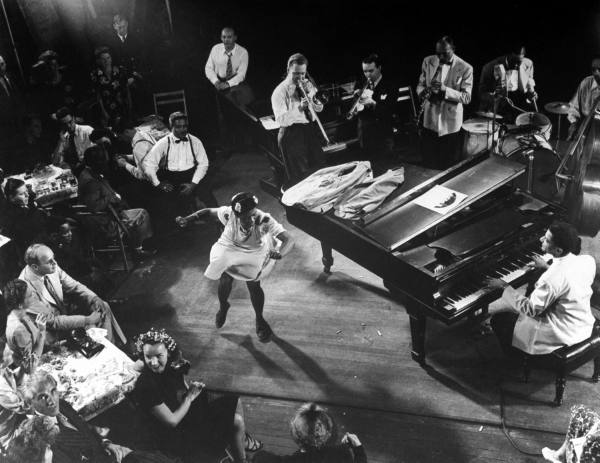
(NB that little group in the bottom left hand corner are from Vogue magazine.)
Mili of course made Jumpin’ the Blues, and also this freekin great clip of rockstars:
lists and canons in jazz
An interesting discussion has cropped up on SwingDJs called “30 Good Hot Records” from LIFE. This is what I’m about to post in response.
I love lists of iconic or ‘good’ songs/books/films/texts. I love them because though they are presented as definitive, they are always[ more effective as a provocation than a definitive answer to questions about what counts and is important enough to be listed. Discograhies work, pretty much, as definitive ‘lists’ or ‘canons‘.
I’ve come across a few different uses of ‘hot’ in articles and books from the 1930s, particularly in reference to discographies. Kenney’s discussion of jazz in Chicago outlines the differences between ‘jazz’ or ‘hot’ bands and music and ‘dance’ bands. These differences are not only musical, but also inflected by race, class, the recording industry, live venue management and ownership, gender… and so on. I’ve also come across quite a few discussions in an academic (rather than populist or ‘music critic’) sources about the expression ‘hot jazz’. The most useful sources point out that any attempt to finally define ‘hot’ or ‘jazz’ is not only difficult, but also problematic.
Krin Gabbard discusses the cultural effects of constructing canons – in which discographies play a key role – and points out that lists of ‘hot’ or ‘important’ or ‘real’ jazz records aren’t neutral or objective lists of songs – they are highly subjective and negotiated by the author’s own ideas about music and place in society generally.
Kenney (who’s written some absolutely fascinating stuff about jazz music in Chicago in the 20s) discusses Brian Rust’s discographies, making the point that Rust distinguishes between ‘hot’ and other types of jazz recordings. Friedwald talks a bit about Rust (and other discographers) in his jazz.com articles. Kenney’s research into the recording and live music industry in Chicago suggests that who got to record or play what types of music was actually dictated in large part by record companies’ ideas about race and class and markets rather than musicians’ personal inclination. That last point suggests that you could make some interesting observations about the correlation between race, class, recorded songs, ‘popularity’ and ‘jazz’ in Chicago jazz during this period. I don’t know enough about it, though, so all I’ll say is that you could, but you’d better have some badass sources to support your arguments. And you’d also better be prepared to accept the idea that though America had a national music industry, different state legislations and music cultures resulted in quite different local practices: it’d be tricky to generalise Chicago’s story across other cities and states. Not to mention countries.
Life and other magazines’ comments on and participation in music promotion in the 30s is also pretty interesting – these guys had ideological barrows to push, just as did Rust and other discographers. One of the effects of publishing this type of list (which was no doubt as hotly contested then as it is now – except by a wider audience :D) is that it does stimulate discussion and debate. And, hopefully, record and ticket sales. One thing I’d be interested in knowing is who owned LifeGreat Day In Jazz photo, I think about the fact that it was a photo for Esquire magazine, and that Esquire also produced a series of live concerts, recordings… and of course, photo spreads in magazines. While GDIJ works a fabulous representation of jazz it also serves as a canon, and as such is also subjective, ideologically framed and interpreted (eg asking why are there so few women in this photo leads us to questions about gender and jazz?) Canons are fascinating things, and can be the jumping off place for all sorts of great discussions and debates. I think this is why I was so excited by Reynaud’s session on Yehoodi Radio where he used the GDIJ photo as an organising structure for the music he chose. In that case, the photo became a listening guide for a radio program. I’d just rather not use them as definitive, fixed lists; I like them more as provocations, or a place from which to begin discussing (and arguing about) a topic.
If I saw a list like the one in Life today, I’d be extra-suspicious. Songs on So You Think You Can Dance, for example, are owned by the company which produces that tv show. There’s been quite a lot written about the Ken Burns’ Jazz series and its role in cross-promoting sales of records from catalogues owned by the same media corporation. The Ken Burns example is an especially interesting one: that series does not present an ‘objective’ list of important artists and songs. It is a jumping off place for a very successful marketing project surrounding back catalogues and contemporary musicians like Marsalis. George Lipsitz has written quite a bit about histories of jazz (including Burns’), and he makes this point:
…the film is a spectator’s story aimed at generating a canon to be consumed. Viewers are not encouraged to make jazz music, to support contemporary jazz artists, or even to advocate jazz education. But they are urged to buy the nine-part home video version of Jazz produced and distributed by Time Warner AOL, the nearly twenty albums of recorded music on Columbia/Sony promoting the show’s artists and ‘greatest hits,’ and the book published by Knopf as a companion to the broadcast of the television program underwritten by General Motors. Thus a film purporting to honor modernist innovation actually promotes nostalgic satisfaction. The film celebrates the centrality of African Americans to the national experience but voices no demands for either rights or recognition on behalf of contemporary African American people. The film venerates the struggles of alienated artists to rise above the formulaic patterns of commercial culture, but comes into existence and enjoys wide exposure only because it works so well to augment the commercial reach and scope of a fully integrated marketing campaign linking ‘educational’ public television to media conglomerates. (17)
Lipsitz is interesting because he says thinks like Why not think about jazz as a history of dance? Why not look into the lives of musicians who gave up fame and fortune in massively famous bands to work in their local communities?
Friedwald, Will. “On Discography” www.jazz.com, May 27, 2009 http://www.jazz.com/jazz-blog/2009/5/27/on-discography
Gabbard, Krin. “The Jazz Canon and its consequences” Jazz Among the Discourses. Duke U Press, Durham and London 1995. 1-28.
Kenney, William Howland. “Historical Context and the Definition of Jazz: Putting More of the History in ‘Jazz History'”. Jazz Among the Discourses. Duke U Press, Durham and London 1995. 100-116
Lipsitz, George. “Songs of the Unsung: The Darby Hicks History of Jazz,” Uptown Conversation: the new Jazz studies, ed. Robert O’Meally, Brent Hayes Edwards, Farah Jasmin Griffin. Columbia U Press, NY: 2004: 9-26.
References for my posts on Esquire.
twitter continues to swallow up my intertubes brain
Things are kind of rolling along here in Sydney.
It rained all last week, every single day, and that was terrible. But today it’s sunny again. SUN!
This is what it was like last week (and this is WHY I couldn’t go out running yesterday morning when it was raining, TWITTER):
I’ve started doing the couch to 5k, which is really just an interval training approach to running 5km. So far I walk/run about 4km. It makes me feel like a gun. I didn’t think I’d like running this much, but the endorphines are fabulous and helping me stave off a case of the unemployed-understimulated-uninteresting-s. It also helps me keep my mood stable – no ‘what am I doing with myself?’ introspection and anxiety… well, a little bit. But mostly that sort of thinking is under control. I’m also delighted by the effect just a couple of weeks of the program has made to my dancing. That, as well as finally ditching the wedding-exchange cold has me feeling fit, collected and energetic on the dance floor. Yay.
In other news, I’m all signed up for a pgrad diploma in Information Management. It will cost a ridiculous amount of money, but at least this degree will get me a job. I’m especially interested in digital archiving and increasing the accessibility of public collections like the Powerhouse’s, the National Archives, the State Library, etc etc etc. It’s all a bit exciting. I was asked to teach some undergrad subjects when I contacted the postgrad coordinator, but I said no because a) that’s too weird, and b) I want to focus on my own study and to (brace for ridiculously over-achieving ambition) do really well and kick arse. There’s a complicated online enrolment process (not like in my day, when we had to line up at the office to hand in our forms in person) and a heap of screwing about to do yet, but it’s all happening.
This is a fairly demanding course, so I’m not sure just how much traveling for dance I’m going to be able to do this year… not that we could afford much, what with the zillions of dollars this course will cost. But I will make do with local Sydney and Canberra stuff and a mid year trip to Melbourne and November trip to Melbourne for MLX. The latter are combined with family visits, of course. This means, sadly, that I won’t be able to go to Hullabaloo, which I tend to think of as one of the Big Australian Events, both in terms of DJing and dancing. The dancing is good and the music is good at Hullabaloo, and Perth always puts on a quality event with lots of attendees. I’d also have liked to DJ at Hullabaloo (if they’d have me), but we simply can’t afford $1000 in plane fares plus assorted expenses. That’s a subject and a bit of my course right there.
In other news, I’ve been experimenting with bread baking. I’m not hugely good at it. It looks ok, but it tends not to taste too good. Sort of sweetish and overly yeasty. I’m going to try some sourdough next (as inspired by Tammi to see if that improves the flavour. A different sort of yeasty taste. But I’ve not had a chance to get the starter going, yet, so that’s a way off. In other food thoughts, we’ve been eating well, but the shitty humidity has sapped our appetites. Lots of boring salads and little interest in anything else.
On the DJing front, things continue as usual. Lately Sharon has been DJing like a demon, inspired by international travel and an unfortunate laptop theft. I think the theft was actually a good thing, as she’s been going through her music, re-adding CDs and transferring files from her other computer, rediscovering forgotten stuff and adding new things. It’s meant that her DJing has suddenly had a burst of inspiring energy, and is absolutely great for dancing. She’s a madkeen balboa dancer, and much of the music she loves dancing bal to is my perfect cup of lindy hopping tea. Yahoo.
The tempos in Sydney have also jumped up quite a bit (interstate visitors over the wedding exchange weekend last month commented on the speediness), and I have to say that this also delights me, as I really do prefer the higher tempos for dancing. By higher, of course, I mean over 160bpm. Tempos at other Sydney venues remain ridiculously low. I’m not interested in a majority of songs below 120bpm (srsly) with the odd dodgy ‘faster’ song for ‘balboa’. Egads.
We’ve also got a Swiss DJ in town who’s also a bal nut and a solidly swinging classic jazz fan, so nights at the Roxbury have been really, truly great dancing. For me. One thing we’ve noticed, though, is that the beginners have sort of dropped away a bit. In part, I think because the first half hour (8.30-9 or so) is super-fast tempoed for bal-nuts and crazyjazzlindyhopfools. By 9, things return to normal, but the tempos over all have been a bit higher.
This is great for me, and great for the scene as a whole, I think, as Sydney really needed a wider range of tempos in the classic swing vein. There’s lots of superfast neo at Jump Jive and Wail, but that’s not much good for lindy hop (well, for my lindy hopping taste). So we just needed some faster stuff. Right now, though, I think we could perhaps re-administer a little more at the lower end of the spectrum (120-140) just for variety’s sake, and then we’re laughing.
When I DJ I’m very conscious of working the wave (moving up and down the range from 130->200 and down again), and the mega-humidity and heat have made this even more important. My last few sets have seen me working a fairly predictable wave: 140-160-180-200-180-140- etc. It feels as though I’m covering the tempo bases pretty well and managing dancers’ energy levels more effectively. I think in the recent past I’ve tended to clump at specific tempos, neglecting the wave. I’ve also tried hard to manage energy levels as well. Though dancers are more interested in higher tempos, now, they simply can’t hack the physical demands of fast lindy hop in 90% humidity (which is where we’ve sat for the last two Roxbury nights) and mid 30s temperatures. It’s just too draining – the humidity in particular.
I think that balboa has, once again, to be thanked for many dancers’ comfort, or willingness to experiment with, faster tempos. Faster tempos simply seem less threatening when you hear them more often. And when you hear really fast tempos, 180bpm just doesn’t seem too fast at all. Which is very nice. My own increasing fitness has made it much easier to deal with the humidity and to enjoy faster dancing again. Yay.
Though we have perfect growing weather now (warm, wet, sunny), we still haven’t put in a proper herb garden. We are feeling its lack quite seriously, but we just haven’t had time to get to the markets for plants, or to get some seeds sprouting. We must get on that ASAP, as fresh herbs are so important in our day to day cooking.
Twitter continues to swallow up my intertubes brain. It’s the instant gratification that I like. I’ll try to do better.
I’m sure there’s more to write about, but I can’t think of it. So, enough, then.
a revision of my comments about CSIRO’s approach to vegetarianism
I want to add something to my first post discussing the CSIRO diet.
Here is some very basic information I’ve found in the two CSIRO books. I haven’t looked further afield (yet).
The acknowledgments in the second book write:
CSIRO gratefully acknowledges all those who have contributed to the funding of research on higher-protein diets for weight management: CSIRO Human Nutrition; Dairy Australia; Goodman Fielder; Meat and Livestock Australia; The National Heart Foundation; The National Centre for Excellence for Functional Foods; The National Health and Medical Research Council
My immediate response to this funding from particular interest groups (especially Meat and Livestock Australia) is to wonder just how trustworthy the findings of this research can be. But then I think about the realities of funding for research in Australia. It is probably not so much that the funding bodies dictated the terms of the research, but that there wasn’t funding available for research into alternatives to a high-meat diet. I’m reasonably confident that CSIRO (and the authors of this book) are reputable researchers. So it’s not as though we’re reading a diet book written by me.
This of course raises all sorts of interesting questions about the role of public bodies – government research bodies – as ‘reputable’ or authoritative sources of knowledge and information. It also makes me wonder about the way we are willing to accept ‘scientific’ research about health and bodies as ‘objective’ and ‘reputable’, but are far more sceptical of research on these topics from the humanities. I have read some really, seriously dodgy published work in the humanities on bodies and diet and food and so on – stuff that’s really theoretical supposing and not at all substantiated by solid data – but I’ve also read some equally dodgy ‘scientific’ work. I think, though we could probably accept that CSIRO is quite good at doing ‘scientific’ research, that it would be wrong to assume that this study (as with any ‘scientific’ study) is objective or neutral or reporting ‘just the facts’. This study is as guided by ideology and notions of ‘body’ and ‘health’ as any other. Science isn’t neutral; it’s just institutionalised in a different way.
At any rate, I approach the CSIRO diet with a degree of critical engagement. I want to ‘trust’ this study and diet, but at the same time, this is my body and I don’t want to fuck it up with the consequences of bullshit research.
With this in mind, here are a few issues that I have with the CSIRO diet’s approach to food, and most importantly with its recipes. Firstly, it’s worth pointing out that the books have three general sections:
1. a discussion of the research into health and nutrition upon which the ‘diet’ is based;
2. a section outlining exercise, and providing some basic exercises;
3. a section of menu plans and recipes.
The books do not position the diet (and its approach to food and nutrition) within political, social, cultural context. There is no discussion about the political economies of food. There’s no talk about the social and environmental sustainability of particular diets and lifestyles. There’s no discussion about (or even reference to) class and how spending money on food is not dictated entirely by ‘lifestyle choices’, but my the basic economics of living within a budget. I do quite like the way it avoids discussions about body image and gendered notions of ‘beauty’, instead emphasising the benefits of fitness and good health: feeling good. I could also discuss the pictures (which are quite heterocentric and feature far more women than men), and I might later in another post.
Generally, the books remind me of the ABC. Sort of middle class aesthetics, careful with its gender talk (but still gendered), articulate but not alienating in its language, lots of nice san serif fonts. It appears ‘neutral’, but of course it’s not.
The one issue I want to take up here is the books’ approach to (or neglect of) vegetarianism and veganism.
I wrote this in my previous post:
There are also questions to be asked about the CSIRO diet’s funding (which was in part from Australian primary producers – meat farmers to be specific) and how this affected their research and findings. Their very brief section(s) on vegetarianism are really quite bullshitty. There’s a line something like ‘there’s no evidence that vegetariaism is bad for you…’ Which of course is misleading if not downright deceitful. A vegetarian diet is much better for you than a meat diet, so long as you’re eating well. No diet is good for you if it doesn’t have mostly fresh fruit and vegies, wholegrain foods, dairy products and then protein, and finally a small amount of certain types of fats. You can skip the dairy stuff (so long as you replace it), but you certainly don’t need to eat meat.
But I wasn’t entirely accurate. I was actually a bit full of shit, there. Here’s what the CSIRO books actually say:
The first book has this to say about vegetarianism:
Our bodies have evolved to thrive on a wide variety of both animal and plant foods. Many people eat a plant-based diet by way of necessity, but others choose to for a wide range of reasons. Population studies have shown that vegetarians have a lower risk of obesity, coronary heart disease, high blood pressure, type 2 diabetes and some forms of cancer – but it is not clear if this is due to their diet or their lifestyle. However, if you are a vegetarian, you need to plan your diet carefully to make sure that all essential nutrients are included (p 39-40 Book 1)
And this (within a very serious section about the importance of calcium, particularly for women:
Vegetarians absorb and retain more calcium than do non-vegetarians. Vegetable greens such as spinach and broccoli, and some legumes and soybean proucts are good sources of calcium. Vegetarians who eat dairy foods will obtain sufficient calcium (p 46 book 1).
There’s even less about vegetarianism in the second book (in a section addressing readers’ questions):
Is there a diet for vegetarians?
We have not investigated whether a high-protein vegetarian diet is as effective as a high-animal-protein diet, but we do know that vegetable protein confers a similar benefit in reducing hunger. You may want to consult your GP or dietician to modify the Diet for your needs. If you wish to substitute non-meat protein, we would suggest eating 200g tofu or 260g cooked chickpeas, beans or lentils instead of 200g meat, fish or chicken (p33 book 2).
The context of these quotes – sections ‘warning’ about the dangers of inadequate amounts of calcium (for women especially), about malnutrition generally – is significant. Vegetarianism is framed in terms of nutritional failure or of malnutrition. It is pathologised. This is the most common criticism I’ve heard of vegetarianism: that you have to eat really carefully or else you won’t get the nutrients you need, and that this is very difficult (if not impossible). My immediate response is to wonder whether most omnivorous human beings in mainstream Australian society eat ‘properly’. Eating meat does not automatically ensure proper nutrition. The meat is far less important than the other stuff you should be eating. A standard ‘meat and three veg’ diet with its emphasis on white bread, processed foods and meat rather than vegetables and fruit is not as nutritionally balanced as it might appear. There’s lots of interesting stuff written about the way this type of diet developed in Australian culture, with attendant discussions of mid- and post-war shortages, the rise of supermarkets, gendered division of labour in the home, the economics of mass-production and distribution of food and so on.
Perhaps the most interesting part of this literature (with which I am not terribly familiar) is the idea that science (and the idea of ‘Science’) defined or shaped ‘modern’ living and food. We could go on here about a movement away from diversity in food plant stocks and towards the genetic ‘management’ of food my corporations. We could also talk about the way diets are shaped by supermarket wholesale purchasing and relationships with growers. And we could discuss the role of class in ‘whole food’ or ‘organic’ counter-movements. But I don’t really have the brain for it today. Really, what I want to say here is that the ‘meat and three veg’ diet is culturally specific. It’s shaped by class and gender and ethnicity and so on. It’s not ‘natural’ and it didn’t ‘just happen’. It is a product of economics and capitalism, of patriarchy, of mass media discourse and so on. It’s also, ironically, the product of government policy and ‘education’.
So, what I really should have just said above, is that vegetarianism is presented as deviance from a ‘normal’, ‘healthy’ diet in the CSIRO diet, and that this reflects broader mainstream notions of vegetarianism. But, of course, it’s not. Vegetarianism is as difficult/easy as omnivorous eating. It is, however, more difficult socially and culturally in many contexts. Dining out offers the best example of this: vegetarian restaurants are fewer in number than omnivorous ones in Australia, and vegetarian dishes are marginalised within mainstream menus at Australian restaurants.
A prioritising of meat of course makes sense in the CSIRO diet: this is a diet focussing on high-protein diets. More specifically, it is concerned with the importance of meat in a high-protein diet. I think that the issue not so much the neglect of vegetarianism, but the over-emphasis of meat and neglect of non-meat protein sources.
What this means, in terms of the menu plans and recipes, is that the dishes are all constructed around meat. The meals are still thinking of the ‘meat and three veg’ ratio, rather than thinking of meals as a combination of elements. This basic point is one that we find most difficult about the CSIRO recipes. Each meal is constructed as one item + one item + one item. This is almost diametrically opposite to the notion of constructing a meal as a complex, harmony of flavours and elements. As an alternative, we might construct a meal that is composed of a series of small dishes, each representing one of a series of flavours: salty, sweet, wet, dry, etc. Or we might select ingredients that balance the ‘humours’ of the body: cooling, heating, etc. The meat and three veg diet lumps vegetables into one or two groups: greens and ‘others’. We might instead think of the role of brassicas and leafy green vegetables in relation to pulses and grains and root vegetables. Though the CSIRO diet does explore the sources of particular minerals and nutrients, the meals themselves are still imagined as ‘meat and…’:
Tandoori chicken with garlic spinach
chicken with djon mustard and white wine
chicken and tarragon meatloaf
(book 1 recipe titles)
And vegetable dishes are then served with them (if at all).
In practical terms, this means that you buy the meat first, then look for vegetables to go with it. This tends to suggest that cooks will look first to their meat, then their vegetables. Which means that they’re more likely to use fresh meat and less likely to use fresh vegetables. If meat is the priority, then the veggies are the ‘add-on’ rather than the central taste and ideological ingredient. Financially, it’s challenging to build a menu around meat – it’s one of the most expensive ingredients. But then the CSIRO diet is not cheap. In part because of its emphasis on meat, but also because of its neglect of seasonal variations in ingredients. I think it’s worth emphasising the importance of cost: this is not a diet for those on a low budget.
Of course, this leads me to an interesting point: the idea of meat as a luxury good. This line from the CSIRO book works with this point:
Many people eat a plant-based diet by way of necessity, but others choose to for a wide range of reasons.
The line about necessity is key. I wish they’d expanded. What issues do they feel necessitate vegetarianism? Poverty? Religious restrictions? Geographic location? Allergies? I also wish they’d referenced some of the reasons vegetarianism is chosen. A few million spring to my mind immediately: ethical (preventing cruelty to animals, treading lightly environmentally, avoiding unjust labour and economic practices…), religious, economic… Surely vegetarianism for these ‘reasons’ is a necessity. It is necessary that they choose not to exploit animals. It is necessary that they live simply so that others may simply live. It is necessary that they honour the teachings of a holy figure by not taking lives.
Finally, the point I’d like to return to at the end, is the one of eating seasonally. The CSIRO diet does not in any way account for seasonal variation in fresh produce. It relies upon its users shopping at conventional supermarkets and having access to all ingredients at any time. We found that the preponderance of particular ingredients (tarragon!) made shopping expensive. The neglect not only of seasonal variation, but also of regional availability made shopping difficult and expensive. This is where we first began varying the menu plans: we didn’t want to eat manky out-of-season tomatoes, or to walk past gorgeous fresh asparagus.
One of the delights of a vegetarian diet is that you supplement dried ingredients (grains, pulses) with fresh produce. Your diet changes with the seasons. In practical terms, this means that you’re eating a menu that changes over the year; you don’t just keep eating the same old stuff, day in and day out, regardless of its freshness or availability. Seasonal produce – stuff that’s in season is fresher, tastes and looks better and is cheaper than stuff that is not. So it simply makes sense to build meals around ingredients which are in season rather than force-grown in a greenhouse, shipped in from overseas and riddled with preservatives and generally sapped of any flavour.
Eating seasonally does require some knowledge of the seasons, and also, by extension, of local farming practices. But this sort of knowledge can come almost osmotically if you’re not shopping in a supermarket. Supermarkets stock the same products, day in, month out. Greengrocers and fresh food markets tend to buy most what is cheapest as well as keeping in stock perennial favourites. But when you’re shopping at a greengrocer every week, you see the biggest piles of cheapest vegetables change with the seasons. Even if you’re not buying organic.
Of course, buying organic is something the CSIRO diet does not make simple. Meat-centred meals with un-seasonal menus do not support a diet of organic, seasonal produce. While the second does not refer to it at all, the first book has this to say about organic produce:
We are often asked whether or not it’s better to buy organic produce. Although organic fruit and vegetables are probably no more nutritious than conventionally grown varieties, they may taste better. Some organic leafy vegetables and potatoes also seem to have higher vitamin C contents, which may be due to the fact that organic produce is often smaller and therefore denser than conventional produce, which has a high water content. The bottom line is that eating more fruit and vegetables, whether organic, conventional, fresh, frozen or tinned, will increase your intake of protective compounds and is important for good health (p50)
There’s a whole world of wrong in that paragraph. I’ll let other people explain why.
I know I’ve rambled off-topic a bit here. I began with an argument about the CSIRO diet’s anti-vegetarian stance. But I think it’s important to point out how a meat-centred diet which neglects seasonal variation discourages the consumption of organic produce and encourages the consumption of processed foods (including canned and frozen food). I think that eating out of season is a matter of swimming upstream when you’re trying to convince people to eat more fruit and vegetables. If the fruit and vegies they’re eating don’t taste too good (because it’s out of season, loaded with preservatives and pesticides or simply sat around for too long), people won’t eat them. If the fruit and vegies they have do taste delicious, they will eat them.
I think this is at the heart of a ‘healthy’ diet. Eating well should be a delight to the senses. It should be about pleasure. This means that a ‘good diet’ not only avoids discussions of ‘restriction’, ‘denial’, ‘guilt’ and ‘suppression of appetite’, but actively encourages pleasure and interest in food. Healthy eating is about enjoying food, about taking an interest in the growing and preparation of produce. It is about the provocation of appetite, the association of food with pleasure and happiness.
It’s no wonder that hardcore cooks become interested in . An interest in cooking leads to an interest in sourcing produce. And this leads to producing your own food – even if only your herbs. For many foodies, an interest in gardening leads naturally to an interest in water and sustainable food production. But not all foodies. I think it’s worth pointing out that being interested in food and growing your own veggies does not necessarily mean you’ll end up a hardcore hippy growing organically. I think it’s also worth pointing out that availability (or lack of it) often pushes cooks to gardening. I’m thinking about migrants in particular: tomatoes in Brunswick, bok choy in Ashfield. Frugality is often a prime motivator for gardening: it’s far cheaper to grow your own organic produce from seed than buy it from the shops.
While the CSIRO diet has been very useful, I think that its neglect of these sorts of social, cultural, economic and scientific issues is a profound weakness.
Having said that, though, I think that its success is largely owed to the fact that it does not address these issues. Perhaps, then, it’s worth thinking about the CSIRO diet as a gateway drug, encouraging an interest and food and cooking and nutrition that might lead to experimentation with other recipes and food types? Unfortunately, I think that the CSIRO diet’s books discourage this type of exploration. Though the book suggests that once the ‘initial’ ‘weight loss’ part of the diet is achieved, users should move on to tailoring their meals to suit their (new) lifestyles, I wonder just how many users do stay with the diet long enough to reach that point.
Ultimately, the CSIRO diet is not so much a ‘diet’ as a manual for lifestyle change. But it is not, unfortunately, a manual for ideological change in terms of approaches to socially and environmentally sustainable food production and preparation.
thinking about victoria spivey and discographies as historical resources
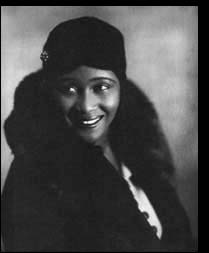 I’ve recently come across some Victoria Spivey songs quite by accident. I have quite a few by her, but mostly bits and pieces from various compilations. I haven’t put any effort into collecting her, in part because my resources are limited and in the other part because my attention was caught by Bessie Smith. I also tend to prioritise ‘songs for lindy hopping’ in my purchasing.
I came across some Spivey songs in a Henry Red Allen JSP (I think) set from emusic. It’s also on one of the Complete Jazz Series, and I think the latter versions are slightly better quality. On both it was just labelled ‘Henry Red Allen and his orch’ I think. I found the additional details in the discography at the library. Listed under Victoria Spivey, she did quite a few sessions in New York 1928 with Clarence Williams etc, and then in 1929 she did some stuff in New York again with some really big guns. Below are the discographic details for the sessions that caught my interest:
Victoria Spivey
[S10354] Victoria Spivey (vcl) acc by Louis Armstrong (tp) Fred Robinson (tb) Jimmy Strong (ts) Gene Anderson (p) Mancy Cara (bj) Zutty Singleton (d)
New York, July 10 1929
40252-C Funny feathers
Okeh 8713, Swag (Aus) 1267, 1310, Col C3L-33, Odeon (F)7MOE-2250, Par (E)PMC7144, CBS (F)65421, (Jap)SL-1209/10/11
402526-A How do you do it that way?
Okeh 8713, Swag (Aus) 1267, S1310, Odeon (F)7MOE-2250, Par (E)PMC7144, CBS (F)65421, Spivey LP2001, Jass 5, Biograph BLP C5, Book of the Month Club 21-6547
[there are details about where these songs were published]
[S10355] Victoria Spivey (vcl) acc by Henry “Red Allen” (tp) J.C. Higginbotham (tb) Charlie Holmes (sop) Teddy Hill (ts-1) Luis Russell (p) Wil Johnson (g) Pops Foster (b,tu-2)
New York, October 1, 1929
56732-1 Bloodhound blues (1)
[with recording details I can’t be arsed typing out]
56733-2 Dirty T.B. Blues (1)
56734-1 Moaning the blues (1)
56735-1 Telephoning the blues
[there are details about where these songs were published]
When you go to the Henry Red Allen entry, you find him in New York in the same months (July and October of 1929) recording with mostly the same musicians. Luis Russell is the one that catches my eye, mostly because he’s (one of) the connections between Allen and Armstrong, leading a band which starred both of them at some points in the 30s.
Here are the details of recordings from the Henry Red Allen entry:
[A1573] Henry Red Allen (tp,vcl) J.C. Higginbotham (tb) Albert Nicholas (cl) Charlie Holmes (sop, cl, as) Teddy Hill (ts, cl) Luis Russell (p, celeste) Wil Johnson (g, bj, vcl) Pops Foster (b) Paul Barbarin (d, vib), Victoria Spivey (vcl) and the Four Wanderers (vcl quartet) added: Herman Hughes, Charlie Clinscales, (tenor), Maceo Johnson (bariton) Olivier Childs (bass)
New York, September 24, 1929
55852-1 Make a country bird fly wild (tfw vcl)
[with recording details I can’t be arsed typing out]
55852-2 Make a country bird fly wild (tfw vcl)
55853-1 Funny feathers blues (vs vcl)
55853-2 Funny feathers blues (vs vcl)
55854-1 How do they do it that way (vs vcl)
55855-1 Pleasin’ Paul
55855-2 Pleasin’ Paul
[there are details about where these songs were published]
I think the sessions under Spivey’s own name were the best for blues dancing, though really it’s a matter of taste.
FYI, if you’re trying to find all the recordings by a particular musician, you use the Musician’s Index (if you’re using the books rather than the online or CD Rom version of the discography) to find all the page and recording session details for each song featuring that musician. When you’re looking at someone like Louis Armstrong, that can get tedious very quickly. In his case, there’re whole books devoted just to his discographies. But people like Henry Red Allen (and Eddie Condon) tend to ramble across dozens and dozens of bands and hundreds of individual songs. You tend to get a feel for a particular musician, and you realise that they played in a whole range of bands in a particular city at any particular time. This gets really interesting, particularly when they’re using pseudonyms to escape restrictive recording contracts with particular labels.
Just looking up ‘Henry Red Allen’, for example, won’t get you all his recordings. But it will get you the recordings which are credited to him, or recorded by bands with his name attached (eg Henry Red Allen and his Orchestra). This sort of attribution gets interesting when you look at artists like Spivey, who had some of the biggest names in jazz listed as her accompanists.
You can see how I get interested in the relationship between blues and ‘jazz’ or ‘swing’ when I’m doing this digging in the discographies. Surely accompanying these singers (and they were accompanying, particularly when it came to people like Bessie Smith) influenced their music in significant ways. And these big names in jazz influenced other musicians – particularly when we’re talking about people like Louis Armstrong or Allen.
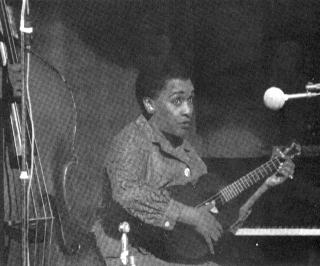 Spivey is interesting because she was not only a seriously famous singer in the 20s, she also managed to survive the declining popularity of blues at the end of the 20s. She did interesting things like play in the Hellzapoppin’ stage review (not the film, lindy hoppers, the stage review from which material for the film was drawn) and found her own record company, Spivey Records in the 60s. It was with this label that she recorded Bob Dylan as an accompanist.
I’m fascinated by the idea that you can chart the relationships between musicians in a particular city by using the discographies. All you have to go on is the city, date, song title and musicians. Which is a surprisingly useful amount of information. My attention is caught by the names which turn up all over the place, in all sorts of bands. Zutty Singleton. Paul Barbarin. Buster Bailey. Peanuts Hucko. People I didn’t know before I started looking through the discographies. Now I find that following these guys through the Chronological Classics or Complete Jazz Series gives me an overview of a particular city or style during a certain time frame. So if I follow Zutty Singleton through a particular year on CD, I’ll hear a range of bands. And I can speculate about the professional relationships between bands and the way creative ideas spread between bands.
Of course, all this information is really only dealing with recorded performances. Though this does include a massive amount of recorded broadcasts and live performances (particularly in the 1930s), we’re really only looking at formal recording sessions in the 20s. I always wonder what went on around these sessions. Who did they meet at the restaurant where they had dinner afterwards? Did they go for drinks with the band who’d been in there before? Who sat in on the following sessions to make up numbers or simply out of musical interest? Did these things even happen?
And of course I can’t help but think about the race stuff going on. I notice things like particular bands having personnel with names of particular cultural backgrounds. German or European names in Benny Goodman’s bands. Italian names in New Orleans bands. Anglicised names in Chicago. Certain names are more common in African American bands than in Anglo-American bands.
There are hardly any mixed-race recordings, so when they do pop up, my interest is immediately caught. And of course, when you get into the French recordings of artists like Bill Coleman, Coleman Hawkins, the remnants of Glenn Miller’s band in 1945, you see familiar American names teaming up with French artists. Glenn Miller’s former bandmates (Peanuts Hucko, Mel Powell, Joe Schulman, Ray McKinley) are joined by Django Reinhardt.
All this is super-interesting. And that’s just the information you can gain from reading through the discographies. When you listen along with the discographies, tracing particular sessions and particular combinations of musicians, you can hear musical developments and experimentations expanding and changing an individual musician’s style. Arrangers become much more important. Listening across bands (following a particular musician rather than a band), you hear similarities within a single year. And when you add to that the fact that many bands recorded the same songs in the same year, you hear each of these little moments in creative time explored within the framework of a single composition, arranged in countless ways, exploded by solos and improvisations.
When you think of the music that wasn’t recorded, of all the live performances on stages and in back rooms and kitchens, you realise that music was not only everywhere, but that these were communities of musicians, complicated networks forged by the act of making music. And money.
And, finally, in all of this, if I do come across a female name anywhere other than in the vocals, I’m flabbergasted. This is a world of men. Or so you’d assume, if you relied only on the discographies. There were plenty of women in these pictures, just not dug into the grooves on the record. There were women playing and writing and recording music, women running offices, making dinners, washing clothes. It’s just that you can’t hear them on the records, unless you listen very closely.
Refs:
Lord Jazz Discography
This is an interesting piece about Henry Red Allen.
Red Hot Jazz.
adventures with badass sistahs in outer space: olivia dunham
I love SF telly. I love it. I watch every SF program, just in case. I also like supernatural, fantasy and general make believe stuff.
But I tend to have less patience with programs that do not have good female characters. I make exceptions for programs like Supernatural which explore male characters and masculinity in new ways.
I love all trashy vampire telly. I can’t help it. It’s a sickness.
I did my honours thesis on female violence in action film, and I’m still interested in the way women and violence and, more importantly, women’s violence are depicted in mainstream film and television. While I was doing this honours project I came across an article which basically argued that straight-to-video releases (ie B films) were often more transgressive in terms of representations of gender than mainstream or A films. I am really interested in this idea. This is partly how I justify my passion for B telly. Partly. But I also think it’s true. Telly that doesn’t gain broadcast telly release, doesn’t make it to prime time, or even make it to Australian television tends to be where I find the most interesting gender stuff. It’s as though being B gives you a little freedom to explore different types of characters.
I gain access to these programs through the internet, and through video shops. Video shops are actually very important. DVD releases of even the most B programs has given me access to some of the most wonderfully un-top-shelf television. Accessing these programs this way (rather than via broadcast telly) means that I tend to watch them in a block, rather than one episode-per-week. I binge view. This changes the way that I read these programs. It makes me more likely to read the meta-arc, the larger story. I tend to regard individual episode stories as pieces of a whole, rather than as discrete texts. Even when the program is very ‘monster of the week’ (as most SF is, particularly in its first season).
I find out about these programs via websites like io9. I use wikipedia extensively to clear up plot points I haven’t understood or to follow up characters and add-on texts like comics. I also use imdb for details about directors, actors and so on. I like to talk about these programs with other people, but I don’t particularly want to sit down and dissect them for hours. This was something I used to do with Buffy when I was at school. These days I quite like to share programs and to mention them, or to share add-on texts, but I’m really only interested in watching them. I do talk about them with my partner when we’re watching. But only the programs he’s also interested in.
My PhD dissertation involved a lot of research into fan studies and methodologies and theories involved in researching fan cultures. I am self-reflexive about most of my talk about these SF telly shows. I am interested in issues of gender and class and sexuality and race and ethnicity…. and all that good identity stuff. But I am also interested in questions about technology and machinery, wider questions about humanity. But, really, gender is where it’s at; all that other shit is inflected by this. And, as somebody clever said once, I’ll be a post-feminist when we live in a post-patriarchy. Gender issues are so central to SF culture and texts, it’s ridiculously self-deceiving to try to ignore them.
This is just one post about one character (mostly) that I like. I’ll try to write other posts about other characters. And perhaps about this program in more detail. But don’t count on it; I’m slack.
Because I tend to watch a number of programs at one time, and am also reading SF all the time, I tend to read intertextually. Well, of course I do. We all do. But this is one of my particular pleasures; I like to imagine characters from different programs meeting. I like exploring the industrial connections between programs – how could the director of Veronica Mars move to Moonlight and what happens when Mark Mothersbaugh does the music for Big Love. Oh – I also read and watch across genres. I’m reading lots of dodgy supernatural romances most of the time, and always reading Tanya Huff; I’m watching programs like Vampire Diaries and, of course, Blood Ties.
So when I’m watching these programs I’m not only reading the text in front of me, I’m also thinking intertextually, I’m thinking about modes and industries of production, and I’m paying attention to audiences and modes of reception. And the communities which tie them all together.
And I re-watch and re-read on a massive scale.
I also do some sessional teaching at various universities. I exploit this role by pushing the television I love on young, vulnerable middle class kiddies. I do, unapologetically and with great verve, present these programs in a feminist light. I have no – as in zero – tolerance for anti-feminist arguments from my classes. I will listen to them and then dismiss them as they deserve. I aim to indoctrinate a generation of students. They will be feminist and they will value SF.
They can just suck it up or fail.
So here’s some stuff about Olivia Dunham. Main character of Fringe. All-round badass sistah. Mos def.
First, watch this:
That’s a Fringe promo. The blonde is Olivia Dunham.
I’m really liking the character Olivia Dunham in Fringe. I especially liked her in the first season of the program. Why?
She’s a crack shot. She is really, really good with a gun.
She’s a good fighter. She wins most fights, and when she doesn’t win, it’s only because her opponent is, I dunno – a car or something.
She’s super clever and figures things out. There are lots of things to figure out in Fringe.
She’s a good explainer. Because she’s a good figure-er-outer, she often has to explain things to other characters. Usually her male partner Charlie, but also quite often her boss.
She listens and thinks and listens again. She’s not always flapping her lips, yapping. She’s listening.
She’s a good runner and jumper.
She’s very gentle and patient with Walter, who’s not only a habitual drug user (and abuser) but a mentally unwell older man who’s been quite seriously damaged by his time in an institution. She listens to him and pays attention to him; she doesn’t patronise him. She protects him when he needs it (and when he asks), but she is also willing to let him take care of himself.
She used to be a prosecutor in the military. She investigated and then prosecuted a middle aged white man who later became her boss. He was charged with sexually assaulting a number of women. When he became her boss, he sought revenge on her through systematic harassment. She didn’t take that crap; she kept on being a badass agent. She didn’t martyr herself; she called him on his bullshit. Her usual boss was this bad boss’s friend. At first he didn’t want to like Olivia because of this. Eventually he figured out Olivia was a gun, and that his friend was crap. Then he became a better boss. Olivia kept on being a gun, regardless.
She’s willing to tell bosses off if they need it. She’s also prepared to listen and to admit she was wrong.
She really likes her sister and her little niece.
She had good, solid, platonic relationships with her male coworkers. There is never even the intimation of sexual tension between her and (the awesome) Charlie. They are partners in the truest sense. He has a wife he loves and Olivia is busy being… Olivia.
She operates in an all-male world – the FBI (or is it CIA? Whatevs – some institution) – but she is aware of gender issues and articulates them. Most especially in her dealings with the bad boss. But she also makes comments about men in positions of power who can’t handle assertive women. She has one great line in the first season about how the men around her (especially her male boss) aren’t listening to her because she’s ‘getting emotional, just like a woman’. And then she says something, very sternly, about how she is getting emotional, because this is emotional stuff, and that this emotion is making her a better agent. Olivia is not only calling the men around her on their mysogynist bullshit, she’s also reworking the role of ‘great agent’ to incorporate a range of characteristics not traditionally located in the male arse.
And she is a fully sick agent.
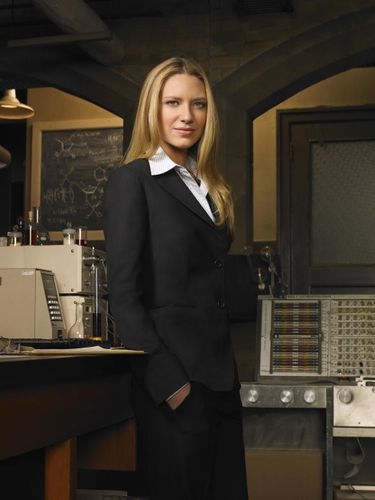
Throughout season one she is the main character. She is the centre of stories, and as the agent in charge, she is also boss of the cases they work. She’s the one to call the lab and tell them to get their gear and come investigate something gross. This changes a little in season two, and she is set up as something of a victim (recovering from a ‘car accident’), but this is changing. We are at about episode four, and she’s already back on her feet and kicking arse. Peter has taken on a more managerial role in the group, and the ‘Fringe division’ has officially been disbanded. Charlie has [SPOILER] died [/SPOILER], which sucks arse, but I’m dealing. So Olivia’s status has shifted. But this is ok, as Peter’s character has only slowly been working away from ‘carer’ for Walter and ‘general slacker’ towards some sort of three dimensional personhood. He’s also finally realising his abilities as an investigator type person. In other words, his character is gradually being fleshed out. I worry that he’ll become Olivia’s partner (in the sense of FBI ness and in the romantic sense), but I don’t see this happening any time soon.
I really like Olivia because I don’t worry about her. She’s kind of superhuman, but only in the way we expect our SF protagonists to be. She gets scraped and banged and shot occasionally, but it doesn’t stop her winning. Sure, she’s kind of a paragon of all things awesome, but this is as it should be in SF. She is, however, flawed. And [SPOILER] probably partly psychic and awesome because she was experimented on as a kid. But she has begun dealing with this history and is assimilating and coming to terms with its effects in a phenomenally healthy way. Which in itself is a bit worrying.
Olivia is an impossible woman. An impossible character. But this is as it should be in SF. This is how SF protagonists are: they are strong and brave and clever. Cleverness is important. She is conventionally attractive, but she doesn’t wear booby shirts or stupid shoes. She can run like a badass mofo and she likes suits. Just like the male agents around her. She wears her hair tied back in a piggy tail, or she wears a sensible black beanie. She doesn’t wear much make up. She is conventionally attractive. But so are most protagonists.
I <3 Olivia.
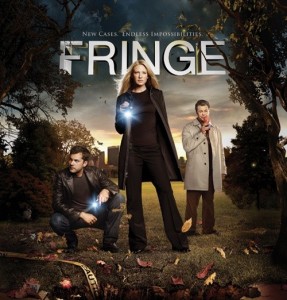
Olivia isn’t the only woman character in Fringe worth loving. I also love Astrid, who’s the agent assigned to working with Walter in his lab.
Astrid is also awesome.
She has a degree in cryptography, another in computer stuff (or is that a double major) and she’s got some sort of medical training (well, she does now). She loves cryptography. As in, she’s a nerd for it. And she loves computers.
She’s also an agent.
She calls Walter on his bullshit, including his inability to remember her name (which we suspect is a ploy on Walter’s part). She won’t let him (or anyone else) forget that she is actually a badass agent as well.
She deals with Walter’s gross dissections and experiments very matter of factly.

She runs errands and also has some badass ninja agent skills.
She veers into ‘servant territory’ every now and then, which is particularly worrying as she’s African American. But these little deviations are usually addressed: Astrid will call bullshit on Walter’s behaviour and regularly refuses tasks she feels cross the boundary from professional assistance to nurse maiding.
She is super smart.
She and Olivia talk regularly about things other than men. They often figure out puzzles together.

She is fond of Walter and also deals with his mental illness and fragile personality gently, yet without patronising him. She does not take on a carer role; she is, if nothing else, Walter’s lab assistant.
Nina Sharp is another important female character in Fringe. She’s the CEO of Massive Dynamic, a sort of super-corporation specialising in technology. A bit like Skynet Cyberdyne Systems, but awesomer. She admires Olivia greatly and has tried to recruit her to Massive Dynamic a number of times. She and Olivia have a refreshingly realistic relationship; they deal with each other as professionals. They do not have the sort of antagonistic rivalry alpha women are usually given in SF… in telly.They talk to each other about plenty of things besides men. They often talk about technology together. And science.
Nina Sharp is middle aged.
Nina Sharp has a bionic arm and a clear glass ipod thingy. She is way cool with technology generally. This is one middle aged woman who is not relegated to earth mother status; she is technology, economic and industrial power and smarts.
I love Olivia the most, though. I love the way she stops and thinks about things. I love the way she can fighty fight. I love it that though she might, one day be interested in Peter romantically, that day is waaaaaay off in the future, and for now she’s busy being a badass. He thinks she’s neat. He might think she’s neat in a romantic way, but for now he just thinks she’s a badass and he wants to be her partner, I think.
So I love Olivia Dunham. And this is why I can watch Fringe.
PS: I’ll try to add some more pics to this later, when I can figure out how to do it in this new version of MT without opening a new stupid window every time.
EDIT: I had to add this link to a drawing Jasika Nicole (the actor who plays Astrid) drew of herself.
i’m not sure about natalie portman
Watching a film this afternoon I asked myself what possessed Natalie Portman to keep taking roles where her character is tortured. Is it something in her, that this torture satisfies some sort of inner masochism? Is it that she is continually cast as victim, as vulnerable by directors and casting agents who see a vulnerability in her? Who knows – I wouldn’t speak for her. But this has made me think about actresses taking on these types of roles.
There are few roles in cinema (both mainstream and otherwise) depicting women as strong and independent and free of the threat of violence or otherwise immune to vulnerability. To work, an actress simply must accept roles which present them – as the body a character occupies, as the craftswoman creating this persona – as vulnerable. Weak. Potentially victim of violence of all types. Does the actress refuse these roles, and perhaps not work? If she accepts these roles, is she complicit in this representation of women?
tweet
I think I’d like to be sewing. Or going to the gallery. Or nerding it up in the library. I think the library is going to win. Again.