Landrights in Western Australia and the Yindjibarndi people

Some very good news.
The High Court has upheld the Yindjibarndi people’s native title rights to their land.
Fortescue Metals Group applied to appeal these rights, and got a big ‘nope’ from the High Court.

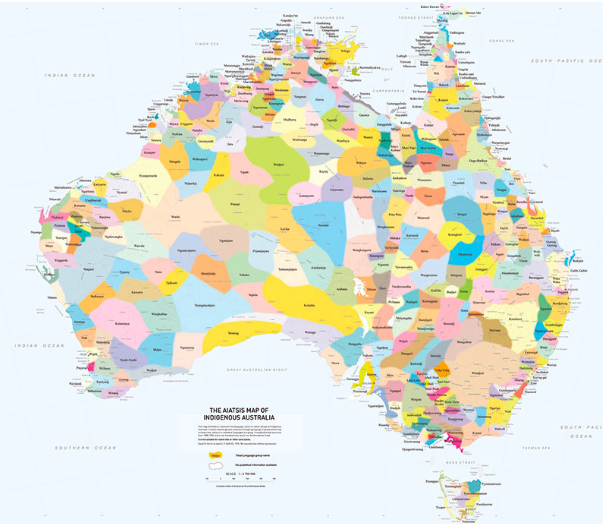
The Yindjibarndi people live in what has been called Western Australia since invasion, but has been black country for 40 000 years. If you look it up on this great map, you’ll find them in blue on the far left of the continent, above the most eastern most bit.

You can read about the Yindjibarndi languages here, on this epic good map.

Languages are important, because you can trace who lived where by the languages they speak. A people will share some linguistic elements (and languages) with neighbouring people.
Language is culture, and the number of people speaking a language can tell you about that people’s history.
The Stolen Generations interrupted the transfer of language and culture between generations in many areas. Reconciliation Week is supposed to be (in part) about making amends for the Stolen Generation.
You cannot understand Australian history without reading the Bringing Them Home (1997) report.
Please note: this Report warrants a Content Warning for sexual violence, neglect, persons who are deceased, and so on. If you are an Australian, particularly if you are not a Aboriginal or Torres Strait islander Australian, you should try to read this Report.

What is Native Title?

Useful things to think about in regards to native title today:

  • water rights (who owns them, who can buy or sell them);
  • mining (who has access to land to mine);
  • continuous occupation of land (and proof thereof, including rock paintings and burial grounds).

    Note: native title is determined by the High Court. There are 7 High Court judges, 3 are women, none are Aboriginal or Torres Strait Islander. It’s worth noting that one of them, Justice Virginia Bell was a volunteer at the Redfern Legal Centre in the 70s, a centre that provided legal support for the 1978 Mardi Gras protesters (the first mardi gras march), for local Aboriginal community members, and other civil rights activists.
    Read more about the Redfern Legal Centre here.

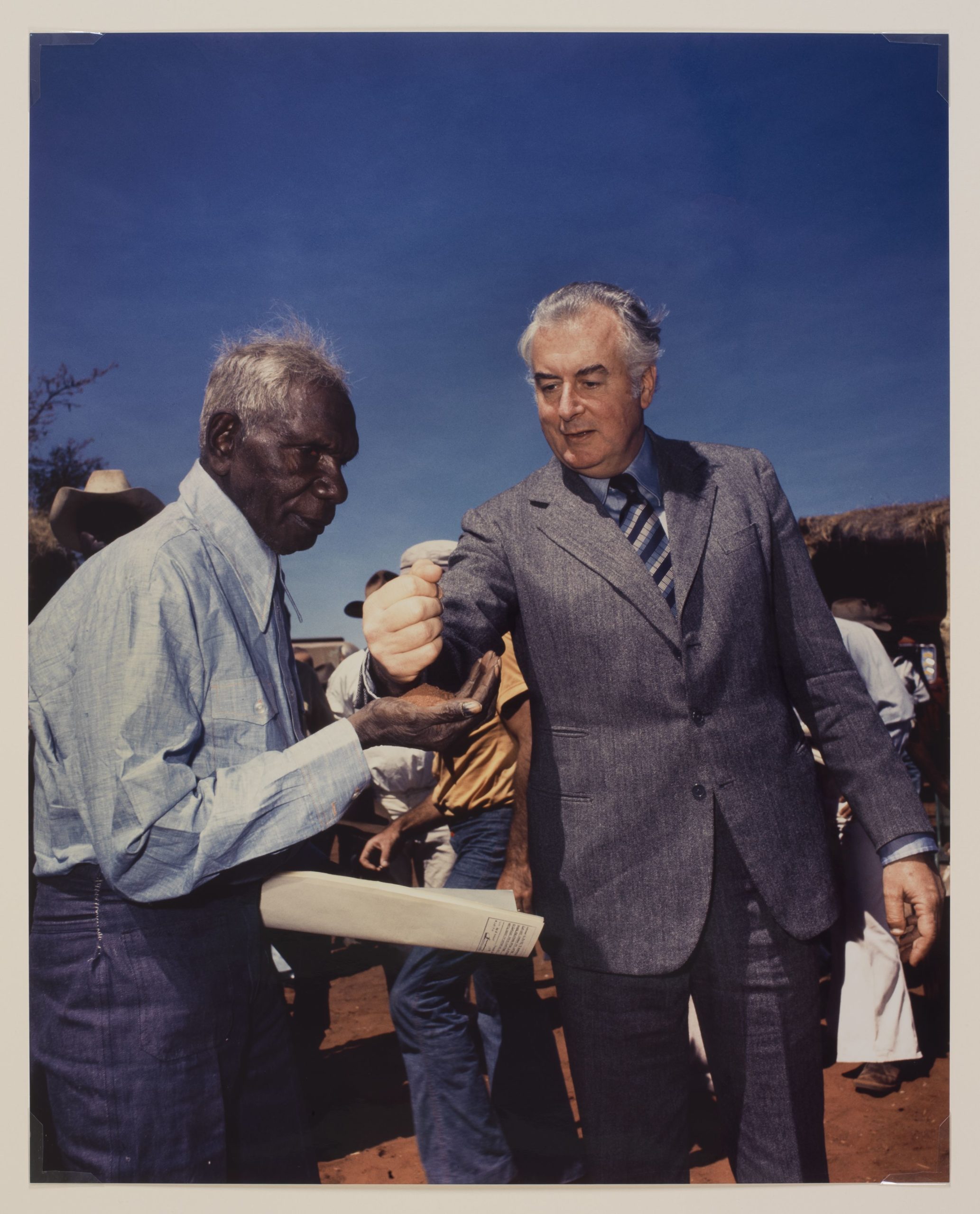
Mervyn Bishop and Vincent Lingiari

I like to think of Frankie Manning’s birthday as the day we white people kick off a week of deep diving into supporting black civil rights. Here in Australia, it’s reconciliation week. This land is home to the oldest culture on earth. And some of the most persistent and terrifying racism.

If you don’t have the stomach for reading about the horrors of black history here and in the US, focus on digging out and supporting black artists, thinkers, activists, workers. Be the person who clears a space so they can stand. Still your voice so they can speak.

This iconic image is by aboriginal photographer Mervyn Bishop. He composed and shot the image.

…on 16 August 1975, he covered a historical event at Wattie Creek in the Northern Territory. This significant moment in Australian history followed a nine-year strike over the working conditions and request for traditional lands to be returned to the Gurindji people. This photograph captures Prime Minister Gough Whitlam pouring soil into the hand of Aboriginal rights activist, Vincent Lingiari on the occasion of the successful passing of the revolutionary act of parliament.
(source)

-> land rights + labour rights + black civil rights
Useful topics to follow up:
– Wave Hill Walk-Off (1966-1975)
– Gurindji people
– Vincent Lingiari
– Aboriginal Land Rights (Northern Territory) Act (1976)

Sorry Day

Today is world lindy hop day and Frankie Manning’s birthday. But it’s also Sorry Day.

For me, Sorry Day is the more important occasion. But I think that Frankie would be down with that: apologise, remember the past, move forward with hope and good will.

[edit 10 minutes later]…maybe do a bit more than ‘move forward with hope and good will.’ Me, I’m adding ‘Do what you can, when you can. Because life is short, and we should take care of each other. And take care of the music.[/]

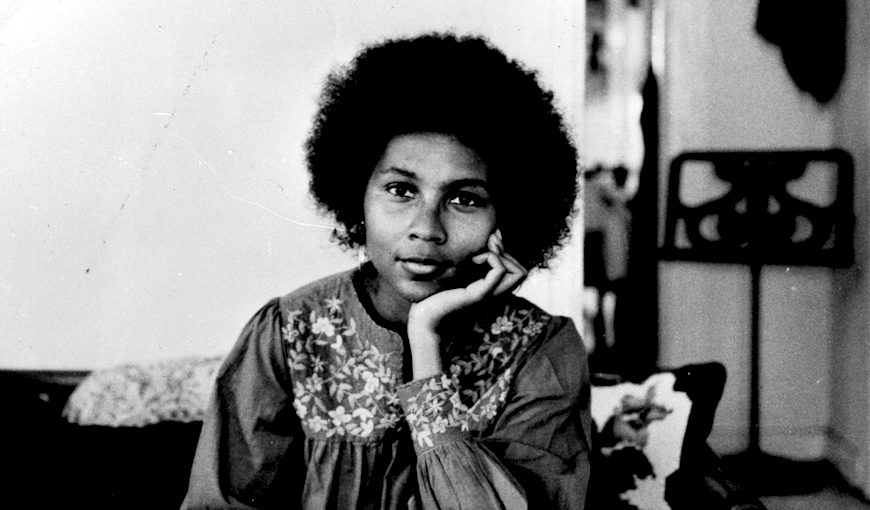
Grey recently asked on fb ‘Ok, Feelings on bell hooks?’
And I got caught up in my response.

bell hooks was really important for me as a young feminist in the early 90s. At that stage, most of published women’s studies literature was by white women, and the women of colour who were getting published (primarily in journals, then in books), really shook up my thinking about class and identity. At the time, it really made me understand the intersection of class, race, gender, ethnicity, sexuality, etc, though at the time it wasn’t called ‘intersectionality’. I was a young, white woman in a working class suburb of a politically corrupt state. People like hooks just blew my brain. It was thrilling.

I remember reading her work, and the work of Ruby Langford Gibni (Aboriginal Australian woman), Audre Lorde (black american feminist), Rita Mae Brown (American lesbian), and then Stuart Hall (queer black British cultural studies king). They were essential to my understanding of identity politics. Because I was a cultural studies person, I was also really influenced by film makers like Laura Mulvey (white British feminist), Lizzie Borden (black American radical), Tracey Moffatt (Aboriginal Australian artist), and by a bunch of authors.

I was lucky enough to be doing my BA in a huge english department (before media studies and cultural studies existed as disciplines), and that department included a lot of politically active feminists, poc, queer peeps, etc etc. So I was able to do subjects across a range of thinking within my BA. Goddess bless Gough Whitlam and the 1980s Australian university arts degree. I remember doing a lot of multiculturalism reading (in a postcolonial context), queer reading (a library full of books about sex!), and getting access to first nations activism. We had brilliant lecturers who were also activists in a lot of cases, and were culturally diverse. Nothing gets you fired up like a koori woman pointing at you and asking you what you’re bloody doing sitting there when there’s a rally to get to?!

All these people in the 80s and early 90, and their critiques of university-based white women’s studies (which was distinct from a lot of the feminist activism of the day), helped me understand that feminism can’t just be about gender. It has to address class, race, sexuality, etc, and it has to engage with institutional patriarchy. I was also influenced by Nancy Fraser (white American feminist) and her concept of ‘pragmatic feminism’. She argued that women’s studies had to have a practical, activist component (feminism) or it was just shoring up the academy.

But that was 20 years ago, and feminism has moved on. The lack of trans voices in the ‘feminist canon’ of that second wave is particularly telling. Even queer voices were marginalised at that moment. I personally think that the rise of trans politics within feminism has been the most radical change of this wave. And that’s no doubt why TERFs have so much trouble with it.
I think that these writers are important for understanding the history of feminism and gender studies, and for understanding women and activists of that generation (who are in their 60s an 70s now). But there are problems with them as well. And the nice thing about modern feminism is that it has moved on, adding new voices and thoughts to the discussion.

As a side note, I’m getting quite interested in Hannah Arendt and Seyla Benhabib at the moment. Old school feminists, but powerful thinkers.

Black activist men:
Straight up, my most favourite thinker is Stuart Hall (queer, black, British man). His work on class, race, gender, and sexuality in culture was the most influential work I read when I was doing my MA and PhD. I love the way he wrote, and his ideas really resonated with me.
I was also influenced by Paul Gilroy (another black British thinker) for his radical black politics.

And I’m a big fan of Tommy DeFrantz (queer black American dance history scholar), who I met while I was doing my PhD. He’s a dancer and scholar, and the way he talked about black dance and media culture, as well as being a dancer himself, part of a dance community, shook me. Plus he is a kind man, and just the right influence I needed at that stage in my own work on race and dance.

I came across Raúl H. Villa and his work on the latina public sphere in LA in the late 19th and early 20th century and was fascinated (partly because it overlaps with the zoot suit riots stuff). I also got into Michael Warner (white American queer)’s work on the queer public sphere.

This then led me to another thought…

Academic journals and magazines were really important in that 70s/80s/90s moment, because they were often published by collectives, or by groups of scholars who had shared interests (and politics). They’d publish special issues, or articles with the latest thinking, and then in following issues authors would respond to those articles or issues. That meant you could see the thinking happening at the time in a particular journal.

So, for example, ‘Screen’ published Laura Mulvey’s article “Visual Pleasure and Narrative Cinema” (Autumn 1975) in vol 16, issue 3 (pg 6–18), but people got so worked up about it (it was influential) that the next issue was themed, and all in response to her article.

There were also some really great magazines and journals published outside universities that gave marginalised writers a voice. eg On Our Backs (a sex positive lesbian erotica magazine) was a response to Off Our Backs (a feminist mag that was often anti-porn). For more.

When I first got to uni, I remember being kind of crazed by access to so many huge libraries. I would just sit in there reading everything. So. Many. Journals. I’d never even heard of things like feminist magazines or journals.
I know there are special collections of these things here in Australia eg Australian Lesbian and Gay Archives.
The language was exciting: very RISE UP! and radical activist.

And of course, at this point, it’s important to point out that Grey’s research and thinking can be read in Obsidian Tea, one of the most important publications in the modern lindy hop and blues dance world.

Looking for Langston

Speaking of the black experience in jazz and blues dance…

I haven’t yet ready anything in the blues and lindy hop community about the black queer male body dancing.

There’s been some good work on black women’s bodily experiences in modern jazz dance culture, and a bit about black masculinity. Quite a few too many white men have whitesplained how blues works as a black space, and far too many white women and men have avoided talking about vintage fashion as an ethnicised scene.

Apparently the black queer body in a well cut suit or gorgeous gown is too terrifying even for whispers.

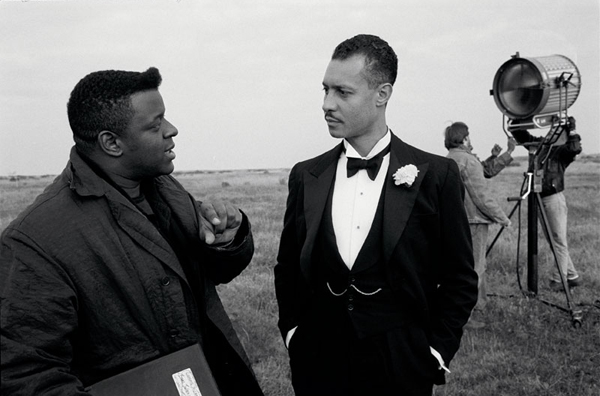
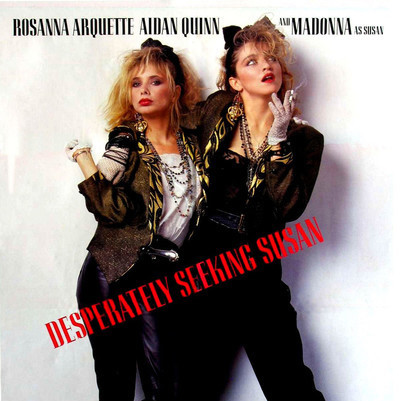
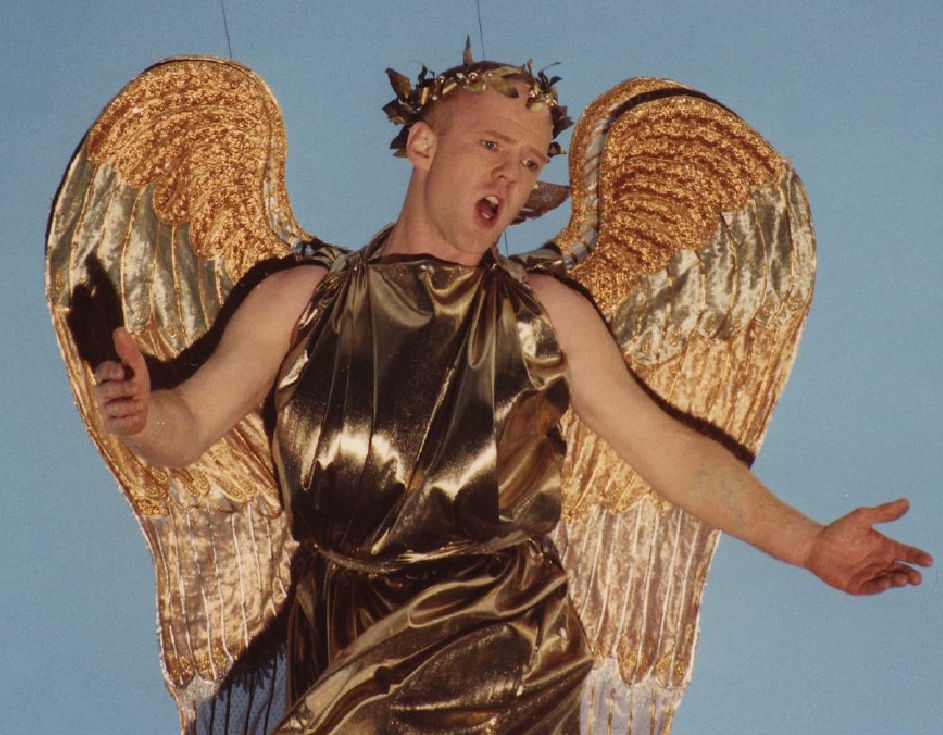
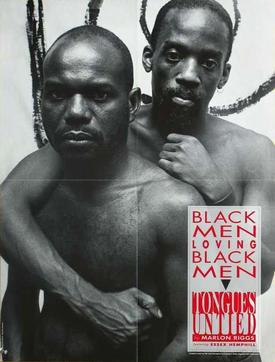
I saw Looking For Langston (an art film by Isaac Julien) last night. The whole project – a film made during the 80s AIDS crisis by a black British man, about a black American man of the Harlem Renaissance – is a meditation on queer desire, jazz aesthetics and the blues. The name (and a lot of the content, including some proto-vogueing) reminds me of Desperately Seeking Susan, Madonna, and the queer-eye-on-art. It includes voice work by Stuart Hall and Toni Morrison, Paul Gilroy gets props, Jimmy Somerville plays a cherub (again), and Tongues Untied is referenced. Also there is some cock.


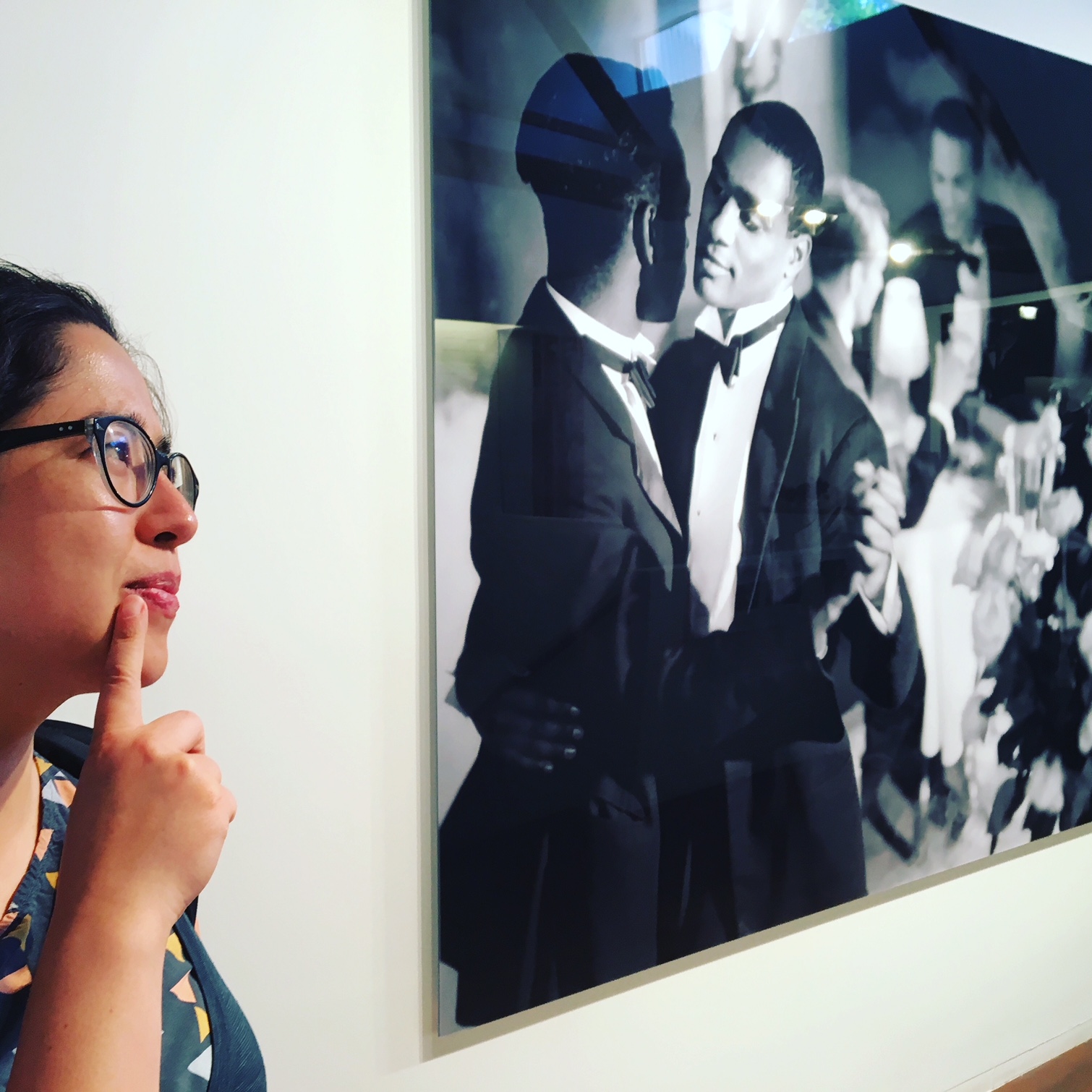
The installation at Rosley Oxley9 Gallery features some beautiful large scale black and white stills from the film, depicting black men dancing in closed embrace. Photos I regularly see linked up on facebook as examples of queer dance in the swing era. Ha.

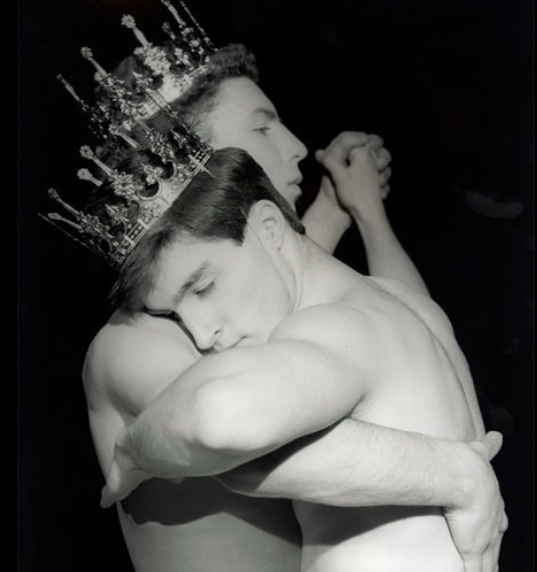
Liah says it’s good to check out the Mapplethorpe exhibit at the agnsw as well, so you can see how Julien’s work responds to Mapplethorpe (and the white queer gaze on black bodies).

I’ve hooked up this obviously pirated version of Looking for Langston, because it’s a hard one to get to see.


photos:

mise en scene pic from Isaac Julien’s set (source).
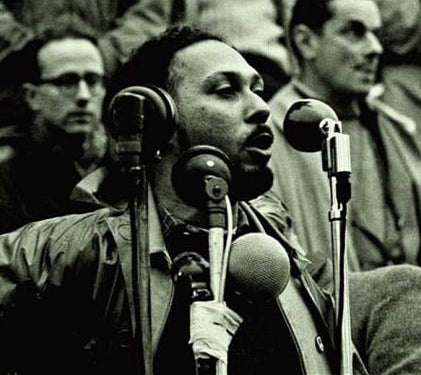
Stuart Hall, from his obituary in the Telegraph.
Toni Morrison by Gregg Delman in the Times.
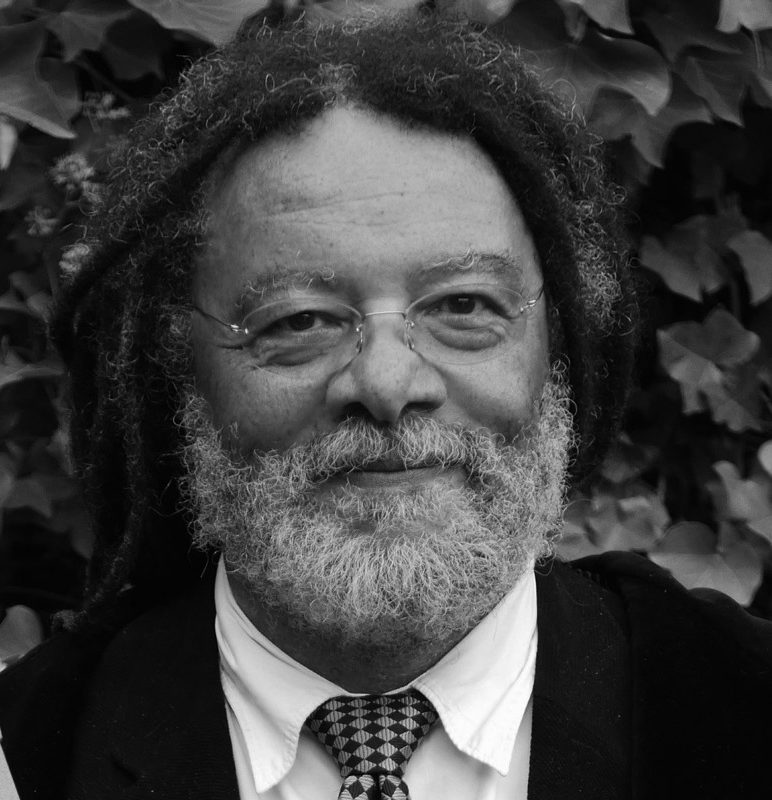
Paul Gilroy (source).
Jimmy Somverville in Sally Potter’s Orlando.
Tongues Untied (source).
My pic from the exhibition.
Robert Mapplethorpe, Two Men Dancing (source).

Lost post: the trouble with linear jazz narratives + more

Here’s a post I’ve just discovered, that may have fallen off my database somehow.

MAY 4, 2009

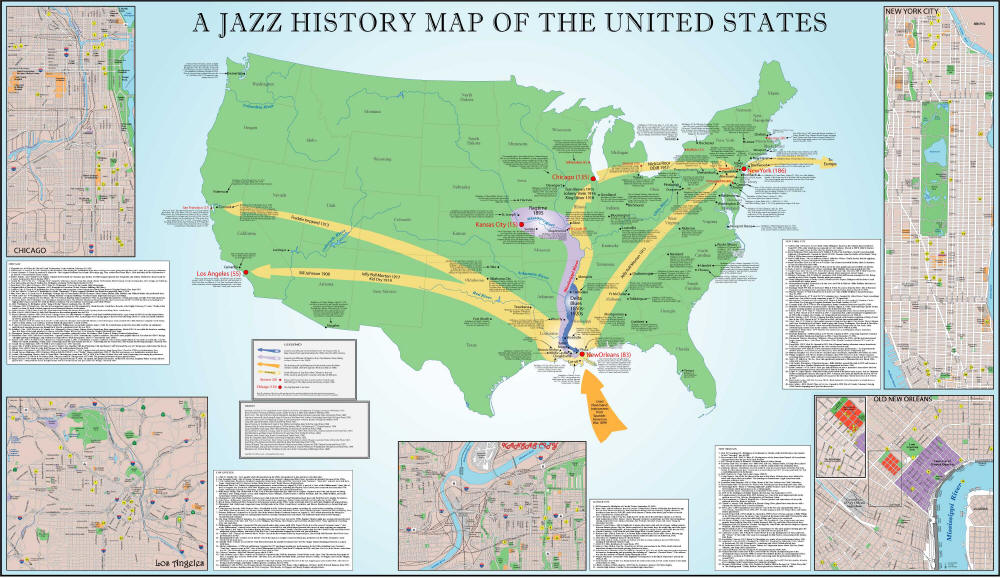
In the earliest parts of my researching into jazz history, I tried to set up a sort of ‘time line’ or map* of musicians and cities and bands. Who played with which band in what city at what time? Then where did they go? This approach was partly based on the idea that particularly influential musicians (like Armstrong) would spread influence, from New Orleans to New York and beyond.

But drawing these time lines out on pieces of paper, I found it wasn’t possible to draw a nice, clear line from New Orleans to New York, passing through particular bands. Musicians left New Orleans, went to New York, then back to New Orleans, then off to France, then back again to New York. The discographies revealed the fact that a band recorded in different cities during the year – they were in constant motion, all over America. Furthermore, musicians didn’t stick with one band, they moved between bands, they regularly used pseudonyms and even the term ‘band’ is problematic. The Mills Blue Rhythm Band, with its dozens and dozens of names, was in fact a shifting, changing association of musicians, and did not even have a fixed ‘core’ set of players. Perhaps this is why the MBRB is so important: many people played with them, and they were a band(s) which moved and changed shape, a loose network of musicians who really only existed as ‘a band’ when they were caught, in one moment, on a recording. Or perhaps on a stage (though that’s far more problematic). I wonder if that’s why it’s so hard to find a photo of them? Perhaps the ‘Mills Blue Rhythm Band’, as a discrete entity didn’t really exist?

The more I read about jazz and ‘jazz’ history, the more convinced I am by the idea of ‘jazz’ as a shifting series of relationships. I think about cities not as fixed locations, but as points on a sort of ‘trade route’ or even as a complicated web or network of relationships between individual musicians (which is, incidentally, how I think about international swing dance culture – the physical place is important, but it’s not binding).

Right now I’ve followed some references backwards to an article by Scott DeVeaux called Constructing the Jazz Tradition, which is really interesting. It not only outlines some of the political effects of a coherent ‘narrative’ history of jazz, but also the economic and social effects of positioning jazz as a ‘black music’, with interesting references to consequences of the ‘jazz musician as artist’ for black musicians. Read in concert with David Ake’s discussion of creole identity and ethnicity in New Orleans as far more complicated than ‘black’ and ‘white’, this makes for some pretty powerful thinking.
wm.jpeg
I’m very interested in the idea of a ‘jazz canon’ and of the role of people like Wynton Marsalis, the Ken Burns Jazz discography, jazz clubs and magazines developing during the 30s and 40s devoted to New Orleans recreationism and the whole ‘moldy figs’ discussion. The tensions surrounding the Newport jazz festival also feed into this: the Gennari article (which I discuss in reference to its descriptions of white, middle class men rioting at Newport here) pointed out the significance of a festival program loaded with ‘trad’ jazz – for black musicians and for the popularising of jazz generally. I’ve also been reading about the effects of this emphasis on trad jazz for superstar musicians like Louis Armstrong.

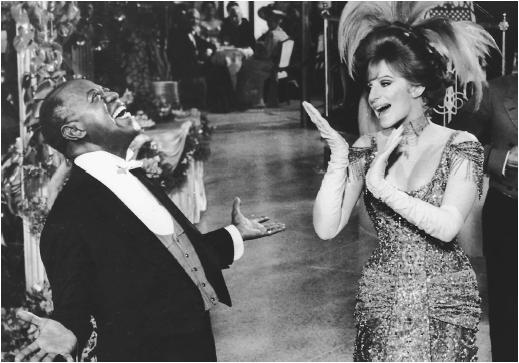
O’Meally and Gabbard have written about the way Armstrong’s public, visual persona is marked by ethnicity.
la.jpg
Armstrong was known for his visual ‘mugging’, or playing the ‘Uncle Tom‘ for white audiences, particularly on stage. Eschen writes

…as the struggle for equality accelerated, Armstrong was widely criticized as an Uncle Tom and, for many, compared unfavourably with a younger, more militant group of jazz musicians (193)

This, as Eschen continues, despite the fact that Armstrong was actually an active campaigner for civil rights in America, and overseas.
The trad jazz movement – or ‘moldy figs’ pushing for the preservation of an ‘authentic’ jazz from New Orleans – effectively pushes Armstrong to continue as Uncle Tom – unthreatening black man clowning for white audiences. A narrative history of jazz which emphasises a beginning in New Orleans and a consistent, clearly defined lineage of musicians and styles also, more subtly, relies on an idea of the black musician as powerless or unthreatening. DeVeaux makes the point that positioning jazz (and jazz musicians) as artistic loners who do not ‘sell out’ with commercial success:

Issues of ethnicity and economics define jazz as an oppositional discourse: the music of an oppressed minority culture, tainted by its association with commercial entertainment in a society that reserves its greatest respect for art that is carefully removed from daily life (530)

In this world, the ‘true’ jazz musician is ‘black’ (in a truly singular, homogenous sense of the world), he is poor and he is mugging for white audiences.
bh5.jpg
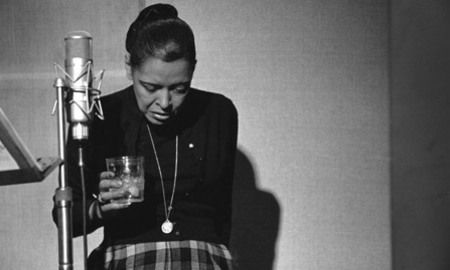
Billie Holiday becomes a particularly attractive representation for this idea of the ‘jazz musician’: poor, black, addled by drugs and alcohol, a history of prostitution, yet nonetheless, a creative genius pouring out, untainted in recording sessions (and I’m reminded of the ‘one take’ stories) and tragically cut short.

All of this is quite disturbing for someone who really, really likes jazz from the 20s, 30s and 40s. Am I buying into this disturbing jazz mythology? It’s even more disturbing for someone who found similar themes in contemporary swing dancers’ development of ‘narratives’ and geneologies of jazz dance history. As DeVeaux writes (about jazz, not dance), though, this is

The struggle is over possession of that history, and the legitimacy that it confers. More precisely, the struggle is over the act of definition that is presumed to lie at the history’s core (528)

I wonder if I should suspect my own critique of capitalist impulses in contemporary swing dance discourse?
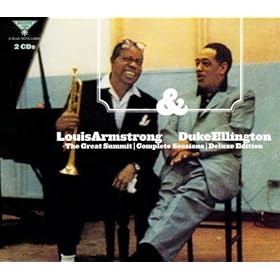
I don’t think it’s that simple. Gabbard discusses Armstrong’s work with Duke Ellington, including the filming of Paris Blues (in which Armstrong starred, and for which Ellington contributed the score) and the recording of the ‘Summit’ sessions:

at those moments in the film when he seems most eager to please with his vocal performances, his mugging is sufficiently exaggerated to suggest and ulterior motive. Lester Bowie has suggested that Armstrong is essentially slipping a little poison into the coffee of those who think they are watching a harmless darkie.Throughout his career in films, Armstrong continued to subvert received notions of African American identity, signifying on the camera while creating a style of trumpet performance that was virile, erotic, dramatic, and playful. No other black entertainer of Armstrong’s generation “with the possible exception of Ellington” brought so much intensity and charisma to his performances. But because Armstrong did not change his masculine presentation after the 1920s, many of his gestures became obsolete and lost their revolutionary edge. For many black and white Americans in the 1950s and 1960s, he was an embarrassment. In the early days of the twenty-first century, when Armstrong is regularly cast as a heroicized figure in the increasingly heroicising narrative of jazz history, we should remember that he was regularly asked to play the buffoon when he appeared on films and television (Gabbard 298)

You can see a clip from Paris Blues here.

Armstrong’s performance gains meaning from its context, from the point of view of the observer, from his own actions as a ‘real’ person (Armstrong was in fact openly, assertively critical of Jim Crowism and quite politically active) and from its position within a broader ‘body’ of Armstrong’s work as a public performer. Pinning it down is difficult – it’s slippery.

The idea of layers of meaning is not only interesting, it’s essential. This physical performance of identity, tied to the physicality of playing an instrument reminds me of the layers of meaning in black dance. And of course, of hot and cool in dance, and the layers of meaning in blues dance and music. Put simply, what you see at first glance, is not all that you are getting. Layers of meaning are available to the experienced, inquiring eye. Hiding ‘true’ meanings (or more subversive subtexts) is important when the body under inspection is singing or dancing from the margins. Tommy DeFrantz discusses meaning and masculinity in black dance during slavery:

serious dancing went underground, and dances which carried significant aesthetic information became disguised or hidden from public view. For white audiences, the black man’s dancing body came to carry only the information on its surface (DeFrantz 107).

Armstrong’s performance is more than simply its surface. As with any clown, the meanings are more complex than a little light entertainment. Gabbard continues his point:

In short, Ellington plays the dignified leader and Armstrong plays the trickster. Armstrong’s tricksterisms were an essential part of his performance persona. On one level, Armstrong’s grinning, mugging, and exaggerated body language made him a much more congenial presence, especially to racist audiences who might otherwise have found so confident a performer to be disturbing, to say the least. When Armstrong put his trumpet to his lips, however, he was all business. The servile gestures disappeared as he held his trumpet erect and flaunted his virtuosity, power, and imagination (Gabbard 298).

This, of course, reminds me of that solo in High Society that I mentioned in a previous post. There’s some literature discussing the physicality of jazz musician’s performances, but I haven’t gotten to that yet (though you know I’m busting for it). I have read some bits and pieces about gender and performance on stage (especially in reference to Lester Young), and there’re some interesting bits and pieces about trumpets and their semiotic weight, but I haven’t gotten to that yet, either.

Sorry to end this so abruptly: these are really just ideas in process. :D

To sum all that up:
– The idea of a jazz musician as ‘isolated artist’ is problematic, especially in the context of ethnicity and class. Basically, the ‘true jazz musician who doesn’t sell out by making money’ is bad news for black musicians: it perpetuates marginalisation, not only economically, but also discursively, by devaluing the contributions of black musicians who are interested in making a living from their music. Jazz musicians are also members of communities.

– Linear histories of jazz are problematic: they deny the diversity of jazz today, and its past. Linear histories with their roots in New Orleans, insisting that this is ‘black music’ overlook the ethnic diversity of New Orleans in that moment: two categories of ‘black’ and ‘white’ do not recognise the diversity of Creole musicality, of the wide range of migrant musicians, of the diversity within a ‘white’ culture (which is also Italian and English and American and French and….), of economic and class relations in the city, and so on.

– ‘linear histories’ + ‘musician as artist’ neglect the complexities of everyday life within communities, and the role that music plays therein. These myths also overlook the fact that music is not divorced from everyday life; it is part of a continuum of creative production (to paraphrase LeeEllen Friedland and to refer to discussions about Ralph Ellison – which I will talk about later on).

– Music and dance have a lot in common. They carry layers of meaning, and aren’t simply discrete canvases revealing one, singular meaning to each reader. They are weighted down by, buoyed up by a plethora of ideas and themes and creative industrial practices and sparks.

DeFrantz, Thomas. “The Black Male Body in Concert Dance.” Moving Words: Re- Writing Dance. Ed. Gay Morris. London and New York: Routledge, 1996. 107 – 20.

DeVeaux, Scott, “Constructing the Jazz Tradition: Jazz Historiography” Black American Literature Forum 25.3 (1991): 525-560.

Eschen, Penny M. The real ambassadors. Uptown Conversation: the new Jazz studies, ed. Robert O’Meally, Brent Hayes Edwards, Farah Jasmin Griffin. Columbia U Press, NY: 2004. 189-203.

Friedland, LeeEllen. “Social Commentary in African-American Movement Performance.”
Human Action Signs in Cultural Context: The Visible and the Invisible in
Movement and Dance
. Ed. Brenda Farnell. London: Scarecrow Press, 1995. 136 –
57.

Gabbard, Krin. “Paris Blues: Ellington, Armstrong, and Saying It with Music”. Uptown Conversation: the new Jazz studies, ed. Robert O’Meally, Brent Hayes Edwards, Farah Jasmin Griffin. Columbia U Press, NY: 2004. 297-311.

Gennari, John. “Hipsters, Bluebloods, Rebels, and Hooligans: the Cultural Politics of the Newport Jazz Festival.” Uptown Conversation: the new Jazz studies, ed. Robert O’Meally, Brent Hayes Edwards, Farah Jasmin Griffin. Columbia U Press, NY: 2004. 126-149.

Lipsitz, George. “Songs of the Unsung: The Darby Hicks History of Jazz,” Uptown Conversation: the new Jazz studies, ed. Robert O’Meally, Brent Hayes Edwards, Farah Jasmin Griffin. Columbia U Press, NY: 2004: 9-26.

O’Meally, Robert G. “Checking our Balances: Louis Armstrong, Ralph Ellison and Betty Boop”. Uptown Conversation: the new Jazz studies, ed. Robert O’Meally, Brent Hayes Edwards, Farah Jasmin Griffin. Columbia U Press, NY: 2004. 276-296. (You can see the animated Betty Boop/Armstrong film O’Meally references here.

*The jazz map was found via jazz.com, but they don’t list the url for the map in context.
There’s something seriously addictive about historic ‘jazz maps’. I think it’s because they’re imaginary places. My latest find: New Orleans ‘jazz neighbourhoods’.

Why we should talk about sexual assault in dance.

I was just thinking about why women telling their stories about being assaulted or attacked or harassed in the lindy hop and other jazz dance scenes is so important.
It’s about consciousness raising.

In an old school feminist consciousness raising group, women would speak about their experiences. They would just tell each other about the things that had happened to them.
The assumption was that their experiences were important, and unique. Worth listening to and sharing.

Kathie Sarachild … noted that the pioneering feminists had initially thought to use consciousness-raising as a way to figure out what their next action would be. They had not anticipated that the group discussions themselves would end up being seen as a radical action to be feared and criticized. (link)

I’m always surprised by the aggression in people’s responses to suggestions that we might actually talk about, let alone do something about, male sexual violence. But I shouldn’t be: it is a profoundly powerful act.
Women should be quiet. We should do as we’re told. Because we are overly emotional and can’t be trusted to be strong and capable. So many things in our day to day lives tell us to shoosh and sit down.

You’re too fat! Too uncool! Your hair is weird! Your skin is bad! Don’t draw attention to all that!
Don’t draw attention to yourself on the train (you’ll get hassled)!
Don’t wear a short skirt (you’ll get catcalled)!
Don’t ask too many questions (you’ll be seen as needy)!

Stop! Don’t! Think twice! Question your choices! Question yourself!

We’re encouraged to doubt ourselves, and that doubt keeps us in our seats. It makes us want to be invisible.

We’re also encouraged to believe that sexual assault is something that strange men do to women on the street who aren’t careful.
But it doesn’t. It usually happens in our homes, and is perpetrated by people we know.

But because women’s voices are drowned out by film, television, popular music, books – patriarchal discourse – women assume their own experiences are an aberration. Unusual. Probably their own fault. If those things even happened at all. ‘Gaslighting‘ is a particularly horrible way of making women shut up. People tell these women that what they’re talking about isn’t true, and didn’t happen. And women believe them.

So when women do speak up – just as Sarah and those other women did – it’s consciousness raising.
It tells other women that their experiences aren’t (sadly) unique.
It tells other women that they are not alone.
It tells men that they can’t get away with their actions in secret; women won’t keep those secrets for them.
It tells men that their friends, family, and partners – not strangers – are hurting women.

Because it’s the secretiveness that enables male crimes of violence.

Carol Hanisch said that consciousness-raising worked because it destroyed the isolation that men used to maintain their authority and supremacy (link).

This is why it’s not only important to speak up, it’s important to speak up in public, and to speak to other women.

But.
Once these women have spoken up, it’s our job to take the baton. We can’t ask them to do everything: this one thing that they have done has taken monumental strength and bravery. We owe them a response that is as brave and coherent as action.

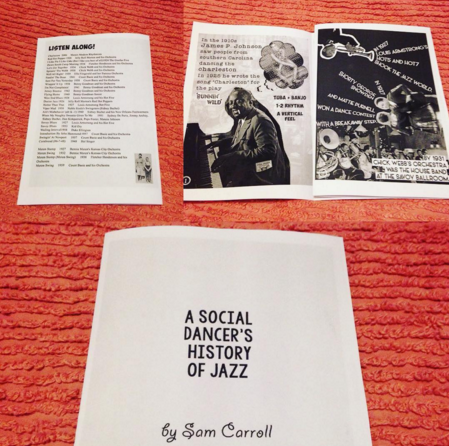
jazz zine

Screen Shot 2016-03-09 at 10.53.26 pmScreen Shot 2016-03-09 at 10.53.12 pm

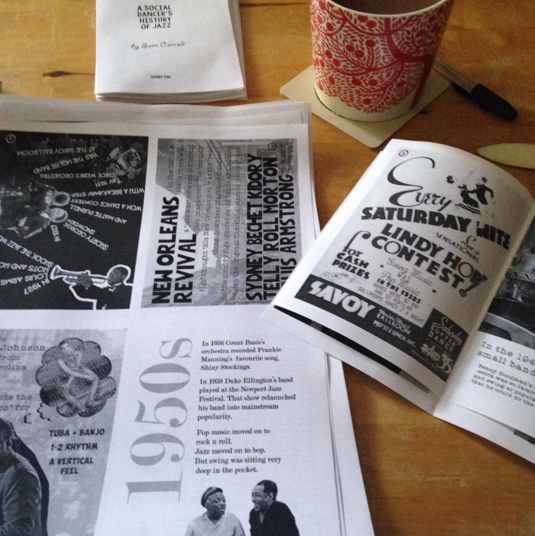
My jazz nerdery has reached (glorious) new heights.
This genuine jazz zine (accompaniment to our jazz history class) can be YOURS for the grand sum of 50AUc. PM to find out how to get it to your house.

Now available ONLINE as my journey into capitalism continues: http://swingdancesydney.com/shop.html
Price: now incredibly high (to cover postage), but also with the added incredible experience of receiving actual PAPER MAIL