Assessing the ‘success’ of a class

There are many ways of assessing the ‘success’ of a class. Because most lindy hop events work on a tight budget, we tend to assess the success of a dance class by numbers in classes, and how much money we make. But large class sizes aren’t necessarily a good gauge for other factors. And we’ve all realised that there aren’t buckets of cash to be made in lindy hop, particularly not if you’re in a nation like Australia, which has relatively low population density in the most active lindy hopping demographics.

We can assess the success of a class using all sorts of criteria, and these criteria are developed through our own teaching, dancing, social and political goals.

Rather than asking ‘”How much money did we make this week?” we could be asking:

  • Are teachers happy with their working conditions?
  • Are students demonstrating a level of ability commensurate with other similar cohorts (eg how do they measure up when compared to interstate dancers)?
  • Are students social dancing, and if they are, are they happy to dance with strangers?
  • Are students entering competitions?
  • Are teachers voluntarily attending workshops and pushing their own learning?
  • Are teachers competing?
  • Are teacher or students traveling to dance?
  • Do we have equal numbers of leads and follows?
  • Do we have female leads and male follows in classes, social dancing and in competitions and performances?
  • Are dancers demographically diverse: are they all one age, class, ethnicity, or are they more mixed?

I’m certain that we’d not all agree on which questions are most important, and that our questions would change as our own interests and our own scenes changed.

Despite these differences, most lindy hop scenes require a critical mass to be socially and economically sustainable. We have to pay our bills, and we have to provide safe, happy dancing environments. And, for most of us, a viable lindy hop scene has a strong, stable social dancing culture. In other words, there are happy, healthy dancers out social dancing, and the bills get paid each week.

But these goals – social dancing and financial viability – are often not enough for most of us. If each week’s class is a painful struggle to cover the bills, then teaching becomes a painful act of martyrdom ‘for the community’. Or financially frightening. And a small class becomes a source of shame or dissatisfaction.

Your specific goals – as a teacher, a student, a studio manager – will be dependent upon your local scene, and your personal priorities. It’s worth taking a moment to lay out some goals, and to think about the things you value most about a class or your local scene. And how you might contribute to their success.

For my classes, I found that my pleasure and satisfaction in teaching grew exponentially when I stopped worrying about the students who weren’t coming to class, and started cherishing the students who were. I now regard small classes as a luxury, and large classes as requiring a different teaching and social skill set. I also find developing class content and syllabus an exciting opportunity to put into practice the new material I learn in workshops. Or, conversely, I see workshops as a rich hunting ground for new ideas and exciting opportunities to expand and develop my own dancing skills and knowledge base – for my students, and for my own teaching satisfaction. Being able to absorb, comprehend, apply, integrate, and then communicate new knowledge has given me new interests and challenges in my dancing. Not to mention a great deal of pleasure.

The most important thing I’ve discovered about assessing a class, is: cherish every student. Don’t think about the students who aren’t there, think about the ones who are. Value their progress, their personalities, their delight in dance. Treat classes as a chance to share fun stuff, and to meet interesting people.

Below is a list of qualities or issues that I think about when I assess my own classes. This list isn’t exhaustive, these are just some of the things I’ve been thinking about lately. And I’m finding that teaching solo dance isn’t quite like teaching lindy hop. There are different teaching skills needed, and these skills in turn shape my lindy hop teaching. Your list may be (and is likely to be) entirely different.

Looking at Students

Superficial assessment – Over the course of one class:

A weekly class (beyond the drop-in ‘swing intro’ class):

  • Have most people ‘learnt’/’got’ the move (ie assessing technical ability)?
  • Are people enjoying themselves?

The drop-in ‘swing intro’ class, the wedding class, the large public festival PR gig:

  • Is everyone smiling and having fun (aka is it incredibly noisy in the room)?

One-off workshop with a group I mightn’t see again:

  • Have people learnt some of the moves, most of the concepts, discovered something new?
  • Are they taking away puzzles or concepts to work on in their own time?
  • Do people feel good about the class?

Superficial assessment – Over 6 weeks:

A weekly beginners class:

  • Have the students developed basic fitness (ie can they make it through a class and still be concentrating, engaged with content), and has this level of fitness slowly improved over the 6 weeks?
  • Do they have basic core stability (ie can they charleston alone without wobbling, can they turn their bodies in space with confidence (eg circle), can they lead/follow (maintain connection with a partner) while doing charleston, circle or other steps?
  • Have they begun to develop an awareness of how their bodies work, and how to use them (eg if we say ‘stand on your right leg and touch your left shoulder’ or ‘do this’ while demonstrating, can they do this)?
  • Are they beginning to learn things faster? This speeding up usually happens at the ‘threshold point’ (about 6 weeks) where they move from stumbling between steps, to making a sudden leap forward in skill. This is always relative to each individual student’s needs/abilities/age/etc, so you’ll always have a diverse cohort (hopefully!), but the entire group should see improvements at a particular number of weeks. My goal for each class: some things should be ‘easy’, some ‘challenging’, and at least one thing should be ‘unfinished’ and needing some extra work or thinking. The pacing of individual classes (and how much and what type of content should be dealt with during what period of time) is a different matter, and requires masses of experience.
  • Are they aware of ‘basic’ levels of leading and following (eg extension, shared bounce, relaxed upper bodies)?
  • Are they making clear weight changes?
  • Are they confident with basic rhythmic components (eg step step, rock step in various directions, keeping feet under body; triple steps; stomp offs; charleston; jig walks)
  • Are they confident with (or will they cheerfully attempt/explore) basic rhythmic sequences (eg step step, triple step; step step, triple step, triple step; charleston).
  • Are they confident with (or will they cheerfully attempt/explore) basic rhythm breaks (eg johnny’s drop, mini-dip, Lennart break)?
  • Do they have a fundamental repertoire of historic lindy hop steps (eg swing out from closed to open, swing out from open to open (lindy turn), circle, SBS charleston, basic 6 count shapes (under arm turn for lead and follow, moving from open to closed)?
  • Can they count themselves in at the beginning of a phrase?
  • Can they find the beat, bounce in time, match their partner’s bounce, and then begin on 1 (or wherever) with confidence and solid connection?
  • Will they cheerfully attempt a range of tempos, and have moderate success at most (slow as well as fast)?
  • Are they beginning to express an interest in the songs played in class?

A weekly ‘level 1’ class (ie the class after beginners)

  • Are they discovering more complex leading and following skills:

-> compression,
-> shared bounce and matching bounce,
-> relaxed upper bodies,
-> not collapsing shoulders,
-> moving core as extension of connection through body (especially follows),
-> are they aware of and able to work with the follow’s delay, and to build this into the ‘swinging’ timing (especially leads)

  • Have the students moved beyond ‘shapes’ and begun thinking about and applying broader technical themes (eg big themes: bounce, engaged body, clear weight changes, the ‘reciprocal connection’ (where follows return the lead’s pressure, and where leads learn to read this return of pressure), etc).
  • Are the students starting to experiment with musical styles, and to explore the way swing, accent, phrasing, and beat vary?

A weekly workshop or practice session for intermediate solo students:

  • Are students comfortable turning in space (eg dancing facing different directions)?
  • Are students comfortable moving through space (eg FOTL)?
  • Are students experimenting with and feeling ok about turns and spins (eg lock turns) and spin with some confidence?
  • Are students comfortable with starting at 8 or 1 or anywhere?
  • Are students making clear weight changes (thus facilitating transitions)?
  • Are students comfortable making mistakes, and experimenting with the ‘wrong’ versions of steps?
  • Are students solid with bounce, core engagement, not collapsing into moves?
  • Are students remembering medium length sequences of steps?
  • Are students comfortable with (or interested in exploring and experimenting with) substantially higher or lower tempos, more complex musical structures, and different styles of swing and jazz music?

Looking at venue/class viability:

  • Is the class paying the rent?
  • Is the class paying the teachers a minimum of $20 an hour each?
  • Is the class paying the costs of promotion, administration, insurance, etc?

->what is the minimum number of students required to cover these costs? eg 20 students @ $15 = $300 for 1hr rent ($50), 2 hrs teaching ($40), admin and insurance ($10), PR ($10)

  • At what point does a class become ‘too big’? Optimal teacher:student learning environment is 20:2. Do you add an extra class when the group gets ‘too big’, do you adapt your current format to accommodate larger groups, or do you just carry on the same way, regardless?
  • Is there a solid cohort of regulars, and what percentage of the weekly income do they constitute (ie how many regulars do you need to make your class numbers stable – 10 from a class of 20?)
  • How does the class weather seasonal variations – can you handle the inevitable numbers drop when daylight savings kicks in? If there’s a day of warm sun after weeks of rain, can you cover your costs? Are you ready for the jump in numbers at the beginning of the year?
  • Do you have strategies in place for periodically boosting numbers and generally keeping a public profile (eg promotional coupons, public dance gigs, etc), and are they adding too much, too little or just enough extra work to your workload?

Looking at teacher work satisfaction:

  • Have the teachers moved beyond nerves and ‘figuring things out’ to confidence, calm teaching vibe and a relaxed, pleasant teaching experience?
  • Are teachers working with a regular cohort, so getting a sense of achievement and satisfaction from students’ development and progress?
  • Is the teaching partnership happy, healthy and satisfying (do the teachers feel confident introducing new ideas, to giving and receiving feedback together)?
  • Are the teachers both ok with managing time and class progress in class (ie are they running to time or over time?)?
  • Are both teachers ok with ‘leading’ the class on their own if necessary, or in being the more active lead teacher if the other is feeling rough and needs to take a back seat that night?
  • Have the teachers reached a point where both are contributing equally, both listen to each other in class (and do not interrupt each other), both demonstrate good working partnerships to classes (eg how to give and receive feedback, how to explore a challenge together, how to give and receive appreciation)?
  • Do the teachers feel ‘inspired’ – are they experimenting with new content, AND integrating this into the syllabus smoothly and confidently?
  • Are teachers balancing new content with ‘old’ content, so developing a sense of ‘core skills’ for LH?
  • Are teachers managing injuries and physical pressure of teaching effectively – ie are they nursing injuries, feeling exhausted the next day, or not getting enough sleep, or are they in good physical condition, recovering well the next day and sleeping well?

Looking at venue-teacher relationships:

  • Is the venue happy with the arrangement? How do you know (do you see them often)?
  • Do yo know the venue manager/owner’s name and have regular contact with them?
  • Is the class meeting the venue’s needs (eg financial, cultural, creative, political)?
  • Is the venue ‘working’ for the class: is it too noisy for a class? Too small? Too hot? Well located for public transport? Decent sound gear? Too expensive for the class sizes?

Looking at class culture:

  • Is there a regular core cohort of students who are peers/friends?
  • Is there someone to work the door, who does so enthusiastically, and with a friendly, welcoming tone?
  • Do teachers enjoy teaching (eg do they look forward to classes, or do they make excuses not to go, or have to convince themselves it’ll be good?)?
  • Do students feel challenged enough by content (eg do they have clear goals for their learning, and clear pathways to those goals (eg moving from beginners through level 1 to level 2))?
  • Is there a stable class culture (eg a shared sense of humour and values, a cheerful willingness to learn, an interest and enthusiasm for challenging content, patience (from teachers and students) with new and challenging content)?
  • Do students and teachers seek out new ways to contribute to class (eg bringing baked goods, DJing, organising out-of-class outings (eg to social dancing), going to drinks after class, wearing particular costumes or outfits, bringing questions about particular dance issues to class, requesting specific class content)?


As you can see, these are far-reaching and often contradictory questions. Not all of them are high on my list of priorities, and not all of them have to be ticked off for the class to be considered ‘successful.’ I think my main priorities are safe classes, where the bills get paid (including teachers being paid), class content has some historical veracity (ie jazz and swing music are played, the classic lindy hop steps are explored, rhythm is at the core of everything we do), and people (students and teachers) enjoy themselves.


A word about successful feminist classes

If you’ve been reading this blog for any length of time, you’re probably wondering why I haven’t talked about gender in any of these points. This is because I see gender equity as a natural consequence of safe, equitable classes. I approach all the events I run with the goals of good, safe, happy, healthy, inclusive, inspiring, interesting, friendly, accessible dance spaces for everyone. I’m continually asking myself ‘How can I do this better?’ and ‘How can we make sure that everyone enjoys what we are doing?’ And I’m asking these questions because happy, confident dancers are creative dancers. If you encourage a culture of innovation and creativity, supporting other people’s projects and sharing your own, you can make your local scene more interesting. To my mind, the perfect lindy hop scene is continually evolving, doing new things, discovering new music, trying new venues, choreographing new routines, pushing themselves to become better dancers or teachers or DJs or event managers or vintage fashion fiends. Just generally feeling creative and excited.


These priorities mean it’s important to be flexible and self-reflexive, willing to try new things, to entertain new ideas, and to untangle your own preconceptions about students, classes, teaching, music, events, and dance.

I think it’s also important to remember that sometimes people aren’t happy, that not everyone becomes a brilliant dancer, and that sometimes a class just falls flat. But all those things are ok: a weekly class that’s safe and friendly might be very important to that person who’s struggling with depression and deep unhappiness. Their goal might be ‘get out of the house once a week’, and if so, your class is a success for them. Students progress at different rates, and while some people might pick things up quickly and amaze you all, the student who doesn’t ever actually become a ‘star’ but who cheerfully comes along to class regularly, gradually adding to their list of skills or experiences is still achieving. Their goal might be ‘have some lols and maybe learn to clap in time.’ Achieving modest goals is just as satisfying as achieving huge ones. Not every class you run will be fabulous. Sometimes you just suck. Your jokes are forced and rubbish, your explanations are unclear, your own dancing is wrongtown. Shit happens. So long as you pick yourself up and carry on, work on the things you can change (work on your own dancing! stop telling jokes! stop talking so much!), and just enjoy the company of good people, you have fulfilled some fairly satisfying goals.

I think it’s a powerful way to approach running dance events: seek out delight. For yourself, and for others. It makes for better dancing (because happy dancers are relaxed dancers, and relaxed dancers are just better lindy hoppers), but it also makes for better communities. Because unhappiness, frustration, rage, disempowerment, resentment, all that stuff is just rubbish. I have no time for that shit.


In practical terms, this means being cognisant of the way I use language in class, of the way I do things like handle partner rotations, dividing the group into lead and follow, and so on. Luckily, lindy hop and jazz dance are naturally very good at enabling resistance. All vernacular dances are about change, mutability and active use-value. Jazz dance, as the product of a people who’ve experienced slavery and segregation, positively delights in breaking rules, in innovation, and in thinking against the grain. Jazz dance, as a response to jazz music, is about individual representation and innovation within structures and constraints. The thing that makes all this so interesting and so wonderful is that jazz requires new thinking, new thoughts.

For example, the idea that to become a good lindy hopper, you must be able to solo dance is exciting: it suggests that if we are going to teach side by side charleston, we must first be able to charleston alone. If we’re going to be able to swing out, we must first be able to find the beat, dance a rhythm and move through space on our own.
And when we dance alone, we get to know ourselves a bit better, to feel confident in our abilities, and so enter dancing partnerships with more confidence and joy. So it makes sense to structure your class in a way that puts solo dance first. To have your students make friends with the music before anything else.

In terms of a political project, developing each student’s sense of self worth and making it easier for them to hone their individual skills is an important way of empowering people. And for women and men exploring gender, knowing we are all important and valuable and capable of great creativity outside a heteronormative relationship is truly powerful and radical. It says to men that they can explore all the ways there are of being a man, as well as, and beyond, those ways that are a response to women. They needn’t be ‘in control’ of anyone but themselves. And women, of course, can see that they don’t ‘need a man’ to be complete; they can experiment with independence, bravery, physical risk and physical pleasure on their own.

So, I guess I feel that solo dance is essential to the success of socially sustainable lindy hop scenes, as well as lindy hop classes and individual lindy hoppers. I believe that we cannot teach successful partner dancing classes without a strong emphasis on individual confidence, ability and delight in dance. And if that isn’t a feminist manifesto, I don’t know what is.

And when it comes to assessing the success of a class, it helps to have a set of criteria, for yourself, your students, and your place in a broader community. Be kind to yourself, be kinder to your students, and remind yourself that every day you dance is a day well spent.


More than gender neutral language

Update on using gender neutral language in class:

It’s easy.

I like it.

It’s no big deal.

So now I’m taking it a step further. Yes, there is a point beyond gender neutral language.

I find that I don’t like referring to ‘the follow’ or ‘she’ as though they were some sort of universal object or being, while I’m teaching. I prefer to use my teaching partner’s name. For example, I might say, “If I want *partnername* to move straight ahead, then my right hand pushes (gently!) in that direction, and *partnersname* moves that way. What does it feel like for you, *partnersname*?”

I think that this stops me making massive generalisations about leading and following and dancing, and encourages me to think about how each dance is a unique interaction and negotiation of space and time and rhythm and creativity with each partner. Which if course is the point, right? That’s why we go social dancing – to really sample as wide a range of experiences as possible? Or is that just the hippy in me?

I mean, last night we were teaching double top turns to complete noob dancers, and I found myself explaining in abstract terms why you don’t (as a lead) hold your partner’s hand too high above their head: because it’s uncomfortable. I reached a point where I was just annoyed by myself and said, “Look, this is just common sense, right? You’re gentle with your partner and don’t twist their arm behind their back because that’d hurt them? Stay with them, watch out for them, watch them, because that’s the nice way to dance.”

Sometimes we (meaning me) seem to pursue these abstract essential universal qualities of ‘good dancing’ as though they were divorced from the actual humans involved. I mean, the reason why we make sure the follow’s hand isn’t too far above their head isn’t mostly about good technique. It’s mostly because we are trying to stay ‘connected’ (in a social sense) with our partner, and not hurt them. We want to be with them in a personal as well as technical sense. The pragmatics of this (ie where you actually position your joined hands), is a consequence of this recognition that your partner is a whole, complete human. Someone you want to get to know, if only for three minutes. And as a lead, the follow is trusting you to watch out for them. So it just feels like the right thing to do is to justify that trust by not being a dick.

There is no universal, fixed ‘correct’ way of dancing (ie you don’t hold your joined hands an exact 170cm above the ground and 80cm in front of your face). Partner dancing is about negotiating a series of ongoing, constantly changing relative positions and relationships. My partner takes large steps because I take large steps. I lift my right hand higher on their back because they are taller than I am, and than my last partner. I stop dancing like a crazy adrenaline fool, and take more care and pay more attention if my partner is heavily pregnant, or feeling a bit unsure. I begin each dance with some time in closed, so we can get connected and ‘get in tune’. If I feel them disliking what I’m doing, I stop and try something new. I’m constantly alert to the possibility that they might bring something consciously, or that their change in weight or timing might inspire me to try something new. And that I can then integrate that into our dance. This is much more than a conversation (and what a boring, limited idea that is). This is a dance.

And this is why I think I’m happier saying “I do blah blah if I want *partnersname* to do X” rather than “I do blah blah if I want the follow to do X.”

Let’s put the gender back into the description: “I do blah blah if I want her to do X” or “I do blah blah if I want the woman to do X”, then this depersonalising and essentialising is made even clearer. My partner is defined by her/their gender, rather than their role or even their individual personality. And this essentialising discourages you from thinking of all of your partners as unique people, and each dance and dance partnership as a series of compromises, adjustments, active engagements and meetings of mind.

So, you know, adopting gender neutral language is just a tool, or a gateway to much more exciting thinking and dancing.

[An aside]
As I re-read this, I wonder if this bizarrely abstract, technical approach to teaching is culturally specific. I’d suggest began in the 2000-2003 period, partly because some people got obsessed with technique, micro-level leading and following, groove (and the slower tempos which made all this possible) and blues dance. And most of these dancers came to lindy hop with no dancing, and almost certainly no partner dancing experience. They also tended to be people from technical or academic backgrounds: IT workers, programmers, etc etc. People who like to logic their way through problems. People who mightn’t (and here is where I make a gross generalisation) have much experience touching and interacting with other humans in a physical way. Beyond sex. So they needed to invent a ‘technology’ for partner dancing.
When if you had grown up with touching other humans, with partner dancing and dance in everyday, normal, ordinary spaces, as part of your ordinary day, you’d be all “Well, durh, if I do this dick like thing, my partner won’t want to be my friend/gf/bf and that’d be crap.”

Now, however, as we move into what’s really functioning as the second or even third wave of lindy hop revival, partner dancing has become so normalised, so much a part of normal life and social interaction, you don’t need to explain every little thing in tiny detail. You can be much more pragmatic and socially oriented.
I mean, one question we get repeatedly from brand new dancers in class is “We did this move, now the handhold is weird – how do we fix it?! [paniiiic!]” I love this question, because the answer is beautifully simple: “If the handhold feels weird, just change it.” And everyone lols, because it’s funny that we’ve gotten so caught up in the mechanics of what we’re doing we’ve forgotten how to hold hands. Of course, the nicest part of all this talk about hand holds is that if you preface all your thinking about hand holds with “Have relaxed, gentle hands, and be cool with letting go of each other,” then you quit worrying about hand holds and get on with feeling the good adrenaline feels.

This all really brings me back to that point: if you’re used to holding hands with people, you’re pretty comfortable with figuring out how to make a hand hold work. But if you’ve never walked down the street holding someone’s hand, or never touched someone casually, or never partner danced, then you are acutely aware of hand holding and are paralysed by HOLYFUCKHOWDOESITWORK!?! panic.

[/aside]

[aside 2]You know why my posts get so long? Because I start writing and thinking, and write as I think, and one idea just prompts another, and another and another, and suddenly the post is a million words long and my brain feels like it on fire with ideas. A long post is the sign of a happy and excited brain.[/aside2]

8tracks: Swingin’ at the Peebs

Swingin' at the Peebs from dogpossum on 8tracks Radio.

Here are some songs we play a lot in our classes. For our beginner lindy hop and our solo classes.
I’ve just uploaded the songs randomly because we tend to play them randomly in class.
Songs:

(title artist year album length)
A Viper’s Moan Willie Bryant and his Orchestra (Teddy Wilson, Cozy Cole) 1935 Willie Bryant 1935-1936 153 3:26

Laughing In Rhythm Slim Gaillard and his Peruvians 1951 Laughing In Rhythm: The Best Of The Verve Years 142 2:56

Laff, Slam, Laff Slam Stewart Quartet (Erroll Garner, Mike Bryan, Harold ‘Doc’ West) 1945 Bowin’ Singin’ Slam 156 2:59

Drinkin’ Wine, Spo-Dee-O-Dee Lionel Hampton and his Orchestra with Sonny Parker 1949 Hamp: The Legendary Decca Recordings 134 3:24

Fiddle Diddle Lionel Hampton and his Orchestra (Walter Fuller, Omer Simeon, George Oldham, Budd Johnson, Robert Crowder, Spencer Odom, Jesse Simpkins, Alvin Burroughs) 1938 The Complete Lionel Hampton Victor Sessions 1937-1941 (Mosaic disc 02) 143 3:24

I’se A Muggin’ Le Quintette du Hot Club de France (Stéphane Grappelli, Django Reinhardt, Joseph Reinhardt, Pierre Ferret, Lucien Simoens, Freddy Taylor) 1936 The Complete Django Reinhardt And Quintet Of The Hot Club Of France Swing/HMV Sessions 1936-1948 (Mosaic disc 01) 176 3:08

Goin’ Out The Back Way Johnny Hodges and his Orchestra (Ray Nance, Lawrence Brown, Harry Carney, Duke Ellington, Jimmy Blanton, Sonny Greer) 1941 The Duke Ellington Centennial Edition: Complete RCA Victor Recordings (disc 12) 155 2:44

Stompin’ At The Savoy Jimmy Dorsey and his Orchestra 1936 Swingsation: Charlie Barnet and Jimmy Dorsey 162 3:12

Cole Slaw Jesse Stone and His Orchestra Original Swingers: Hipsters, Zoots and Wingtips vol 2 145 2:57

Sad Sap Sucker Am I Fats Waller and His Rhythm (John Hamilton, Gene Sedric, Al Casey, Cedric Wallace, Slick Jones) 1941 The Last Years (1940-1943) (disc 02) 142 3:03

All That Meat And No Potatoes Fats Waller and His Rhythm (John Hamilton, Gene Sedric, Al Casey, Cedric Wallace, Slick Jones) 1941 The Last Years (1940-1943) (disc 02) 143 2:47

B-Sharp Boston Duke Ellington and his Orchestra 1949 Duke Ellington and his Orchestra: 1949-1950 126 2:55

Lawdy Clawdy The Cats and the Fiddle 1941 We Cats Will Swing For You Volume 2 1940-41 148 2:57

Fan It Bob Wills 1936 San Antonio Rose [disc 02] 151 2:42

Flying Home Benny Goodman Sextet (Fletcher Henderson, Charlie Christian, Artie Bernstein, Nick Fatool, Lionel Hampton) 1940 Charlie Christian: The Genius of The Electric Guitar (disc 1) 167 3:16

Bearcat Shuffle Andy Kirk and his Twelve Clouds of Joy (Mary Lou Williams) 1936 The Lady Who Swings the Band – Mary Lou Williams with Any Kirk and his Clouds of Joy 160 3:01

This is the second playlist, because it was all a bit huge in one, and because we play a LOT of Fats, Hamp and Slim and Slam.

Swingin' at the Peebs #2 from dogpossum on 8tracks Radio.

Song list:

Slim’s Jam Slim Gaillard and his Orchestra (Bam Brown, Zutty Singleton, Dizzy Gillespie, Charlie Parker, Jack McVea) 110 3:17 The Legends of Savoy, Vol. 2 1945

My Baby Just Cares For Me Nina Simone 120 3:38 The Great Nina Simone

Lemonade Louis Jordan and his Tympany Five 117 3:17 Louis Jordan And His Tympany Five (vol 5) 1950

Don’t Be That Way Lionel Hampton and his Orchestra (Cootie Williams, Johnny Hodges, Edgar Sampson, Jess Stacy, Allen Reuss, Billy Taylor, Sonny Greer) 136 2:36 The Complete Lionel Hampton Victor Sessions 1937-1941 (Mosaic disc 02) 1938

Hey! Ba-Ba-Re-Bop Lionel Hampton and his Orchestra 135 3:21 Hamp: The Legendary Decca Recordings 1945

Wham Johnny Hodges and his Orchestra (Emmett, Berry, Lawrence Brown, Al Sears, Leroy Lovett, Lloyd Trotman, Joe Marshall) 140 3:07 A Pound of Blues 1952

Peckin’ Johnny Hodges and his Orchestra (Cootie Williams, Barney Bigard, Otto Hardwick, Harry Carney, Duke Ellington, Fred Guy, Hayes Alvis, Sonny Greer, Buddy Clark) 165 3:10 The Duke’s Men: Small Groups Vol. 1 (Disc 2) 1937

Moten Swing Jay McShann’s Kansas City Stompers 192 2:57 Kansas City Blues 1944-1949 (Disc 1) 1944

Hootie Boogie (1945) Jay McShann 148 2:55 Jay McShann: Complete Jazz Series 1944 – 1946 1945

Answer Man Harry James 143 3:47 New York World’s Fair, 1940 – The Blue Room, Hotel Lincoln, 1940

Functionizin’ Fats Waller and his Rhythm (Herman Autrey, C.E. Smith, Eddie Anderson, Fred Robinson, George Wilson, Rudy Powell, Gene Sedric, George James, Emmett Matthews, Fred Skerritt, Hank Duncan, James Smith, Charles Turner) 177 3:07 I’m Gonna Sit Right Down: The Early Years, Part 2 (disc 02) 1935

Fat And Greasy Fats Waller and his Rhythm (Herman Autrey, C.E. Smith, Eddie Anderson, Fred Robinson, George Wilson, Rudy Powell, Gene Sedric, George James, Emmett Matthews, Fred Skerritt, Hank Duncan, James Smith, Charles Turner) 162 3:11 I’m Gonna Sit Right Down: The Early Years, Part 2 (disc 02) 1935

Spinnin’ The Webb Chick Webb and his Orchestra (Louis Jordan) 132 3:08 Stomping At The Savoy (disc 4): Spinnin’ the Web 1938

Easy Does It Big Eighteen (Billy Butterfield, Buck Clayton, Charlie Shavers, Rex Stewart, Lawrence Brown, Vic Dickenson, Lou McGarity, Dicky Wells, Walt Levinksy, Hymie Schertzer, Sam Donahue, Boomie Richman, Ernie Caceres, Johnny Guarnieri, Barry Galbraith, Milt ) 129 5:14 Echoes of the Swinging Bands 1958

A Mellow Bit of Rhythm Andy Kirk and his Twelve Clouds of Joy (Mary Lou Williams) 158 3:20 The Lady Who Swings the Band – Mary Lou Williams with Any Kirk and his Clouds of Joy 1937

Here is the pic in full, because it was super fun to make. The dog (Buster), stuffed fruit bat (unnamed), and carpet pattern are all from the Peebs. The Peebs has a hand-pump and specialises in interesting beers. It is a lawn bowls club, where you can roll a few balls.

PBicon-small

all of the things

It’s 14*C here, but it feels 7, which is VERY COLD for Sydney. I hate the cold, which is why I didn’t like living in Melbourne, where the lindy hop is better, but the weather is not.

Bronte-Beach-6

Sydney is beautiful. It is that city you see in the tourism ads – beautiful beaches a short city bus trip from the CBD. It has all the culture stuff Melbourne does, only people in the galleries and bars and music venues are wearing thongs or tshirts and their scarves are affectations not necessity.

leighbarker6

I really don’t have much to write about right now. I’m a bit busy – got a few events to run (three at last count), classes tonight to prepare for, practice tomorrow to think about. But I do have a new CD or two. I saw lovely Leigh at Unity Hall on the weekend and he gave me his band‘s new CD ‘Australiana’. It’s not danceable music at all, which is really quite nice.

midnightserenaders2

My copy of the Midnight Serenaders‘s new CD ‘A Little Keyhole Business’ arrived, and it’s not so great, which is disappointing. I reckon their second album is the best. But they’re a fun band, and I bet they’re superfun live, so it’s nice to support them.

I’m waiting on a CD or two from a Very Famuss Musician to arrive. Their publicist asked if I wanted one, and I assume she wanted me to review it or talk it up or whatevs. I’ll write a review when it gets here, and we’ll see what it’s like. I have to say: there’s nothing more exciting than a Very Famuss Musician you admire asking if they can send you a copy of their CD. Even if it is their publicist asking.

[Meanwhile, I’m listening to the New Sheiks’ new CD ‘Australiana’ right now, and it’s so very good. I had thought about writing a post about the way I/we listen to music across genres, and how musicians play across genres, and how that’s important, but I don’t have the brain for it right now.]

The little red counter on my email icon keeps ticking over. People are responding to the storm of emails I sent out yesterday. I’d finally gotten it together after a couple of weeks of dodgy health, and did some admin work. Working those contacts. The biggest part of my workload is maintaining contacts. With musicians, with venues, with other event organisers, with sound engineers, with visiting (or possibly-visiting) dance teachers, with local dancers, with artists and designers… there’s really a lot of leg (and mouth) work to be done. Lots of people to talk to and telephone and email. And nothing’s harder when you’re feeling a bit rough than getting it together to have a sensible conversation with someone you don’t really know.

I’ve stopped reading a lot of the blog posts and bits and pieces discussing gender in the lindy hop world. Mostly because most of them aren’t terribly good. I don’t think everyone should learn to lead and follow. But I do think every lindy hopper should be able to solo dance competently and confidently. You can draw your own euphemism if you please. I don’t see the point in arguing for women leads. If you can’t accept the fact that women are as competent leads as men, then you probably don’t know much about lindy hop. Or men and women. And you aren’t worth my time. Women should just lead if they want to. The end. I reckon it’s more important for the male leads to realise just how much better most of the women leads around them are, and lift their game. More importantly, particularly in scenes with fewer leads than follows, the male leads need to get up off their arses and lift their game: the women dancers around them are so much better than they are, they’re turning to solo dance out of desperation. Desperate for a challenge. In sum, the best way to maintain the heteronormativity of lindy hop is for men to be really fucking good leads. Right?
No, I’m not convinced either.

I haven’t done a heap of DJing lately. The Roxbury, one of Sydney’s only proper dancer-run lindy hop events has folded forever. Sad times. That was my favourite DJing venue. There’s still Swing Pit, but I quite liked having an event I could go to and have no responsibilities – just turn up late if I wanted, dance as much as I wanted, leave when I wanted. And if there was a problem with the sound, I didn’t have to fix it.
ellingtonia1071
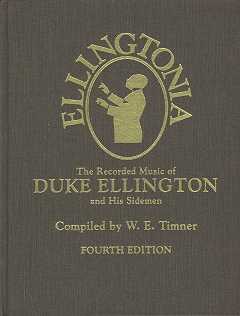
I did buy a copy of Ellingtonia, the Duke Ellington discography. It’s great, but the format of each entry is kind of annoying – instead of listing each musician by name, their initials are used. This sucks, because it means you have to flick back to the guide to figure out who’s who. Makes sorting your music collection really tedious. But then, I think it was hand-typed. It’s certainly self-published. So typing out every name would’ve been a bum.
Duke Ellington, aye. Just when I think I’ve gotten over him, I hear something new, and he draws me back in. I’m really enjoying him in 1941 atm. Again. My current favourite songs is ‘Goin’ out the Back way’ from ’41, which I heard a DJ playing in a smallish dance comp somewhere in the states or Canada. It’s the perfect lindy hopping song. Which of course is the perfect solo dancing song.

Solo dancing has really changed my perception of tempo and speed. Nothing’s too fast when you’re dancing on your own. Which I guess relates to the challenges of following: when you follow, you can’t really change the ‘speed’ or ‘tempo’ at which you and your partner are dancing. The lead gets to decide how many steps you both take. Whether you swing out like crazy people or just step gently through some nice rhythms. When you dance on your own, you get to decide everything. But this has also informed my leading lately. And I’m simply not a terribly talented follow. I would quite like to be a brilliant follow, but it just doesn’t gel for me. How even does following work?

Perhaps my biggest problem while following is that that I just forget I’m not leading, and I introduce steps or rhythms which are ignoring what the lead is doing. And that’s not cool, whether you’re leading or following. So, you know. Leading. That’s where my brain is at. I actually think that you have to decide whether you’re a lead or a follow, if you really want to level up your dancing.

Sure, you can do both and that’s cool. But if you want to get really good at one, you have to dance that one exclusively for a while at least. Because there’s a significant part of your dancing which isn’t conscious decision making. It’s an unconscious response to what’s going on. When I’m leading, I’m responding to what the follow is doing (where their weight is, the tension in their body, the shapes they’re making, the rhythm or timing they’ve got going on), and I respond by initiating something that develops their theme. When I’m following, respond by responding. Sure, I can bring my shit, but someone has to lead, and someone has to follow. They’re different roles, and particularly when you’re dancing at higher tempos, you gotta have a clear idea of who’s doing what. This opinion could really just be an expression of aesthetic preferences: I like to see a clear lead and follow in a partnership, not a muddied, blurry mutual exchange. Not because of politics, but because of physics and biomechanics. And rhythm.

Lennart Westerlund says this thing: “yes, you have the steps, but you do not have the rhythm. I cannot see the rhythm.” He said this about a million times while he was here, and eventually someone in a small teachers’ session asked him “Can you demonstrate the difference? I don’t understand what you mean by ‘see the rhythm’.” So he danced a phrase or two where the rhythm wasn’t clear. Then he danced a couple of phrases where it was very clear. It was quite stunning: I felt all my muscles jump and leap in a real, physical Pavlov’s lindy hopper effect.
So when I watch someone dancing, I don’t want to see a sort of vague blurring of steps. I want to see the rhythms, the shapes, the transfers of weight. I don’t just want to see which foot a dancers weight is on, I want to be able to see which part of the dancer’s foot is on the ground, and whether or not their weight is committed to that particular part of the foot. I want to see muscles recruited efficiently, and turned off when they’re not needed. I really want to see a nice, swinging timing. And I want to feel that leap and jump in my own muscles as I watch. So, I guess I want to see someone lead, and someone follow. I don’t care if you’re taking turns in each role during the dance, but you can’t both drive. Someone has to lead, someone has to follow. Doesn’t mean the follow isn’t also contributing (and I’ve gone into how in detail before). Means that you’re doing lindy hop, which prefers requires participation from each dancer.

Lennart says that too: “someone is leading and someone is following.” I don’t think he cared who was doing what (if he did, he was tactfully discrete with his opinions :D ), he just wanted to see a lead and a follow. But Lennart also made another lovely point: “I don’t want to be speaking all the time. That is boring. I want to hear what my partner has to say.” All of that is of course wrapped up in his phrase, “We must make friends with the music.” What a lovely thought: that we come together, as partners, through friendship with art and the creative work of other people.

HIPPIES!

To be honest, I’m still working through the concepts Lennart Westerlund introduced me to in May. Was it only two months ago? But Lennart’s relaxed, gentle approach to rhythm and timing has changed my brain. He could be dancing very simple, gentle, relaxed figures, but stuff them full of highly complex rhythms and timing. It’s a fabulous idea, and it’s something I’ve been thinking about for a couple of years, and which guides the content of our classes. I’m sure the more ‘intermediate’ dancers find it terribly boring and naff – they just want ‘new moves!’ when I’m thinking ‘moves shmooves – give me an outline and I’ll fill it in with far more interesting stuff.’

I’ve noticed that the very best lindy hoppers in the world (the Swedes, and Skye) tend to use a lot of quite simple figures, but their timing is supremely complex. And that complexity is dictated by the music. People like Ellington. ‘Rockin in Rhythm’, your phrasing is so difficult. Yes, they do use complex moves as well, but the fundamental assumption of good lindy hop is that a simple shape (a swing out, a tuck turn, a circle) is also something highly sophisticated if you make it so.

The thing I like about this relationship between simple and complex, is that these guys looks so relaxed when they dance. Everything they do looks easy. Until you try to reproduce it. There are quite a few dancers around at the moment who are quite fabulous, but their dancing looks so overwrought. They look like they’re Working. So. Hard. I want it to look so easy; I think ‘oh, I can do that’ and then I try, and realise that it’s not humanly possible. And of course, the relationship between ‘simple’ and ‘complex’ is a little like the relationship between ‘hot’ and ‘cool’. I’ve written about that a lot, so I won’t go into it again. Except to say, that the most important part of lindy hop is being relaxed in your body, until you need to turn a muscle or muscle group on, then that part of you is on.

I think that this is part of what makes the ‘swing’ happen. Don’t rush. We’re not rushing. We’re cool. We’re not hurrying. It’s uncool to hurry.

I didn’t mean this post to become a big spiel about dancing. I’m doing a LOT of reading at the moment. Stacks and stacks. I’m on GoodReads as dogpossum if you want to talk books. One of the things I am reading more of at the moment is comics. I’ve always been a bit of a low-level fan, but I’m frustrated by how quickly they read. I need more bang for my buck – at least more than an hour from a book.

I’ve been reading Wonder Woman lately, particularly the Gail Simone series starting with The Circle. LOVE.

wonderwoman_the_circle_cvr

I quite like the New 52 Wonder Woman

1170653

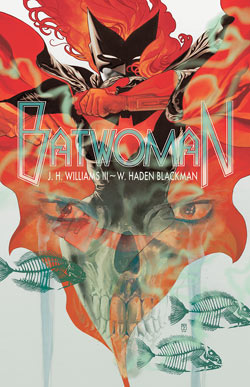
And I REALLY like the New 52 Batwoman. The art is just gorgeous.

250w_new_52_batwoman

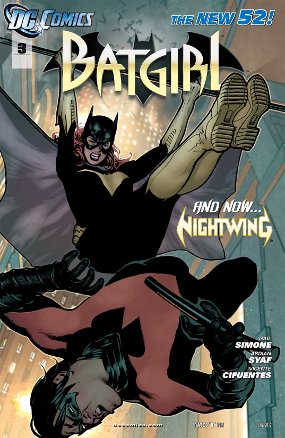
I wasn’t struck on the New 52 Batgirl (boring).

batgirl3

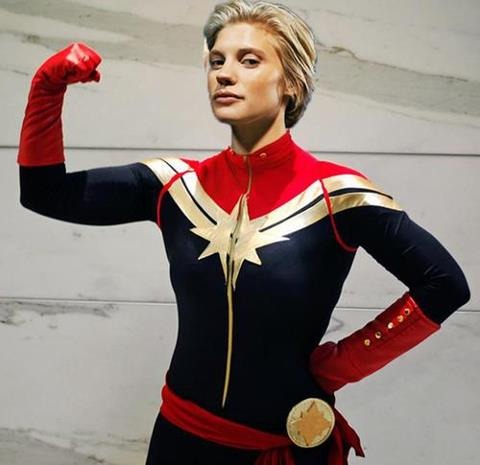
But of course, the new Ms/Captain Marvel is THE BEST EVER.

photo1

captain-marvel-3

And I am totally on this bandwagon:

tumblr_mmrx0anb7M1r4abjdo1_500

I’ve also been reading Saga, which I quite like, but I’m just not a Vaughan fangirl.

250px-Saga1coverByFionaStaples

I’m a fan of trade paperbacks because individual comics just don’t last long enough. And, to be honest, I find the writing in a lot of comics that I’m reading jus doesn’t come close to the good SF that I read. And I read a lot of SFic and SFant.

But Wonder Woman. She’s the best. Especially when she’s drawn by Cliff Chiang.

CliffChiangrunaways-dc-women-mash-up-by-cliff-chiang

Writing this post, I realise I’ve heaps more books and music and television too talk about! But I have things to do.

…so if you want to talk about Hemlock Grove or Teen Wolf or The Fosters or The Returned or Top of the Lake, assume I’m interested!

dancesplaining

ultracrepidarian
(image: “Ultracrepidarian: A person who gives opinions and advice on matters outside of one’s knowledge” from The Project Twins’ A-Z of Unusual Words)

I reckon this post about dancesplaining is good stuff. I like the way Jason expands the idea of mansplaining. Mansplaining is about power, and dancesplaining is about power. I like the way Jason has expanded the idea of explaining-as-power. He’s making the point that this act of power isn’t about biological sex, it’s about social power. This seems to be something that a bunch of commentary on sex and gender in dance getting about at the moment doesn’t seem to grasp.

In other words, while we might associate particular characteristics or qualities with masculinity or femininity (eg violence or aggression or technical know-how might be associated with masculinity in anglo-celtic discourse), they aren’t actually biologically determined. Men aren’t naturally aggressive or violent or good with tools (lol) because they have a bunch of testosterone or a dick or a brain wired in a certain way. Men often demonstrate violence or aggression or are the first to have a go with a tool because the society they grew up in encouraged them to be that way.

So mansplaining isn’t biologically determined, it’s an act of power, where the person explaining assumes they know more, and assume they have the right to speak/explain. When this explaining person is a man, explaining something to a woman, they’re often taking advantage of the fact that women in this same cultural context are brought up to be ‘polite’ and to avoid confrontation. That means avoiding interruption or telling an explainer that they already know this stuff. Avoiding conflict can also be about helping other people save face (and avoid embarrassment or loss of face/status). Many women help men save face to avoid conflict because in their experience conflict can often involve physical conflict: an angry, embarrassed man can be a violent man.

Danceplaining and mansplaining isn’t often malicious or deliberately dictatorial. It’s usually an unconscious demonstration of discursive power. Just as a man mightn’t stop to worry about whether that guy who just got on the train is about to sit next to them and make suggestive comments, a man who explains mightn’t stop to think about whether he should shoosh. In both examples, men have lived with the experience and idea that they will be safe on public transport, that they won’t be harassed, and that it’s ok to explore or explain their thinking out loud. Both of these public behaviours are about status, power and confidence in public space. They’re both also about the power of feeling safe enough to explore a new idea in front of other people.

If you want to have a bit of a read about the ‘mansplain’ concept, I suggest starting with Rebecca Solnit’s piece ‘Men Explain Things to Me: Facts Didn’t Get in Their Way’.

I like Jason’s piece because makes it clear that explaining – dancesplaining – isn’t necessarily about gender. While men might do it it women a lot in class, women quite often return the favour and explain to men why they’re doing things wrong. But I do think it’s about power, and I’d argue that certain types of power can be gendered (or associated with a particular gender identity) in certain contexts. So dancesplaining is often perpetrated more by men, and as most dance classes have more men leading than women, we see more leads/men dancesplaining to follows/women than vice versa. I’d probably add that a male lead teacher should be particularly careful not to paraphrase and repeat a point his female follow teaching partner has just made in class settings. That’s a type of mansplaining too.

Jason extends this thinking to explore how this type of behaviour in class affects the way we might think about leading and following generally.
I’d argue that dancesplaining (as a gendered behaviour) works with other gendered behaviour to create a continuum of gender and patriarchy. This is how discourse and ideology work: if it was just one little thing that bothered us (and we could fix with a quick solution), then feminism would be redundant within a couple of hours. But patriarchy is complicated. This is why I have troubles with the recent posts about ‘sexism’ on Dance World Takeover: the thinking is too simple, and the solutions are too simple. A reshuffling of ideas about connection isn’t going to magically solve sexism in a community. It might be one point at which we can engage with particular ideas about gender and power, but tackling that one thing this time will not quickly or easily ‘solve’ patriarchy.

If we are to engage with gender in the lindy hop world in a constructive way, we need to think about all sorts of stuff: clothes, notions of ‘beauty’ and ‘strength’, discussions about food and ‘health’, teaching practices, competition formats (eg how is a jack and jill competition judged, and how does this process articulate ideas about gender?), the role of solo dance, the place of aerials, how we manage and think about injuries and pain, ethnicity and race and how we think and talk about it in dance, talk about sex and sexuality in dance partnerships, labour relations and the role of ‘volunteers’ and unpaid labour, etcetera, etcetera, etcetera. Gender: it’s complicated.

This is why, though, I’m quite pleased by Jason’s piece. He takes one behaviour (or use of language and power), and then draws out the effects and related behaviours and thinking within a culture (and cultural practice). I’m especially delighted by the way he presents his own thinking and behaviour. This really is what I would call being a feminist ally. Doing feminist work. I am also very pleased by the way this thinking makes clear that feminist work can also be socialist work, and also be the work of pacifists and human rights activists. Feminism might be centred on gender, but we can’t talk about gender without also talking about economics, ethnicity, sexuality, violence, and so on.

I was especially delighted by this paragraph in the ‘establish permission’ section:

Both as a teacher and as a student, I have found it is often really helpful to approach first with a question along the lines of “Can I make a suggestion?” If he or she says “yes,” then we can proceed to having a discussion about it. If he or she says “no,” then I keep my opinion to myself unless that person is causing serious harm (in which case I might have led with something more direct like “I need to talk to you”). The act of asking for permission can feel a tad cumbersome but it respects the other person’s boundaries and gives them a moment to adjust to a state of readiness to hear feedback. It is the dance class equivalent of inviting someone to a performance evaluation rather than barging into their office and telling them they need to shape up or ship out.

I think this is a gorgeous illustration of how undoing the power dynamics (and hierarchies) of pedagogic discourse in dance can work to undo other dodgy power dynamics in a dance community. The class is, of course, where we socialise new dancers – where we teach them not only how to dance, but how to be in a dance community. It’s something I need to remind myself: though I might be a teacher, I don’t automatically have the right to correct someone’s dancing in class. And how I should correct them needs to be carefully thought about, to promote and encourage mutual respect.

If you’re curious, I’ve written other posts where I’m pretty much annotating the development of my ideas about teaching. I’m only new to teaching dance and boy am I making a lot of mistakes.
Dealing with problem guys in dance classes: where I write a huge, long, rambly post exploring my ideas about this, and nut out some strategies.
Self Directed Learning: where I look at alternatives to the formal dance class, and how this might destabilise hierarchies, and also complement traditional learning models.
teaching challenges: routines, structure and improvisation in class: where I remind myself that rote-learning is about power and hierarchy, and not in the spirit of lindy hop.
Teaching challenges 2: drilling and memorising: kind of like that previous post, but with some dodgy referencing of pedagogic lit.
Valuing the process rather than the product: where I talk about a bunch of things, but most importantly, about the importance of being wrong and making mistakes.

90 minutes

I have no evidence or further reading to support any of the claims in this article, but it’s interesting.

Basically, it argues: work for 90 minutes or less, then take a break. Then repeat.

I’m personally of the opinion that no meeting or class should be longer than an hour. After that, we start to get stupid. More importantly, an hour time limit forces you to focus and get shit done in a reasonable, structured way. No time to waste babbling on about rubbish.

I’ve used this approach in planning dance workshops weekends. I don’t let classes run any longer than 1 hour and 15 minutes, and I insist on a rest (of at least 15 minutes) between sessions. That rest has to include changing tasks – you’re not allowed to practice or film or whatevs. You have to eat or sit down or talk or go to the toilet. Doesn’t matter what it is, you’ve just got to change tasks.

This can be challenging if you’re teaching: when you’re in the zone, any break feels like an interruption that might ‘break’ the zone. But it’s really better to take that break, reset and come back in fresh.

When I’m writing, I usually sit down and write solidly for hours at a time. I forget to go to the toilet. I don’t eat. This is how I got my PhD done. But that sort of obsessive work isn’t helpful. Even if you do really enjoy that feeling of being in the zone, with the rest of the world blocked out.

I’m also of the opinion that a dance practice session shouldn’t be any longer than 90 minutes. And, unsurprisingly, I guess, I find 90 minutes is my optimal DJing set length. I can and have gone longer, but I find I get in, do good work, then come out a winner if I keep it to 90 minutes. A ten minute break in the middle… now, that would be good.

On fucking up in front of a crowd

tumblr_mkp8e8GmlC1qksquzo1_500
(pic by Beth Evans)

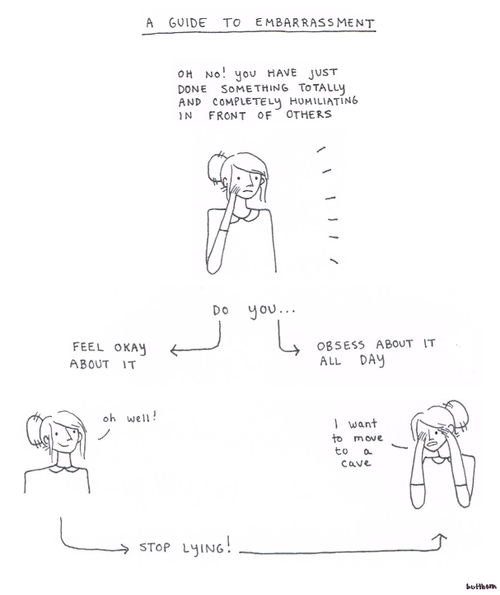
My first instinct, when discovering I’ve fucked up, is to hide the fact. You know, cover it up.
When I was first learning fall off the log, I’d been quite ill with flu, and it was a really hot, humid Brisbane night. I don’t quite know what happened, but everything went black, and I’m suddenly on my arse on the floor. I leap to my feet and carry on like nothing ever happened.
I’m fairly certain that everyone was onto me.

Since then, I’ve made huge, public errors in many ways, and in front of many different audiences. I’ve been the only person in a solo jazz performance fucking up the choreography (I’m usually the only person in a solo jazz performance fucking up the choreography). I’ve sworn loudly into a microphone at a large, public gig. And there was that time when I was at the end of a semester, lecturing for the first time, on my own, pounding out a lecture a week on a range of topics I wasn’t entirely comfortable with. We get to week 10, on The Media In War Time, and I realise, in an exhausted, confused and overworked daze, the night before the lecture, that there hasn’t just been one ‘gulf war’. Furthermore, I have no idea where Afghanistan is, beyond the fact that it’s somewhere ‘in the middle east’. So I go through the lecture and carefully reword things to be precisely imprecise on the geography of the region. I remember, as I’m banging on in front of a group of 200 bored undergraduates, exhausted and strung out on powerpoint, looking up and seeing that row of middle aged women students in hijab making the ‘what the fuck, young person?’ face. Madames, I’m afraid I had no idea what the fuck was up. And I apologise.

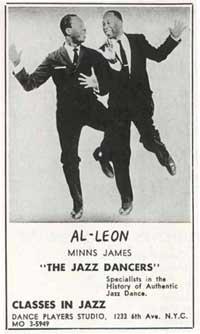
More recently (and most embarrassingly), in fact just this year, I realised that the dancer in this photo that I had thought was Al Minns, was actually Leon James:

safe_image

Fifteen fucking years of lindy hop, writing and talking about jazz dance, teaching solo jazz and pontificating about uses of history, and I find out NOW that that guy is NOT Al Minns, he is LEON JAMES. Face fucking palm, right?

At the end of the day, though there are really only a couple of ways you can respond to all this. You can leave, immediately, and never look back, retreating to some sort of solo jazz cave in the far western suburbs of Sydney. Or you can quietly continue teaching and crapping on, just with new facts, and never acknowledging your mistake. Who, me, not able to identify one of the most famous dancers of the age? No way, man, I am a SPECIALIST.

But all that kind of sucks. You just carry the shame of mistake around with you, feeling embarrassed and kind of anxious about the whole thing.

That’s all very tempting. But it’s also crap.

This is my preferred method:

Discover the Facts.

Groan. Shout a bit about my own stupidity. Scrabble around, double checking. Get confirmation from someone who Knows (aka a mentor type person whose opinion you respect). Suffer in my jocks for a bit. Then tell people, because it’s both excruciating and also hilarious. There really isn’t anything funnier than pride taking a fall, and usually the circumstances of that fall are totes funny. My general feeling about public humiliation is that it stops being painful and humiliating when you tell someone about it and make yourself laugh.

The freeking middle east, Hamface.

AL MINNS, Hamface.

But what if you are teaching a group of people you’ll be working with every week for the foreseeable future, and you realise you’ve given them wrong information, or you just don’t know the answer? And you’re trying to contribute good knowledge about dance history to your local scene, so we can stop listening to Wham at dances and making up horseshit about lindy hop history?

Probably the most helpful thing I’ve learnt about teaching was in a tertiary education teaching skills seminar, where we looked at the idea of teachers not as reservoirs of all knowledge, injecting it into students heads, but as guides to learning. The students are the ones doing the learning, and our job is to make that work easier for them.
With this in mind, it gets much easier to say, when a student asks a question and you’re flummoxed: “Sorry, man, I have no idea. But I reckon we could find out if we consulted X source. Or why don’t we have a go now, and see how it works?” and then you try that thing, and see if you can figure it out together.
In a dance context, this approach is made easier by adding in an extra element: make mistakes confidently. As Ramona says, a dance class is a laboratory, and this is where we experiment. We are here to try new stuff, and when we’re trying out new things and discovering, there really isn’t any right and wrong. Just various shades of new and interesting.

So what do I do when I discover I’ve taught something that’s completely wrong?

First, I ask myself, ‘Was it all completely wrong?’ Sure, that stuff I explained about the way your hips work in shorty george mightn’t have been strictly accurate when it comes to the mechanics of a shorty george, but was that general approach to biomechanics and rhythm completely wrong? I don’t think so.
Secondly, I remind myself: you are a guide to learning. You’re there to facilitate students’ learning. This isn’t all about you. So you need to stop assuming that they’re all focussed on you. You need to remind yourself, that we’re all there to focus on our own learning, on having fun, and on making mistakes.
Thirdly: just fucking tell them. They really don’t give a shit. They’re worried about the cut of their trousers, or whether that hot person likes them, or if their house mate will have eaten all the bread. They got other priorities. I mean, YOLO, right? Life’s too short to carry around a bundle of anxiety and worry about one tiny fucking mistake. Move on!

In summary, then, I find it both frightening and powerful to approach teaching as thought I will mistakes, and I will be incorrect. That’s the whole point. I’m here to learn too, and if I already knew what I was doing, the whole thing’d be super boring. My goal should be to change and grow and learn as a teacher. Or pontificator.

In practical terms, this is how I handle these things:

  • When my teaching partner and I are explaining something, and I just don’t know what I’m doing, I say so.
    And I turn to my partner and I say “I’m not sure how to explain this. Do you have an idea?” and they usually do. If they don’t, then we all LOL and we just move on. Yolo, right? And we’re here to dance, not fret about something we don’t know.
  • Don’t try to make your class a seamless, perfect engine.
    It’s actually great to say to your teaching partner “I think we should try this to music, what do you think?” and for them to say, “Mmm, maybe just one more time without music?” It’s great because it takes the pressure off you (you don’t have to be perfectly right all the time!), it models problem solving and partnership interaction for the students (this is how you work on stuff in class with your partner), and it lets the students see how you think about teaching and learning – you’re letting them see the sausage being made. So to speak. You are inviting them in, and not presenting a polished, impersonal facade.
  • If you find something hard or challenging, you say so. “I find this bit tricky. So let’s go through it slowly, and we’ll figure it out.” Usually they find it easier than I do, which I find very helpful, because I suddenly do understand. And again, you’re modelling helpful learning and in-class behaviour strategies. It’s all good.
  • If you teach something, then realise you were all wrong, it’s ok to come back and tell your students.
    Sure, it feels like it’s going to be humiliating to admit you were wrong, but dood – you aren’t really the centre of their universe. They’re not going to be crushed because you fucked up that one time. Tell ’em. I do it like this: “You know how last week I said that we start on the left foot/that was Al Minns/Afghanistan is in ‘the middle east’? Well, that wasn’t entirely accurate.” And then I explain what I’ve learnt, and how I learnt it: “I emailed blahblah and got the good oil” or “I compared a bunch of videos and photos from these reliable sources” or “I looked at a goddamn map.”
    And then everyone groans, you LOL a bit, and then you revise what you did last week. You can be sure that this particular dance step/conversation/point of geopolitical history will stick in their brains forever. And ever.

…and so on and so on. It’s ok to make mistakes, yo. But it’s not really ok to expect to be perfect, and to not acknowledge your own mistakes. It’s also not ok to stew on your errors and let them consume your thoughts. Dancing, unlike the history of digital media practices in the gulf war, is fun. So let it be fun, and don’t seek out ways to freak yourself out.

tumblr_mkvnx2b0ds1ripzl4o4_400
(pic by only fools and vikings via mindlessmunkey)

NB: I spent quite a bit of time on Mindlessmunkey’s tumblr this week, and it shows. The man makes gorgeous, thoughtful internet, and it inspires me.

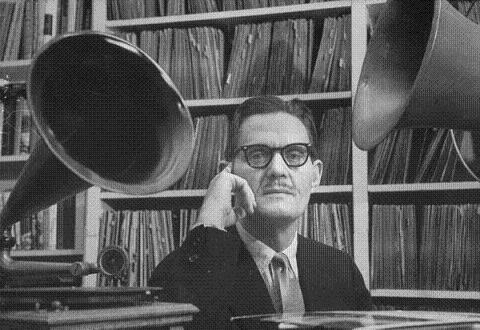
Who is Marshall Stearns?

I’m writing some notes for our students on FB, so I figured I’d let the content free, here in the unfenced part of the internet.

Who?

MarshallWStearns

Marshall Stearns.
Stearns was a jazz music and dance historian and reseacher, who was involved in the founding of the Institute of Jazz Studies.

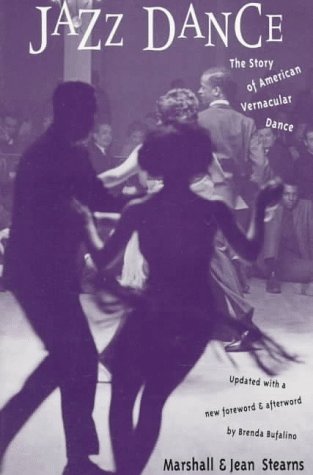
Most modern day lindy hoppers and jazz dancers would know him for his book Jazz Dance: the Story of American Vernacular Dance, which he co-authored (and researched) with his wife Jean Stearns.

529429

Jazz Dance is an invaluable resource if you’re interested in the history of jazz dances (including lindy hop), and it includes extensive interviews, biographies and descriptions of dances. There’s even a section of labanotation in the back, where each dance is carefully described in detail.

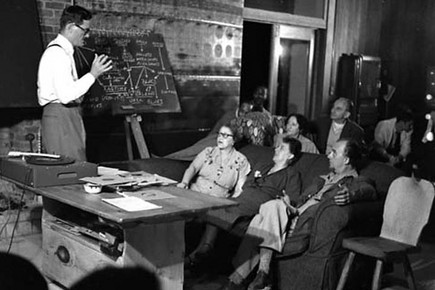
But even more importantly, Marshall Stearns features in some of the most useful archival film footage of jazz dance that we have available to us today.

You can see him calling the steps for Al Minns and Leon James in this television program:

link

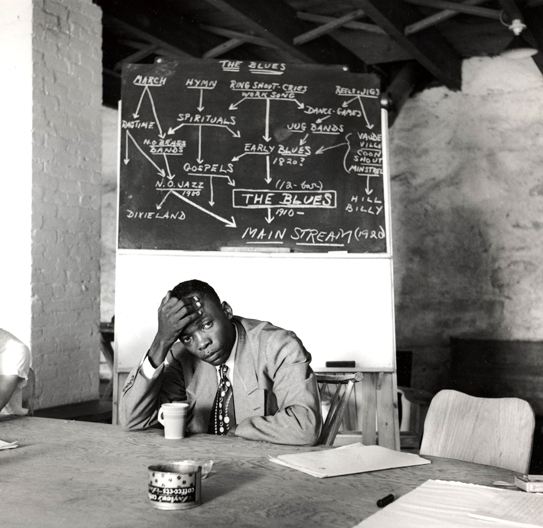
Marshall Stearns worked with Al and Leon and other African and African American dancers and musicians, recording their stories, dance steps and knowledge of dance and music.

JohnLeeHooker-ClemensKalischer-1951

(Poor John Lee Hooker, workin’ for the man.)

Marshall and his wife Jean, who was also his research partner and co-author, spent hours and hours and days and days working with musicians and dancers, compiling the book Jazz Dance, but also expanding their collection of music, film and documents, which eventually became the Institute of Jazz Studies Archive. They describe this process in Jazz Dance.

Then Marshall (who was a university lecturer and researcher) and Jean set about sharing this knowledge with other people.

ms

They published books and papers, appeared on television, and were involved in projects like The Music Inn, where (mostly white, mostly rich) people could come to learn about jazz music and dance.
The Stearns write in Jazz Dance:

In the early 1950’s, during the first years of a summer resort in the Berkshire Mountains called Music Inn, we tried an experiment. Our aim was to entertain – quite informally – a handful of guests in the lounge after dinner, but our host Philip Barber was carried away with his theory of instantaneous talent combustion. “Throw gifted performers together,” he said, “get one of them going, and watch them all discover talents which they didn’t know they had.” With various jazzmen of supposedly separate eras, the idea had worked well.
That evening we had dancers from three different countries: Asadata Dafora from the Sierra Leone, West Africa; Geoffrey Holder from Trinidad, West Indies; and Al Minns and Leon James from the Savoy Ballroom, New York City. All of them were alert to their own traditions and articulate, eager to demonstrate their own styles.
So we began with the Minns-James repertory of twenty or so Afro-American dances, from “Cakewalk to Cool,” asking Dafora and Holder to comment freely. The results were astonishing. One dancer hardly began a step before another exclaimed with delight, jumped to his feet, and executed a related version of his own. The audience found itself sharing the surprise and pleasure of the dancers as they hit upon similarities in their respective traditions. We were soon participating in the shock of recognizing what appeared to be be one great tradition (Jazz Dance p12).

The Institute of Jazz Studies holds a collection of recordings of oral histories as well as countless books, papers, music scores and ephemera. You can access some of this online. A highlight is this great biography of Mary Lou Williams, composer, arranger and pianist in Andy Kirk’s band, whose music we often use in class. And you can listen to Nellie Lutcher talking about playing music and traveling on the road in the 1930s and 40s.

Al and Leon continued to dance, perform and discuss jazz dance with Stearns for years after the heyday of the Savoy. Al Minns later worked with the first of the lindy hop revivalists in the 1980s, including Lennart Westerlund.

safe_image

My favourite part is just after that first quote:

Dafora finally observed with some asperity that although the Fish Tail came from Africa, dancing in the European fashion with one arm around your partner’s waist was considered obscene. (“The African dance,” writes President Senghor of Senegal, “disdains bodily contact.”)

Solo because yolo, right?

While the Stearns rocked the kasbah, I can’t help but wonder how those nights at the Music Inn might have gone if there’d been at least one woman dancing, to talk about African women’s dances, and to demonstrate the badassery that is a woman dancing…

[edit: I’ve just come across this story about jazz education which mentions the Lenox School, which seems an extension of the Music Inn]

Little Big Weekend 3

This is where my attention is right now:

Web-promo-LBW3

The (3rd) Little Big Weekend, featuring Lennart Westerlund and Georgia Brooks, 11-12 May 2013, here in Sydney.

The website: www.littlebigweekend.com/ is now active;

There’s a twitter account to follow: @littlebigwkend;

And a facebook event.

I run two Little Big Weekends per year, and I think they’re great. They’re basically smaller workshop-focussed weekends, tailored specifically to my local dance scene. But we do attract interstaters as well, which is nice.

There’s only one day of general admission workshops, and the workshops start at midday. There’s only one day of classes, because local peeps don’t want to spend their entire weekend at workshops – they’re usually busy people with full time jobs who have other things they need to do on the weekend. But the workshop content is quite unique (we don’t just do random ‘intro to charleston’ or ‘lindy hop blahblah’ – we do 1920s eccentric solo dance, or ‘blues dancing that’s dynamic and interesting’). I hunt down teachers who have mad teaching skills and are also great dancers and (most importantly) are approachable, friendly, nice people. Because life is too short to deal with pain in the arse, drama queen teachers. I’m also very interested in mixed-level classes, especially solo dance classes, because they’re good for the local community.

There’s only one big dance and one major late night party, because local dancers are busy and can’t really trash themselves hardcore all that regularly. The major dance is in a big town hall, and will feature a really great band. The late night party is the best late night party. The band is truly fabulous, there’s free cake (and not just random cake – really good, high quality, fancy cake), there’re usually two rooms of music and a chill out room, and it’s a community-run, non-profit event. This time the weekend happens to fall on the same weekend as a fortnightly DJed dance, so that’s on the Friday as well. And this time, because we are hosting Lennart Westerlund, I’ve added a film-talk-Q&A event to the program. That’s on the Sunday, and it’ll be a bit more chillaxed. The venue does good food and drink, there’s non-dancing stuff to do there (lawn bowls, etc), and it’s a friendly, community-run venue (NOT a Clubs Australia venue). The film/Q&A will be followed by DJed social dancing.

And, finally, there’s another teachers’ workshop on the Sunday. This is an afternoon session with limited numbers, restricted to people who are currently teaching regularly. These workshops have two parts: a general skills tidy-up for teachers (looking specifically at dance skills for teachers); and a teaching-skills and practical tips session. Because Lennart tells me he teaches ‘old school Harlem style’, I want him to talk about this in that session, and to explain how this is different to other types of teaching. And I want him to explain how he fits history into his classes, in a practical way.
I find these teachers’ workshops really interesting and stimulating. The small class size is just fantastic, and working and talking with other teachers is so inspiring and stimulating. These aren’t ‘be a better teacher’ sessions, so much as ‘come and think about and work on teaching practices with us’ sessions. The sessions emphasise participants’ asking questions and bringing challenges or things to work on, where they can workshop them with other teachers and draw on the experience of the visiting teacher. And then the best bit is that we then get to go to the Film/Q&A gig and talk about these ideas.

Having run larger events which explicitly target inter-staters – a national and international audience – running locally-focussed gigs is really nice. I don’t need to do aggressive interstate promotions, hassling people in other cities and competing with other high profile events. I can aim for a smaller group of people, which makes for much better learning experiences (good student:teacher ratios = good learning), and I can canvass local people to find out what they want to learn, and then plan the weekend to suit their interests. Financially speaking, the risk is much lower, but the profit percentage stays the same, which is nice. Running two per year means there are two opportunities to earn profit, but there’s less risk of a massive loss. Because I’m not trying to make a weekend event feel like good value for money for a traveler, I don’t have to run my local volunteers ragged putting on three million events in one weekend. I can just run a couple of good parties. And it also means that I can look at really unusual or interesting class content. I don’t have to try to appeal to a huge, general audience. I can be very specific.

The littler program means that I can run two of these per year. It’s not as draining a a mega event, where you run on too little sleep and too much work for too long. Running two per year means that promotion works in a slightly different way as well. The event stays closer to the front of punters’ minds, and if they miss one, they know the next one is just six (or so) months away, so it’s not a huge drama to plan for that.

So, all up, it’s a good thing. And I enjoy working on these events quite a lot. They don’t leave me with that burnt-out, exhausted and creatively wrung-dry feeling that a huge event does. And because I’m deliberately thinking small, there’s not the pressure to be a huge success. Having said that, because I have had experience with larger events, I can draw on that to make these smaller ones very high quality. They’re not dodgy small and amateurish events. The local managers and volunteers are highly skilled people – they are capable, professional and a joy to work with. And Sydney is a big, cosmopolitan city, so we have very good resources to draw on – good venues, great bands, lots of options for sound and lighting engineers, great restaurants and bars. As a fairly diverse, long-running lindy hop community (the oldest in the country) with lots of dancers who travel overseas, we also have a fairly discerning audience-base, so we need to run events that are fairly decent. So you’re not getting rubbishy DJs in crappy dance studios. You’re getting fucking hot bands in great dance studios :D

…and that’s partly why I haven’t been writing here much lately. The part of my brain that does critical thinking about dance is otherwise engaged.

FYI If you’re interested in the Little Big Weekend, we are running a fourth event in December this year. I have no idea who’ll be teaching, but we have a very good band lined up to do a series of gigs, so the parties will be good :D
It’s 7th-8th December, the weekend after MLX, which is 28 Nov-1 Dec. So if you’re thinking of a trip to Australia, it’s cool to combine the two events. MLX is the biggest event in the country, and Melbourne is a great tourist city. Then the LBW the weekend after is in Sydney, which is the biggest city in the country. Last December we had quite a few internationals travel up from MLX to the LBW.