
it’s a tall order to claim yourself a guiding force in the dancing lives of a few thousand dancers

I have in the past noted the difference between ‘classic’ swinging jazz of the ‘Swing Era’ (ie 1930s-40s) and ‘new testament’ swing (ie post WWII), focussing on the role of the rhythm section.
I still find julius‘ discussion of the topic over on yehoodi the most useful for discussion of jazz and lindy hop:

This is all based on informal research, i.e. facts that I cannot document. They are opinions based on watching clips and talking to oldtimers and people who have talked to oldtimers and watching oldtimers and new dancers dance “now” and “back in the day” … and listening to a LOT of music.
Swing-era music (henceforth called “swing”) is driven primarily by the rhythm section. The bass would play on the quarter note and the drummer would beat the same quarter note with the bass drum. The guitarist would also chord on the quarter note along with the bassist and drummer. In addition, the drummer kept the rhythm swinging by playing a swung rhythm on the hi-hat. Rhythmic motifs (such as horn riffs) were often played in unison rhythm (although not unison notes, which were a feature of bop later on). Drum solos often featured march-style drum rolls and rarely used polyrhythmic devices such as playing three with the left hand and four with the right.
The combination of guitarist, drummer, and bass playing on the quarter note made swing music very propulsive. At that time, jazz was not played behind the beat as much as it is now. The rhythm section was almost, but not quite, playing in unison on the quarter note.
The dance reflected this propulsion by emphasizing quarter notes and the swung rhythm. The steps of the basic that we know today are derived from that rhythm: 1, 2, 3 and 4 (swung), 5, 6, 7 and 8. There was very little upper body movement, although the limbs were extensively used to reflect energy and excitement. Charleston steps (often in unison with your partner) were very common because of the tempo and feel of the music. (Note that 20s Charleston is much more staccato and than 30s Charleston, because hot jazz was much more staccato than swing music.)
If we listen to post-war music, we detect a difference in the feel compared to pre-war music. Jimmy Blanton revolutionized bass playing with Ellington’s band by using more ornamental techniques on the bass, and Ray Brown brought bass virtuosity to the fore by playing far less staccato than swing bassists did. His playing virtually defined the feel of post-war straightahead jazz by holding the bass notes and creating a much deeper “pocket” for the rhythm section. With the advent of bop, the drums began to lay behind the beat, which was now kept almost entirely by the bassist. Drummers moved the swing rhythm to the ride cymbal; the bass drum was used to “drop bombs” — playing very loud accents, only barely playing quarter notes, and sometimes even playing on the offbeat.
Arrangements for bands began to feature more rhythmically complex parts and the solos began to use more than the basic major, minor, diminished, augmented, seventh, and ninth chords of swing. The upshot of this new harmonic and rhythmic complexity was a change in the dance, with Frankie notably complaining to Dizzy Gillespie (I think) that you couldn’t dance (lindy hop) to it.
In the modern era, people commonly dance to straightahead jazz from the 50s … not bop, but music heavily influenced by bop’s harmonic concepts and post-war, way-behind-the-beat rhythm. The music chosen by DJs today also tends to be on the slower side than swing era music taken as a whole, and there are a lot of influences from West Coast (which was itself derived from lindy hop) observable in modern lindy hop. For example, the upper body is used often to express the music; frequently dancers will acknowledge musical “hits” with motion.
Why this change has occurred, I cannot say. One of the first people I encountered who taught this style of dancing were Paul and Sharon. When I was first learning I learned from people who had learned from old-timers directly, and were commonly emulating the rhythm-based style of lindy hop dancing. Then I saw people in San Francisco dancing and they were doing a more melody-based style of lindy hop.
Over time I think lindy hop has embraced both aspects of musicality (rhythm and melody), but some areas of the country are still locked in one or the other.
Edited to add something a bit more judgmental:
Dancing to the melody makes it very hard to dance fast, because it feels as if one is being unmusical in not acknowledging the music going by. Dancing to the rhythm makes it very easy to dance fast and requires better balance and technique because there is less time to recover from mistakes. However, dancing to the rhythm makes dancing slow less interesting.
The very best dancers in the world dance to the music, employing whatever is appropriate and not worrying whether the music is “too fast” or “too slow”, because they have integrated everything about the music into their dancing. Dancing reflects the music, not the other way around. I am fairly sure that lindy hop, alone of almost every social dance in the rest of the world, is danced to the widest tempo range of music. That’s one of the things I really like about it, that I can go balls-out on some insane flag-waving swing anthem, or dance more intimately if I want (Posted: Tue May 23, 2006 8:55 pm).

Personally, I prefer the sort of ‘classic swing’ sound to the post WWII sound, which I tend to think of as Old and New Testament, respectively, in part as a response to the influence of Basie on this issue – the man’s career ran from the 20s to the 80s, and he was one of the most influential band leaders in the big band swinging jazz genre.
I’ve been listening to some Jo Jones recently, and reading the Allmusic entry here, where they note:

Jo Jones shifted the timekeeping role of the drums from the bass drum to the hi-hat cymbal, greatly influencing all swing and bop drummers.

This is an interesting point, as Jones played with Basie’s band for a chunk of his career, and formed the backbone of Basie’s rhythm section, with Walter Page (bass), Freddie Green (guitar) and Basie himself (piano). To think that this man might have played a key part in the shift from bass drum to high hat in the foundational rhythm of a big band is kind of a tall order. I know nothing beyond the stuff I read in liner notes and on the internet (hardly excellent sources, but you know how it is – I’m too busy with other stuff to read up on this… though I’d dearly love to audit a decent undergrad course on the history of jazz), so I can’t really comment intelligently on this topic. But it’s worth thinking about.
I am a fan of Lionel Hampton, who was a percussionist (drums, vibraphone, assorted other) and bandleader (though I’m not sure what role he played in his bands’ arrangements and compositions), and I’ve noticed that big bands tended to reflect the instruments and interests of their leader – so you get a different emphasis in Benny Goodman’s stuff, than you do with someone like Basie, in part because they played clarinet and piano, respectively.
This stuff is really interesting to think about when you’re comparing the work indivdidual members of a group did with their other bands – I’m obsessed with Benny Goodman’s small groups, and have been enthralled by the differences between this group, Goodman’s bigger band stuff, and the role of Lionel Hampton, Gene Krupa, etc, in those small groups and in their own big bands. You can really hear the musical emphasis shift from Goodman and the clarinet to, for example, the vibes/rhythm section in Hamp’s bands.
So the fact that Basie played in his rhythm section, and that his band was so influential in swinging jazz is kind of important.
…I’m not sure where I’m going with this, really.
But I suppose that one of my ongoing concerns as a DJ is how how to balance the old testament sound with the new testament. As a dancer, I much prefer the chunk-chunk sound of the old testament rhythm section – that high hat action in some of the 50s stuff (and late 40s, depending on who it is) gets up my bum. As a DJ, I’m much more flexible – I will happily play stuff from the 30s through to the 50s for lindy hoppers (with deviations into more modern stuff in the old school style), and from the 20s (and more recently if it rocks) for charleston and other dances. I feel I have a ‘responsibility’ as a DJ to sample good music from all these historical periods, and more importantly, from the range of swinging jazz that is available. While I feel I can comment on musical choice and taste and its impact on dancing in my local community as a dancer, I am more reluctant to make those value-laden judgements as a DJ, perhaps because of the perceived power and influence of DJs in the swing scene. I’ve seen people do some awsome shit on the dance floor to all types of music, and who am I to dismiss something simply because it reflects the music of a period which post-dates the ‘original’ swing era?
It’s a difficult issue, because I do feel that I need to promote the old testament stuff in Melbourne because it is so under represented in the DJing of local DJs, and in the teaching of local dance teachers. We have a preponderance of ‘groove’ music, a definite emphasis on not-old-school dancing, to the point where new dancers frequently fail to recognise someone dancing in the ‘olden days’ style as lindy hop (and often don’t know that name for ‘swing dancing’ at all).
Yet, at the same time, my job as a DJ is to get people dancing, and if old school jazz doesn’t do it for them… I can either trick them into it, leading them gently back to the Good Old Days, using such tools as the Lincoln Centre Jazz Orchestra, Mora’s Modern Rhythmists and the Kansas City Band, or I can hop on the old high horse and play with no reference to what’s going on on the dance floor around/below me.
This seems the perennial question for a DJ who plays almost exclusively in their own, local scene (particularly one which is as parochial as Melbourne).
My solution, though, has been to follow my nose – to seek out the artists and music that I really enjoy, and to combine them in ways while I’m DJing that will get dancers out onto the floor despite themselves. Kind of a honey rather than vinegar approach. There are a number of on-the-spot techniques for doing this, from quick transitions between musical styles and tempos, through to using a combination of old recordings, new remastered recordings, and recordings by new artists, and I’m endeavouring to master as many of these skills as possible.
One of the key parts of this process is simply collecting and listening to as much music as possible.
In Melbourne today, many, hell most of the DJs simply swap their collections, rather than seeking out new music on their own. One of the clearest results of this has been a definite lack of variation in the music we hear out dancing in this town. One of the less direct results is a lack of diversity in the dancing and improvisation we see on the floor – if dancers do not hear ‘new’ music (whether in terms of individual songs, or different styles), and dance is about making music visible, we are unlikely to see ‘new’ stuff on the dance floor if DJs continue with these small-pond approaches to music and DJing. And speaking as an old school hippy feminist, diversity = good. It’s sure as fuck more interesting than homogeneity.
As I am finding, though, the exchange of music between DJs serves as more than simply the sharing of music and the expansion of individual collections – it is a key vehicle for the development of interpersonal and professional relationships between DJs, and between new and more experienced DJs. To refuse to swap is a delicate matter, and one must tread carefully the line between ethical approaches to copyright legislation and forging relationships with other DJs. Particularly when one does not access to other avenues of becoming part of ‘the gang’ in this community.
With all this in mind, then, how can I go about both satisfying dancers’ desire for the familiar, and exploring and sharing my own musical tastes and passions, and consequently, encouraging DJs to include music that suits my tastes, so that I have the opportunity to dance to this stuff as well?
One the one hand, there are the practical DJing techniques I’ve discussed above.
But I’m also increasingly of the conviction that DJing for new dancers is really important.
I enjoy DJing for new dancers. The first set of the night is usually considered the ‘beginners” set in Melbourne, in part because of the importance of pre-social dancing classes (usually populated by beginners). When I began DJing earlier this year, that first set was dismissed by most other DJs, many of whom wouldn’t accept sets in that slot. As a new DJ desperate for experience, I happily took on thost sets. I discovered that the new dancers were not only fresh and excited about dancing (unlike the more jaded, cynical and decidedly picky more experienced types), they were also excited about the music, and far more open to a wide range of music.
So I enjoy playing for beginners, even if it means that I have to be careful with tempos.
And it means that I’m wondering if perhaps I should be strutting my stuff as a DJ at more beginner-friendly, after-class venues in order to advertise my tastes, create a market and perhaps ensure a greater tolerance for wider musical styles in the future?
Those sorts of claims feel insufferably smug and arrogant: it’s a tall order to claim yourself a guiding force in the dancing lives of a few thousand dancers.
But I’ll report back, and we’ll see what happens.

the researcher in their work: natural passions

I really need to get on and do some work, but I did want to write a tiny bit about how our own interests and passions motivate our research. So, for example, I’m a keen lindy hopper, and this lead (eventually) to my writing about lindy hoppers.
This point was brought to my attention in class last week when a student blushed and declared embarassment for his passion for an ‘uncool’ film star. I took this as a neat opportunity to talk about people like Matt Hills and Jenkins and other fan studies doods, pointing out the idea that much of audience studies research – fan studies in particular – begins with the author’s own interets. In the simplest terms, our attention is caught because we give a shit about the topic. And is kept because we’re passionate about the things and people we are writing about. So being dismissive of someone’s interests simply because they’re ‘low brow’ isn’t terribly productive.
But I do think it’s a strength to write from what you know, or rather, from what you care about. Whether you’re writing about a favourite telly program or about women and capitalism. I feel that bias is a strength, if only because it serves as sufficient motivation to get us through a massive research project like a PhD or a book.
I don’t have time to go on into detail about this, but there’s a chunk of lit talking about the ethical and methodological issues which attend writing from ‘inside’ the community you’re studying.
Some of the most interesting is from dance studies. Check out this nice quote:

I am an anthropologist, but I am also a dancer and I begin my investigation of gender in ballet by using my dance experiences as a case study… I adopt this approach because it allows me to shift between my memories and comments as a dancer and my analysis as an anthropologist, in a sense using autobiography as fieldwork data.
The researcher…is an essential component of all research. …It is important to take account of the fact that I (the researchers/interviewer) was an active agent in the research setting, attempting to make sense of and contributing to the dancers’ discussions about an activity that is not bound by verbal language. I would contend that my intervention in the … process was enabling rather than, as an objectivist approach would argue, a hindrance to the research. … the idea inherent in an objectivist framework that the researcher is an invisible being who drops into and reveals the practices and ways of others (the researched) becomes redundant, in favour of a reflexivity of accounts. …this does not mean that the project should be full of ‘soul searching’ or ‘navel gazing’. It entails, rather, that the researcher reveal or uncover his/her grounds for speaking; that he/she should be reflexive on the context, methods and procedures adopted and at the same time, enable the voices of the researched to speak (35 – 76).

(Novack, Cynthia J. “Ballet, Gender and Cultural Power.” Dance, Gender and Culture. Ed. Helen Thomas. London: Macmillan, 1993. 34-48).
I’ve written in greater detail about this in my thesis, combining fan studies stuff and dance studies stuff, with an emphasis on feminist and African American writers in the latter. In fact, a significant portion of my argument throughout my work is devoted to the notion of participation in discourse, where dance is discourse, and participation is not only important, but non-verbal.
…ok, I have to run. I’ll see if I can write more later…

oh yeah

And I had my paper approved for the CSAA conference (read about it here). I didn’t unfortunately, score the bursary/grant thingy. Which means that it’ll be next to impossible for me to get to the conference to give the paper. Got no money for airfares, no money for conference registration, no money, no money, o.
The scholarship ends on the 19th, which is ok, as the thesis is totally done (did I mention that? I’d like to say there’s been some quiet triumph in our house ever since, but The Squeeze says it’s more the fact that there’s been a significant increase in shouting, carousing and declarative one-stanze (one-line) songs about how great the Ham is). But it does mean that I now, officially, have no income.
Oh, no, wait. I’m tutoring like total tutoring stooge instead. I am taking sixty million classes in a media studies subject (best not to name it, as the little darlings are a wee bit internet savvy, and google will get me in trouble… note to self: do not mention thesis topic ever again in class), so I almost have enough money to cover my PT tickets.
There are some good bits of this, and some crap.
Good:
I love teaching. I think it’s a power thing. I goddamn LOVE being in front of an audience, and I LOVE to talk, so it’s all good. But I have been practicing Shutting Up this semester, which is hard, but rewarding: we have dialogues rather than monologues.
I love teaching media stuff: who doesn’t have something to say about telly or books or magazines or the internet?
I learn a lot. Ask me about CD next time we meet. Your brain will be blown.
It gets me out of the house.
Bad
It costs a lot to get there.
I can’t ride my bike and I miss it.
I’m overworked and exploited.
I’m really really tired.
Anyway, I’d like to go to the conference, but can’t afford it. Looks like academia is for rich kids, huh?

tell me place and geography aren’t important here

There’s been a bit of talk about Helen Garner around the traps recently:

I wrote this comment in the latter:

(dogpossum on 3 August 2006 at 1:29 pm)
Nice post, Weathergirl.
I remember reading all Garner’s work when I was an undergrad – I fell in love with her style. In those pre-GST days I had enough cash to splurge on books whenever I liked.
TFS almost lost me for her, but I changed my mind… no, wait, I think I was just distracted by other authors (C.J.Cherryh, most probably – nothing like a little hardcore SF by a woman writer to get things in perspective)…
When I first moved to Melbourne I’d pretend I was recognising places from Monkey Grip (though I was finding it easier to recognise places in Brisbane in the Nick Earls books I was reading, probably because I was busy enjoying be Away From Brisbane at the time). And Garner’s pieces in the Age about ordinary Melbourne stuff helped me feel at home in my new city (what can I say – I’m a stooge).
I don’t find it difficult to enjoy the way Garner puts words together, and yet also have some trouble with the ideas behind the words. Frankly, a nicely written bit of opinion is far more likely to convince me to consider a topic than something difficult or clunky… I like the line about energy, and the thought that nasty bits of writing can inspire us to do great thinking and writing and talking ourselves. I mean, that seems to define feminsim for me: being inspired to think and write and talk and act by nasty bits of writing and ideology-in-action.
As for Garner herself… I met her once at a party, and knew her daughter through Uni, but that’s all I can say. I wouldn’t pretend to know her through her writing – just as I wouldn’t expect to know a blogger through their blog, or a singer through their songs. But I might admit to vague feelings or unsubstantiated impressions.

And had this response:

(weathergirl on 3 August 2006 at 1:33 pm)
Dogpossum, thanks for contributing! I read a tiny bit of Alice Garner’s PhD thesis (something about holiday imagery on French beaches), which I think she then published as a book. She inherited her mother’s writing talent.
But please don’t mention Nick Earls on my beat. I like to think this is about interesting literature.

I did start writing a response to the response, but I ended up feeling like an idiot. Some things are best written on your own blog (especially when they stray into true blogging territory: long and boring). So here it is:
I feel like I’m dragging the discussion off into irrelevent territory, but one of the things I liked about Garner (and Nick Earls, John Birmingham and Shane Maloney*, actually), is/was the way they write about cities and construct/represent ideas of community and place. I choose those three because of their accessibility, their popularity. I choose those three in particular because I was reading them before, during and after my move from Brisbane to Melbourne, in book and newspaper-column form (the latter is a reference to Garner’s spots in The Age). I think that in that period of moving to a city where I knew perhaps 3 people, away from family and friends, I was busy making new social and professional networks – making this new city home (I want to reference the space/place thing, but I don’t have the brain right now).
I was interested in the way these authors use lots of specific references to local landmarks and people to create a feeling of ‘knowing the city’, or more usefully, ‘knowing the community’ in which their stories are based. It’s an interesting idea, especially when you take into account things like Garner’s decidedly middle (or upper?) class experiences in Melbourne today, compared to the Monkey Grip days, Earls’ Brisbane of the 80s, Birmingham’s Brisbane of the late 80s and early 90s. These are quite definitely experiences of a city inflected by class, gender, sex(uality), education, market forces, etc etc etc. Yet they are all represented as ‘common sense’ or ‘normal’ or ‘familiar’, particularly in the case of Garner’s work (which seems to rest so firmly on the strength of ‘common sense’ or ‘diary-esque’ writing as a tool to convince. I, for one, am a little sceptical of Garner’s (occasionaly quite irritating) use of ‘oh, this is just what I think, and I’m probably wrong, but…’ arguments. Can you spell passive aggressive?).
But I’m interested in the way, while reading these people at that time, I could say ‘hey, I know that place’, or more scarily (esp in the case of Birmingham), ‘I know those people!’, and found that so comforting.
This is the sort of thing that comes up all the time in discussions about Garner’s work (and in this thread above) – the idea of ‘journal-diaryistic’ writing and ‘journalism’: levels of ‘real’ and ‘true’ and so on. I think it’s worth my pointing out, at this point, that I take Earls and Maloney as writing with as ‘diary-esque’ a style as Garner, largely in response to the incredible detail about ‘real’ places in their work. While Garner writes using her ‘real’ (and autobiogaphical) emotions as a bit of a blunt object in the ‘reality’ stakes, Earls and Maloney use ‘reality of place’ in much the same way.
That I could point to a building or street in Melbourne and say “that’s where Helen went swimming or rode her bike or saw a band” or think “I remember that shopping centre in the Queen Street Mall”, was kind of comforting for a person alone in a new city. It certainly shaped the way I thought about my place within my current and past home-cities. Nothing new for ‘the media’: kind of the point, really, constructing consensual notions of place and community**.
But I do think that it’s a key part of Garner’s work, and there have been quite a few comments already [in the LP thread] about the way she uses phrases like “Any woman who has left home for university could fill in the gaps”: inviting us, explicitly to identify with Garner (or her characters), as if it was a natural and inevitable thing.
Isn’t that interesting, that the language of domesticity (and Garner is all about domestic spaces) and ‘home cities’ and ‘the familiar’ is such a useful tool for convincing us that the author’s point is ‘just common sense’? That an ’emotional honesty’ in writing is somehow more relevant or convincing than an objective account?
You can see why, at this point, I hesitated to post this comment on LP.
But my attention was caught by the way Weather Girl dismissed Nick Earls as ‘uninteresting’ work. Sure, he’s no great literary talent, but some time was spent in that LP thread making similar observations about Garner – she’s no great literary talent. But many of the commenters in that thread (and most of whom were women – perhaps just an indication of LP’s reader/commenter -ship) declared an affinity or affection for Garner based on her use of the personal and the invitingness of her lovely prose.
I’d argue that Earls has similar appeal – the use of the personal, and an inviting style (in his case, though, the invitation was to share the joke, rather than marvel at a lovely turn of phrase). With Maloney, the appeal lay in the minutiae of everyday life in Brunswick/Coburg/Melbourne (my new home suburb), and of local politics (which fascinated a girl who’d just completed an MA on women in Qld politics). In addition, I’d argue that they’re very Australian writers (though from different age/social groups), and I like to read in the vernacular.
Though we must keep in mind the fact that Garner’s books have stuck around, while Earls feels a bit stuck in that ‘grunge fiction’ moment – do people still read him, or is it just me? Maloney, on the other hand, has made his mark on the pop culture landscape, especially with the television programs based on his work.
I know that I’m a little biased, but isn’t this bias kind of the point? I was attracted by the invitation to share the everyday lives and everyday experiences of these authors’ lives, and that made me feel ‘at home’ in a new city. I certainly wasn’t ‘sucked in’ to believing that this was in any way a ‘true’ story I was being told. But that was part of the appeal: I was reading one person’s interpretation and experience of a city, and that very subjectivity was part of it’s appeal. It invited comparison with my own experience, and a dialogue with the text.
I should note: I was so interested by The First Stone when it came out that I did a pgrad essay project on the topic, exploring the newspaper responses to the book, and to their representations of ‘feminism’. This was a sort of test-run for my eventual MA project.
…and all of this has strayed quite a bit from the love/hate/niggle-fest that began in the original articles on Garner and her writing, but, well, like I said: blog.
*It’s worth checking out the ‘official’ Shane Maloney site and noting the background image of the site: Melway maps of Brunswick.
Tell me place and geography aren’t important here?
**I’m paraphrasing old school Stuart Hall there
–EDIT: fixed the dodgy link up there at the top – sorry everyone–

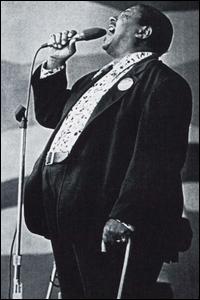
i want a big shouting man and an analogue mouse

bigjoeturner.jpg
I just can’t get enough of this man’s shouting voice.
We’re listening to that album I mentioned here. It’s far too late for such exciting music, but we like to live dangerously.
I should go to bed. The Squeeze is watching some old skool computer nerd peep action: The Mother of all Demos (you can read about it here on wikipedia).
The Squeeze likes to read about old computer stuff. The other day he went to see a talk about the first computer mouse:

“The first computer mouse and other terrific tales of technology!”
The Stork Hotel Café, 504 Elizabeth Street, Melbourne
Who says the history of computing is boring? Experience the droll delights of Information Age nostalgia in a raucously profound evening of low-tech storytelling with your host School of Business Information Technology academic John Lenarcic in conversation with Museum Victoria curator David Demant.

He had a lovely time. I went to see Super Dood Returns and had a lovely time.
When I make up the bed in the back room, I usually find at least two books about olden days computers (today I found the phone that I lost yesterday), the remote for the imac, and some sort of cord for the computer. And usually a belt and a pair of pajama pants. He must own at least a million books about computer history. I’ve read a few of them – ones about macs, or ebay or Steve Jobs or Bill Gates or other stuff. It’s mostly dull, and written by semi-literate journalists, but The Squeeze is a big fat sponge for computer knowledge (and hardware – he’s a bit borg I think. All technology is belong to him, and will be assimilated. Resistance is futile).
But this demo on google movies is pretty impressive – this dood Douglas Englebart invented a mouse in 1968, and demonstrates it in this film. That’s some awesome shit – we didn’t start using them til the 90s. And this guy is there, in a black and white film, with his massive quiff and black horn-rimmed glasses, demonstrating some scarily advanced technology.
The Squeeze is about to pass out with delight. When he stumbled onto the film moments ago, he declared: “I didn’t think this existed!”
That and the Big Joe Turner shouting action – this little freckler is going to expire from delight.
I, however, am going to pass out from exhaustion.

now he’ll do that pathetic sighing thing whenever the letter ‘f’ is uttered, or we see someone in a beret

Ampersand duck has made me sound really interesting over here. I think I’d like to make friends with those people. Then eat all their food and run off into the night, cackling… well, maybe waddle off into the afternoon.
Look over here at stack. Stacks of slacks. No, stacks of books, really (funny how you meet more booknerds on the internet than in bookshops, huh? Guess it’s a wordy* thing).
And you must, in the spirit of all things cute (and in honour of The Squeeze, who loves this shit), go look here to see more of this sort of action:
berret.gif
(stolen from here)
…I shouldn’t have let him know about that. Now he’ll do that pathetic sighing thing whenever the letter ‘f’ is uttered, or we see someone in a beret.
*worder? wordsmith? wordnerd? werd!

Joe Turner’s Boss of the Blues


There’s a reason they call these doods shouters.
The second of my amazingly quick-to-arrive CDs from Caiman (less than 2 weeks from Europe), I’m sucking up Big Joe Turner’s Boss of the Blues.
The super-jazz-nerds amongst you are no doubt thrilling to the thought of Freddie Greene playing on this 1956 recording. The rest of you should just settle in and enjoy… take care to get a firm grip on the sofa, lest Turner blows you away.
I’ve not had that much experience with Joe Turner. I have bunches of his stuff with people like Basie, and I’m pretty fond of most of it, but this is the first proper Big Joe Turner album I’ve bought. I like it. It’s uncompromising. I like those shouters – I love Dinah Washington especially. I like the thought that most of them started singing in church, and all that shouting is about Jesus. But Jesus dancing with his skirt up round his hips, on a table, dancing the crazy-I’m-dancing!-I’m-dancing!-like-a-fool type of dancing.
There’s lots on this album for DJing, from saucy blues to jumpy lindy, but our favourites in this house are the boogie woogie bits – that version of Roll ’em Pete makes you want to run around like a fool*. Sometimes the quality is kind of fagged** by Turner’s volume. But that’s kind of cool. Like feedback on a Nirvana album in 1992.
*funnily enough, I was just listening to my ‘lindy music’ on shuffle and came across another version of that song that I really, really like and wish I had more opportunities to play for dancers (from Basie’s Breakfast Dance and BBQ). It clocks in at 230bpm, so it’s kind of not all that playable most of the time. It starts: “Well I got a gal, she lives up on the hill” and continues…
**using this term the way my dad would – meaning ‘tired’ or totally buggered from overwork.

Alberta Hunter’s Downhearted Blues

While I fear I’ll die of old age before my order from raisedonrecords (via Amazon) comes, I’ve received both my recent acquisitions form caiman.com via amazon (they rock – Caiman are always really quick to deliver and no hassle to deal with). The first was Alberta Hunter’s Downhearted Blues, a live recording by one of my favourite artists. You can read about her over on allmusic, but I think the phrase ‘dirty lesbian nanna’ pretty much sums it up. This album is fun – you can hear that nanna working the crowd. Not so much for DJing, but it’s certainly worth listening to, and heaps of fun.

not in any way i’d like to advertise

Every now and then there comes along a bit of music that gets inside you (to pilfer a metaphor) and makes you want to move your body.
As a DJ for dancers, I’d like that bit of music to come along more frequently. And to bring its friends. While you usually have to hunt them down, sometimes you come across these lovely things hiding in your collection, probably inside a crappy black and white CD cover for something you bought second hand. Sometimes they’re hiding in massive collected works collection on your hard drive (probably in the huge and wonderful Duke Ellington Centennial Edition: Complete RCA Victor Recordings Ellington – I promise I’ll get through the remaining ten of twenty-four discs soon).
Right now I’m just sucking up Oscar Peterson’s Bluesology At The Concertgebouw [live]. It has everything late swinging jazz should – saucy bass action, unbelievable piano, chunking guitar (that’s Ray Brown and Herb Ellis, respectively), kind of growly unintelligible muttering from the Oscar at the piano… did I mention this was a live recording? You can hear the audience digging the thing these excellent musicians have going on. You can hear Oscar mumbling along to his piano (and we can assume Clark Terry’s vocals on Mumbles (check it on this album if you’re interested) were inspired by this sort of action). You can just feel these seasoned musicians really working with each other, bouncing musical ideas around far beyond the ordinary length of a pop song. It goes for a massive nine minutes twenty-two – far too long for DJing to most lindy hoppers, but oh-baby, if I ever find just the right crowd…
They’d have to be a group of mellow lindy hoppers, heavy on the groove, happy to work with one partner for the equivalent of three songs (luckily at an easy 120bpm – which, for the uninitiated, is still more than two steps a second, but considered ‘baby tempo’ by lindy hoppers). And they’d better appreciate this gem…
As a DJ, as I’ve said, you’re continually on the look out for the right songs. Some DJs swap music just for the right three minutes. Morally high horse types like myself spurn this fannish exchange and have spent ridiculous sums buying a ridiculous number of albums for just that one perfect song. And while I’ve come back to those albums to rediscover the other great songs overshadowed by That One, I’ve also shoved the CD into the bookcase, or failed to catalogue the rest of it into my play lists. Lost and gone forever. itunes and emusic are your friend in these sorts of situations – I’d never buy a whole City Rhythm Orchestra album, but I’m very happy with the version of Blues in Hoss’s Flat (check that one on this album” – are you getting an idea of the sorts of uses lindy DJs make of Amazon, yet?) I bought from itunes the other day.
This version of Bluesology ends with applause for at least twenty-two seconds, until the musicians bring on the next song (When Lights are Low, incidentally, and almost as good). The very best songs for dancing are usually live – or carry some of the improvisation and creative team work that makes jazz so great for dancing. For lindy hoppers, improvisation is the reason we dance – we learn the basic steps so we can get to the made up bits. And of course, it’s so’s we can do what we hear in the music with our bodies. When it’s a live recording, you can hear the crowd and musicians really making something wonderful together. To call it a conversation is too easy or too simple. Every partner dancer knows it’s not like talking – it’s a much faster and more efficient way of communicating with someone. With lots of someones.
I think that’s the sort of thing that the best DJs aim for – recreating that relationship between musicians and dancers. As a musician, you choose the notes and how you play them to work with the other musicians and the audience and possibly the dancers to make for the nicest possible bit of group work. As a DJ, though, you’re choosing and combining songs for the same effect. The same principles of improvisation and spontaneity apply. You’re still responding and contributing to your dance partner – it’s just that you have hundreds of dance partners, and you can’t get your hands on them to get connection.
So when you find just the right song – the sort of song that makes you want to leap up off your chair – you’re not just scoring something nice to listen to or enjoy on your own. You’re finding something that’ll help you get it going on with as many people as possible. All at once.
The only frustration, the only irritation with sharing the most excellent songs with dancers is that you can’t dance yourself… well, not in any way you’d like to advertise…

“Emma Dawson: Left out of debate by convoluted speaking”

Is this headline more than a comment on Emma Dawson feeling excluded, or the Left’s irrelevence to public discourse?
In recent days there’s been an ongoing discussion about this article in the Australian by Emma Dawson. My responses to both the original article and the responding discussion on the CSAA list have been mixed. In that article, Dawson discusses her personal response to a notice for the Everyday Multiculturalism conference to be held at Macquarie Uni in Sydney in September.
First, my response to Dawson’s article was a little different to some of the comments on the CSAA list. While I did feel a little uncomfortable with the way Dawson’s critique of academic terminology, in the context of the Australian served as a critique of ‘the left’, I’m not sure this was how she intended her words be read. My first instinct was ‘oh, she’s not comfortable with acka talk.’ That she positioned herself as a Phd candidate encouraged me to sympathise with her, reading her feelings of exclusion as a result, perhaps of her inexperience with academia.
Listening to this ABC podcast on media ownership legislation in Canada today, my memory was jogged in regards to where I’d heard of Dawson before. I remembered this story on the ABC’s Media Report on the introduction of advertising on public broadcasters, featuring Dawson as a special guest discussing SBS in light of her Phd reseach and experience with the station. I remember thinking that Dawson was one of the ‘good guys’.
I decided to follow up some of my feelings about her article and CSAA discussion by reading up on Dawson a little further. I discovered that she’s written for the New Matilda, a lefty online magazine, and that she’s doing work on SBS, and had worked at SBS as a journalist.
With this in mind, I’m leaning towards the suspicion that Dawson’s article on lefty academic talk was perhaps read in context, by many on the CSAA list (and beyond), taken as one point in a series of critiques of lefty ideology and discourse, rather than as a distinct piece discussing the intimidating and off-putting nature of academic talk. This is not an unlikely response – the Australian opinion pages are rife with lefty/academic bashing these days.
This fascinates me as an example of the ways in which we take context – the newspaper in which an article is positioned, the recent articles on a similar topic, using similar terms and ‘buzz words’ (or making similar selections from a shared interpretive repertoire, to reference Potter and Wetherall), even the placement of an article on a page (or screen), in relation to other pieces – in our readings of meaning and ideological ‘intention’. In fact, this stuff fascinated me so much I wrote my MA on similar stuff.
Setting aside those issues of form and text and context which appeal to my critical discourse analysis side, perhaps it’s worth engaging with the issues Dawson actually raises in her piece – her opinion piece?
Perhaps Dawson was encouraging lefty academics to engage more thoroughly with everyday discourse by using everyday discourse?
As some posters to the CSAA list noted, that’s not such a bad idea. And yet, on the other hand, as others responded (and I myself feel), sometimes we need to use big words. Sometimes we need to get together and use big words. And academic conferences seem the most appropriate place for this sort of talk. After all, we wouldn’t expect a doctor to abandon the technical terms of their profession to discuss medical matters with their peers at a conference, would we?
Dawson, however, seems justified in expecting a conference on ‘everyday multiculturalisms’ to use everyday language. It’s unfortunate that the ‘everyday language’ of academia can be so impenetrable. Speaking as a (just about to submit) Phd candidate with quite a few years as a postgraduate researcher under my belt, I do actually think that it is a little naïve for a postgrad to expect an academic conference to use un-academic discourse. I mean, these are complex issues that we are dealing with, and at times we need complex language and conceptual tools to put them together or take them apart.
I wonder, though, if Dawson is a journalism student, rather than a cultural studies student, and has perhaps run into one of the most irritating stumbling blocks in world of ‘media studies’? I remember a one-day conference I attended in Brisbane in the early days of my MA (1998? 1999?) called Media Wars where I first ran into Keith Windshuttle, and was infuriated by his nasty attacks on my (then and now) hero Graybags Turner – it wasn’t the nicest introduction to the tensions between journalism and cultural studies. Though my impression that journalism (as the old kid on the block) seemed particularly threatened by media and cultural studies remains (or perhaps that was just Windshuttle’s problem with Turner… threatened by his gentle manner? His friendliness? Or perhaps his stone-washed jeans?*). It seems to me that there are many journalists and journalism academics who have a great deal of trouble with the methods and language of cultural studies. Not trouble in that they don’t understand it or aren’t capable of understanding it, but trouble in that it signifies a profound deviation from traditional quantifiable approaches to the media that sits so uneasily with many workers in the field.
So perhaps Dawson was thinking that a conference titled ‘Everyday multiculturalism’, would be using the everyday language of an academic discipline with which she was familiar? And when she read the call for papers, felt uncertain of her ability to participate in the discourse (though I do think she has a great deal to offer the discussions, particularly in regards to multicultural television). She wrote:

The call for papers started like this: “Papers … will engage with the quotidian dimensions of living with diversity. Quotidian diversity has variously been described as togetherness-in-difference (Ang 2000), and inhabiting difference (Hage 1998). We take the term to mean those perspectives on cultural diversity which recognise the embodied or inhabited nature of living with cultural difference.”
The elite intellectual language discouraged me from proposing a paper, and the very idea was firmly quashed by the suggestion that: “Papers which take an embodied approach, such as through frameworks such as affect or Bourdieu’s habitus are also particularly welcome.”
I am a PhD student in the field and have published several (admittedly non-academic) articles on cultural diversity. However, this sort of gobbledygook leaves me cold.

And then she wrote:

Lest I be sternly rebuked by fellow students and researchers, let me make it clear that I fully support rigorous scholarship and will vigorously defend the right of academics to contribute to the intellectual development of the human race at the most theoretical level. The apparently abstract and often obscure work by researchers in social sciences and cultural studies is essential to the development of ideas.

Followed by:

But this is a conference entitled Everyday Multiculturalisms, and one of its stated aims is to reflect on last December’s riots in Sydney’s Cronulla shire. There’s nothing particularly “everyday” about the language used to invite participation. Nor is there much focus on creating work that resonates beyond intellectual circles.

(all quotes from the article referenced above).
I think Dawson makes a point. The sort of hard-core academic language in the call for papers is hardly in the vernacular of the un-university world.
But I do suspect that Dawson wrote with very little knowledge of the planning behind the conference, and that she wrote quickly without exploring the conference in any great detail (understandable for a journalist writing to a deadline).
Take this comment from Ien Ang in her post to the CSAA list:

It is a pity that Emma Dawson had chosen to single out Amanda Wise’s call-for-papers text to make her points. Ironically, Amanda is one of the few people amongst us who has consistently engaged beyond academia in her work, either through public discussion or through collaborations with government or community groups. I therefore completely understand that she is upset.

(Ien Ang, email to CSAA list RE: Another attack on CS, sent: 29 July 2006 2:58:38 PM)
To explain, Wise raised the issue on the list with this email:

Any CSAA-ers want to write a letter defending us?
Another anti-left, anti-theory attack in today’s Australian, attacking the ‘Everyday Multiculturalism’ conference we are holding here at Macquarie University which a number of you are presenting at.
http://www.theaustralian.news.com.au/story/0,20867,19933096-7583,00.html
Cheers
Amanda

(Wise, to the CSAA list, Another attack on CS in the Oz, sent: 28 July 2006 11:11:28 AM)
I can imagine Wise’s frustration and upsetness, reading Dawson’s critique in the paper. As someone who’s in the middle of organising a massive event for my peers, there’s nothing as frustrating as mis-informed, negative criticism of your efforts when you’re working as hard as you can, not only to plan an excellent event, but to make that event as accessible and inclusive as you can. I can imagine it’s particularly trying for Wise, who’s working to produce a conference that will bring people together to discuss and workshop ideas to reduce injustice and exclusion and so on. Her email to the list was, I think, not only an interesting poke to a fairly quiet group of readers, but more importantly, a “Goddamn! Surely I don’t suck that much?” call for emotional and professional support from her peers.
Indeed, she writes:

Thanks for all this input. I was furious this morning, but have calmed down substantially! Softly, softly, I promise.
I think Greg (and others) make important points. I’ll synthesise these arguments and write to her and something for the oz. Indeed; I might just invite her to give her a paper!
Its always the problem writing about the ‘everyday’ as you’ve all pointed out.
Another point to be made is that ED is quite patronising towards non-academics. We have lots of non-academics coming to this conference. They come in droves because they enjoy the stimulation of hearing fresh ideas which are theoretically informed. They are quite capable of understanding the work we present. Indeed, we deliberately pitched the conference CFP at attracting ‘grounded’ work; esp based on ethnographic and/or interview based approaches – so it’s a conference full of accessible work.
But as Greg says; theory or otherwise, we have a perfect right as academics to congregate and discuss academic ideas in an academic forum. It is quite a separate question as to whether and how we subsequently communicate those ideas to the wider public.
Many of the speakers at our conference (including myself) are engaged in public debate through the media; through consulting with local, state and federal govt; through working community groups. We are quite capable of working at different registers. Ien Ang and Greg Nobles work (who are keynotes at the conf) is a case in point.
Thanks for the input. Lets see if the oz publishes my rebuttal op ed. I Hope you’re all ok if I quote some of your emails
Cheers
Amanda

(RE: [csaa-forum] Another attack on CS in the Oz Sent: 28 July 2006 2:27:08 PM)
That Wise did respond so defensively is not only an indication of her own feelings as the event organiser, but of cultural studies’ researchers’ familiarity with such comments from the main stream media – “God, why don’t they understand how important my work is?” And while that might sound like a fairly snarky comment on my part, it’s a feeling that I sometimes have to stifle: why is it that we have to continually justify our work in terms that feel so limited and simplistic, when we’re working on ideas and relations that are so complex, and really do require such big words and ideas?
That’s the sort of question that various academics in our field continue to ask ourselves. Laknath Jayasinghe pointed out in their email:

In fact, this is something that Graeme Turner alluded to in a paper he delivered in 1999, arguing that–apart from the academic stuff we do–we should be doing more work in the ‘public sphere’, the broad public sphere, that is. I take my cue from him. I believe that we should build academic bridges, not remain on separate islands. The mass media here in Oz, from both my professional and academic experience, are open to articles and letters that take new and exciting ideas to the public–from all political positions. Of course, language must be modified and the ideas recrafted and tailored to the audience; very few allusions to Bhabha, Butler or Bourdieu here!

(Re: [csaa-forum] Another attack on CS in the Oz, sent: 28 July 2006 1:07:37 PM)
Graybags himself wrote, only minutes later:

For what it’s worth, I share Mark’s reading of it. There are real differences between attacks such as this one and that provided by Windschuttle. I think this person genuinely wanted to be informed by the conference and found that its language was alienating – and therefore suggested that maybe this is something we should think about if we want our work to have a social function. Given the topic of the conference, and its objectives, that’s not an unreasonable position. It is damaging to have it published in the Australian, and it may well be the case that its inclusion is motivated by rather less sympathetic considerations than its author’s, but we need to think carefully about this kind of stuff, take it one piece at a time, avoid characterising it as motivated by a particular pathology or orientation, and be alert to the possibility that they may actually have a genuine point with which we can engage.
A response could well admit the distance created by such language, while nonetheless defending the need for people to work through these issues in their own way and at the highest level, and suggest that while the context of the topic might be the everyday, the capacity to deal with these problems so as to fully understand them is quite clearly not something that is part of the everyday life of most people. That is where academics come in.
It might also be useful to take the lead from this piece and consider if there could be some more publicly accessible outcome from the conference that even a columnist for the Australian would not find alienating, but would find informative.
And, finally, given the regularity with which this kind of issue is raised – particularly by those writing in the Australian—it is probably helpful to be reconciled to the fact this comes with the territory of working in a critical discipline and we are always going to be called to account by those outside it. I think we can wear that responsibility.
Cheers
Graeme

(RE: [csaa-forum] Another attack on CS in the Oz. Sent: 28 July 2006 1:08:57 PM)
I won’t quote the emails sent by ‘Mark’ and ‘Greg’ (and others), but you get the point.
So, I think, at the end of a couple of days posting, I’m left with the following conclusions:

  • It’s crap to have your hard (community-focused) work slagged off in a very public and influential forum by someone who doesn’t appeared to have researched it properly
  • Cultural studies talk is fairly exclusive, and makes the uninitiated or unfamiliar feel dumb and excluded
  • While the previous might be the case, complex ideas need complex language tools, and then forums for their practice
  • Perhaps cultural studies researchers and writers need to do a bit of work on producing accessible descriptions of their work and ideas for the general public?

I’m not really sure how I feel about that last point. On the one hand, I do feel, very strongly, that there’s no point doing all this research if we can’t share it with everyone – not just other cultural studies stooges. Nancy Fraser has said most of the things I’d like to say about public discourse and access and exclusiory practices. She’s also made a point about feminism and theory – that we need pragmatic feminist theory to make positive feminist change in the world. I personally feel, that if we are to see more of the work and ideas of cultural studies represented in the mainstream media beyond those of a few (somewhat scary and not terribly representative) voices, we need to get scribbling.
Yet I can’t help but think: Dawson herself sounds like she’s doing the sort of work we should dig. But when she wrote what was, in itself, a fairly ‘harmless’ comment on the terms of discursive participation, she earned a serve from the Gang. Really, how useful or possible is the ‘accurate’ representation of the diversity and depth of ideas and research in cultural studies in the mainstream media?
*This was in the days before stone wash made a comeback – in that interim period between fashions.
==EDIT: Here’s the first bloggage on the topic that I could find (even after scanning the CS stooge network): Tseen comments on Ivory Towers and the Everyday. I have a great deal of respect for Tseen and her work, so I might change me mind on this some time soon…==