what is inclusivity? what is a safe space?

Shelby recently asked on fb:

Dance friends!

What is inclusivity?

Also, what is a safe space?

I know what these are in general sense but curious of what people’s functioning definitions are rather then these ne terms that thrown around in the ether but don’t have a definition tied to it but rather have actions connected to these terms.

This is what I said.

I use these words in different ways in different contexts, but in my dance work:

What is inclusivity?

I usually talk more about ‘being inclusive’ (ie doing something, rather than a noun), because it’s tied to activism – actions – in my head.
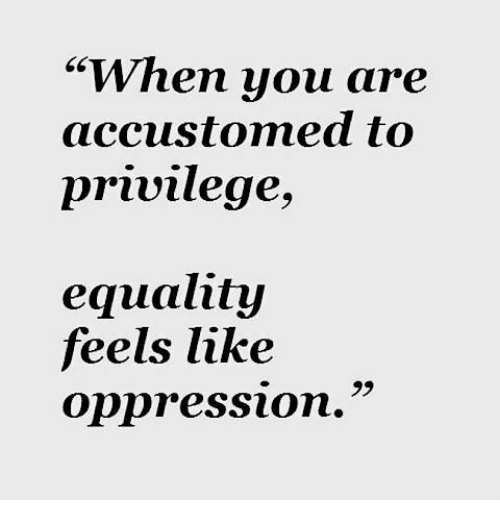
Basically, it means doing what you can, changing things, to include all sorts of people. The assumption is that mainstream spaces (ie lindy hop classes, parties, workshops, etc) are dominated by white, middle class, heterosexual, urban, able bodied people. This isn’t an accident, but a result of how the space is designed and functioned.

So when we make things ‘more inclusive’, we change the space. That can include:
– the language teachers use; the type of teachers (eg hiring POC, same-sex couples, etc etc);
– where a space is (in a middle class area, or out west in a more diverse community?);
– how a space is advertised (changing images and language to be more welcoming to a wider range of people);
– the make up of bands (from all white men, to ….heck, anyone else).

Before we can make these changes, though, we need to study the space itself, and note it’s characteristics: who’s missing from this space? Which voices are heard? Who is speaking? There’s lots of literature about this stuff to draw on, so we needn’t invent the wheel. This is also my background: looking at communities of cultural practice and finding out who they are.

I don’t think every single person is welcome at all dance events. As an example, I don’t allow known sex offenders or violent people into my events. They are clearly not welcome.
As another example, we have women-only dance classes in the Sydney scene, run by and for women who don’t feel safe with men, or want to dance just with women. For all sorts of reasons. That’s cool.
We also have lgbqt classes, which welcome straights and allies, but also make it clear that these classes prioritise queer language and politics. So anyone coming needs to be cool with that, and might find it challenging at first.

So when we say inclusive’, I’m thinking ‘a place or policy that actively works to resist and undo patriarchy.’ It’s not a neutral ‘everyone is welcome’ policy. It’s an explicitly political policy to undo the privileging of straight, white, middle class men in lindy hop.

What is a safe space?

I don’t use the phrase ‘safe space’ very often, but I do talk about ‘safety’ in my dance work. When I talk about safety, I’ve specifically chosen to position my work on preventing sexual harassment and assault as part of ‘occupational health and safety’ work. Why? Because I run a business, and there’s a lot of good literature and resources on this exact issue, coming out of feminist activism and also union work.

So when I talk about ‘safety’ I’m talking about:
– prosaic stuff like avoiding injuries and accidents by removing dangers. But this is useful because a ‘danger’ can be a known offender that we ‘remove’ for the safety of workers and punters.
– I like to position sexual assault and harassment as potential injuries, as this makes them ‘ordinary’ and desexualises them to a degree. This allows us to get past some of the social taboos around talking about sex or bodies or gender in our community.
– I like to push the idea that ‘safety’ is all of our responsibilities. So I use the phrase ‘we have each other’s backs’ and ‘look after each other’ a lot. The three main ‘rules’ of my business’s dance classes are: ‘look after your partner, look after yourself, look after the music.’
-> this idea of mutual responsibility is central to my feminism: it’s about communitarianism and collectivism (rather than individualism); it’s about care and nurturing; it’s about empowering people by giving them responsibility for each other.
-> very central to this is giving people concrete ways to ‘care’ for each other – eg our code of conduct has a section on ‘how not to harass someone’. At events I say, “If you see someone who needs help, offer to help them to the registration desk” (and this is said over the mic to punters, but is also written in our handbook for volunteers and staff). They have explicit ‘scripts’ for asking for help or for offering help.

At the heart of this approach, is my belief that to make spaces more inclusive and safer, we need to undo patriarchal power structures. ie we need to undo the ‘top-down’ pyramid of power, where we have one ‘boss’ at the top, and then layers of people with less and less power. I aim for a flatter power structure, and more rhizomatic systems of responsibility. When I say ‘rhizome’ I’m talking about a model where everyone is connected to each other in complicated ways and relationships, not just looking up to one boss or down to employees. Change is the most important part of this: we are capable of change, and we should aim to change and learn and try new things.

Exposing sexual assault is hard

[Getting Help.]

This article ‘I publicly accused Dustin Hoffman of harassment. Take it from me, it’s not easy to expose sexual misconduct’ by Anna Graham Hunter reflects the things I’ve seen happen in the dance world, as brave women try to do something about the men who’ve assaulted them.
It’s very difficult. It takes ages. It’s horrid. Horrible. It requires a lot of trust, a lot of very good communication, and the most careful, most delicate conversations.

Most of the women reporting want one thing: to know if the man who assaulted them will be at This Event, and if he is, they won’t go. Because they don’t feel safe near him. And they aren’t. No woman is.
When I hear women say this, I think, “Gee, I’d much rather have you at this event than him. He’s shit.” But it’s so hard for us to get men reported (let alone banned), I understand why they choose to absent themselves.

I’ve had bloody shithouse people in the dance scene accuse me of being on a ‘witch hunt’ when I report offenders. It not only irks me that they’ve misunderstood the historical context of witch hunts, it irritates me that they are so ignorant of the actual process that they think reporting an offender is as simple as pointing a finger in the Salem courthouse. If only.

Finally, while the reporting of big name teachers makes big time facebook hits, the vast bulk of offenders are men you don’t know or don’t notice. That’s how they operate: they make sure no one notices. And they’re very good at convincing their targets that they’re not in the wrong.

I’m still thinking about the men who’ve been assaulted and haven’t reported it. I’m thinking about you, and I think we’ll find a way to make it easier for you to report too. Eventually.

Who wants to pay me to research gender in the Australian jazz music industry? Have relevant experience, skills, degrees, etc.

a long post from fb.

I am interested in:

  • sexual harassment and assault and its role in discouraging women musicians;
  • the recent round of cuts in arts council funding and its role in pushing musicians o/s;
  • do women follow the jobs o/s as younger men do, or do they have domestic commitments keeping them here?;
  • whether or not a lack of attention to female historical figures in jazz education disuades young women musicians;
  • intra-band culture and masculinism, and their role in discouraging women from playing instruments (v singing), and consequent effects on the music itself;
  • are broader industrial factors inaccessible for women, because of impossible child care and donestic labour making the late hours, excessive drinking and drug use cultural factors central to jazz music culture and networking)

And so on.
I also want to look at the intersection of race, class, and sexuality, because the australian jazz world is very white, very straight, and very male.

What’s the point of asking these questions?

  • most dance event organisers are women; does jazzbro culture impede collaboration? Would it be different if there were more women musos?
  • jazz is slowly fading away as musos and audiences pass away. Why is the jazz world ignoring (even fighting) the great resource of 51% (more!) of the population?
  • how would the music itself be different if it became the vernacular not just of some white bros? How many more people would it resonate with, if the stories were more varied and interesting?

I just need money for research (incl library access, transcription resources, secure places for data, travel $$ for interviews, etc). But i could plan and do this research no worries.

Here is a thing I read today RE arts funding which made me think about this: https://twitter.com/beneltham/status/942570857250959360

And I’ve also been reading first-person accounts by very brave young women recording their experience with sexual assault and harassment in the jazz scene, both in the US and here in Australia.

Basically: getting raped and harassed every day by staff, teachers, students, and punters discourages young women musicians. How can it even be true. Unfathomable*.

Upshot: sexual assault is a very good way of getting rid of threats to male egos and careers. ie talented young women.

Similarly, racism (both explicit and implicit) is another good way to get rid of threats (to white masculinity): talented young musicians of colour.

None of this is news. We have decades of first hand and academic research supporting this idea that sexual assault and harassment are tools of the patriarchy: discouraging women and others from breaching the citadel.

*insert sarcasm gif

I feel like the ban on black/american musicians touring Australia until the 50s is also relevant. And the role of the musicians union(s).
…and I want to look at the role of women in the Australian jazz industry to date. Especially the role of the women in the 50s, 60s, and so on up til now – the people who managed gigs, sold tickets, etc etc. All that unpaid, low status work that actually makes a gig possible.

I think that ‘uses of history’ is going to be important too. Something about the way historical figures, historical recordings and texts, ideas about history, authenticity, etc etc are used in ‘jazz’.

I feel like there’s some connection with the way Herrang really discourages modern black music like hip hop, house, rap, etc etc, yet sponsors the Frankie Manning ambassadors and young black people to the camp. These kids are allowed to come as ‘ambassadors’, but they aren’t allowed to bring their own, modern day music and dance – stuff they are authorities on. They have to be positioned as ‘special cases’ accessing black history via white ‘specialists’ in Europe, v accessing black history via their own families and communities and bodies and contemporary culture.

…I guess it’s all about culture, gatekeeping, power, and access to knowledge. And the discursive role of words and concepts like ‘authentic’, ‘history’, even ‘swing’. And which historical figures are used (Louis Armstrong vs Lil Hardin Armstrong etc).

So I guess we’re looking at the intersection of ideas about ‘work/labour’, ‘art’, ‘creativity’, ‘gender/race/ID’ in a particular creative field. Same old same old, really, but in a new context. And the new part is the role of funding and support (eg universities) by governments today, and jazz’s shift from vernacular music and culture funding by everyday spaces (eg bars, cafes, dancehalls) to ‘art’ funded by the state and high-end sponsorship. Which, it turns out, is much more precarious. There’s also something in there about education, learning, and teaching in vernacular vs institutional spaces. I think that’s the bit that’ll interest me most.

I’m already pretty interested in community arts practice via ‘art’ in galleries, opera houses, conservatoria, etc etc. I’d like to have a look at some cultural policy studies literature on engagement with the arts in Australia. ie do more people ‘engage with the arts’ as amateur makers via craft courses, community choirs, school holiday programs, etc etc, than they do via more formal routes like ‘going to see a show at the opera house’ or ‘attending the Sydney Festival’? I’d also like to look at the pathways to professional musicianship – via places like the Con, or via music programs in universities, or via informal apprenticeships with family members, or via ongoing lessons with teachers? And do these pathways offer particular obstacles or opportunities for women/POC/queer folk?
And of course, what are the more complex (and interesting) networks and convergences of all these pathways and factors? eg attending the Con, taking classes as a kid at school, practicing with friends in high school, making a band, recording and broadcasting at home for youtube, etc etc etc.

Getting help

With the recent reports of sexual assault in the lindy hop scene (and elsewhere), here is some useful info.

The contact details below can help you help your friends and your self.
If you’ve been assaulted (whether recently or less recently), you can get help straight away:

Safe dance scenes rely on people taking care of each other. You’re not alone, friend.
There are peeps who will have your back when you need them. Even if they’re on the other side of the planet :)

Anyone who’s been assaulted can ask for help: safety champs are there for peeps of all gender IDs.

  1. Your safety is the most important thing. Get somewhere safe, and if you need help to get there, call the numbers below straight away.
  2. You deserve help and support. Don’t wait. You deserve to feel safe. The phone numbers below will get you access to experienced help.
  3. You can make reports anonymously in the lindy hop scene. This is becoming a priority for most safety champs.
  4. You don’t have to speak to or face the person who assaulted you. Don’t ever feel you have to let them ‘respond’ with their ‘side of the story’.
  5. You can have an agent/support person or friend (a safety champ) handle reporting an offender to event organisers. You don’t have to go through all that on your own.
  6. You can choose who acts as your agent/support person. I suggest an experienced agent, but even your BFF or someone you saw on fb who seems safe.
  7. You can decide what action is taken. It’s ok if you just want to know if an offender will be at a particular event. You needn’t go to the police or make a formal complaint. Safety champs are there to be sure you’re safe.
  8. If someone asks you to be their agent/safety champ/support person, you can (and should!) get help too. Most of the Australian dance events have awesome safety champs. Find contact details under ‘code of conduct’ pages on event websites.
  9. If someone asks you for help, but you don’t feel strong enough on your own – get help! There’s a network of safety champs who can help you access the right people and get help for you and your friend.
  10. The international lindy hop scene has been skilling up its safety champs.
    Experienced safety champs like the brilliant MLX team can help you take the next step for keeping yourself and people reporting assaults safe. And if they can’t, they can suggest someone who can.

The usefulness of being specific

Kathleen Rea’s piece “That lady”: The story of what happened when a woman put up a boundary in the contact improv world is a great post by a woman about her experiences setting up ‘boundaries guidelines’ for her dance session.

I especially dig her points about using specific language:

My guidelines evolved over the years, but have always been very clear and direct in their language and guidance. I have faced both praise and critique for this direct approach. I think one of the reasons they have been controversial is that I leave little room for misinterpretation. In the guidelines, I say things such as, “Do not intentionally caress another dancer on their breasts or genitals”, and, “Non-consensual pass-by pokes, kisses, tickles, caresses, massages or pats while dancing or passing by someone in the studio or hallway will not be tolerated”. I think this approach was unusual in the contact dance improvisation world. I had said something which is usually not said, and as well I was a woman saying these things.

I’ve tried to be specific in our Code of Conduct, because I think that being coy can lead to problems. It also suggests that if actually saying ‘groin’ or ‘breasts’ is impossible, then talking about someone touching your groin without permission is utterly anathema.

If we use precise terms simply and casually, we make it clear that it’s ok to talk simply about our bodies and what we do and don’t like. It gives women the language tools to speak up about what’s happened: “He grabbed my breast.” If we don’t have these tools, it’s even harder to actually explain what happened and why it wasn’t ok.

Of course, using appropriate language tools is also a very good way to be specific about how you do like to be touched, or how you would like to touch someone: “Could you grab my breast, please?”

If we get used to speaking about our bodies like this, it’s even harder for offenders to claim they ‘misunderstood’.

Sexual offenders know what they are doing

Don Burke, recently reported as a serial sexual offender, has defended his actions as the symptoms of Aspergers syndrome. Neurodiverse peeps (including those living with Aspergers) may have difficulties understanding social cues, or managing social interactions.
Men like Burke, who repeatedly offend, target specific women, and conduct ongoing, sophisticated campaigns of manipulation, exploitation, and terror, are very very good at understanding social cues and managing social interactions. They are highly manipulative and say and do things in specific ways to provoke particular responses. In simpler terms, they say and do horrid things to women because they enjoy frightening and controlling other people. They know exactly what they are doing.

In the dance world we have see these same patterns of behaviour in men like Steven Mitchell, Max Pitruzella, William Mauvais and many more. Sexual assault and harassment are about control and power. Controlling social situations and controlling other people.

Sexual offenders and rape are not random, wild, or unpredictable forces of nature like bears or earthquakes. They are calculating, deliberate individuals. And you can see them coming, identify patterns in their behaviour. One of these markers of offenders is ‘gaslighting’. Convincing women and others that they are imagining this behaviour. Convincing women to doubt themselves, and to accept the offender’s version of events.
We should not be changing our behaviour to accommodate their aggression; they should be changing their behaviour.

It is important to recognise the signs and patterns in these men’s behaviour. It is important to believe women who report them, and to support these women.
You do not need to ‘hear his side of the story’. Because he will lie and manipulate in a sophisticated way.

Monstrous

Claire Dederer’s ‘What Do We Do with the Art of Monstrous Men?’. Once you get past the Woody Allen stuff, she asks:

It might sound as though I’m conflating two things—male predators and female finishers—in a troubling way. And I am. Because when women do what needs to be done in order to write or make art, we sometimes feel monstrous. And others are quick to describe us that way.

This resonates with me. Because doing ‘the right thing’ and tackling sexual harassment (taking on that feminised role of caring) has had direct consequences on my own creative work. Less time to write, to DJ, to work on my own dancing, to work with musicians. My energy and health spent on tidying up after bastard men rather than fostering my own work.
Men are largely absent in the Australian dance scene’s responses to s.h. There are _some_ very good men squirrelling away, but for the most part it’s women writing codes and policies (for which male organisers are happy to take reflected credit). Women who could be dancing or playing music. It’s a second subtraction from our creative lives: we pay once when we fight off these arseholes, and we pay again when we pick up our sisters and chase down the offenders.

Yes, this caring labour does build skills and networks and confidence. But it also detracts. And choosing _not_ to step up and help is a bastard act. Monstrous. As this writer notes, choosing to pursue our own goals, to set aside that role of carer is monstrous. It feels that way. And it is oftenmen who are quickest to dismiss the woman lindy hopper’s failure to ‘help’ their lead as a moral failure.

My rules for DJing

My rules for DJing are pretty simple, and I’ve written about them many times before:

  1. Make it easy for everyone to have fun.
  2. What you play is not as important as the combinations you play them in.
  3. These combinations are dictated by the crowd’s feels, not how you feel in your pants.

That’s it.
But how does that work? If any of the following phrases don’t make any sense to you, have a read of this post How I think About DJing afterwards.

You don’t need fancy technology, and there’s no substitute for listening to your music and getting to know it well.
I DJ using itunes on a mac + cog and an external soundcard for previewing.
I always choose songs on the fly.

Work a tempo wave, and work an energy wave.
It’s ok to play favourites.
Play solid, swinging jazz from the 30s and 40s, and A bit from the 50s.

If you fuck up (clear the floor), follow up with an apology song (i have a list of tried and true favourites).
If you don’t social dance a lot, you’ll be a rubbish dancer.

Only play songs you love.
Only play jazz. If you don’t love swinging jazz, don’t DJ

Watch the dancers. Stop looking at your computer. Watch the dancers. Learn to read how they feel from how they dance. Don’t leave the booth while DJing (because you can’t watch the dancers). Watch the dancers. Learn their feels.

And most importantly, be a pro. Be on time, bring all your gear, be helpful, accommodating, and polite, and ask the organiser what they want.
Know how to play a birthday jam, learn to use the mic, and buy everything Basie up til 1955.